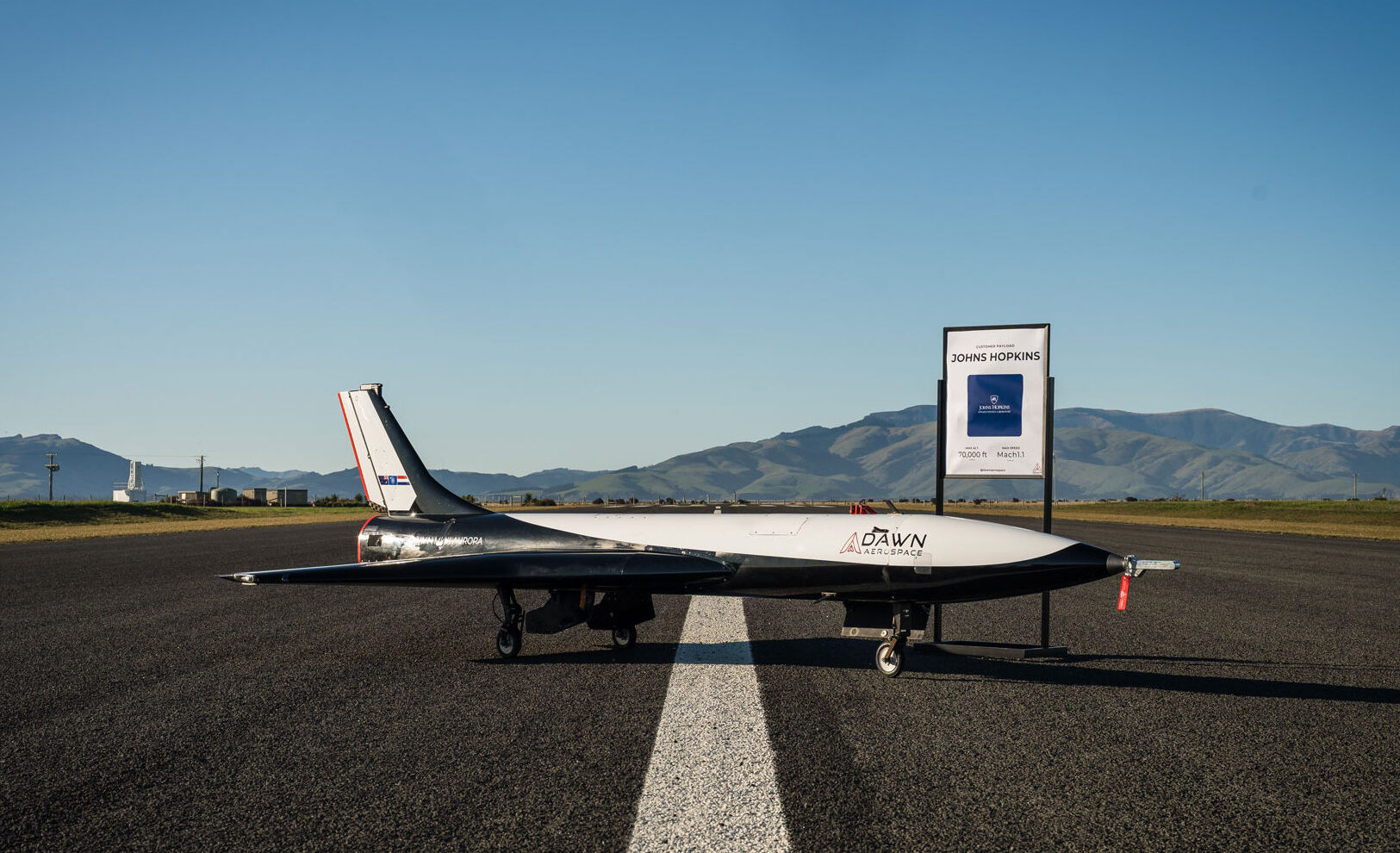
Most rockets fly once and fall into the ocean. Dawn Aerospace is taking a different route with Aurora, a small rocket-powered aircraft designed to take off from an ordinary runway, climb toward the edge of space, glide back down, and fly again the same day. The company describes it as a tool for routine, repeatable high-altitude and high-speed flight rather than a one-shot launch vehicle.
Aurora is an uncrewed vehicle. In Dawn Aerospace’s own words, “Aurora is a remotely piloted aircraft system (RPAS) that provides routine, affordable access to suborbital space and speeds over Mach 3.” The spec sheet shown in the company’s materials covers the Mk-II version of the aircraft.
A small airframe with rocket performance
Aurora is compact. It measures 5.0 meters (16.4 ft) long with a 2.5-meter (8.2 ft) wingspan, and its airframe is built from carbon-fiber-reinforced polymer (CFRP) composite rated for a structural G-load limit of 8 g. Flight is controlled by six elevons, a split rudder, and a body flap, supplemented by an independent reaction control system that steers the vehicle by thruster once it climbs above the usable atmosphere.
The aircraft carries up to 15 kg (33 lbs) of payload in a bay measuring 250 × 250 × 250 mm (about 9.8 inches on each side), excluding the hatch volume. That space is designed for modular experiment integration, with defined mass, volume, and power limits.
The engine
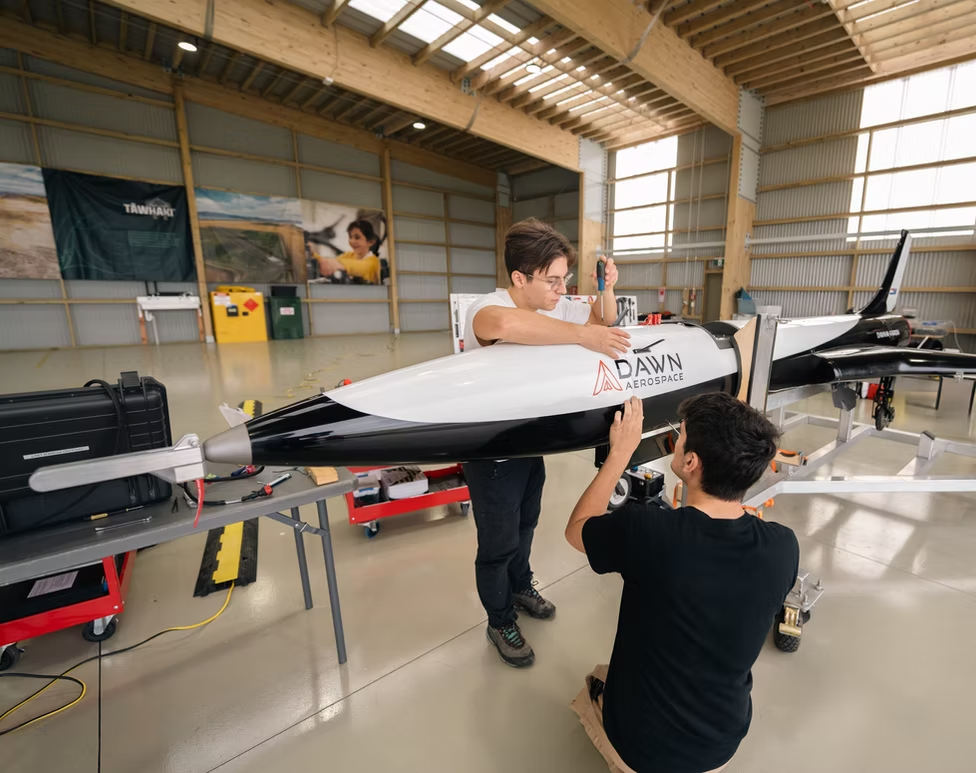
Power comes from a single restartable rocket engine that burns kerosene with high-test hydrogen peroxide (HTP) as the oxidizer. It produces 4.85 kN of thrust (1,090 lbf) with a specific impulse of 281 seconds. The ability to restart the engine in flight is central to the spaceplane concept, since it lets the vehicle manage its climb and return like an aircraft rather than a ballistic rocket.
Performance and turnaround
Dawn Aerospace lists a maximum design altitude of 100 km (about 330,000 ft) — the altitude commonly treated as the boundary of space — along with a maximum 3D range of 130 km (80 miles) and an endurance of up to 60 minutes. The company cites a top speed of Mach 3.7, more than three and a half times the speed of sound.
The figure Dawn Aerospace emphasizes most is turnaround. It quotes a 4-hour turnaround time between flights and frames the goal with the tagline “From Earth to Space Twice A Day.” That reusability is the core of the pitch: “By combining the performance of a rocket with the reliability and versatility of an aircraft, Aurora makes high-altitude and high-speed flight a routine, repeatable part of your program. In turn, helping you to test, iterate, and demonstrate faster.”
Two ways to fly
Aurora is built around two mission profiles. The suborbital profile is tuned to reach space and maximize time in microgravity and pointing time for optical instruments; Dawn Aerospace lists a maximum altitude above 100 km, an approximate flight duration of 30 minutes, and up to 127 seconds of microgravity.
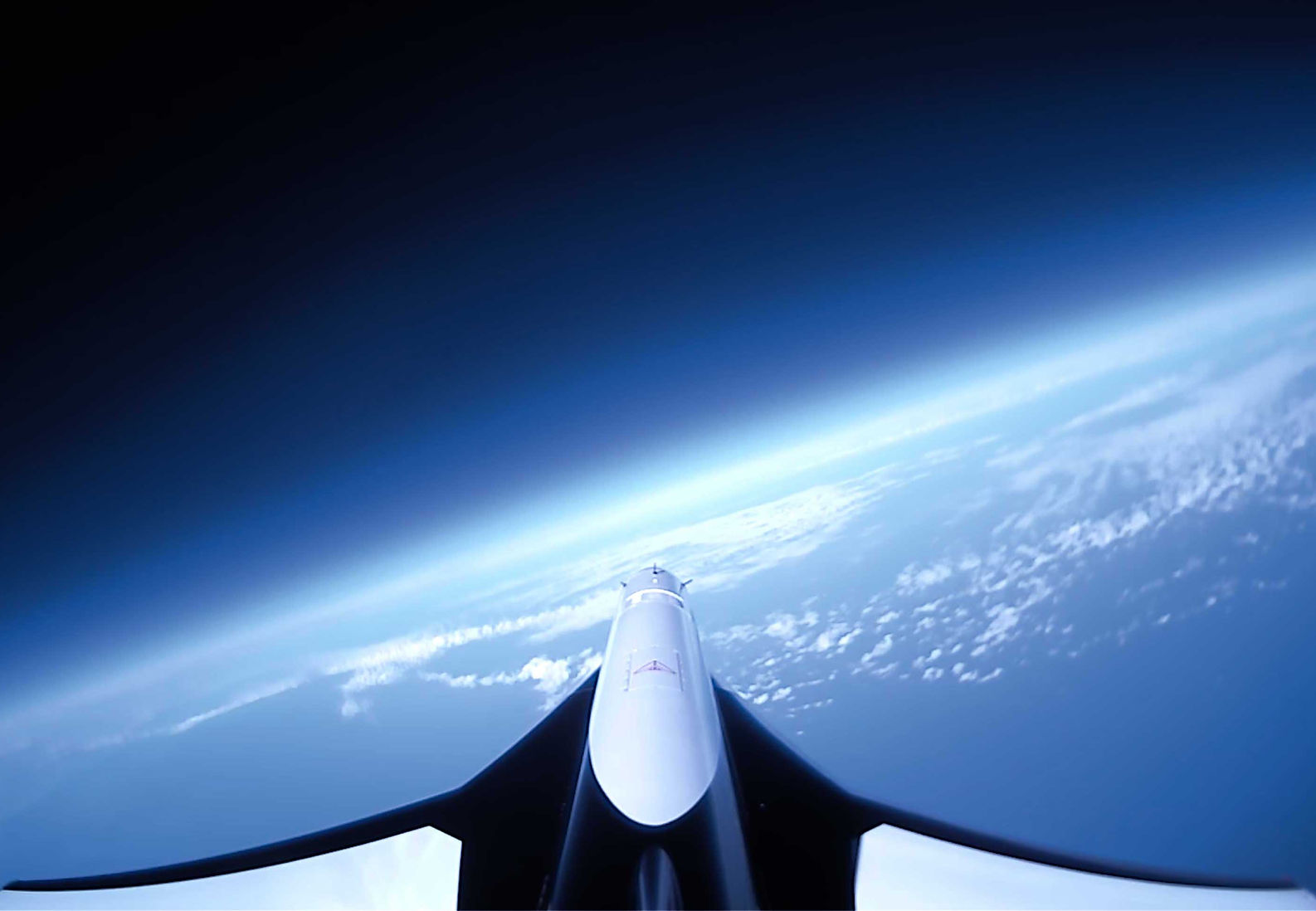
The boost-glide profile keeps the vehicle inside the atmosphere to reach high Mach numbers for supersonic testing and what the company calls target presentation — a use case relevant to defense work. In this mode, Aurora can reach Mach 3.7 and perform maneuvers in the supersonic regime.
What it has actually flown
Aurora’s headline altitude is a design capability, not yet a logged flight. The confirmed milestones are more modest but notable. In November 2024, the aircraft broke the sound barrier, reaching Mach 1.12 at 82,500 feet. On that flight it also set a record for the fastest climb to 20 kilometers (about 65,600 ft), reaching that altitude in 118.6 seconds and surpassing a record held by the modified F-15 Streak Eagle that had stood since 1975.
Beating a half-century-old jet-fighter climb record with a five-meter uncrewed aircraft is a useful marker of how much performance Dawn Aerospace has packed into the airframe, even well short of the 100 km target.
Significance and limitations
The appeal of a runway-launched, reusable spaceplane is frequency and cost. Suborbital research, microgravity experiments, and high-speed flight testing have traditionally meant waiting for scarce sounding-rocket or balloon slots. A vehicle that can fly, land, and refly the same day could lower the cost per flight and shorten the wait between experiments.
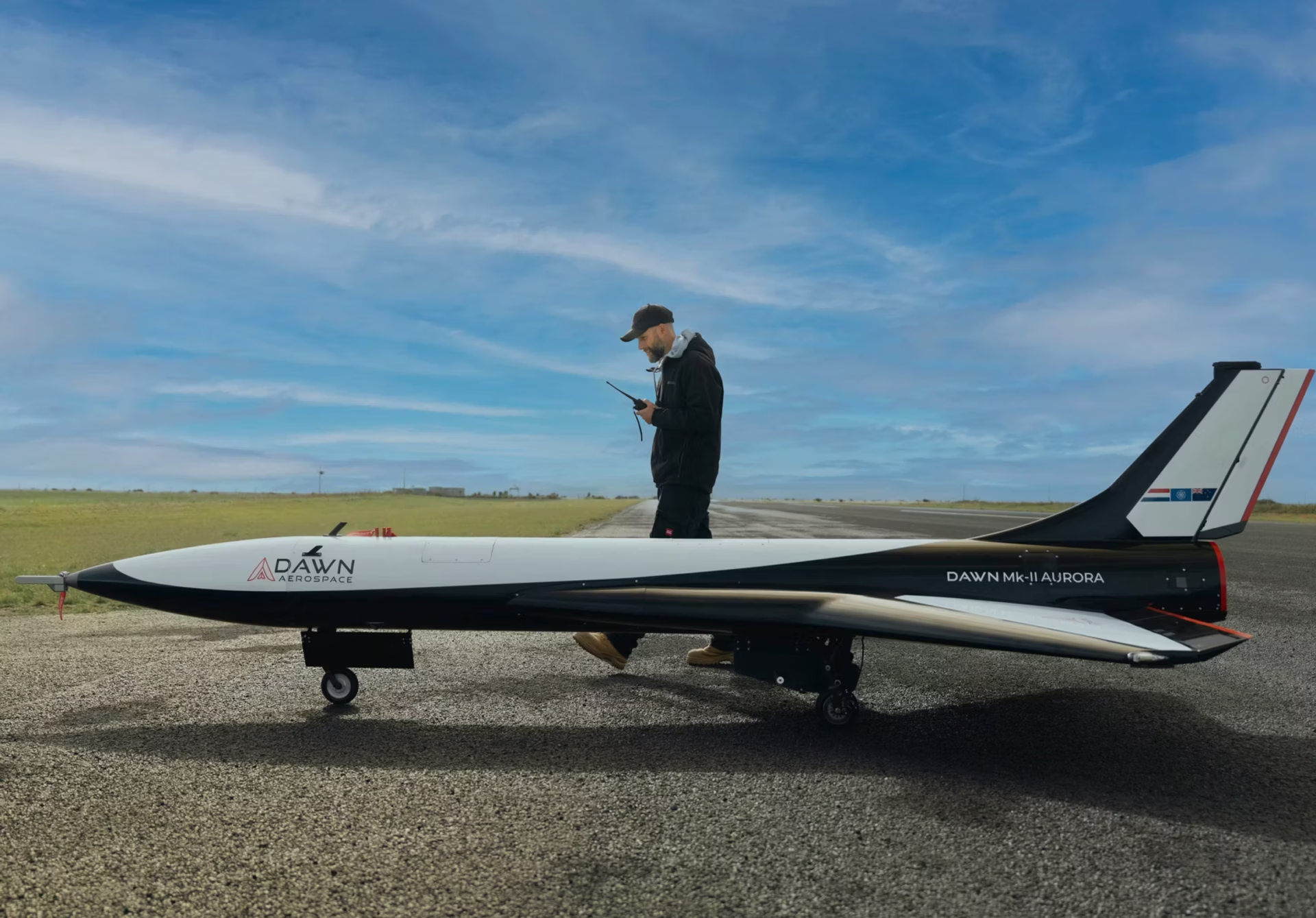
The limitations are equally clear. Aurora is small, with a 15 kg payload and a roughly 25-centimeter cube of usable volume, so it suits instruments and experiments rather than large hardware or people. And while the design targets 100 km, the publicly reported flights so far have reached supersonic speeds in the lower atmosphere, with the higher-altitude and higher-Mach goals still ahead.
Availability
Dawn Aerospace operates as both a manufacturer and a flight provider, and it markets an owner-operator model for customers who want their own vehicle. The company has operations spanning New Zealand, the Netherlands, France, and the United States. It does not publish pricing on its spaceplane page; access is arranged through its sales team. Organizations interested in payload flights or purchasing a vehicle would need to contact Dawn Aerospace directly for terms.
Source: Dawn Aerospace