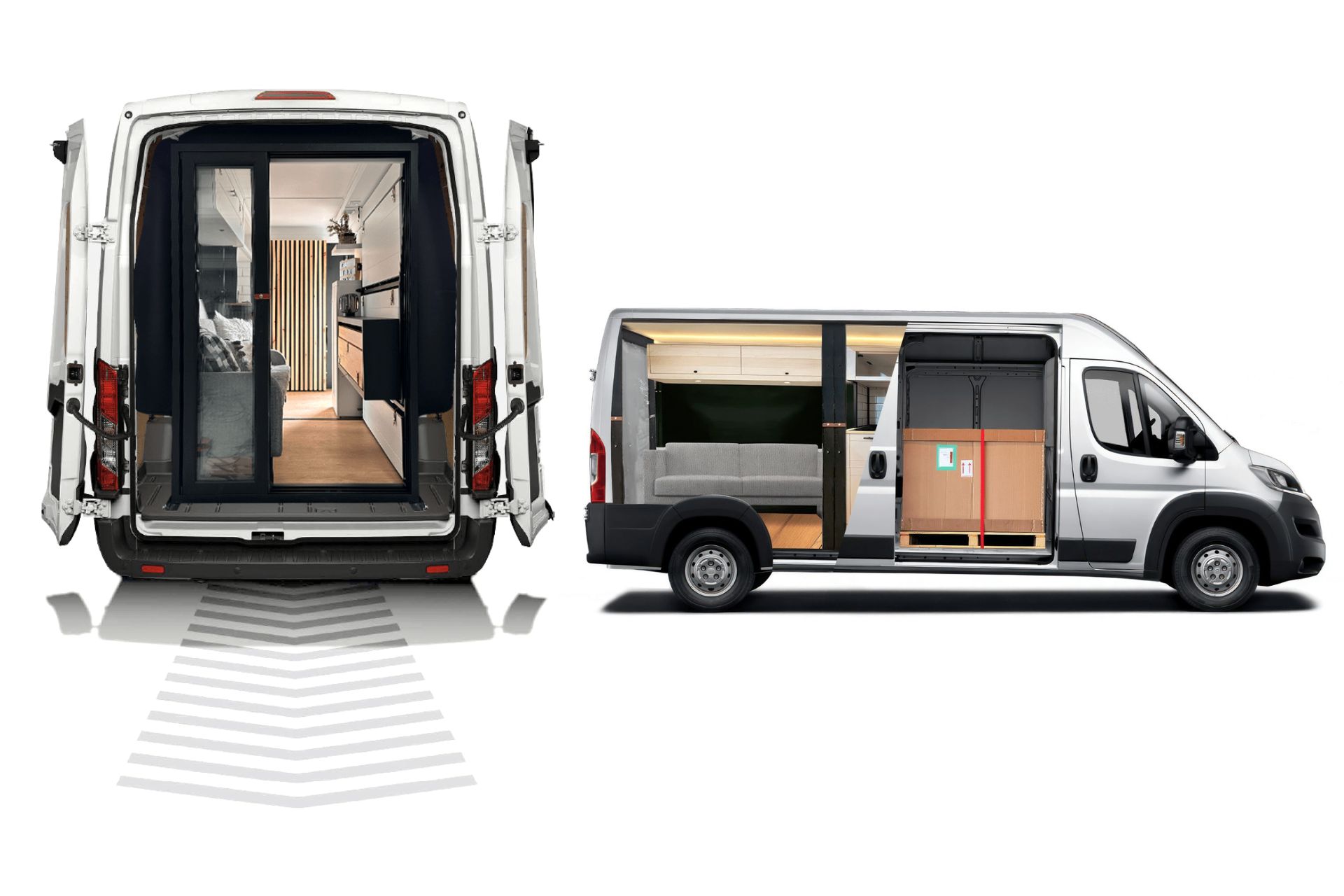
Converting a cargo van into a camper usually means weeks of fabrication, drilling, and permanent changes that are hard to undo. The Spanish company VanCubic takes a different route: two prefabricated modules that roll into an empty van, strap down, and turn it into a furnished living space without any permanent modification. When the trip is over, the modules come out and the van goes back to hauling cargo.
How the system works
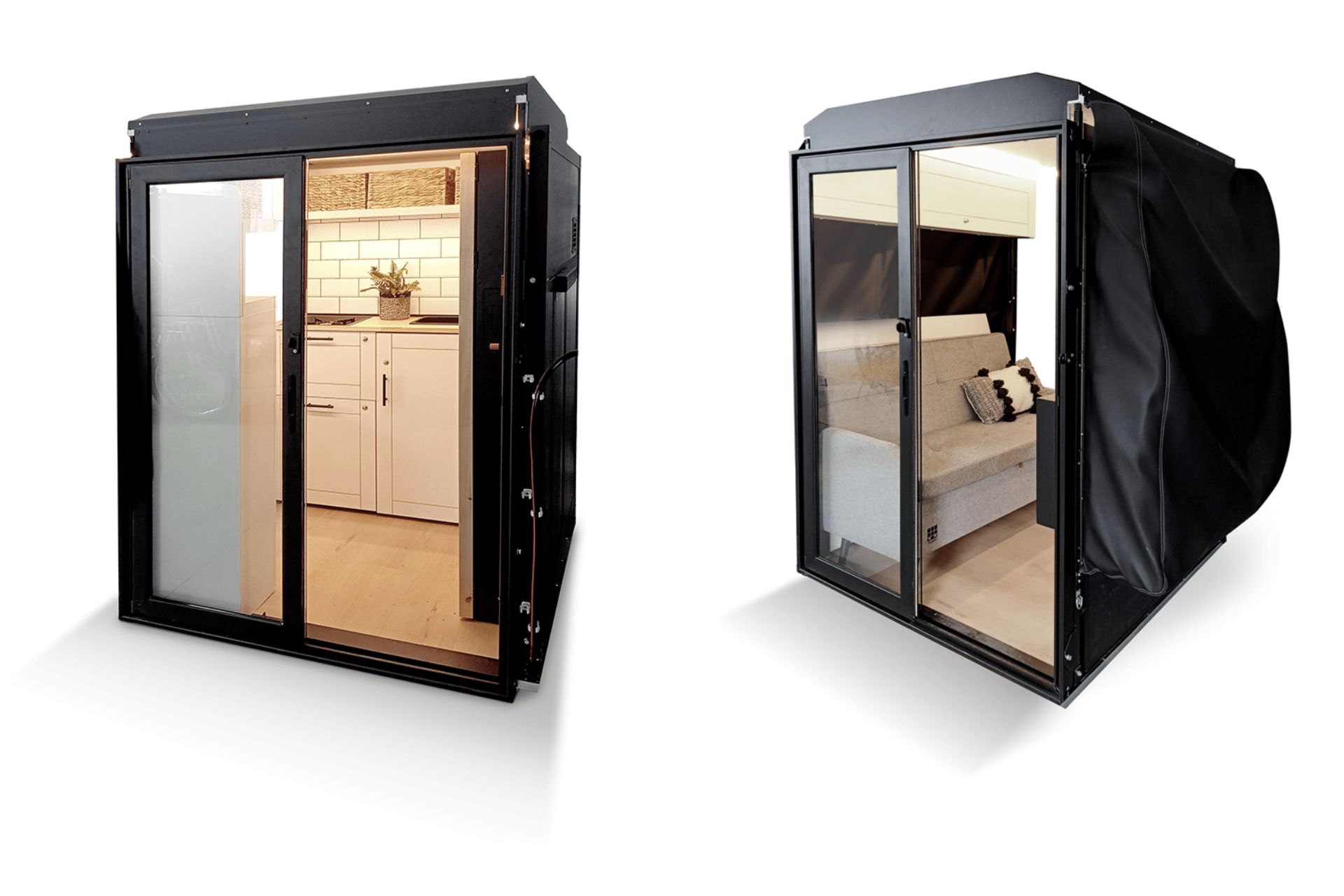
VanCubic is built around two self-contained pods that fit together inside the cargo area. The first is a kitchen module, which can be optionally fitted with bathroom amenities. The second is a living and sleeping module that slides in behind it to occupy the rear of the van.
Each module is delivered on a wheeled trolley. The user opens the van’s rear doors, rolls the modules in, and secures them with straps. The company says the full setup takes about an hour, with no drilling or structural work involved.
Because the modules are held in place as secured cargo rather than bolted-in fixtures, they don’t require the vehicle to be re-homologated as a motorhome in markets where that distinction matters. That is part of the appeal for owners who use a van for work during the week and travel on weekends.
What van it fits
The modules are designed for L2H2-size vans or larger, such as the Ford Transit or Fiat Ducato. VanCubic specifies a minimum cargo floor length of 270 cm (106 inches, about 8.9 feet) and a minimum interior height of 190 cm (75 inches, about 6.2 feet).
Each module weighs between 300 and 350 kg, for a maximum combined weight of about 700 kg (1,543 lbs). Owners should factor that into their van’s payload capacity.
Inside the kitchen module
The kitchen module is built on an insulated aluminum frame with its own roof. It has a sliding window door designed to line up with the van’s side entry, and an open rear wall that connects to the second module so the two form a single continuous interior.
The kitchen includes a sink plumbed to fresh and waste water tanks (22- or 48-liter, depending on the package), a single-burner gas cartridge stove set into the countertop, and an available compressor fridge. VanCubic uses a basic cartridge stove but recesses it into the counter so it reads as a built-in unit. Finishes such as a wood-look countertop, tiled backsplash, and ambient ceiling lighting give it a look closer to a custom conversion than a drop-in box.
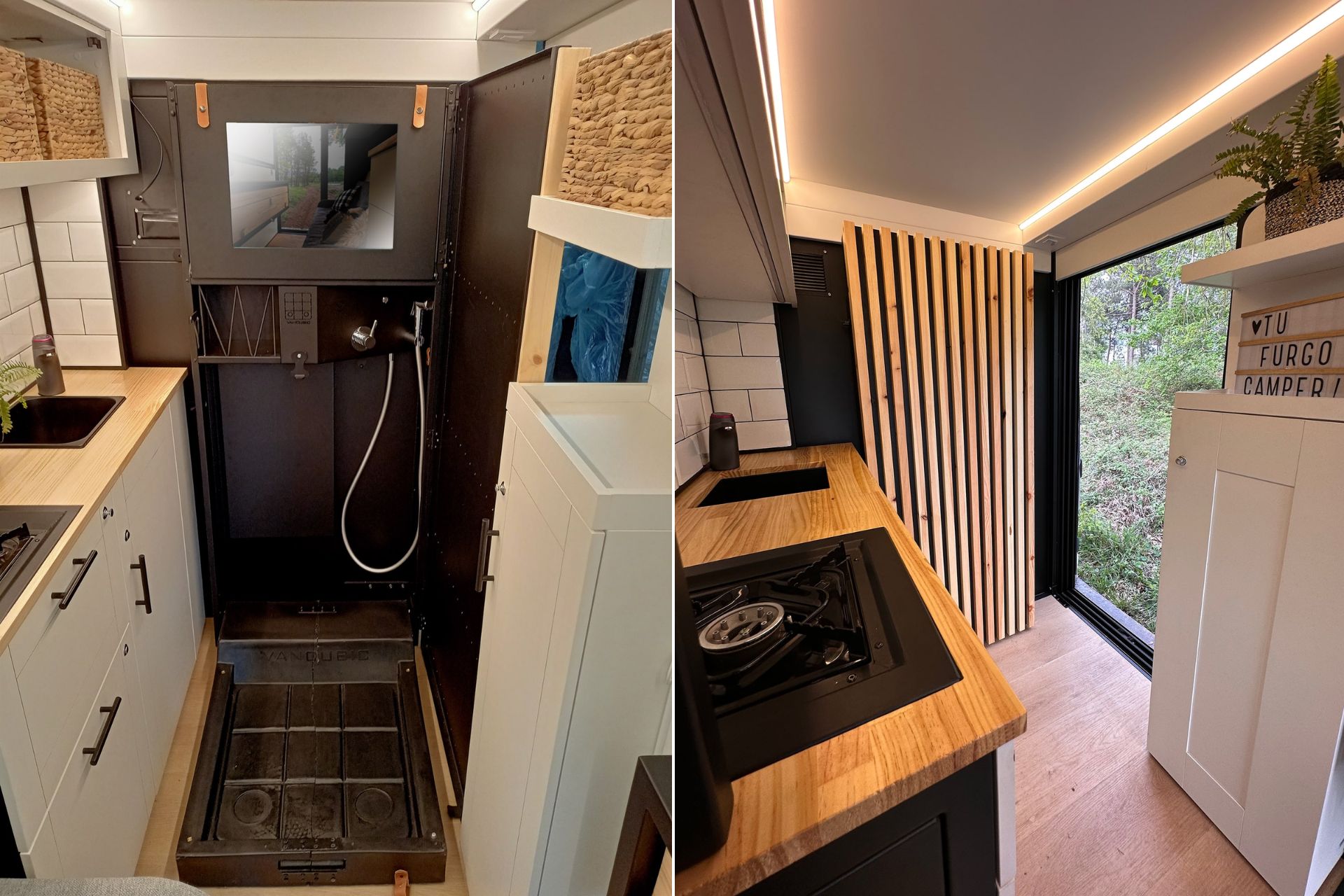
Bathroom features are optional. A shower cabinet hides behind a wood-slat door, with a fold-out shower pan that drops down when needed and stows away the rest of the time. A portable toilet is available as an accessory.
Inside the living and sleeping module
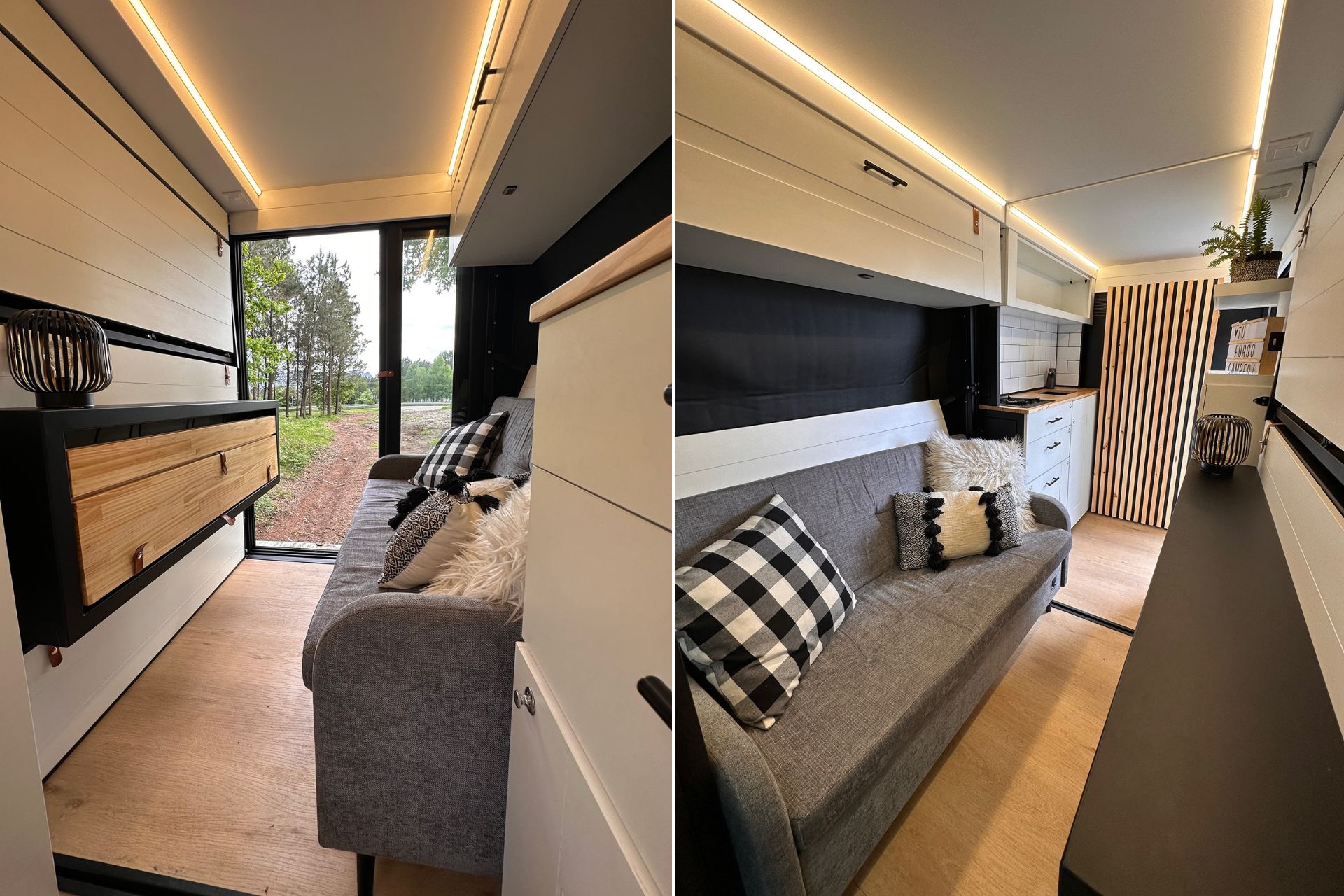
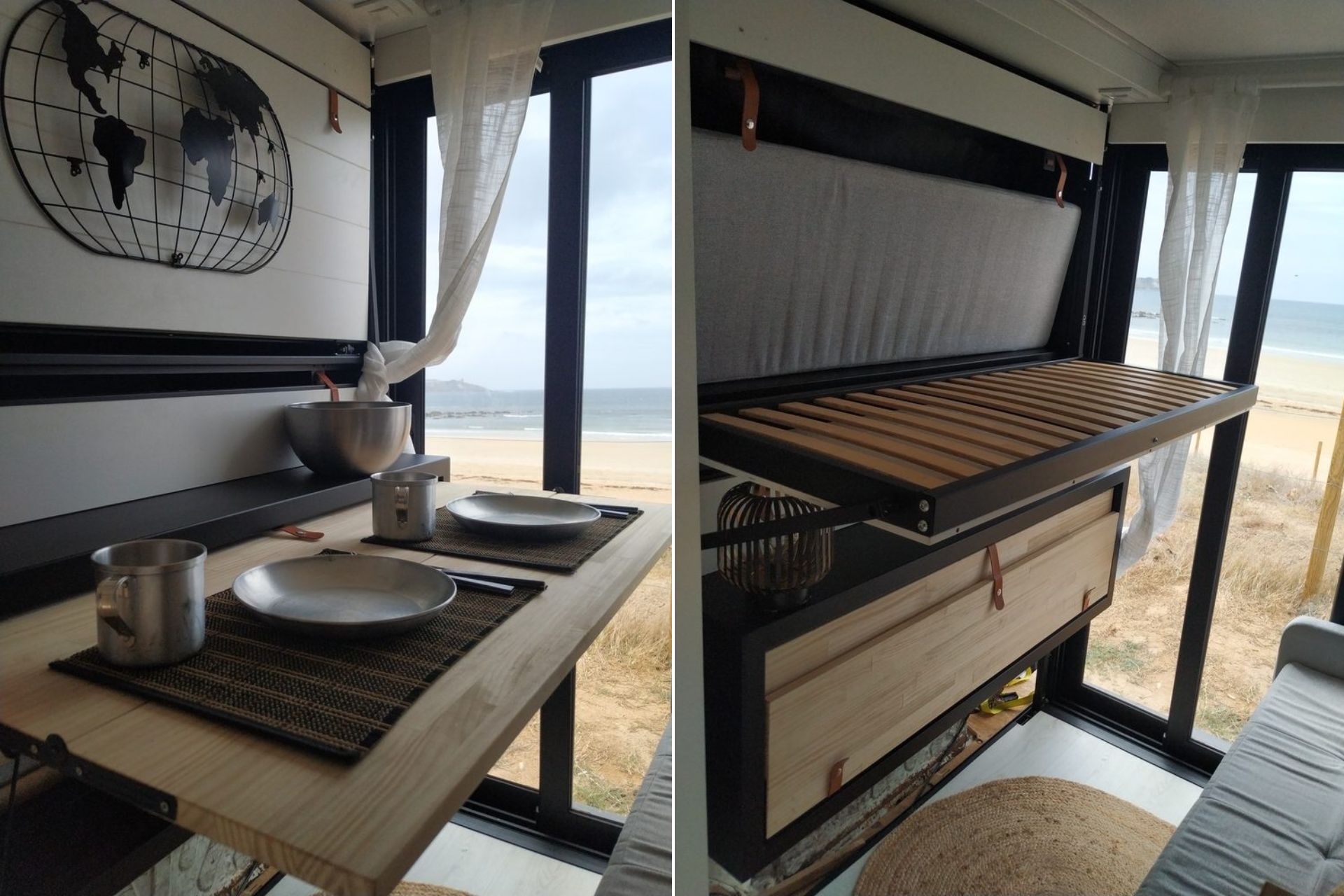
The second module handles living and sleeping. In the base configuration, it comes with a foldaway double bed measuring 120 x 190 cm (47 x 75 inches) that uses the full width of the van and stows against the wall when not in use.
Buyers can add a convertible sofa, a fold-out dining table that doubles as a work desk, a foldaway child bunk bed mounted above the main bed, and storage cabinets. An optional privacy curtain separates the bedroom from the kitchen, and a sliding door provides entry through the van’s rear.
For power, VanCubic offers an EcoFlow portable power station as a plug-and-play option to run the integrated LED lighting and other onboard needs.
Who makes it
VanCubic is based in Spain’s Galicia region, in Vigo, and the modules are assembled locally in the Galician provinces of Ourense and Pontevedra, using metal, wood, and textiles from regional suppliers. The company now lists six versions of its removable camper system: Origin, Basic, Loft, Premium, Compact, and 360º, covering different van sizes, layouts, equipment levels, and passenger needs.
Context and trade-offs
The slide-in concept sits between two familiar options. It offers more than a simple “camper-in-a-box” kit that you hand-carry into a van, but avoids the cost and permanence of a full custom build. For people who want a finished interior without giving up the van’s day job, that middle ground is the main draw.
There are limits worth noting. The combined module weight eats into payload, the kitchen and bathroom share one compact module, and the single-burner cartridge stove is modest compared with a built-in range. Buyers should also confirm how removable-module rules are interpreted in their own country, since the homologation benefit depends on local regulations.
Pricing and availability
VanCubic’s current configurator/catalog flow lists four package families, with all prices shown as starting prices that include VAT. The entry-level Origin package starts at €11,990 (approx. US$13,745), with an optional Origin Plus Pack listed at €3,000 (approx. US$3,440). The Loft package starts at €20,990 (approx. US$24,060), while both the Premium and 360º packages start at €23,990 (approx. US$27,500).
Transport is not included in these prices. The figures were shown in VanCubic’s quote/catalog flow for a U.S.-country inquiry with pickup set to Vigo, Spain, so buyers should confirm final pricing, configuration details, delivery costs, taxes/import duties, and regional availability directly with VanCubic.
Source: VanCubic