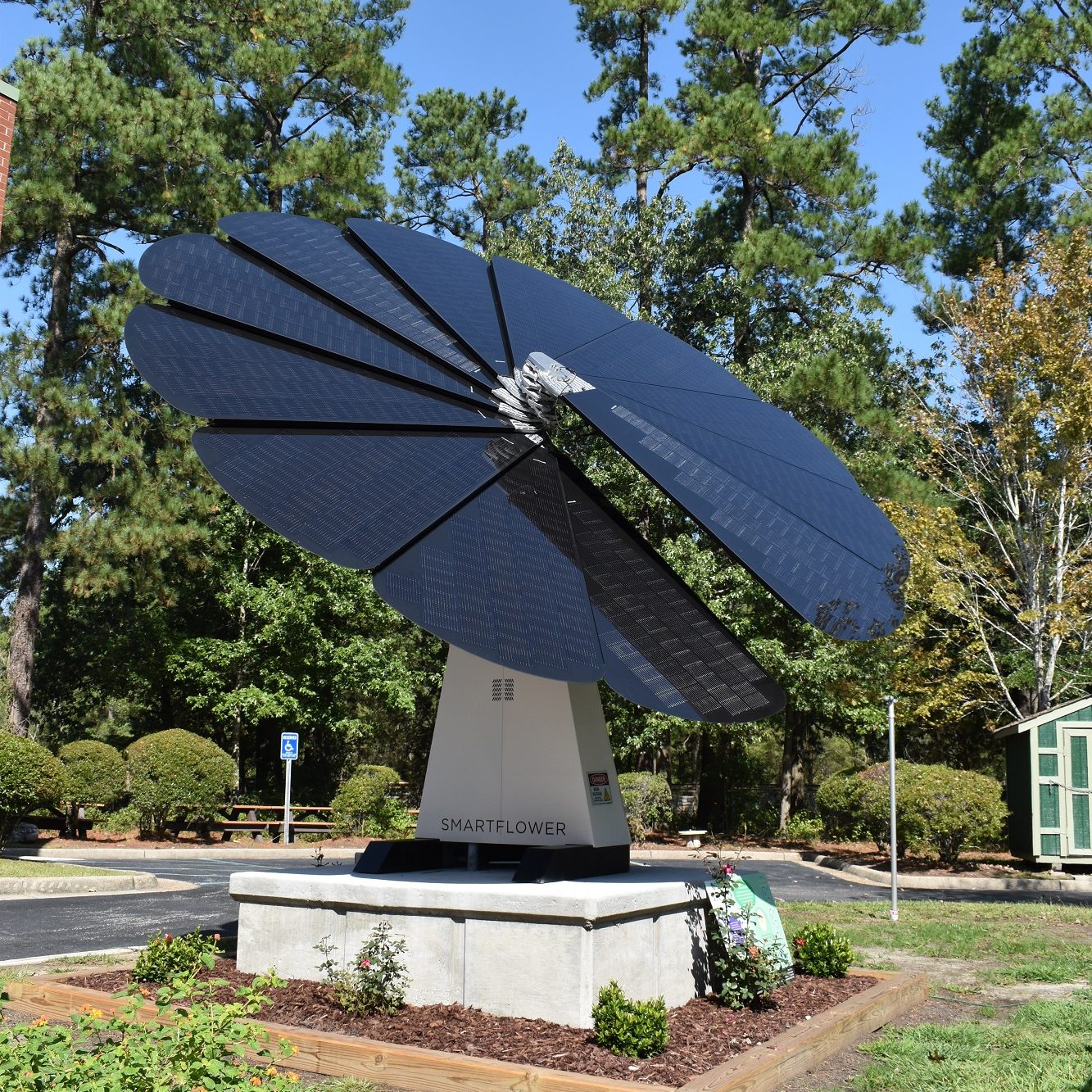
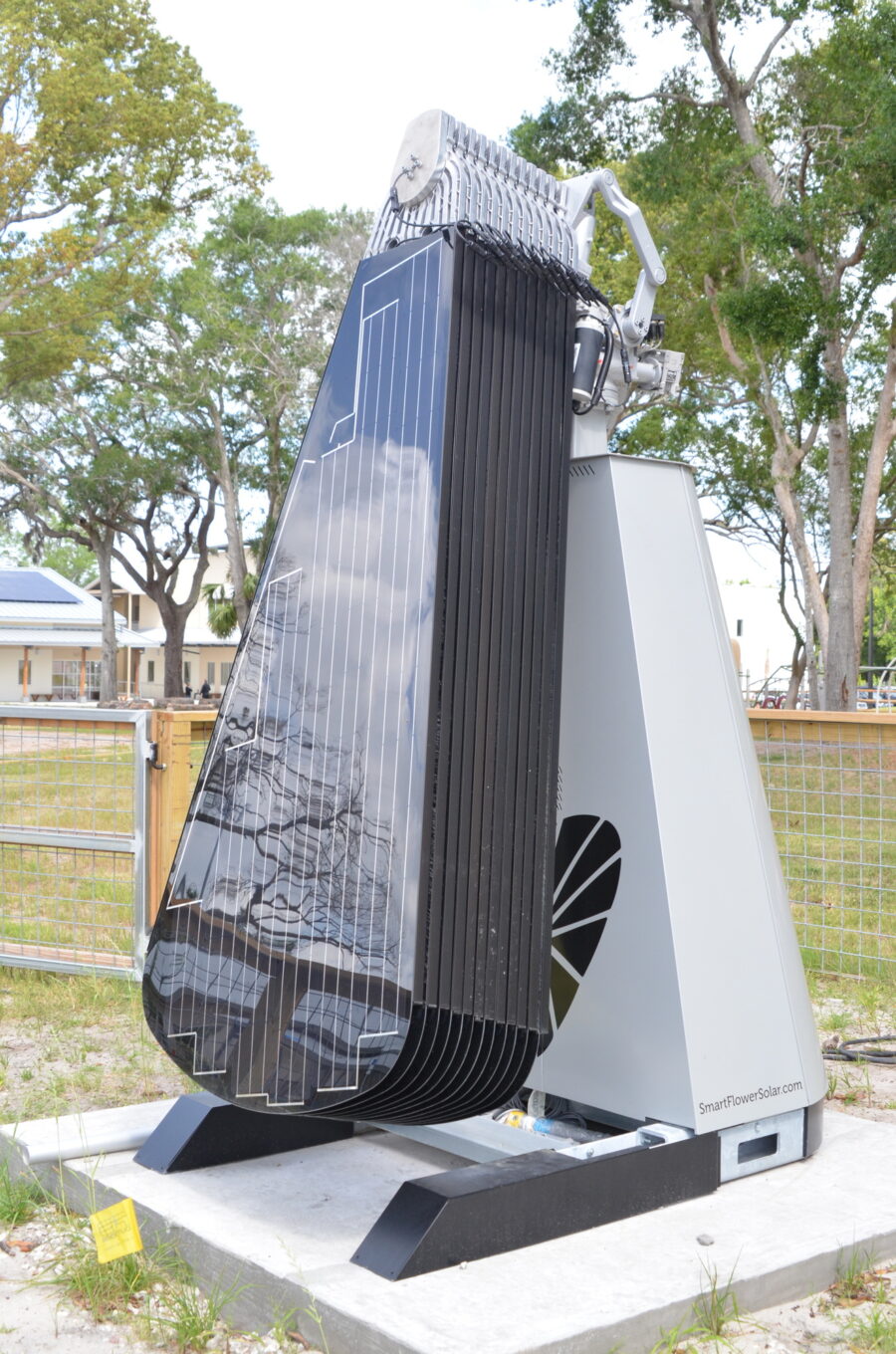
Most people picture solar panels as flat rows mounted on a rooftop. SmartFlower takes a different approach — one borrowed from nature. The Austrian-designed solar system opens its petals at dawn, tracks the sun across the sky, and folds back up at dusk, much the way a sunflower behaves. The question most potential buyers reasonably ask is: does this sculptural design actually perform better, and is it worth the premium price?
Here is a factual look at how SmartFlower works, what the product lineup includes, and how it stacks up against conventional rooftop installations.
Where it comes from
SmartFlower was originally developed in Austria, a country with a long history of precision manufacturing. Energy Management Inc. (EMI), a Boston, Massachusetts corporation with over 43 years of experience developing large energy projects, acquired SmartFlower in 2018 and now manages North American operations. The system is still manufactured in Austria, using components sourced from European Union countries. SmartFlower Solar has installed thousands of units worldwide, with notable commercial clients including Adidas, Nike, Siemens, Carlsberg, and Vodafone.
The three products
SmartFlower currently offers three models, each built on the same sun-tracking, 12-petal architecture. The base SmartFlower is a standalone solar generation unit that connects to a home or business through a single AC cable, with no battery storage included. It is designed as an aesthetically distinct, versatile alternative to a rooftop array — particularly useful for renters, people who move frequently, or those whose rooftop is not suitable for panels.

The SmartFlower+ adds a fully integrated battery pack to the base system, allowing users to store solar energy and draw on it at any time. SmartFlower says up to 100% self-utilization can be achieved with this model, making it well suited for remote locations without grid access or for grid-connected buildings that want resilience during power outages.
The SmartFlower EV includes an electric vehicle charging output for homeowners and businesses that want to power their EVs directly from solar energy without routing through the grid. All three models are available in multiple colors.
How the tracking system works
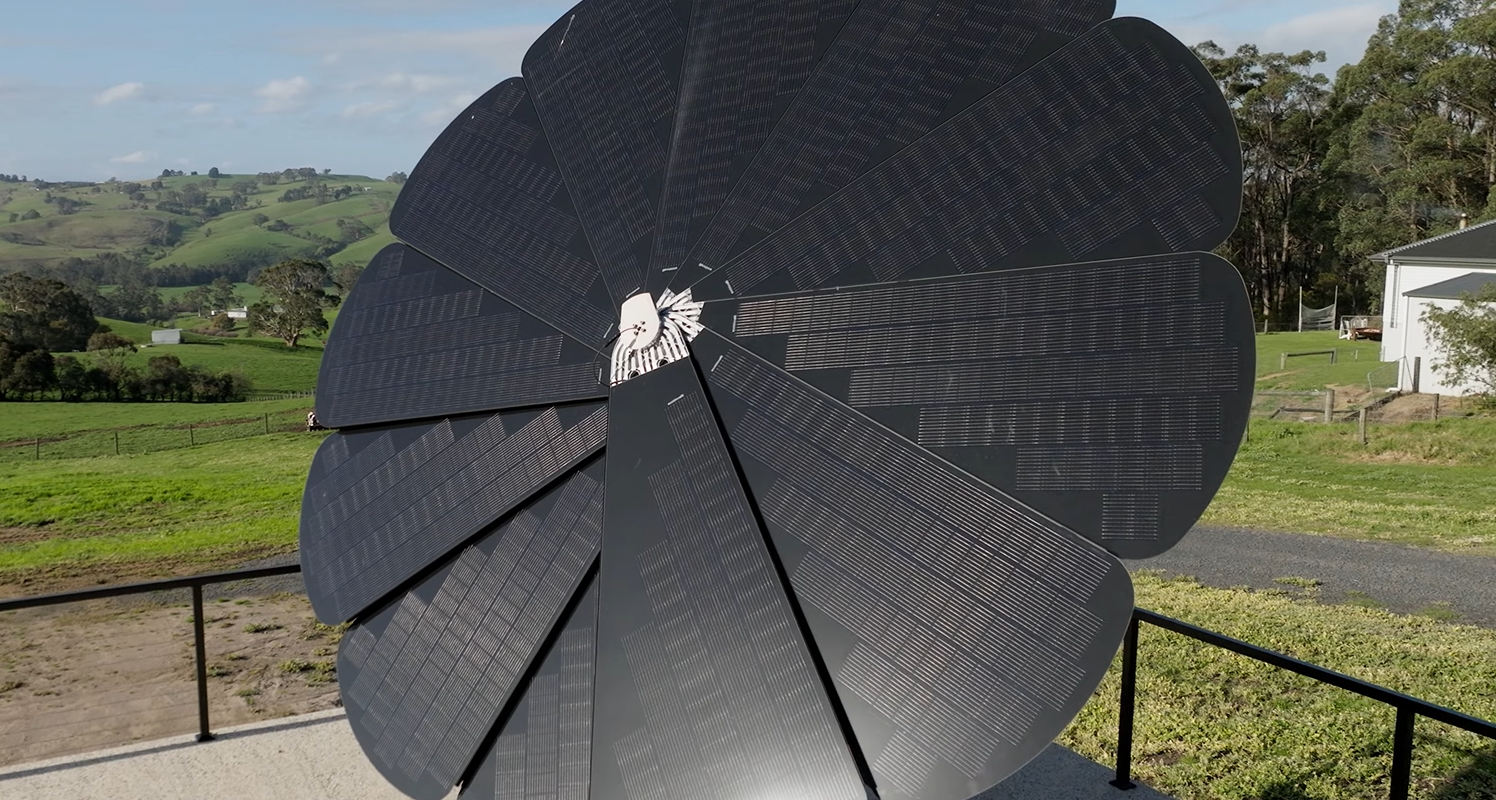
The central feature of SmartFlower is a dual-axis sun tracking system that keeps the panels perpendicular to incoming sunlight from morning to evening. Rooftop panels are stationary and are only at the ideal angle for a limited portion of the day. SmartFlower’s continuous tracking, the company says, results in up to 40% more energy production than a comparably sized fixed rooftop system.
The rear ventilation design also keeps the panels up to 18°F cooler than they would otherwise run, contributing an additional 5-10% output advantage on warm days — rooftop arrays can lose that same amount to heat accumulation alone. The panels move at 0.5 feet per second when opening and closing, and most users describe the unit as nearly silent during normal operation.
SmartFlower CEO Jim Gordon has described the thinking behind the design this way: “It’s a bold, beautiful and unusual solar solution. We’ve reinvented solar… the beautifully designed system maximizes energy production, because it tracks the sun. What inspired the product is the sunflower, it’s biomimicry – it opens in the morning, aims itself toward the sun, moves with the sun, and at night the petals stow away.”
Self-cleaning and storm protection
Every SmartFlower model includes two automated protective features. When the panels open each morning and close each evening, integrated brushes sweep across all 12 petals, removing dust, dirt, snow, and debris. SmartFlower says this daily self-cleaning yields a 1-2% productivity gain over conventional panels, which accumulate sediment over time and can lose up to 5% of output if left uncleaned.
When the system’s sensors detect sustained wind conditions, the panels automatically retract into a closed safety position. Winds exceeding 40 mph trigger the retraction, and SmartFlower states the unit can withstand hurricane-level winds in that closed position. Once conditions settle, the system cleans itself automatically before reopening. There is also a canopy mode — activated via a button on the controller — that raises the unit to allow lawnmowers and other equipment to pass underneath during yard maintenance.
Performance numbers
SmartFlower typically produces between 4,000 and 6,200+ kWh per year depending on location. Gordon has noted that peak output is sufficient to cover an average European home’s energy use, or roughly three-quarters of a typical Massachusetts home, which consumes approximately 7,200 kWh annually. In lower-consumption states like Vermont, where the average household uses around 6,780 kWh per year — the fourth lowest in the nation — a unit at peak output could cover around 92% of annual energy needs.
The system operates from -20°C (-4°F) up to 40°C (104°F). Third-party data from a Nestlé installation at the company’s Antigua Guatemala factory, where three SmartFlower units were installed, recorded 95.6% panel efficiency compared to 90% for conventional panels. For most grid-connected homes and businesses, the unit is designed to reduce electricity costs rather than eliminate them — though the company notes that standalone applications like agricultural water stations, highway rest stops, and small cabins can run entirely on a single unit.
Installation
The SmartFlower arrives fully assembled. An installer uncrates the unit, anchors it to the ground, and connects a single wire to the building’s electrical service panel — a process that typically takes a day or less. Gordon has said: “It’s really just plug and play. Installers simply run one line to the electric panel on the house or business and within hours we’re empowering the home-owner or business to produce their own renewable energy.”
A traditional rooftop system, by comparison, arrives in multiple components, requires field assembly, involves roof penetrations, needs specialized internal cabling, and can take a month or more from start to finish. SmartFlower requires a minimum clear circular footprint of 5.2 meters (17 feet), with the fully open structure spanning 194 square feet and a radius of 16 feet. Local permits are required as they are for any solar installation, with requirements varying by municipality.
The unit can also be relocated if the owner moves property — something a permanently roof-mounted system cannot do without full removal and reinstallation.
Commercial use and branding
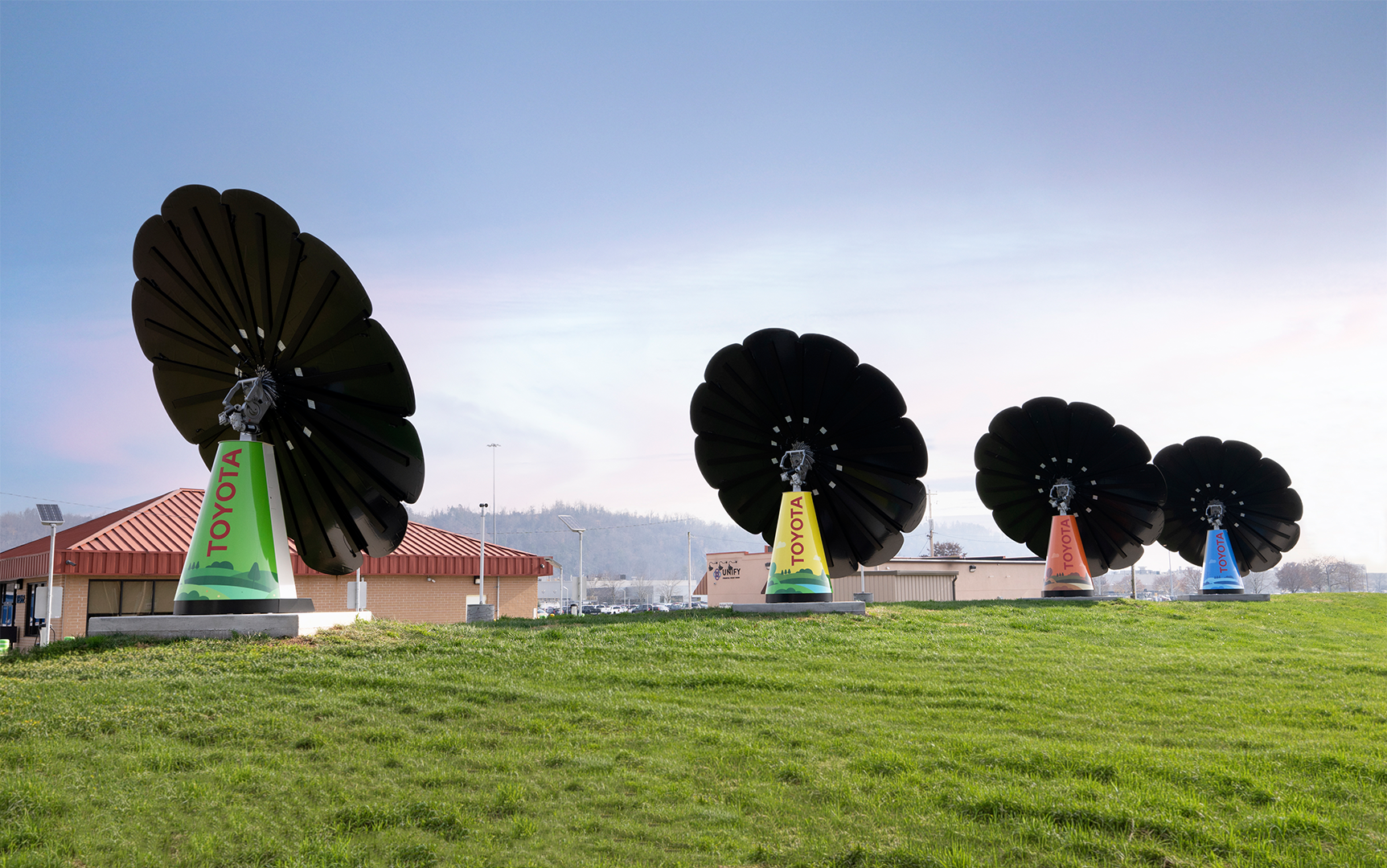
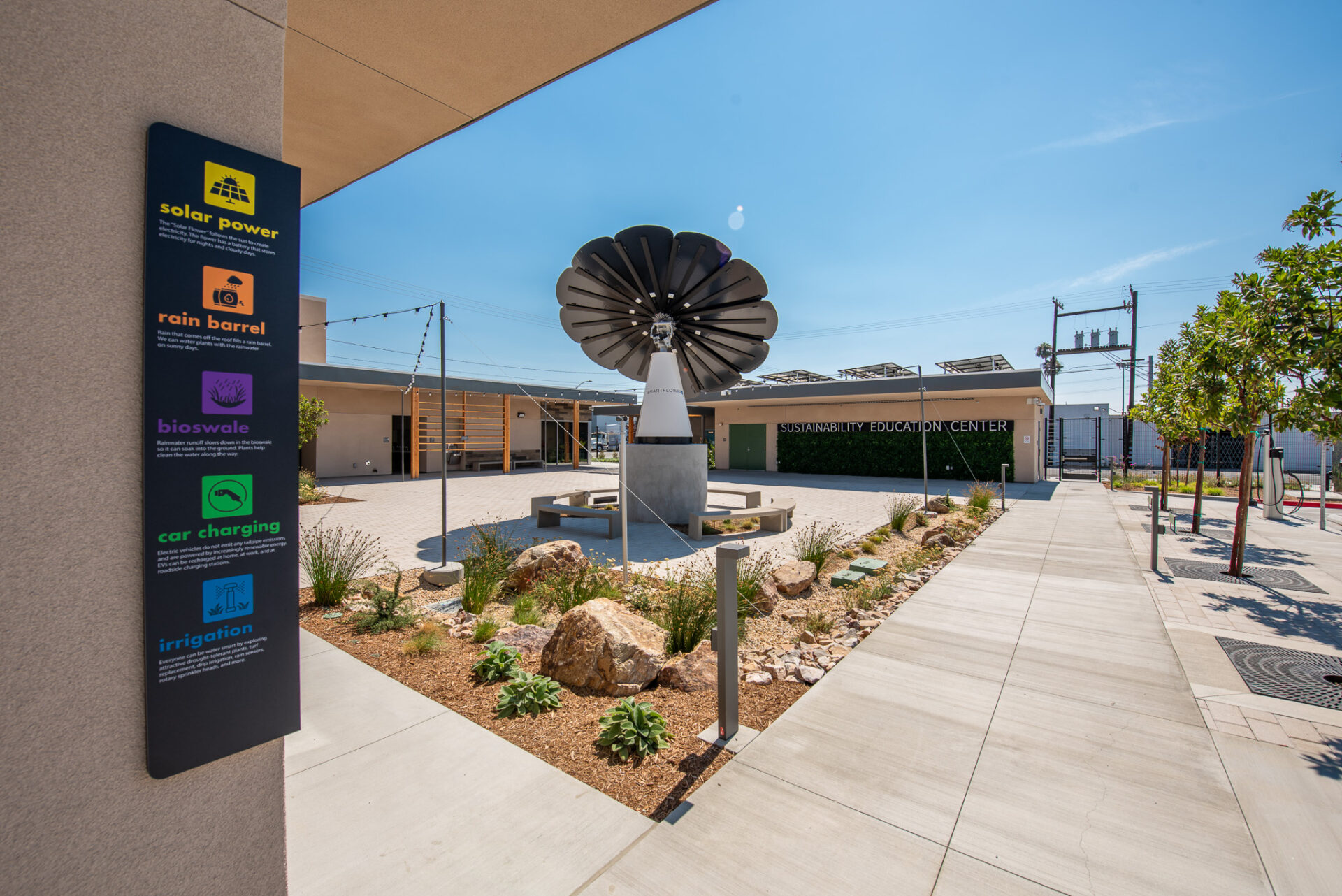
SmartFlower has found a strong market in commercial and institutional settings — corporate campuses, universities, wineries, eco-resorts, museums, schools, and healthcare facilities. Commercial units can be customized with branded messaging on the base and panels, making them a visible ESG marketing asset as well as an energy source.
Robert Chabot, Chief Operating Officer of Franklin Park Zoo New England in Boston, said: “We really liked the eye-catching look of the SmartFlower and how it is self-contained. It is a wonderful opportunity to highlight solar energy and educate guests about its importance.”
Randy Johnson, President and CEO of OakStar Bank, noted: “At OakStar we continually focus on progress that is beneficial to our organization and beneficial to our communities. The SmartFlower was a perfect fit for that focus.”
Donald Snoke, Assistant Superintendent of the Trinity Area School District in Washington, PA, said: “Our students, faculty, and staff are stunned and excited, and the community has taken notice of the innovative direction the Trinity Area School District is taking… Our Smartflowers are a definite source of pride and accomplishment for the members of the Trinity Area School District.”
Maintenance and warranty
Annual maintenance is required to keep warranty coverage active, including visual inspection and lubrication. EasyBlock recommends cleaning and lubricating the unit every three to six months depending on usage, given its exposure to the elements. SmartFlower offers a standard 2-year warranty on the complete system and passes along additional limited warranties from key component manufacturers.
Pricing and availability
SmartFlower’s starting price is $44,950 USD, before shipping and installation. This is considerably higher than a standard residential rooftop solar system, which typically runs between $15,000 and $30,000 in the U.S. depending on system size. That price covers an all-in-one, pre-assembled unit with dual-axis tracking, self-cleaning, automated storm protection, and full portability included.
Depending on location, federal and local solar tax incentives may reduce the net cost. The federal Investment Tax Credit, currently set at 30% for residential solar installations, may apply — buyers should confirm eligibility with a tax professional. SmartFlower is available through the company’s website and through an authorized dealer network for those who prefer local purchase and installation.
Source: SmartFlower