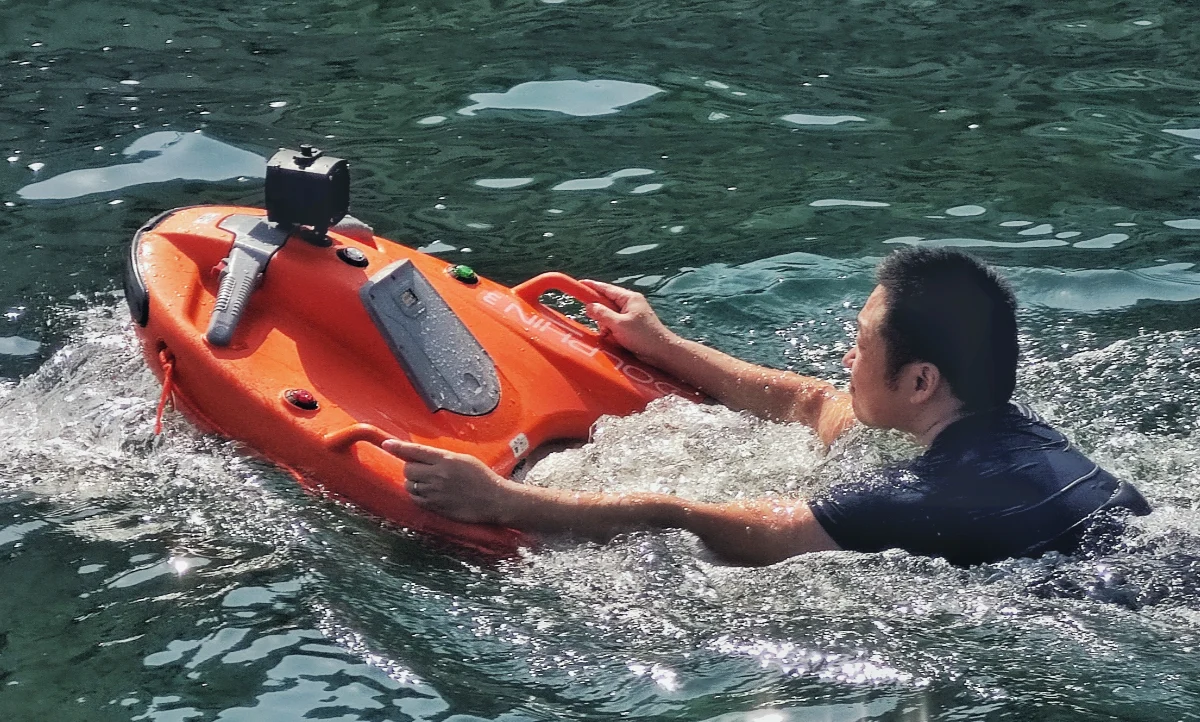
Every second counts in a water rescue. By the time a lifeguard spots a distressed swimmer, strips off equipment, and reaches them in open water, valuable time can already be lost. A Hong Kong-based robotics company called OceanAlpha is trying to close that gap with the Dolphin 3 — a smart, self-propelled water rescue device that can reach someone in trouble significantly faster than even the fastest human swimmer.
The Dolphin 3 is essentially a remote-controlled lifebuoy — compact enough to be deployed from shore or a boat, and designed to let rescuers save swimmers without entering the water themselves. It’s part of a growing category of robotic marine rescue devices, and it’s already seeing real-world deployment across multiple countries.
What it is and how it works
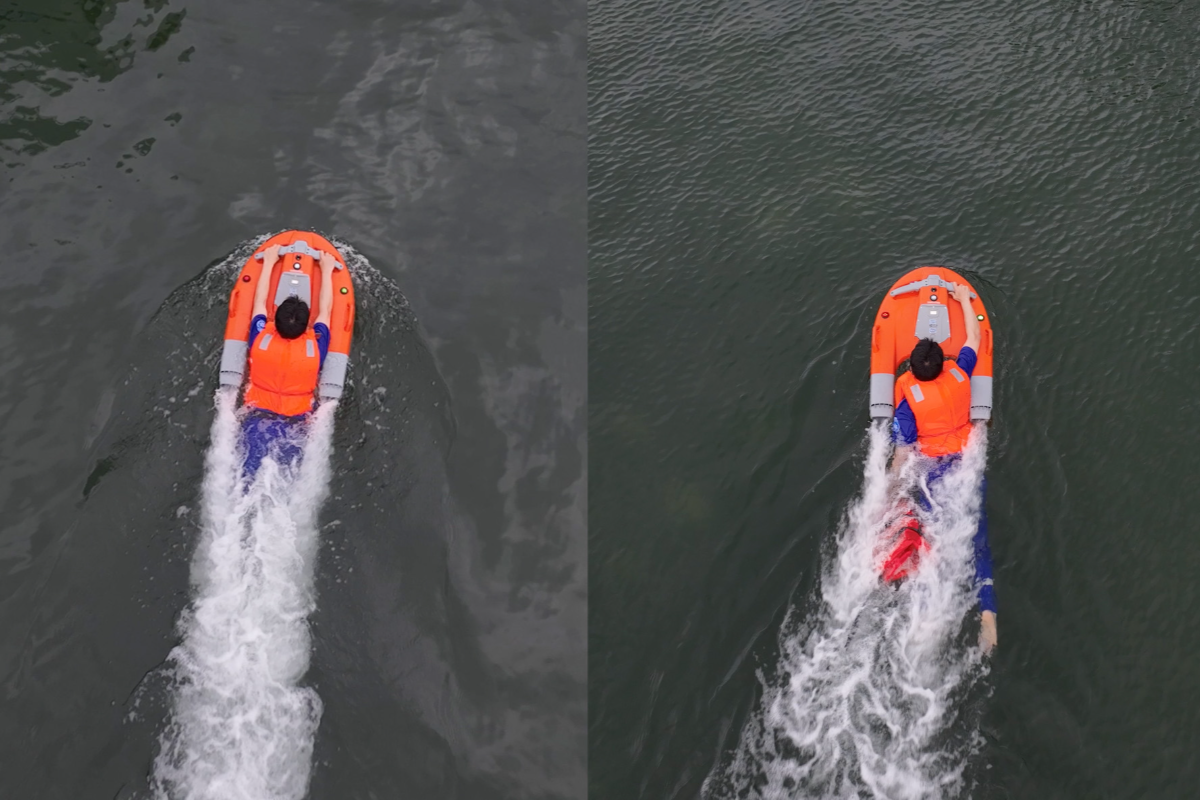
At its core, the Dolphin 3 is designed to let an operator on shore or aboard a vessel control the device remotely, directing it toward a distressed person. Once reached, the swimmer can lie on the device and be carried safely back to shore.
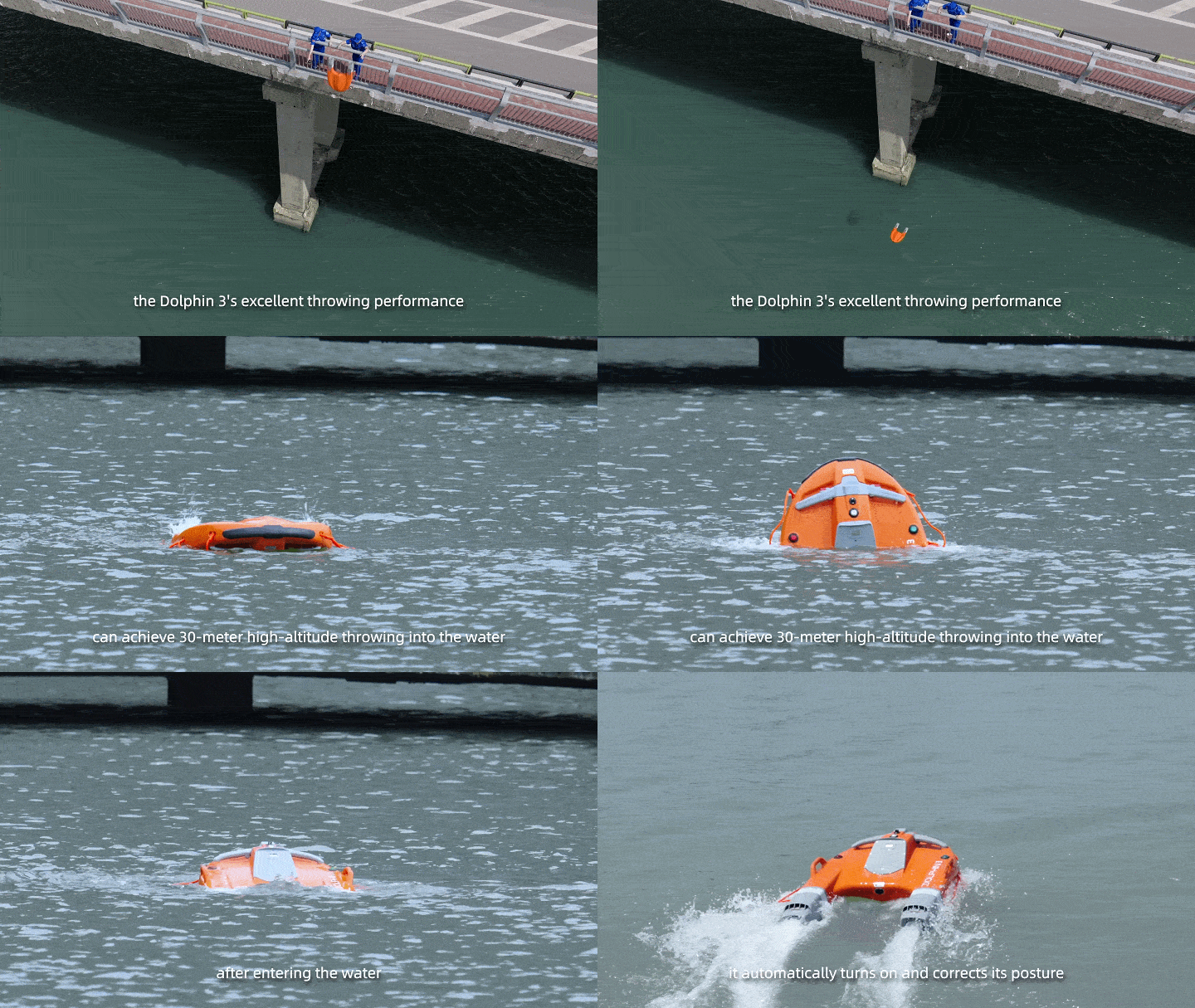
The device measures a little over a yard long and activates the moment it hits the water — removing any delay caused by manual startup. In a real emergency, that kind of automated response matters. There is no need to activate switches or wait through a startup sequence. The device enters the water, powers on automatically, and begins moving immediately.
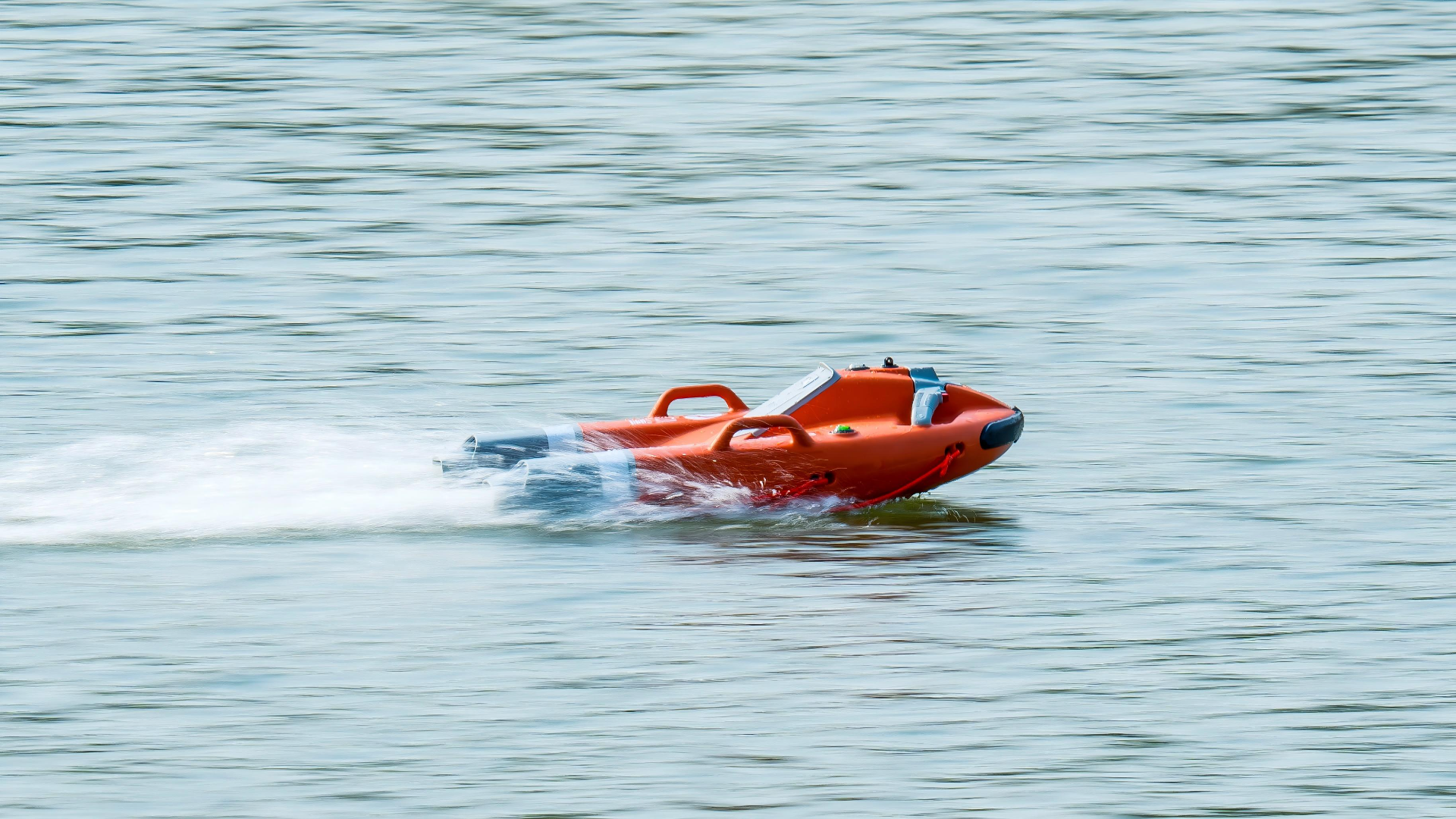
The Dolphin 3 was engineered to solve a fundamental limitation of traditional life rings: their inability to reach targets accurately. OceanAlpha says the device can reach distressed swimmers up to three times faster than Olympic-level swimmers.
Speed and towing capacity
The Dolphin 3’s top speed is 7 meters per second — approximately 16 mph or 25 km/h — when traveling unloaded toward a person in distress. That is nearly twice as fast as the first-generation Dolphin, which topped out at 3.6 m/s, helping reduce response times significantly compared with its predecessor.
When returning with survivors holding on, it slows to a more controlled 3.1 mph (5 km/h) — a speed intended to maintain stability and safety while towing people in the water.
One of the more striking specifications is its towing capacity. The Dolphin 3 can tow up to 1 metric ton — roughly 2,200 lbs — meaning it can potentially tow multiple survivors, a small lifeboat, or debris from the water. In a scenario with multiple people in trouble at once, that kind of raw pulling power is a meaningful operational advantage.
Auto-righting and instant deployment
Water rescues are inherently chaotic. Waves, current, and the act of throwing a device from shore mean capsizing is a genuine risk. The Dolphin 3 addresses this with a built-in auto-righting mechanism — exclusive to the Plus version — that uses a directional sensor to recover from a complete capsize in under 2 seconds.
Combined with the automatic water-activation on entry, this means the device can be tossed into rough surf without the operator having to worry about orientation or manual startup. The system automatically corrects itself.
Control and range
Operators can control the Dolphin 3 from up to roughly half a mile away — about 800 meters. That range is enough to cover most beach, lake, and port rescue scenarios where waterfront emergencies typically occur.
The device supports dual control modes: a remote control unit for standard operation, and a local manual override for scenarios requiring the operator to be physically closer to the action. Having both options available means there’s always a backup method of guidance in fast-moving situations.
Real-time video feed
The Dolphin 3 includes an onboard camera that streams live 1080p HD video back to a waterproof display held by the operator. This lets the rescue team see the water surface through the screen — tracking the survivor’s location, spotting debris, or identifying other hazards in real time.
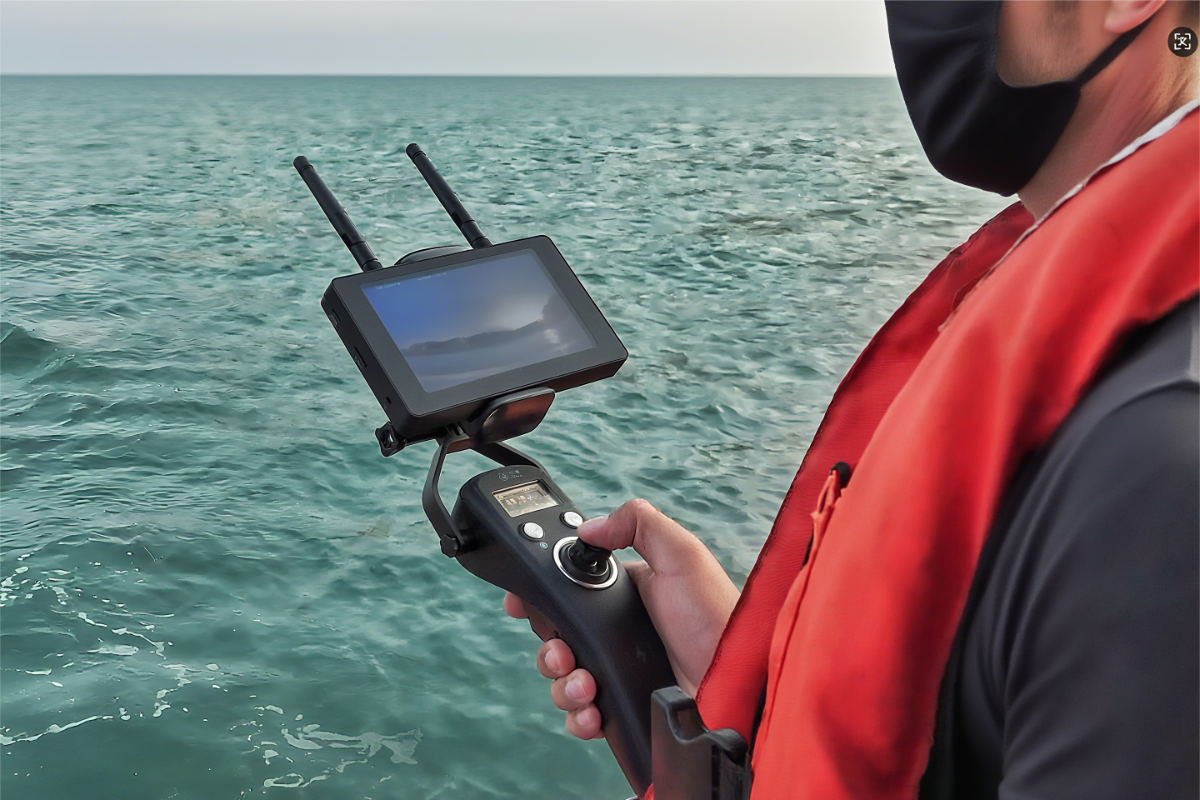
The practical value here goes beyond simple visibility. In low-light conditions, rough water, or at significant distance from shore, seeing the rescue scene from the device’s perspective gives operators considerably more situational awareness than watching from the beach.
Auto-return and low-battery recovery
The Dolphin 3 includes an auto-return system that triggers in two specific failure scenarios: if the remote signal is lost, the device uses GPS pathfinding to navigate back on its own; and if the battery drops below 15% charge — a threshold that can be customized — it also initiates an automatic return.
This is a practical feature for equipment longevity and operational reliability. Preventing rescue equipment from drifting out to sea after signal or battery loss is an important operational safeguard.
Real-world deployments
The Dolphin 3 has moved well beyond testing phases in several parts of the world.
In Germany, the device has been deployed at 14 open water swimming locations as part of a formal testing program run by the German Life-Saving Association (DLRG). The program was launched in response to a deadly 2024 season — Germany recorded 411 drowning deaths that year, the highest figure since the pandemic, and up significantly from 380 the previous year. The DLRG’s testing program gives the technology a level of professional credibility that goes beyond novelty.
In South America, DP World Lirquén became the first port in Chile to deploy the Dolphin 3. The device was introduced to help respond more quickly to potential sea-related accidents, providing immediate flotation assistance to individuals who fall overboard and facilitating their safe transport to shore.
Felipe Silva, Head of Protection at DP World Lirquén, spoke directly to the device’s operational value: “The deployment of this equipment marks a major advancement in port safety. As a terminal, we’re proud to be the first in Chile to implement this technology, which will allow us to respond more quickly and effectively to emergencies involving our personnel — without putting others at risk. This is undoubtedly a major step forward for DP World Chile.”
The Dolphin 3 is also already in consistent use by lifeguarding organizations in China, where OceanAlpha is headquartered. A sea rescue demonstration was also carried out in Laracha, Spain, led by local distributor Nordés Tech, further illustrating the device’s expanding footprint across Europe.
The bigger picture
Drowning remains one of the leading causes of unintentional injury-related death globally. Traditional water rescue approaches — relying on human lifeguards to physically enter the water — have a fundamental speed and risk limitation. Deploying a lifeguard into rough water or toward a panicking swimmer can potentially place additional rescuers at risk.
The Dolphin 3 attempts to reframe that equation: keep the human out of the water entirely, and let a robotic rescue device handle the high-risk transit to the survivor. Given its 16 mph top speed and towing capacity of over a ton, the specs suggest the device can operate in conditions that would challenge many human rescuers.
Whether it replaces human lifeguards or simply adds a faster first line of response remains to be seen. But the DLRG’s decision to test it at 14 locations, and DP World’s deployment at a working commercial port, suggest that professionals in the field are taking it seriously.
Source: OceanAlpha