Most people building or renovating a home don’t spend much time thinking about what their walls are made of. Concrete blocks go up, gypsum drywall goes in, mineral wool gets stuffed between the studs — and that’s that. Von Hanf Baustoffe, a German company out of Hohenaspe in northern Germany, is quietly offering a different path. Under the Hemplith brand, the company sells building materials made primarily from hemp — the fast-growing, pesticide-free plant — combined with lime and natural minerals. Their product range covers structural wall blocks, interior drywall boards, fiber insulation mats, and acoustic panels.
Where it comes from
Von Hanf Baustoffe — the name translates to “from hemp building materials” — is based at Bergstr. 1, 25582 Hohenaspe, Germany, with a warehouse in Schenefeld and main offices in Itzehoe. The company handles sales, technical consulting, and logistics directly.
The company’s international profile has been growing. Von Hanf was selected as a partner of the German Pavilion at Expo 2025 in Osaka, Japan — putting its hemp building materials on display alongside other examples of German industry and innovation.
Their stated position: “Building with hemp doesn’t harm the environment, but protects the climate and conserves resources.”
Why hemp works as a building material
Before getting into the products, it helps to understand what makes hemp useful in construction — because it’s not obvious at first glance.
Hemp grows fast. From seed to harvest takes about five months, and the plant doesn’t need synthetic fertilizers or pesticides to do it. Von Hanf states that roughly 1 to 2 hectares of farmland can produce enough hemp biomass per year to supply raw materials for a small single-family home.
The more interesting claim is around carbon. Hemp absorbs CO₂ as it grows, and that carbon stays locked inside the finished building material for the life of the structure. Von Hanf says its products carry a CO₂-negative balance — they pull more carbon out of the atmosphere than they put in. That puts them in a different category from concrete or conventional insulation, both of which have significant embodied carbon.
On the practical side, hemp-based materials are naturally breathable — or “diffusion-open” in construction terms — which means they regulate indoor humidity rather than trapping moisture. This suppresses mold. They’re fire-resistant, rated at fire protection class B-s1, d0. They’re naturally insect-repellent. They contain no formaldehyde. And they carry no hazard warnings — which, for anyone who’s ever handled fiberglass batt insulation, is a noticeable difference.
The Hemplith Block range
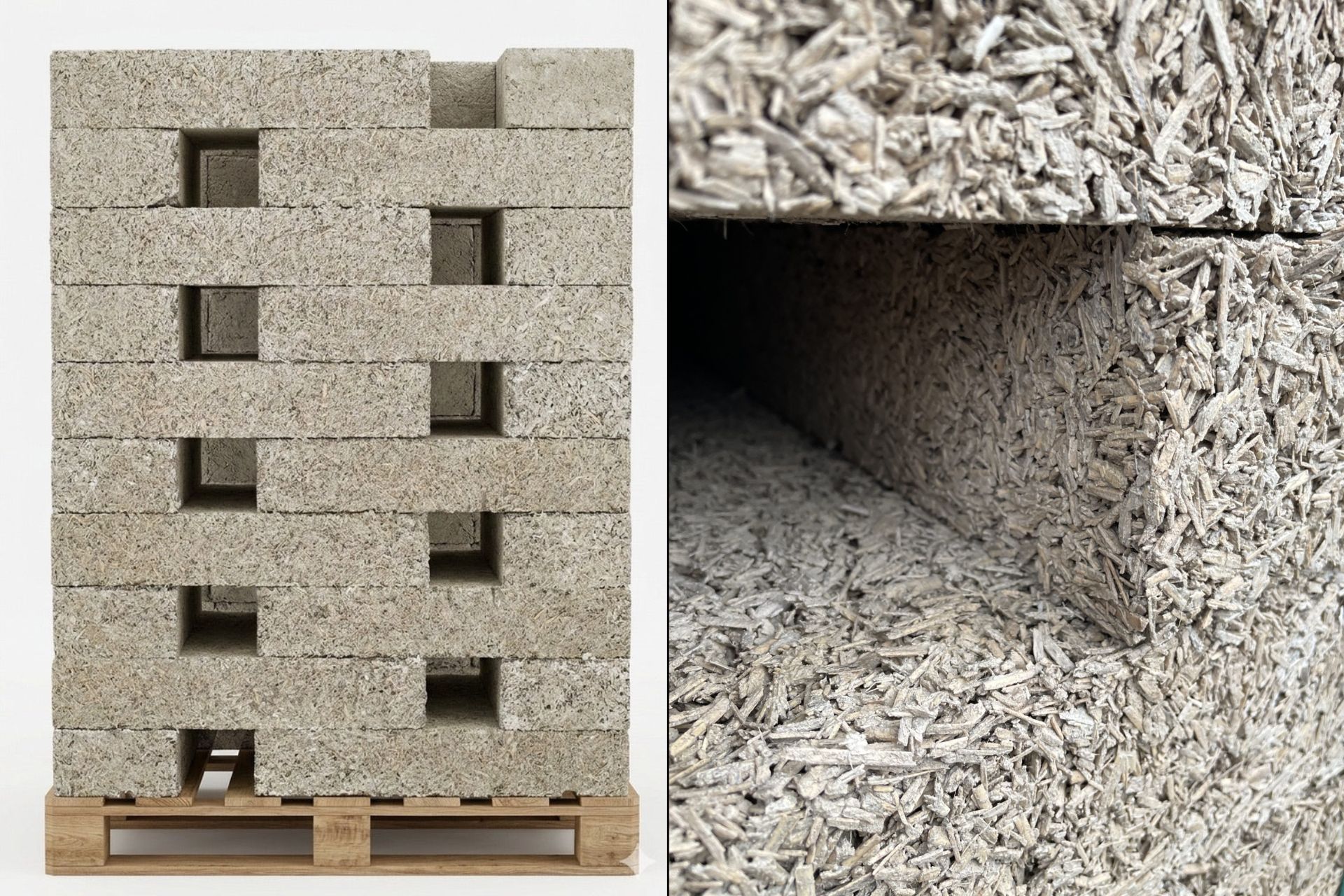
The hemp blocks — called Hempstones — are the most structurally substantial product in the lineup. Each block is a prefabricated masonry unit made by binding hemp hurds (the woody inner core of the hemp stalk) with natural lime and minerals. The blocks are solid and monolithic, meaning a single wall layer handles both structure and insulation — no separate insulation system needed.
The blocks have a bulk density of around 340 kg/m³, which is significantly lighter than traditional fired brick and closer to aerated concrete in feel and workability. They’re fireproof, mold-inhibiting, rodent-resistant, and fully recyclable. On the thermal performance side, von Hanf says the blocks meet passive house and KfW energy efficiency standards — specifically KfW 55 through KfW 40 Plus — without any added insulation layer. KfW is Germany’s national development bank, and its efficiency house standards are among the most stringent in Europe for residential construction.
Processing is straightforward. The blocks are laid with insulating mortar or lime mortar, and they cut with the same tools used for aerated concrete — aerated concrete saws, band saws, alligator saws, and hand saws. Finish plaster needs to be breathable, so slaked lime, lime plaster, or clay plaster are the right choices here.
One reference format is the Hempstone 30, which measures 30 × 60 × 30 cm (roughly 12 × 24 × 12 inches), with about 5.5 blocks covering one square meter of wall surface.
Von Hanf sells five thickness variants through hemplith.com, priced per pallet:
- Hemplith Block 7 PAL — €570.00
- Hemplith Block 11 PAL — €475.00
- Hemplith Block 15 PAL — €475.00
- Hemplith Block 20 PAL — €435.00
- Hemplith Block 25 PAL — €425.00
The number in the name refers to the block thickness in centimeters. Thinner blocks cost more per pallet, likely reflecting the higher piece count required to fill a pallet at a smaller format.
The Hemplith Drywall Board range
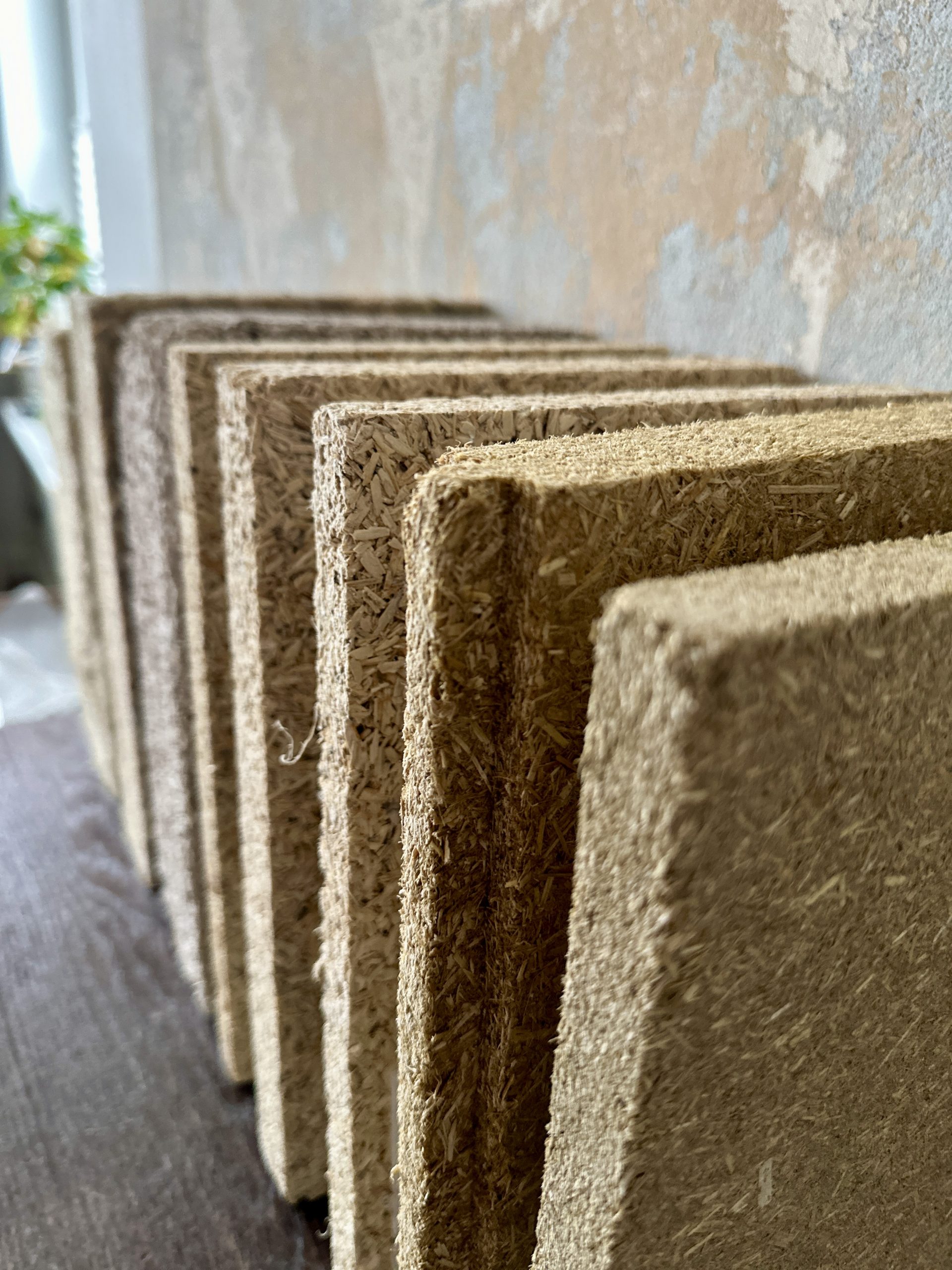
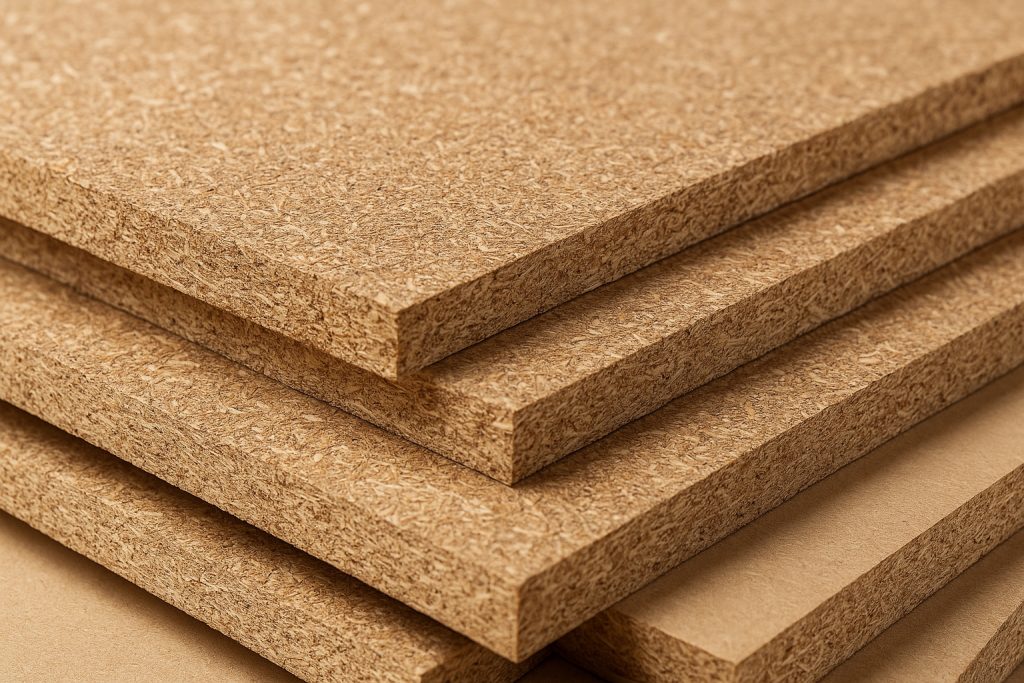
For interior work, von Hanf offers the Hemplith Drywall Board — a lightweight dry construction panel made from hemp hurds and natural minerals. These aren’t structural. They’re designed as interior wall cladding, plaster bases, partition walls, and interior insulation panels for existing buildings — the hemp equivalent of what standard gypsum board does in conventional construction, but with better moisture regulation and no formaldehyde.
The 30 mm panel format measures 1200 × 600 × 30 mm (about 47 × 24 inches). Installation follows standard drywall logic: mount to a substructure with a maximum stud spacing of 40 cm (about 16 inches) for walls, and 30 cm for ceiling or sloped applications. Adhesive mortar is applied with an 8–10 mm notched trowel. Ceiling panels should also be mechanically fastened with screws and washers.
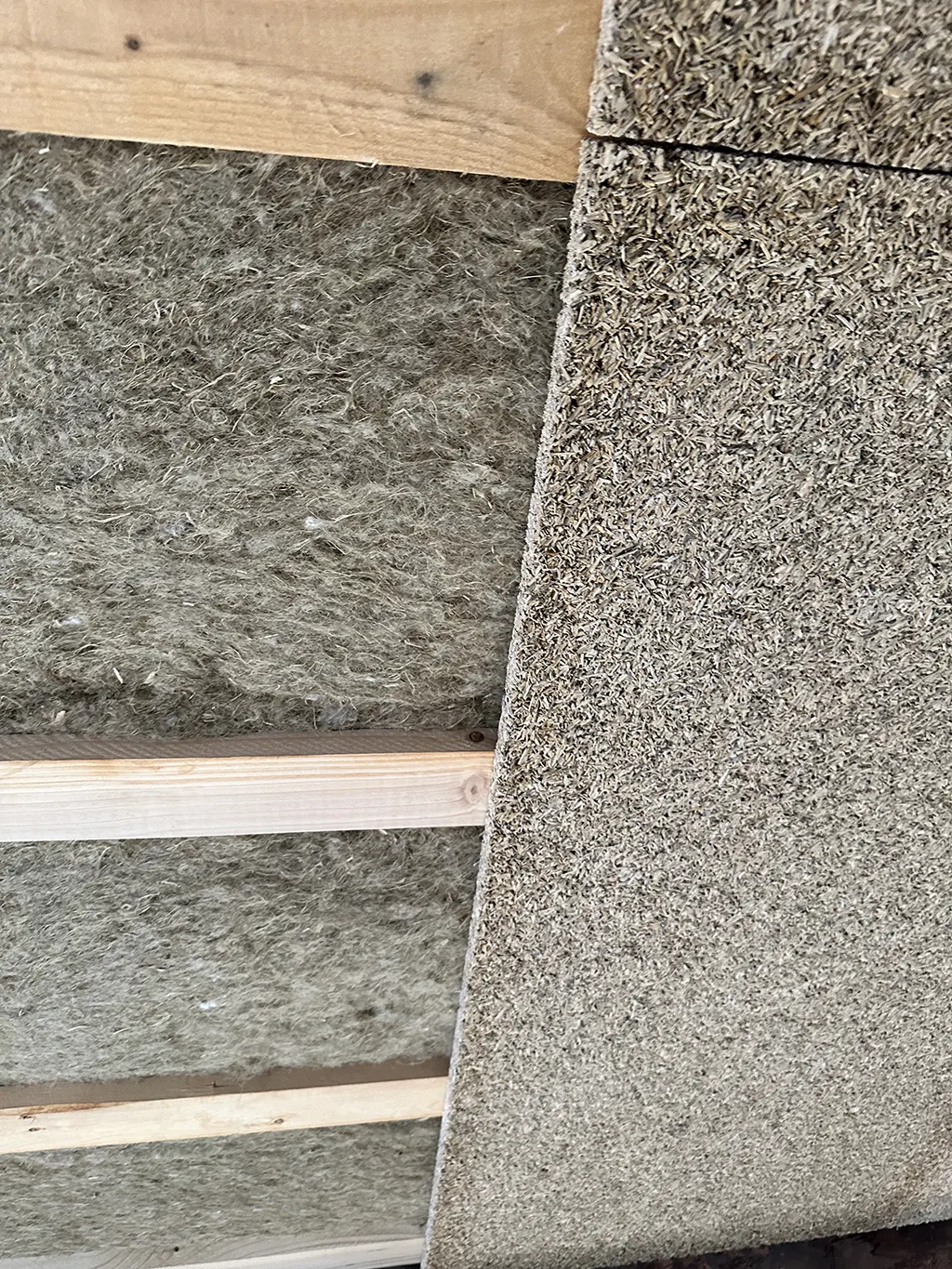
One important compatibility note: don’t finish these boards with diffusion-tight coatings like standard emulsion paint or regular wallpaper. Doing so would seal the panel and block the moisture-regulating function it’s built to deliver. Lime plaster and clay plaster work. Standard latex paint doesn’t.
Two pallet options are available:
- Hemplith Drywall Board 18 PAL — €1,407.56
- Hemplith Drywall Board 30 N+F PAL (tongue-and-groove profile) — €1,113.31
No hazard warnings, no formaldehyde. The boards can be cut with a jigsaw, hand saw, circular saw, or band saw.
Hemplith Flex insulation
The Hemplith Flex is a hemp fiber insulation mat, produced in a 60 × 110 cm format (roughly 24 × 43 inches) in multiple thicknesses. These mats are approved for all compartment types — roof, wall, and floor. They clamp between roof beams without requiring additional fasteners and can be cut with a standard serrated saw or insulation saw.
Flex mats are compatible with the Hemplith drywall boards, wood fiber boards, and the Silentlith acoustic panels from the same company. Like the blocks and boards, the moisture-regulating properties of hemp fiber make it a natural pairing with lime and clay plaster systems.
Universal LDF and Silentlith acoustic panels
The Hemplith Universal LDF is a low-density fiberboard based on straw rather than hemp — a distinction worth noting. It has a bulk density of approximately 580 kg/m³ and a thermal conductivity of λ = 0.115 W/m·K. It’s formaldehyde-free, based on an annually renewable raw material, and intended for non-load-bearing interior wall cladding and dry construction. Like the hemp boards, it should not be finished with diffusion-tight coatings.
The Silentlith acoustic panels are a separate product line focused specifically on sound absorption. They’re sold under the Silentlith brand name and sit alongside the Hemplith range as part of von Hanf’s broader natural building materials offering.
Who this is actually for
Hemp building materials from von Hanf are a genuinely practical fit for a specific kind of project. Architects and builders working on energy-efficient new construction will find the Hemplith block system appealing as a monolithic wall solution — one material that handles structure and insulation together, simplifies the build, and lands inside KfW passive house standards.
For renovation work, particularly on older buildings, half-timbered homes, or listed structures, the breathable and moisture-regulating properties of the boards and blocks are especially relevant. These are building types where vapor barriers and synthetic insulation often cause more problems than they solve.
They’re also clearly aimed at anyone working toward a CO₂-neutral or carbon-negative construction target.
Where they don’t make sense: foundation applications (hempcrete isn’t used for load-bearing below-grade work), or any project where upfront material cost is the primary decision driver. Conventional concrete block and standard gypsum board will still be cheaper per unit.
Pricing and availability
Products are available through hemplith.com, which ships across Europe and accepts multiple currencies. For anyone wanting to see and feel the materials before ordering by the pallet, von Hanf offers a physical sample box — the Musterbox mit Hemplith Baustoffen — for €29.95 (approx. $33 USD).
Block pallets range from €425.00 (approx. $470 USD for Block 25 PAL) to €570.00 (approx. $630 USD for Block 7 PAL). Drywall board pallets come in at €1,113.31 (approx. $1,230 USD for Drywall Board 30 N+F PAL) and €1,407.56 (approx. $1,555 USD for Drywall Board 18 PAL). The company also sells von Hanf BioMulch — 20 kg of hemp shives including shipping — at €35.95 (approx. $40 USD), or a base rate of €0.18 (approx. $0.20 USD) per liter.
Source: vonHanf