Concrete and steel have dominated construction for generations, but they come with a heavy environmental footprint. At the same time, many modern timber buildings rely on glues, metal fasteners and permanent connections that make them difficult to dismantle or reuse at the end of their life.
German company TRIQBRIQ is taking a very different approach.
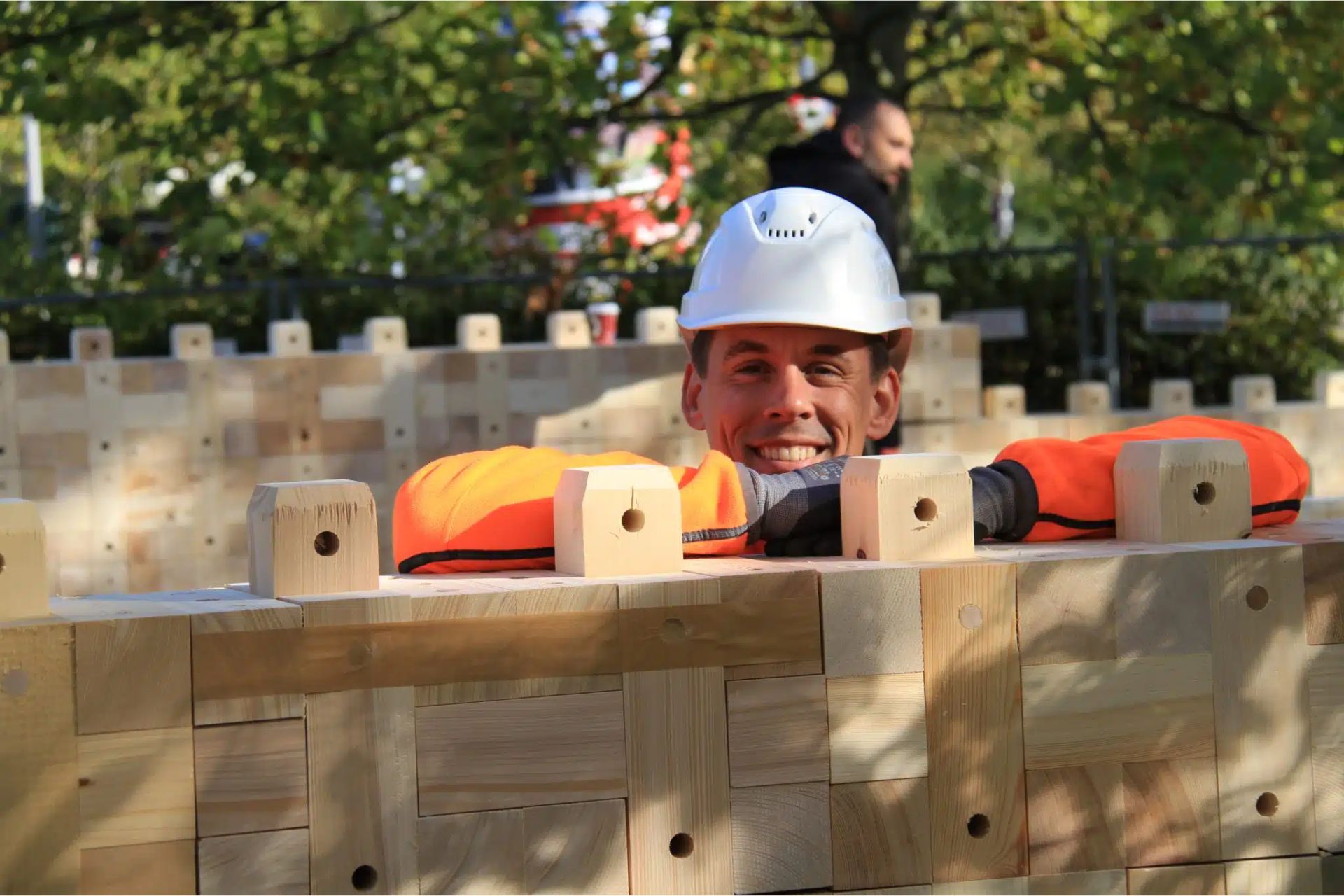
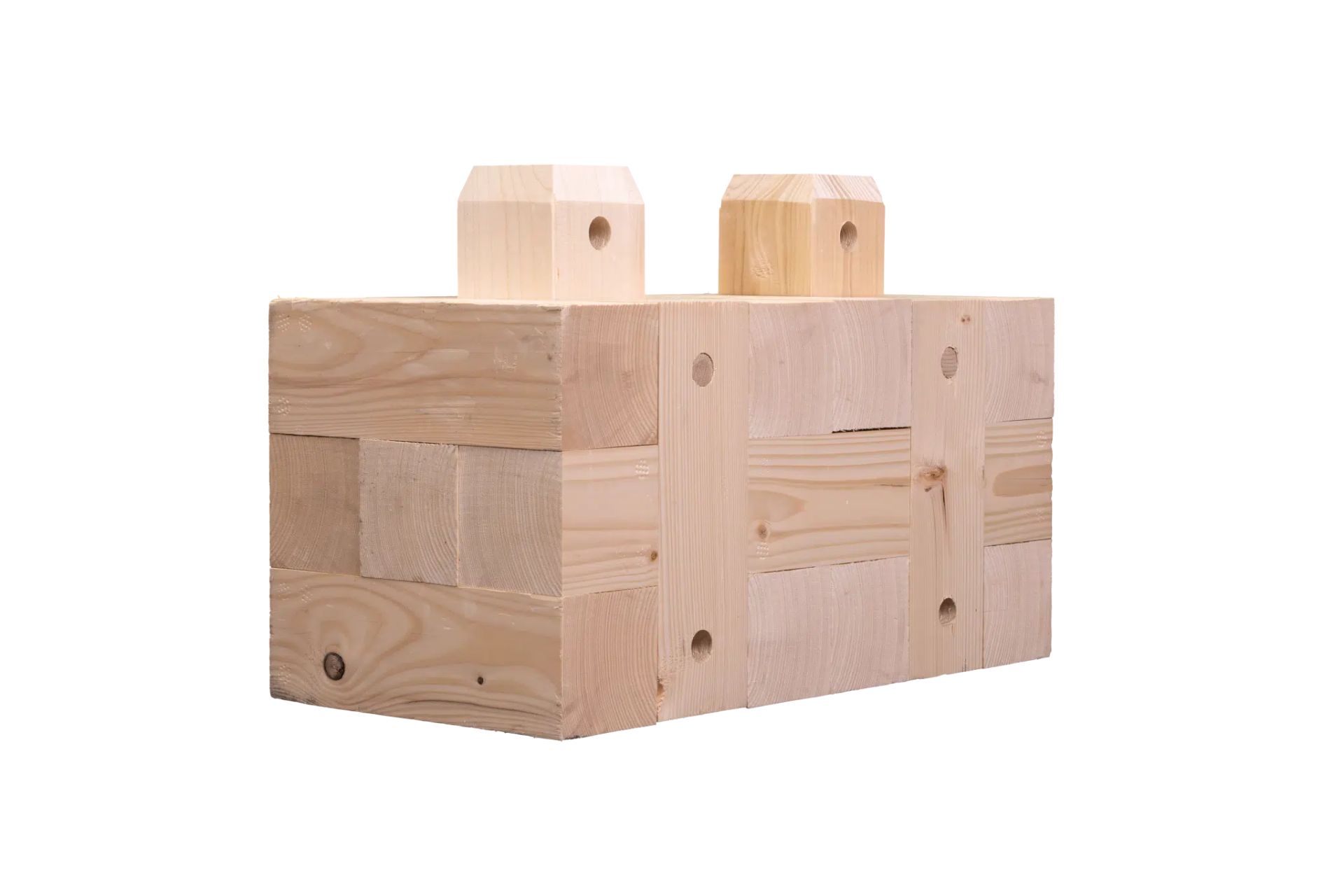
Instead of large timber panels or conventional framing, it has developed a construction system made from thousands of small, precision-machined wooden blocks called BRIQs. These blocks stack together like oversized building bricks and are locked in place using solid beech wood dowels—without glue, nails or metal connectors in the structural wall.
The result is a solid timber building system designed not only for fast construction, but also for easy disassembly and genuine material reuse.
Building with wooden “bricks”
At first glance, a TRIQBRIQ wall almost looks like it’s being built with oversized wooden LEGO pieces.
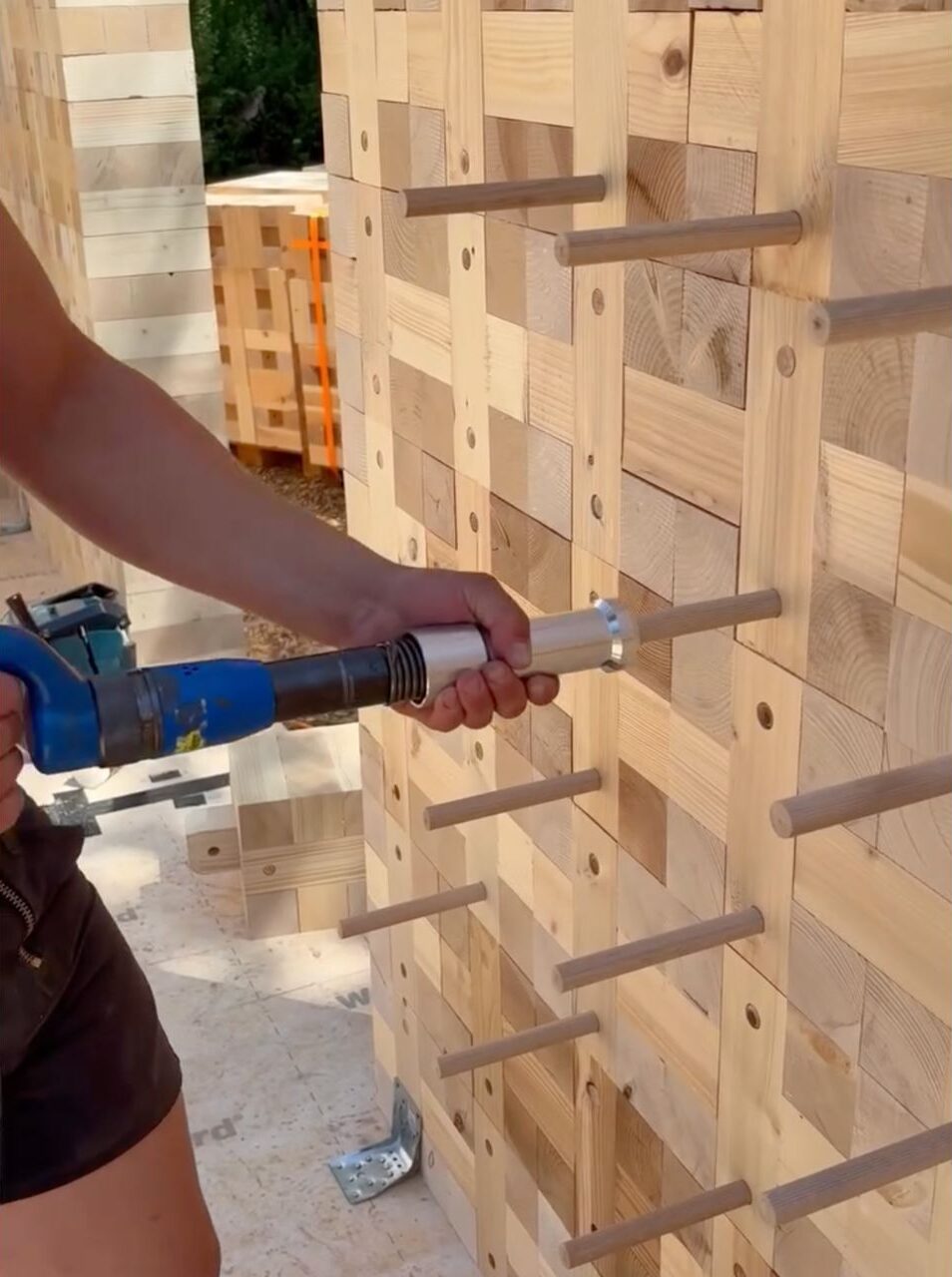
Each BRIQ is manufactured with precise interlocking profiles that allow it to fit securely with the surrounding blocks. During construction, installers simply stack the blocks layer by layer before inserting hardwood beech dowels vertically through the aligned openings.
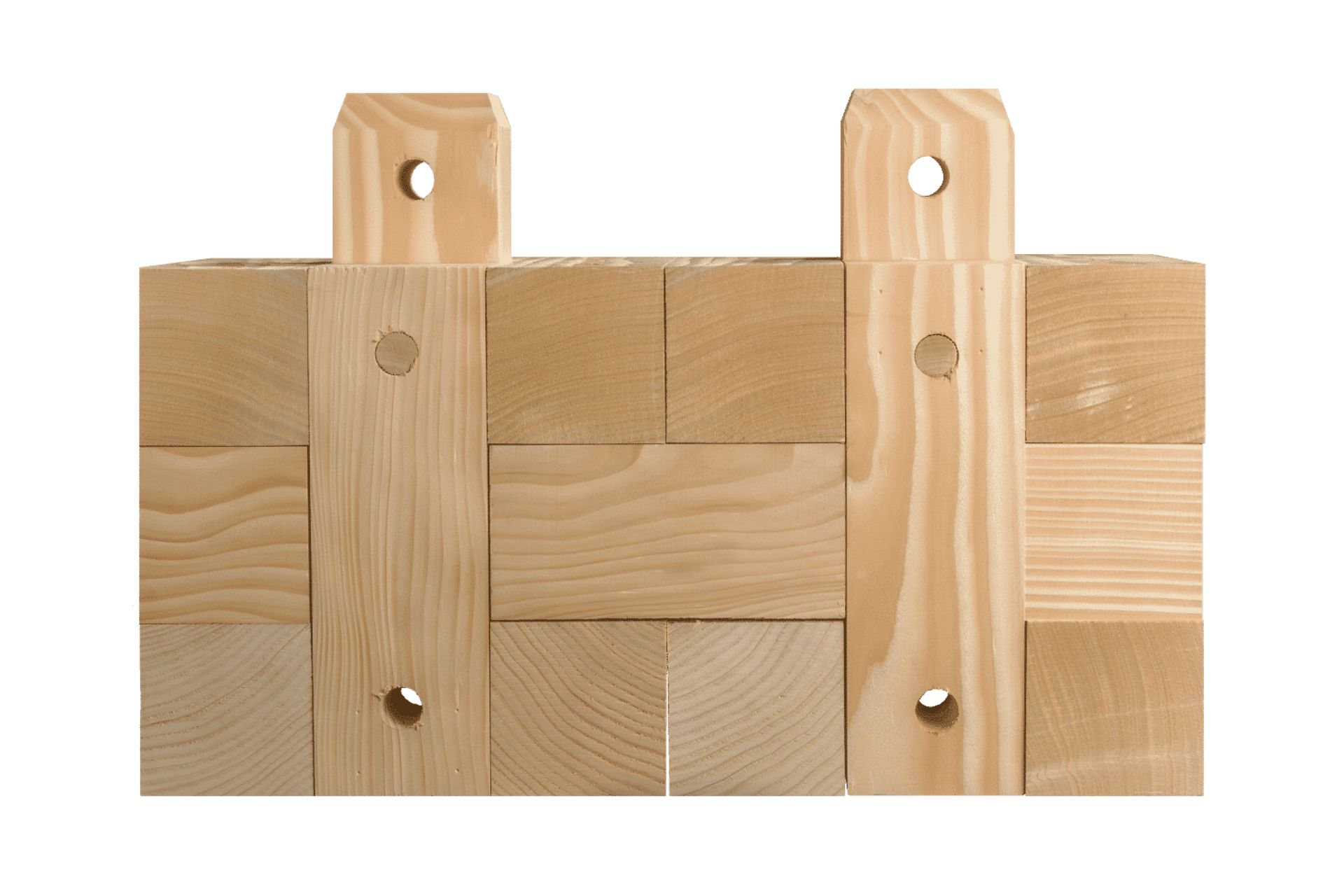
These dowels lock multiple layers together, creating a rigid solid timber wall without requiring adhesives or permanent mechanical fasteners.
Because every connection is dry-assembled, the entire structure can theoretically be taken apart in the future, allowing the same building blocks to be reused in another project instead of being demolished and discarded.
That philosophy forms the foundation of what TRIQBRIQ calls circular construction.
Made from timber that often goes unused
One of the most interesting aspects of the system is the material itself.
Rather than relying only on premium-grade lumber, TRIQBRIQ manufactures its BRIQs using industrial softwood sourced from lower-grade timber, including storm-damaged trees, bark beetle-damaged wood and reclaimed timber that would often have far fewer high-value uses.
Robotic manufacturing ensures every block is machined to tight tolerances regardless of where the wood originated.
This not only helps utilize more of each harvested tree but also gives damaged timber a long-term purpose as a structural building material.
No glue means easier recycling
Many engineered timber products achieve their strength using large quantities of structural adhesives.
TRIQBRIQ deliberately avoids that approach.
Since the walls rely on wooden blocks and hardwood dowels instead of glue, individual components remain separate materials throughout the building’s life.
That offers several potential advantages:
- Individual BRIQs can be replaced if damaged.
- Entire wall sections can be dismantled rather than demolished.
- Building components can potentially be reused in future projects.
- Material separation at end-of-life becomes much simpler.
Instead of becoming construction waste, the structural components are intended to remain valuable building materials.
Two wall systems for different applications
The company currently offers two primary wall systems.
The WS25 serves as the external load-bearing wall. As its name suggests, it creates a 25-centimetre-thick solid timber wall assembled from standardized BRIQs. Compared with the previous generation, WS25 is approximately five centimetres slimmer while also being lighter and easier to install. The redesign also improves dismantling, reinforcing the company’s circular construction goals.
For internal partitions, TRIQBRIQ developed the WS15, a 15-centimetre-thick solid wood wall system. It integrates seamlessly with WS25 while maintaining the same glue-free construction philosophy.
Together, the systems allow builders to create complete timber buildings using the same modular approach throughout the structure.
Fast, precise on-site assembly
Much of the work happens before the building materials even reach the construction site.
Industrial robots manufacture the BRIQs with consistent dimensions, allowing installers to assemble walls quickly without cutting, trimming or extensive adjustment.
Because the system is dry-assembled, there is no curing time for adhesives or wet construction materials.
The process is closer to precision assembly than traditional masonry, reducing waste generated during installation while simplifying logistics on site.
The construction process shown in TRIQBRIQ’s demonstration videos highlights just how quickly solid timber walls can take shape as the blocks and dowels are assembled.
Locking carbon inside the building
Wood naturally stores carbon absorbed while trees grow.
By using solid timber as the primary structural material, buildings effectively become long-term carbon storage.
According to TRIQBRIQ, its construction system stores approximately 177 kilograms of CO₂ per square metre of wall area, while also reducing the need for more carbon-intensive materials such as concrete and steel.
Combined with the ability to reuse building components, the company believes its system can significantly reduce the environmental impact of future construction.
From experimental idea to real buildings
TRIQBRIQ is no longer limited to research projects or demonstration structures.
The company has completed residential buildings, commercial projects and larger public developments using its timber construction system.
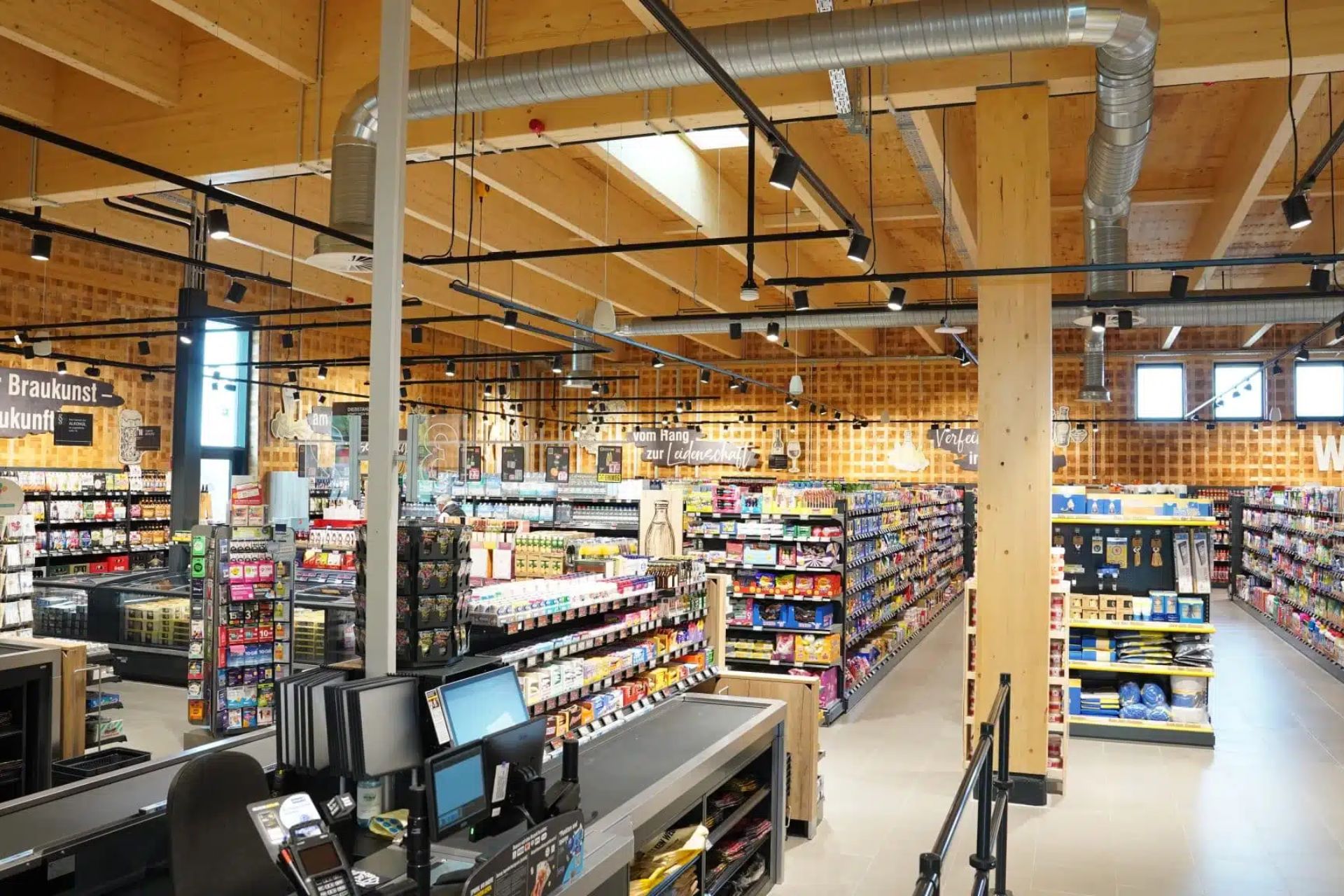
One notable milestone was the completion of Germany’s first supermarket built using the TRIQBRIQ system, demonstrating that the technology can be applied well beyond single-family homes.
As more architects and developers explore lower-carbon construction methods, systems like TRIQBRIQ are attracting growing attention across Europe.
The company has also received recognition including the German Sustainability Award 2025, highlighting its contribution to circular building practices.
How much does TRIQBRIQ cost?
TRIQBRIQ lists prices for two standard BRIQ variants used in its WS25 wall system.
The larger BRIQ 25-50 is priced at €29.15 per block, while the smaller BRIQ 25-25 costs €14.87 per block. Both prices exclude statutory VAT and transportation costs.
The company notes that discounts may be available depending on the quantity ordered. Since the total number and combination of BRIQs will vary with each building, customers can request a project-specific offer based on the size and design of their planned structure.
A different way of thinking about buildings
Perhaps the most revolutionary aspect of TRIQBRIQ isn’t simply that houses can be built from wooden blocks.
It’s that the company questions a long-standing assumption in construction—that buildings should be permanent, impossible to dismantle and ultimately destined for demolition.
Instead, TRIQBRIQ treats buildings more like assembled products.
If future generations no longer need a particular building, its walls could potentially be disassembled, the wooden BRIQs recovered and used again elsewhere.
Whether this approach becomes mainstream remains to be seen.
But by combining robotic manufacturing, glue-free mass timber construction and genuinely reusable building components, TRIQBRIQ offers an intriguing glimpse into what the future of sustainable construction could look like.
Source: TRIQBRIQ