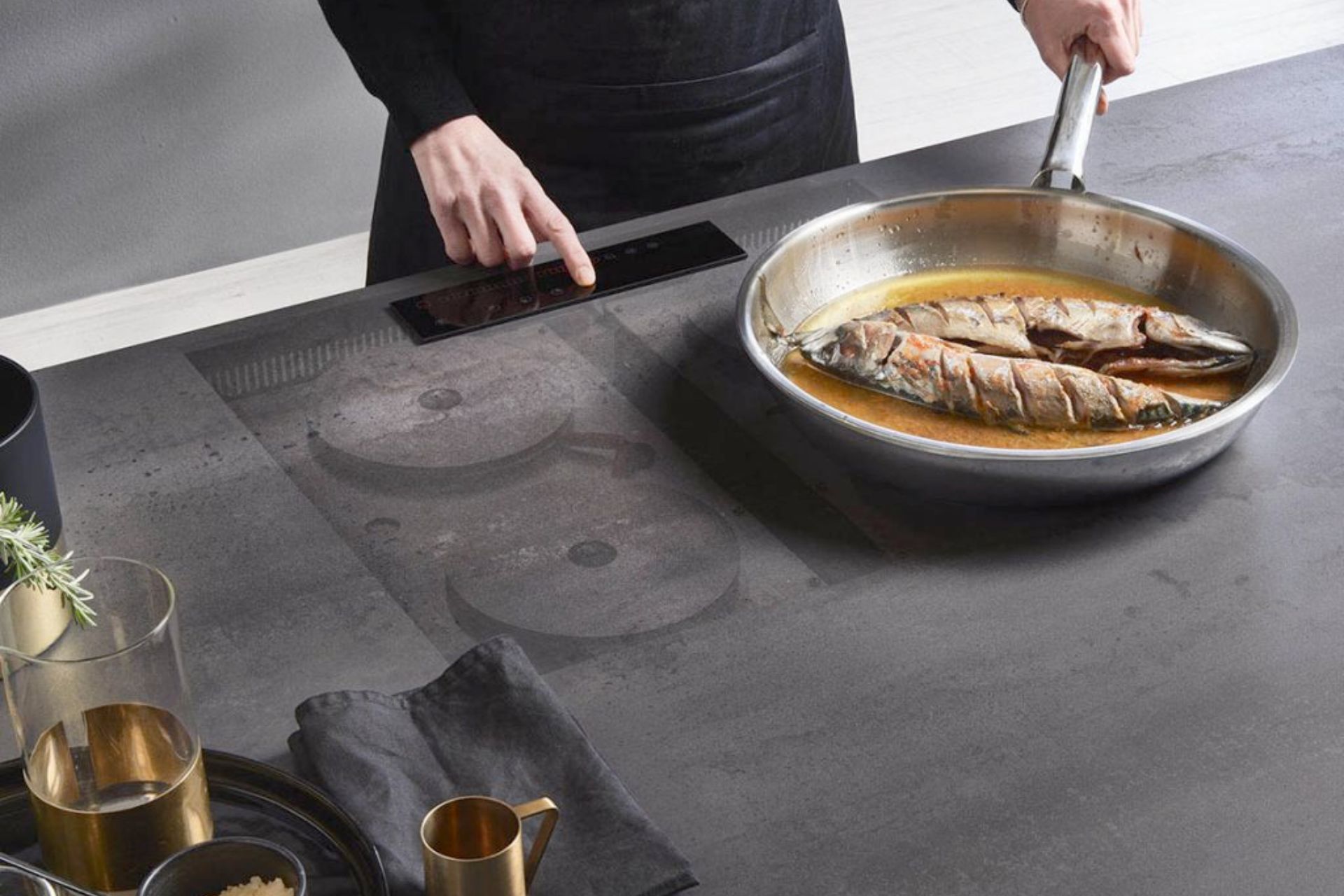
A new approach to induction cooking allows homeowners to use their kitchen countertop as both a workspace and a cooking surface. Unlike conventional cooktops with visible burners or glass tops, this system installs the induction unit beneath the countertop surface, delivering heat directly to compatible cookware through the stone or ceramic above it. The result is a nearly uninterrupted countertop that functions as a work area when not in use and a cooking zone when activated.
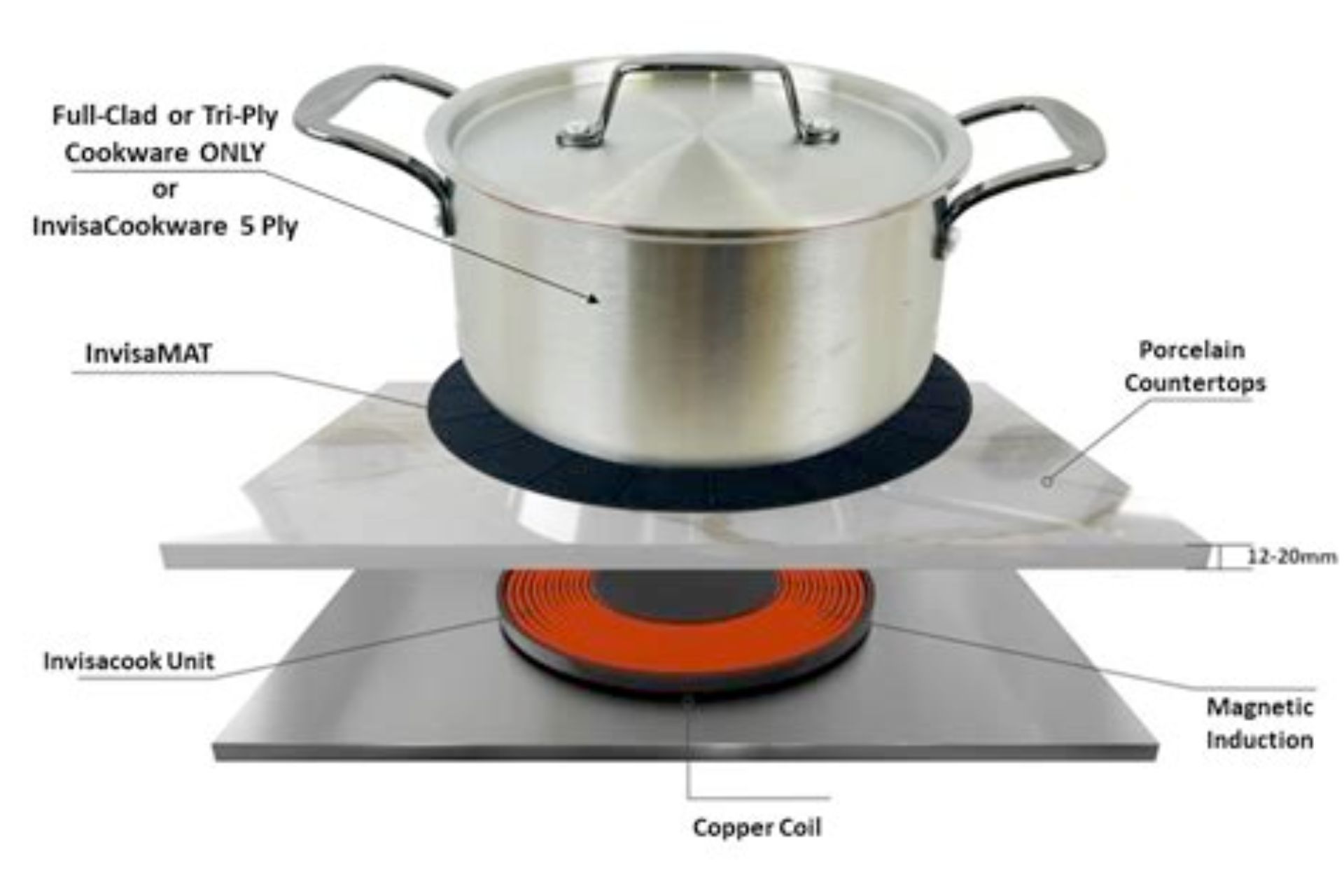
The underlying technology is based on induction cooking, which uses an electromagnetic field to heat the cookware itself rather than relying on thermal conduction from a flame or electric element. In traditional induction cooktops, a coil beneath a ceramic glass surface generates a magnetic field that induces electrical currents in ferrous cookware, causing it to heat quickly and with high efficiency. Because the surface does not become as hot as a gas flame or electric coil, induction cooking is considered more energy-efficient and safer, with reduced excess heat in the kitchen.
In the hidden cooktop design, similar induction coils are installed under the countertop, allowing homeowners to place pots and pans directly on the work surface. The cooktop remains invisible when not in use, preserving the aesthetic of materials such as porcelain, sintered stone, or other heat‑resistant surfaces. Applicable countertop materials are selected for their heat resistance and non‑porous characteristics, with large‑format porcelain slabs often recommended due to their durability and ability to transfer induction energy efficiently. Granite and other natural stones may also be used in some installations, though manufacturers sometimes note these carry risk depending on the specific material and thickness.
Operation is straightforward: when compatible cookware is placed on the countertop over an induction zone and the system is turned on, the magnetic field penetrates the countertop material and heats the pan. Only cookware with a ferromagnetic base — typically stainless‑steel or multi‑layer clad pots and pans — will work with this system, while non‑magnetic materials like aluminum, copper, or glass will not heat unless they have a magnetic layer added.
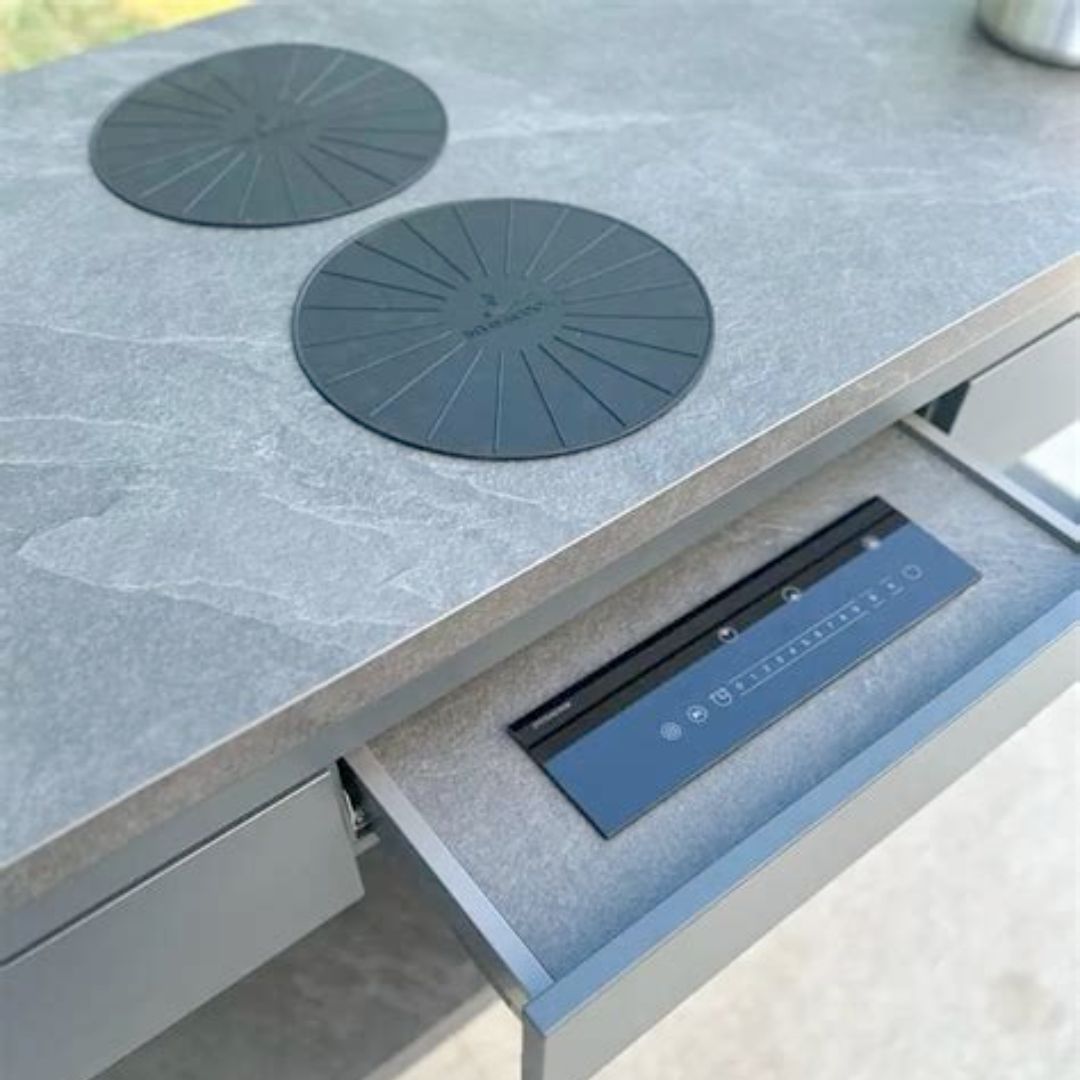
One practical consideration with this setup is knowing where the induction zones are located. Because they are hidden, some installations use subtle surface markings, audible beeps when the system is searching for cookware, or app‑based controls to help the user align pans with the induction coils. Some systems offer control through an app or a hidden panel, further integrating the technology into smart‑home setups.
Proponents of the hidden induction design point out its advantages in terms of workspace and cleanliness. With no exposed burners or cooktop edges, the countertop remains easy to clean after use, and the absence of direct heat from the surface reduces the likelihood of accidental burns. The technology also supports the increasing trend toward minimalist and multifunctional kitchen layouts, where surfaces serve multiple purposes without visual clutter.
While the aesthetic and functional benefits are clear, costs for these systems can vary depending on configuration and installation complexity. According to a 2025 pricing guide from InvisaCook of South Florida, smaller units with two to four cooking zones typically start around $2,500 to $4,000 for the hardware alone. Additional expenses for installation, compatible countertop materials, and fabrication work can significantly increase the total cost, especially in customized kitchen layouts.
Overall, hidden induction cooking represents an evolution in kitchen design that prioritizes flexible use of space and integration of cooking technology with daily living areas. As materials and installation techniques continue to develop, this approach may become a more common alternative to traditional cooktops in modern homes.
Source: InvisaCook