

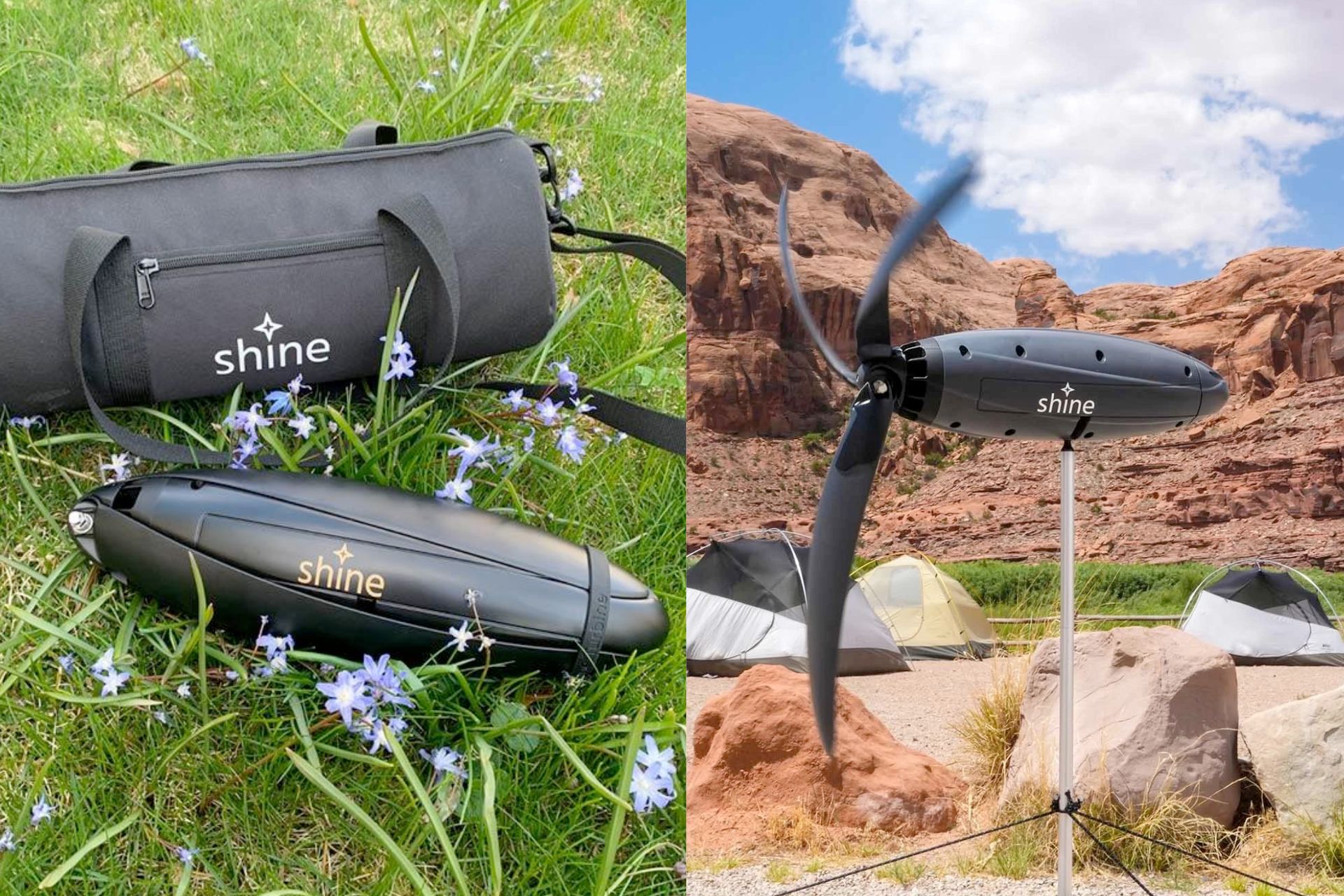
As portable power solutions continue to evolve, solar panels have become the default choice for campers and off-grid users. But they come with a limitation that’s hard to ignore—once the sun goes down, power generation stops. That gap is exactly where the Shine 2.0 portable wind turbine is trying to make a difference.
Developed by Aurea Technologies, Shine 2.0 is a compact wind-powered generator designed to fit inside a backpack while offering a practical way to generate electricity in windy conditions, day or night.
A foldable wind turbine you can carry anywhere
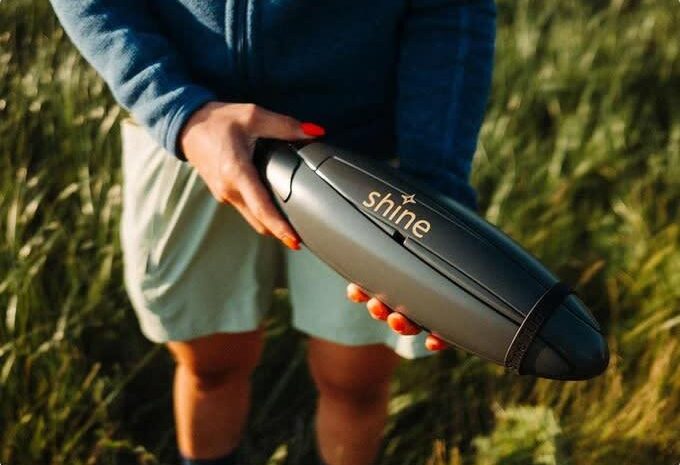
One of the standout features of Shine 2.0 is its portability. The turbine folds down to roughly the size of a water bottle and weighs about 3 pounds (around 1.4 kg). This makes it significantly easier to carry compared to traditional wind generators, which are often bulky and fixed installations.
Setting it up is straightforward. The device unfolds into a small three-blade turbine mounted on a tripod. Once positioned in a windy area, it automatically aligns itself with the wind and begins generating power.
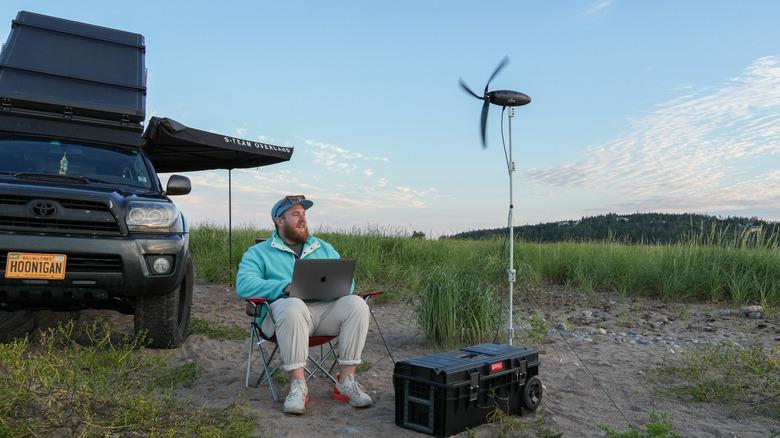
This kind of setup makes it particularly suitable for:
- Beach campsites
- Mountain ridges
- Open plains
- Overlanding trips
Power output and charging capabilities
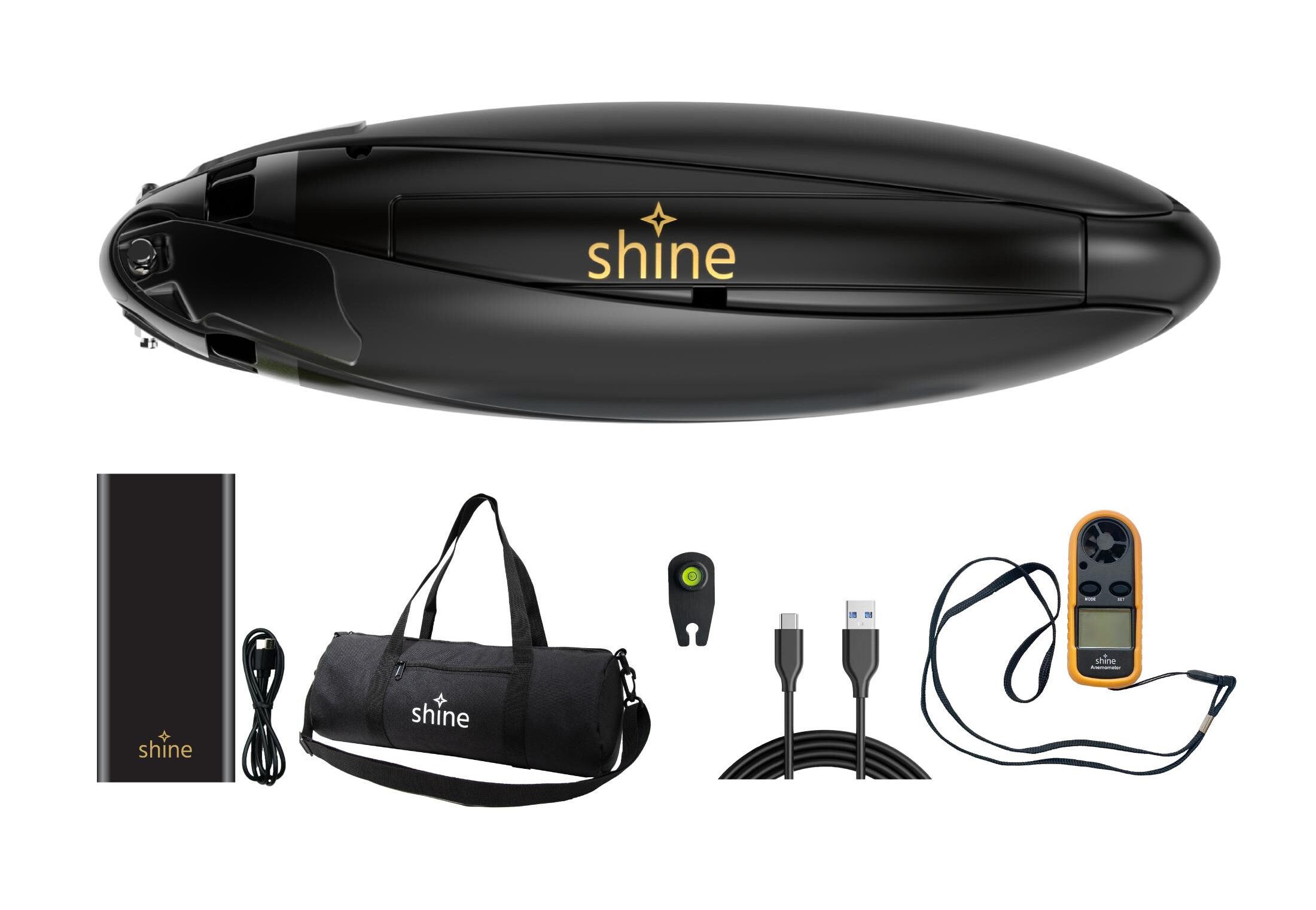
On paper, Shine 2.0 delivers a rated output of 50 watts, with USB-C fast charging up to 75 watts. It also includes a built-in 12,000 mAh battery, allowing users to store energy and use it later when needed.
In practical terms, this means it can:
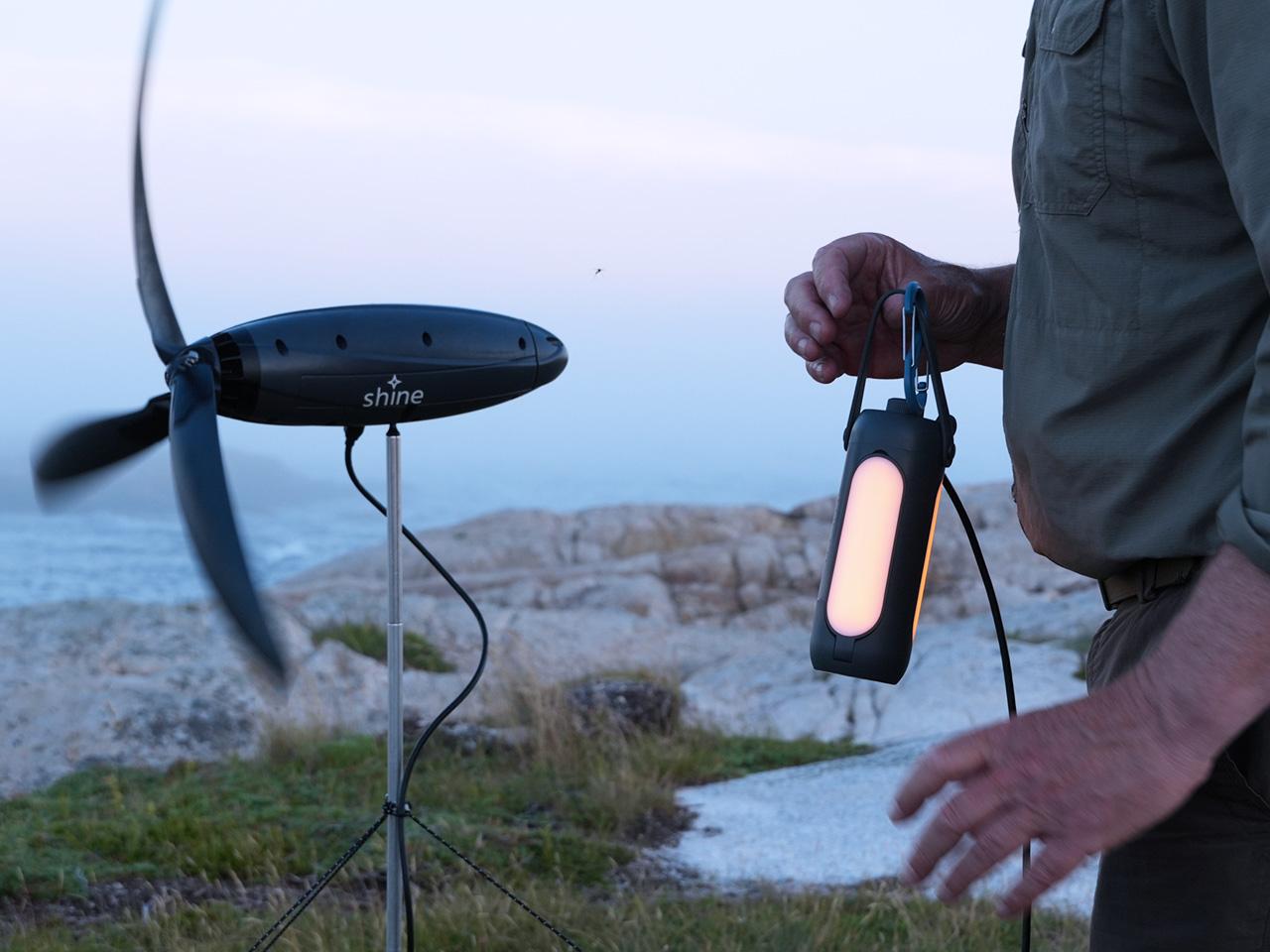
- Charge smartphones and cameras
- Top up power banks
- Support smaller laptops under favorable conditions
- Feed power into compatible portable power stations
However, like all wind-based systems, performance depends heavily on wind conditions. The turbine typically operates in wind speeds between 8 and 28 mph (approximately 13 to 45 km/h). In lighter winds, output may drop to just a few watts, while stronger winds can bring it closer to its rated capacity.
Designed for real-world off-grid use
Unlike solar panels, which rely entirely on sunlight, Shine 2.0 works whenever wind is available—including at night or during overcast weather. This makes it a useful complement to solar setups rather than a replacement.
The device also integrates with a mobile app via Bluetooth, giving users access to real-time data such as:
- Wind speed
- Power generation levels
- Battery status
Its IP54 rating means it can handle dust and light rain, adding to its suitability for outdoor environments.
Pricing and availability
Shine 2.0 was initially introduced through a crowdfunding campaign, where early backers could secure the device at around $400. The expected retail price is closer to $570, depending on configuration and accessories.
Optional add-ons, such as taller mounting systems or power station adapters, are typically sold separately.
As of now, the product is transitioning from crowdfunding to broader retail availability, with shipments expected to roll out in phases. This means availability may vary depending on region and production timelines.
Where it fits—and where it doesn’t
Shine 2.0 is best understood as a backup or supplementary power source rather than a primary one. In consistently windy environments, it can provide a steady trickle of energy that adds up over time. But in low-wind areas—such as dense forests or urban settings—its usefulness may be limited.
For many users, the most practical setup could be a hybrid approach:
- Solar panels for daytime charging
- Wind turbine for night-time or cloudy conditions
This combination helps cover more scenarios without relying on a single energy source.
A new category of portable renewable power
Shine 2.0 represents a broader shift toward ultra-portable renewable energy devices. By combining a turbine, battery, and charging system into one compact unit, it offers a level of convenience that traditional wind power systems have lacked.
While it won’t replace larger power solutions, it introduces a flexible way to generate energy in places where solar alone falls short.
For campers, overlanders, and anyone exploring off-grid setups, that added layer of redundancy could make a meaningful difference.
Source: Shine Turbine


