

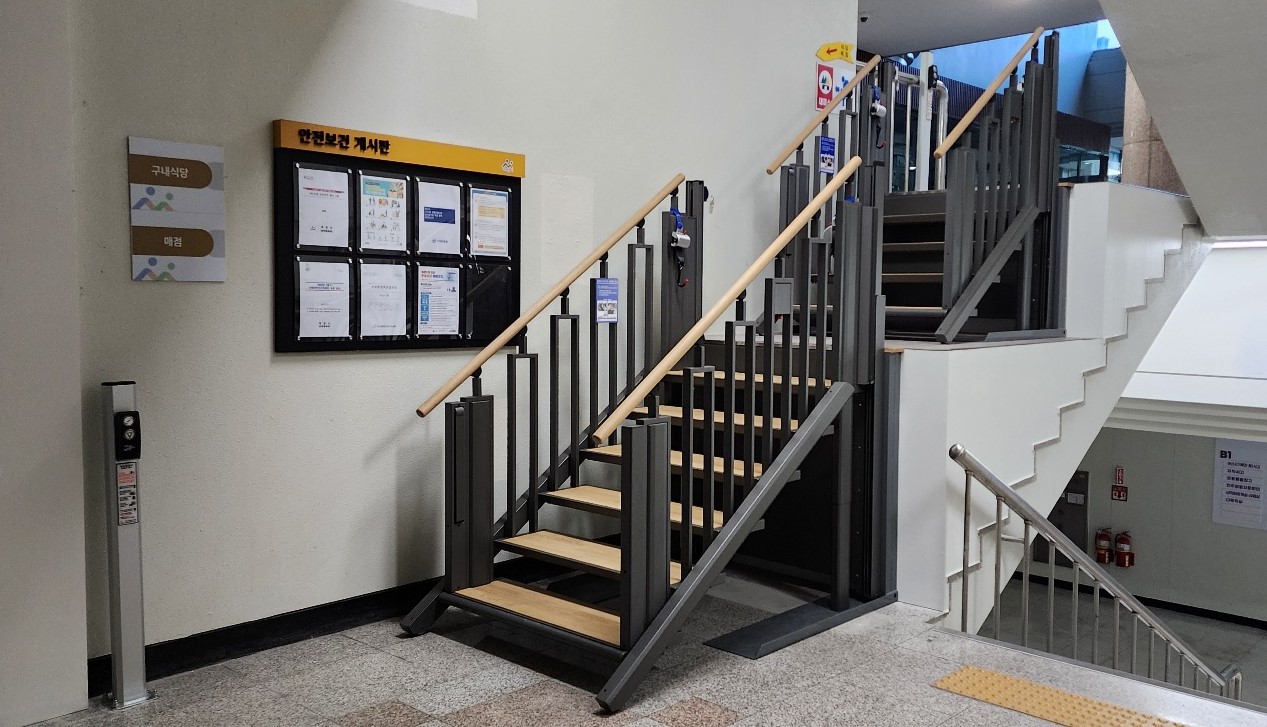
In many buildings, accessibility solutions often come with a trade-off. Ramps take up significant space, and installing both stairs and a lift side by side isn’t always practical. The LiftUp FlexStep approaches this problem differently by combining both functions into a single structure.
At first glance, it looks like a regular staircase. But with the press of a button, the steps gradually transform into a flat platform that lifts a wheelchair user between levels. Once the lift cycle is complete, the structure returns to its original staircase form. This dual-purpose design allows the same footprint to serve both walking users and those who require mobility assistance.
The system is designed for relatively short vertical distances, making it suitable for entryways, split-level interiors, and small elevation changes. Depending on the configuration, the FlexStep can handle rises of up to around 49 inches (approximately 1.25 meters). It typically supports a maximum load of about 400 kg, or roughly 880 pounds, which is enough for a wheelchair user and an attendant.
One of the key advantages is how much space it saves. Traditional ramps often require a long run to meet accessibility guidelines, which isn’t always feasible in compact homes or urban commercial spaces. By integrating the lift into the staircase itself, the FlexStep removes the need for separate installations.
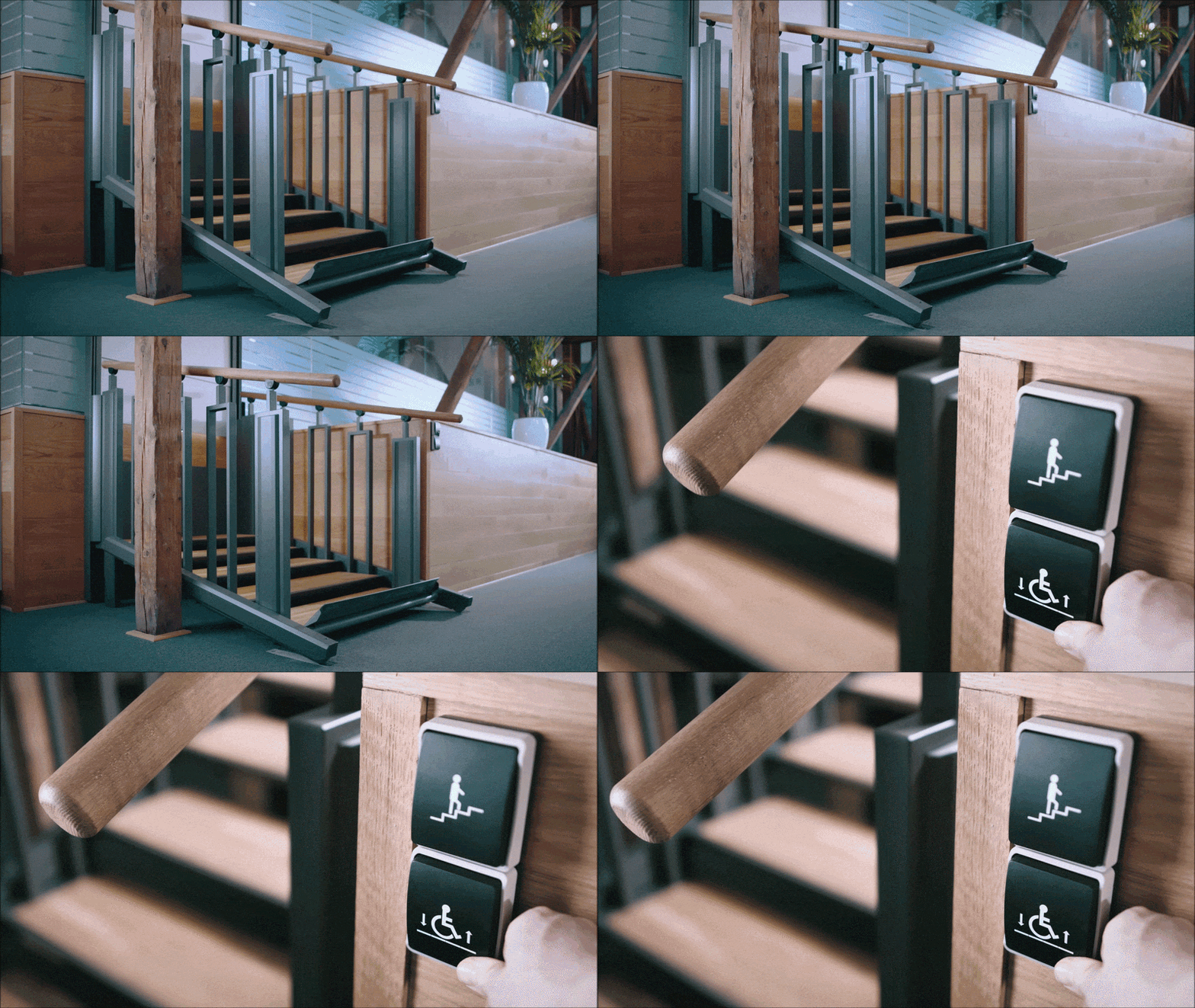
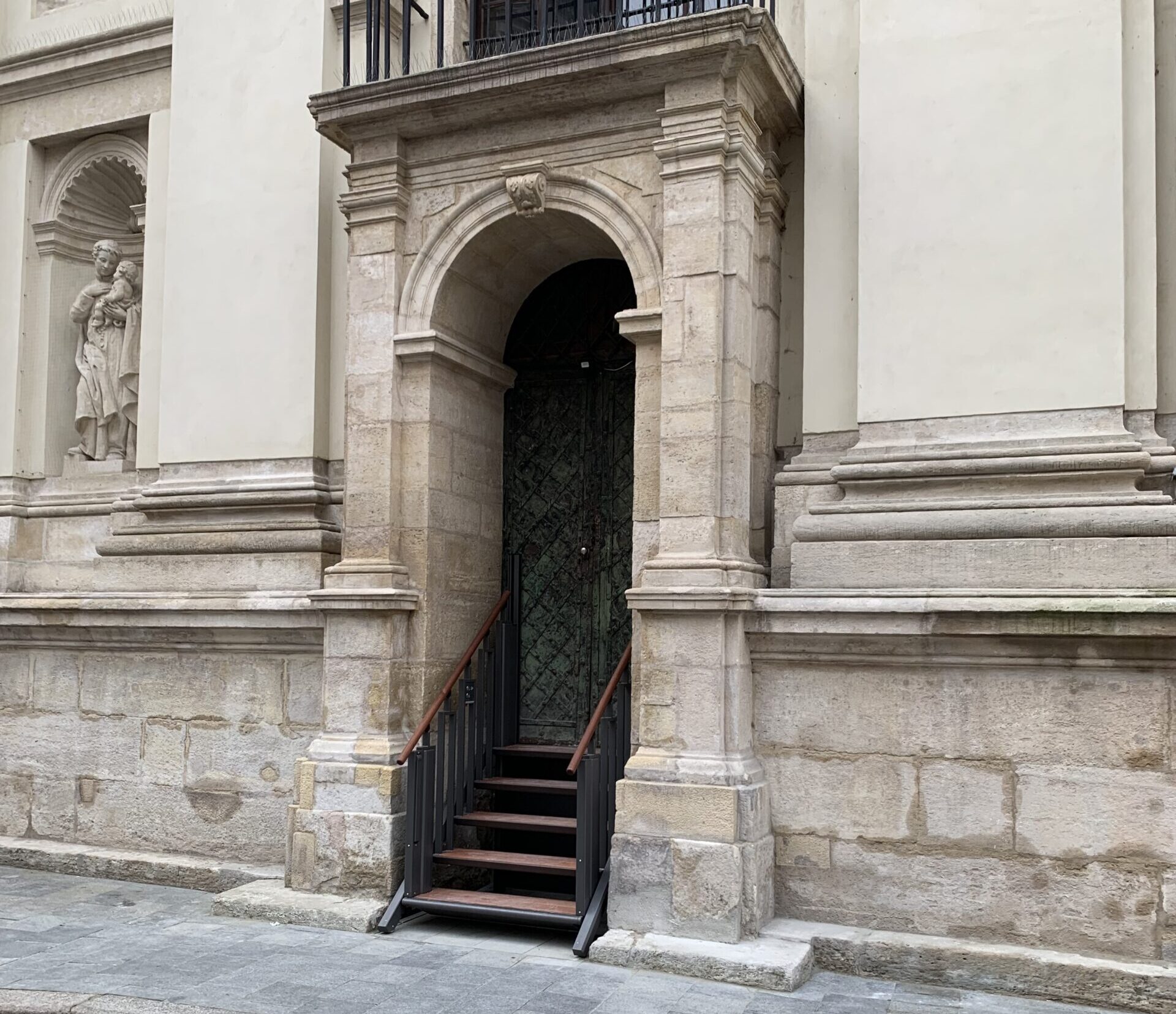
The unit is also highly configurable. It can be built with different widths, usually ranging from about 27.6 to 39.4 inches, and is available in multiple step configurations depending on the required height. Materials and finishes can be customized to match the surrounding interior or exterior, helping it blend into residential or commercial environments rather than stand out as a purely functional addition.
Safety is a core part of the design. The system uses multiple synchronized motors to keep the platform stable during movement. It also includes features like anti-slip surfaces, safety barriers, sensors to detect obstructions, and backup battery operation in case of a power outage. These features help ensure that both modes—stairs and lift—are safe for everyday use.
In terms of installation, the FlexStep is designed to be relatively flexible. It does not require a deep pit or a separate machine room, and it can be installed as a free-standing unit in many cases. This makes it suitable for both new construction projects and retrofits.
Pricing for the LiftUp FlexStep is not fixed, as each unit is customized. Based on available distributor listings, typical costs range from around $22,000 to over $30,000, depending on size, materials, and installation complexity. It is generally purchased through authorized dealers rather than directly online, with lead times often in the range of several weeks.
Overall, the LiftUp FlexStep offers a different approach to accessibility by combining two essential functions into one compact system. For spaces where traditional solutions are either too bulky or impractical, it presents a design that prioritizes both usability and efficient use of space.
Source: LiftUp


