

Getting an IV placed on the first try sounds like a basic expectation. In practice, it frequently isn’t. Missed sticks — attempts that fail because the clinician couldn’t locate or accurately assess a vein — are common enough that they’ve become a recognized problem in vascular access care. They cause patient discomfort, add procedure time, increase the risk of complications, and contribute to the kind of anxiety that makes patients dread needle-based procedures before they even begin.
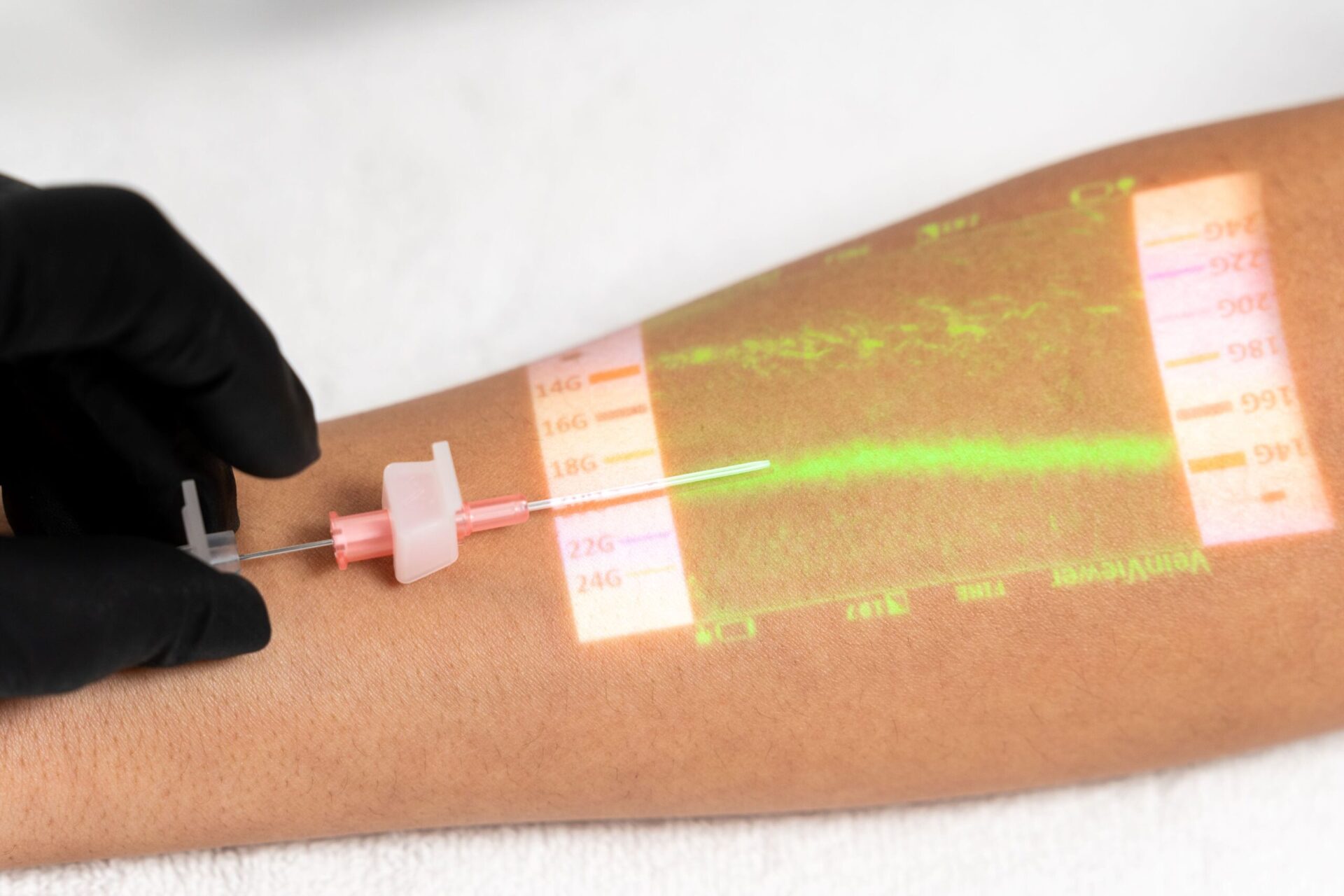
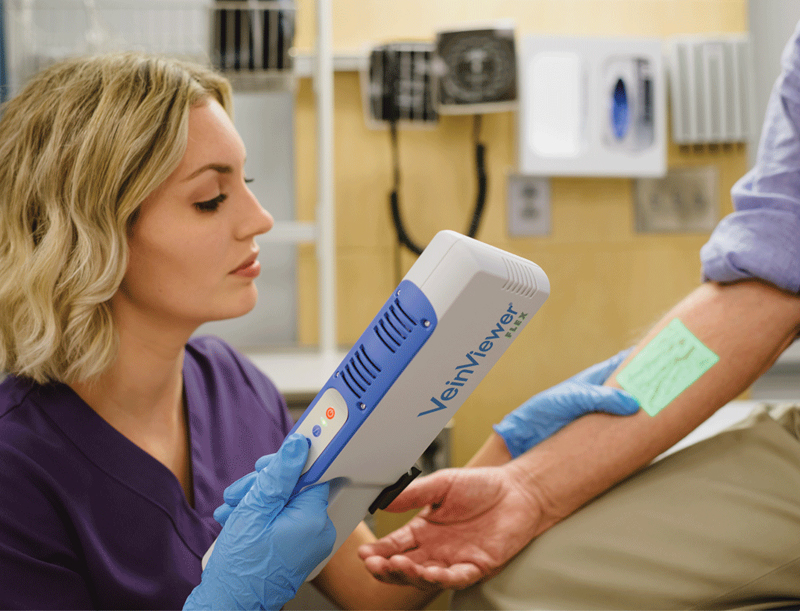
Christie Medical Holdings, a central Florida-based medical device company, has spent more than two decades developing a technology designed to address exactly that problem. Their VeinViewer® line uses near-infrared (NIR) light to project a real-time, HD image of a patient’s vein pattern directly onto the surface of their skin — no screen to glance away at, no patches, no gels. Just the vein map, rendered live on the patient’s arm.
The technology is now in its sixth generation, deployed across more than 40 countries, and is used across a broad range of clinical settings — from pediatric wards and emergency departments to oncology units, pre-op rooms, blood centers, and emergency medical services.
How it works: Near-infrared light and real-time projection
The underlying principle is straightforward, even if the engineering behind it is not. VeinViewer emits harmless near-infrared light onto the patient’s skin. Blood absorbs that light; the surrounding tissue reflects it. The device captures the reflected information, runs it through proprietary processing algorithms, and then projects the resulting full-field digital image directly back onto the skin in real time.
The result is a live, high-definition picture of the patient’s vein pattern — visible on the surface of the skin without any contact with the patient and without any heat, radiation, or laser eye-safety concerns.
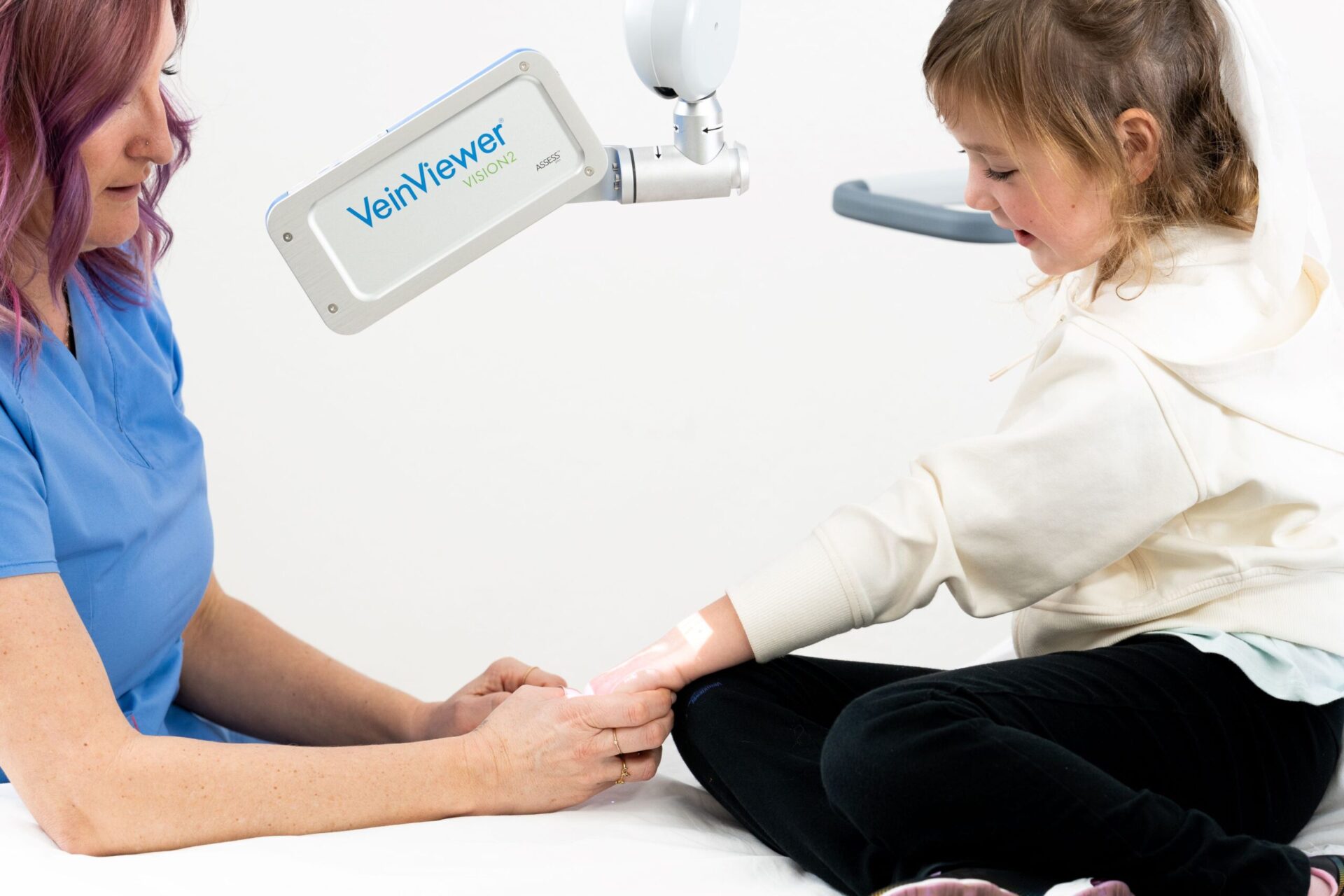
Christie calls this approach Df2, or Digital Full Field technology. Unlike devices that only illuminate the vein’s location, Df2 processes the entire image field through Christie’s algorithms, which allows the device to show not just where a vein is, but also its depth, diameter, bifurcations (where one vein branches into two), and valve positions. Clinicians can also watch in real time as a vein refills or flushes during the procedure — information that’s useful both during and after the stick, not just before it.
The imaging depth is clinically meaningful: VeinViewer’s AVIN (Active Vascular Imaging Navigation) technology can detect blood patterns up to 15 mm (roughly 0.6 inches) below the skin surface, with clinically relevant veins visible up to 10 mm deep.
Accuracy is backed by extensive testing. Christie’s TrueView data — gathered from more than 3,000 data points — shows the device projects vein width for vessels most commonly accessed during peripheral IV placement (those 3–7 mm wide) with a margin of error of just +/- 0.06 mm. That’s 60 microns, or micrometers — about 40% smaller than the diameter of a human hair, and only 20 microns above the human visibility threshold.
The ASSESS Imaging Suite: Adapting to the patient in front of you
One of VeinViewer’s more practical features is its ASSESS Imaging Suite — a set of configurable imaging modes that let clinicians adjust the projected image based on the patient’s skin tone, body hair density, room lighting, and the specific vein they’re trying to access.
The suite includes Universal mode, which provides the brightest and most accurate baseline projection; Fine Detail mode, designed to enhance smaller structures useful in pediatric patients or during sclerotherapy; Inverse mode, which flips the image colors to improve contrast based on environmental conditions; and Resize, which lets the clinician focus the image window on a single vessel when needed.
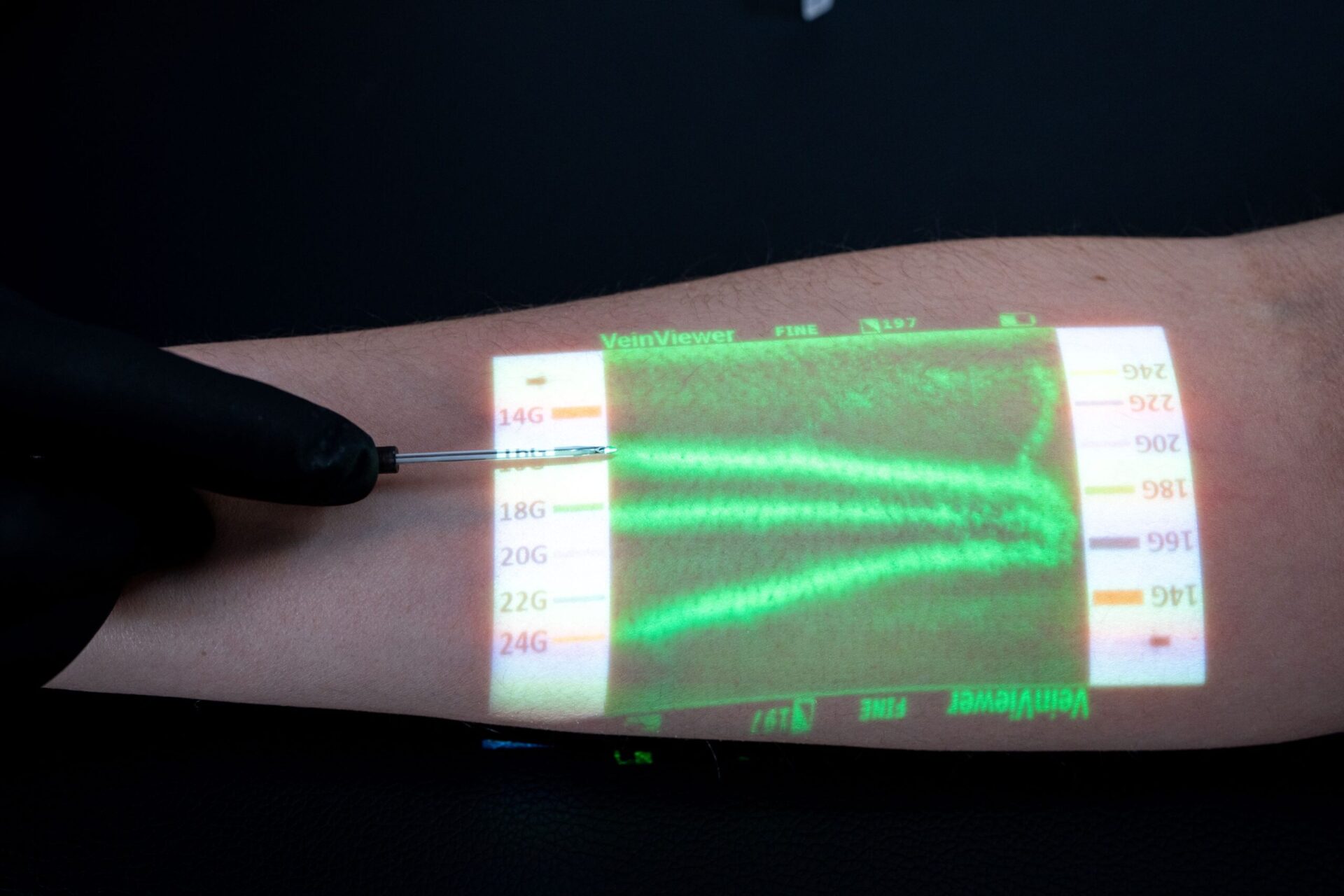
MaxBright mode increases image brightness by another 40% beyond the standard setting — intended for high-ambient-light environments where the standard projection might be harder to read.
The Image Capture feature allows clinicians to photograph and store up to 200 static vascular images on the device, which can then be transferred to a PC for integration with HIS, RIS, or PACS systems. No patient data is captured in the image files, keeping the system HIPAA compliant.
The Vision2 model adds TriColor — a mode that lets clinicians choose between green, yellow, or white for the projected image color, offering further customization for different skin tones and personal preference.
CathCompass: Catheter sizing built into the projection
Both current VeinViewer models include a feature called CathCompass — a color-coded, peripheral IV catheter sizing reference graphic that is projected directly alongside the vein image on the patient’s skin. The reference displays catheter gauge options (14G through 24G) as color-coded bars scaled to actual size, so the clinician can visually compare the width of the target vein against the available catheter options without having to estimate or reference a separate chart.
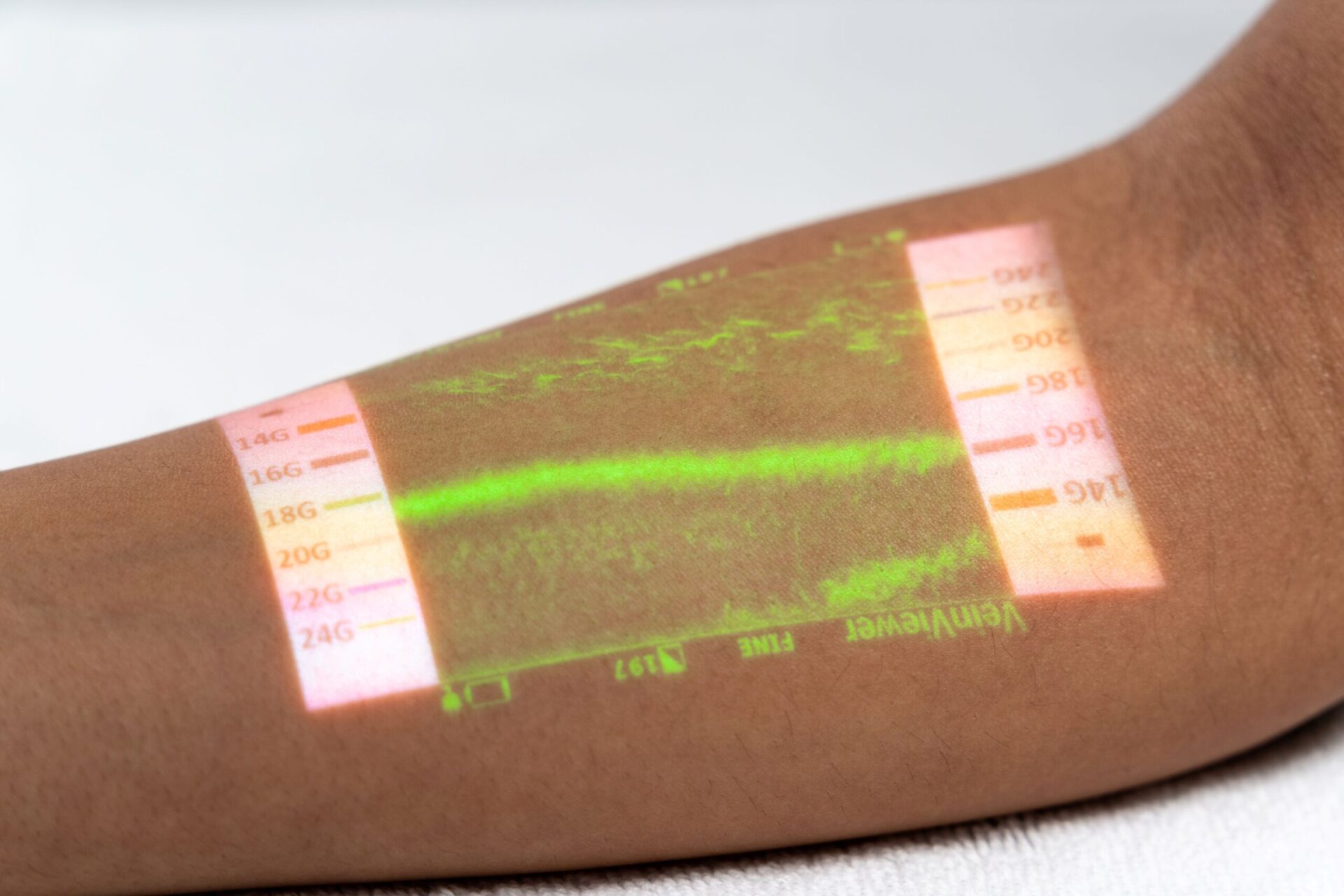
This turns the VeinViewer projection from a locating tool into a decision-support tool. A clinician can assess the vein, evaluate the appropriate catheter size, and proceed — all while keeping eyes on the patient, without reaching for additional equipment or documentation.
Two models: One for the field, one for the facility
Christie currently offers VeinViewer in two configurations, designed for different care environments.
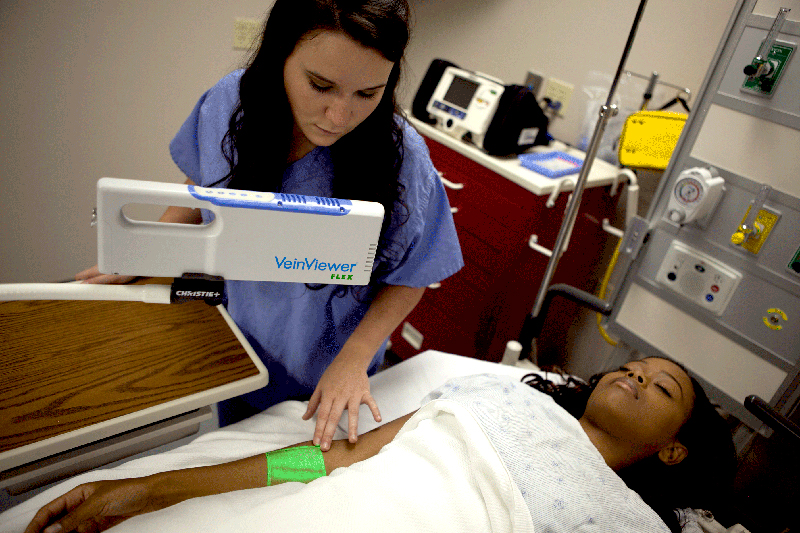
VeinViewer Flex is the handheld model — designed for portability and durability. It weighs 1.6 lbs (0.7 kg) and measures 11.6 × 4 × 1.7 inches, making it compact enough to carry in a bag or mount on a bed rail or IV pole using the included S-Mount clamps. Its minimum brightness is 5 lumens, and it operates at an imaging distance of 12 inches (30 cm) — the distance recommended by the Association of Surgical Technologists to maintain safe distance from a sterile field.
The Flex runs on two fast-swap rechargeable lithium-ion batteries, each rated for approximately two hours of continuous use, or via AC power. It has been drop-tested to IEC/UL standard 60601-1, is rated as an EMC Class B device suitable for both industrial and domestic environments, and ships with international power adapters for North America, EU, UK, China, and Australia. The base accessory kit includes two batteries, a charger, two S-Mounts, two clamps, a storage case, wrist strap, and PC software for image transfer.
Its design priorities are clear: fast deployment, hands-free operation, and resilience in environments like emergency medical services, NICUs, surgery centers, home health settings, and blood or plasma donation centers.
VeinViewer Vision2 is the facility-grade model, built for hospital-wide deployment. It stands 69.8 inches (177 cm) tall, assembled, with a base measuring 21 inches (53.3 cm) diagonally, and weighs 54 lbs (24 kg). Its articulating arm and flexible wrist joint give it a MaxReach of 53.4 inches (135 cm), allowing a clinician to assess a patient from head to toe without repositioning the device’s base.
Brightness on the Vision2 ranges from 6 to 10 lumens — higher than the Flex and adjustable across a wider range. It uses the same fast-swap battery system and can also be used while charging. The Vision2 includes the full ASSESS Plus Imaging Suite, which adds TriColor to the modes available on the Flex. An optional IV supply basket accessory provides on-device storage for venipuncture supplies.
Both models project at the same 12-inch imaging distance, use the same Df2 and AVIN core technology, and include CathCompass.
Where VeinViewer is used — and why it matters
The range of settings where vein visualization technology has a practical role is broader than it might first appear.
In pediatrics, small veins and patient distress make accurate first-stick placement especially important. In oncology, patients who have undergone repeated chemotherapy infusions often have compromised or scarred veins that are difficult to access by feel alone. In emergency departments, speed and accuracy matter simultaneously, and patients may arrive dehydrated, in shock, or otherwise presenting with veins that are harder to locate. In EMS settings, a clinician may need to establish IV access in a moving vehicle, in low light, with limited time to assess.
VeinViewer’s design — particularly the Eyes On Patient (EOP) hands-free technique supported by the S-Mount system on the Flex — is aimed at reducing the cognitive and physical overhead of vein location so clinicians can stay focused on the patient rather than the equipment.
Christie’s clinical data indicates VeinViewer has been shown to improve IV first-stick success by up to 100%, decrease the time required to start an IV by up to 100%, and reduce PICC (peripherally inserted central catheter) line placements by more than 30%. PICC lines, while sometimes necessary, carry higher infection risk and require more complex placement procedures than standard peripheral IVs — so reductions in their use, when peripheral access is adequate, represent a meaningful clinical and cost outcome.
Availability
VeinViewer Flex and VeinViewer Vision2 are available through Christie Medical’s global distributor network and direct sales channels. Prospective buyers can request a demonstration or quote at christiemed.com. Christie also provides an online ROI calculator for facilities assessing the financial case for adoption.
Source: Christie Medical


