In many industries, the job itself doesn’t move — whether it’s a car chassis, machinery, or low-mounted components. Workers are often left bending, kneeling, or crouching for long periods, which can gradually lead to fatigue or long-term strain.
The Human Hoist stool and its related devices approach this problem differently. Instead of forcing the body to adapt to the task, these systems are designed to adjust the worker’s position, keeping them at an optimal height throughout the job.
The concept is simple: bring the person to the work, not the other way around.
A powered stool designed for low and tight workspaces
The Human Hoist stool is the most compact model in the lineup, built specifically for tasks that happen close to the ground or in confined areas. It features a powered height adjustment system, allowing users to move smoothly between working levels.
According to the official specifications, the stool offers a height range from 5 inches to 25 inches (12.7 cm to 63.5 cm). This range allows workers to transition from near floor-level work to a more elevated seated position without needing to stand, kneel, or reposition manually.
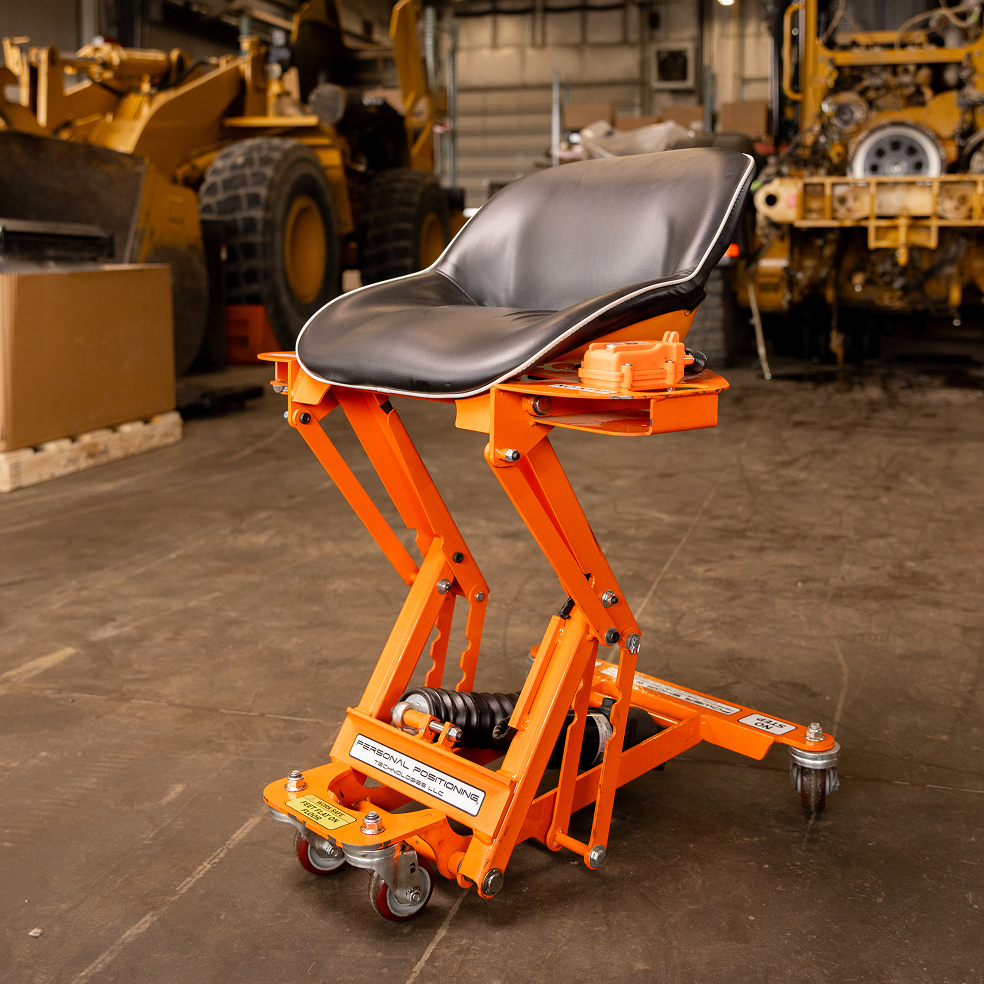
The system is powered by a Milwaukee M18 18V battery, which is included with the unit. Height adjustments are controlled through a simple push-button interface, and a full up-or-down cycle takes approximately 6 seconds.
Built for industrial environments
The Human Hoist stool is designed with durability and stability in mind. It weighs around 70 lb (32 kg) and supports users up to 300 lb (136 kg). The base includes four 3-inch precision ball-bearing casters, allowing smooth movement across workshop floors.
With a ground clearance of just 5/8 inch, the stool can operate in tight spaces where traditional equipment may not fit. An integrated tool tray provides convenient access to parts and tools, reducing the need to repeatedly stand up or reach away from the work area.
The product is intended primarily for indoor use, where controlled environments allow for stable operation and consistent performance.
A larger system for full-body positioning
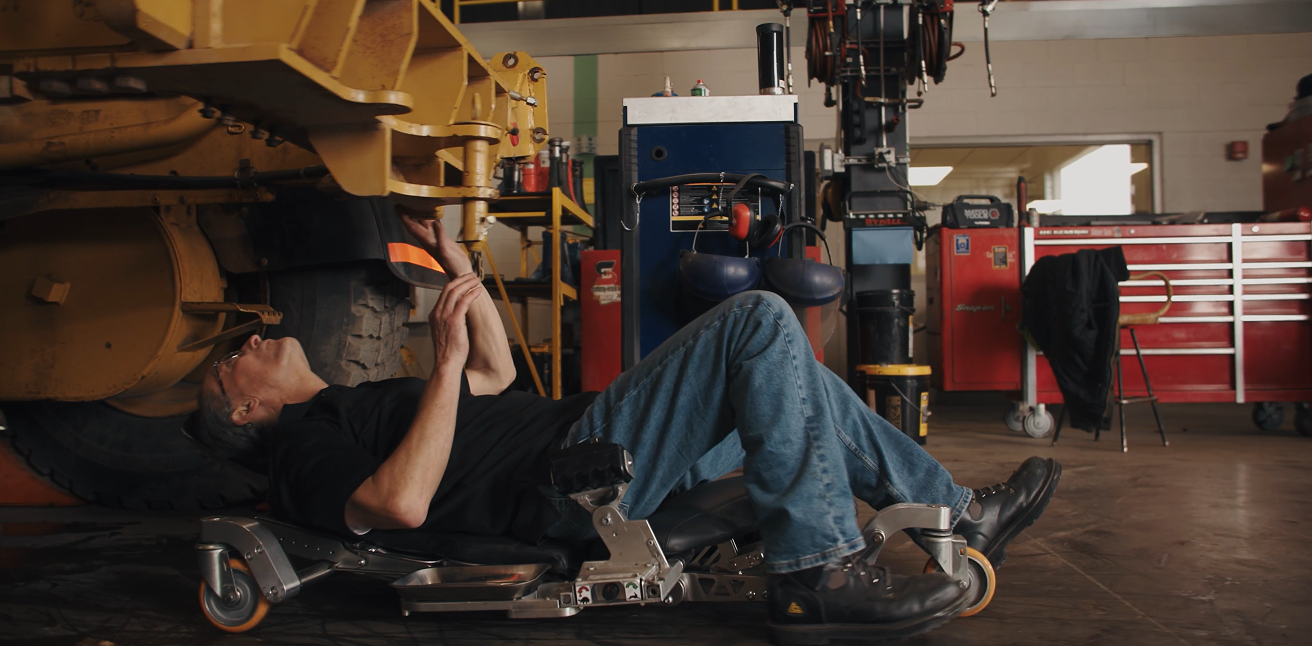
Alongside the stool, Human Hoist also offers a more advanced model known as the Human Hoist chair. While the stool focuses on seated positioning, the chair expands on this idea by allowing users to transition between sitting, reclining, and near-horizontal positions.
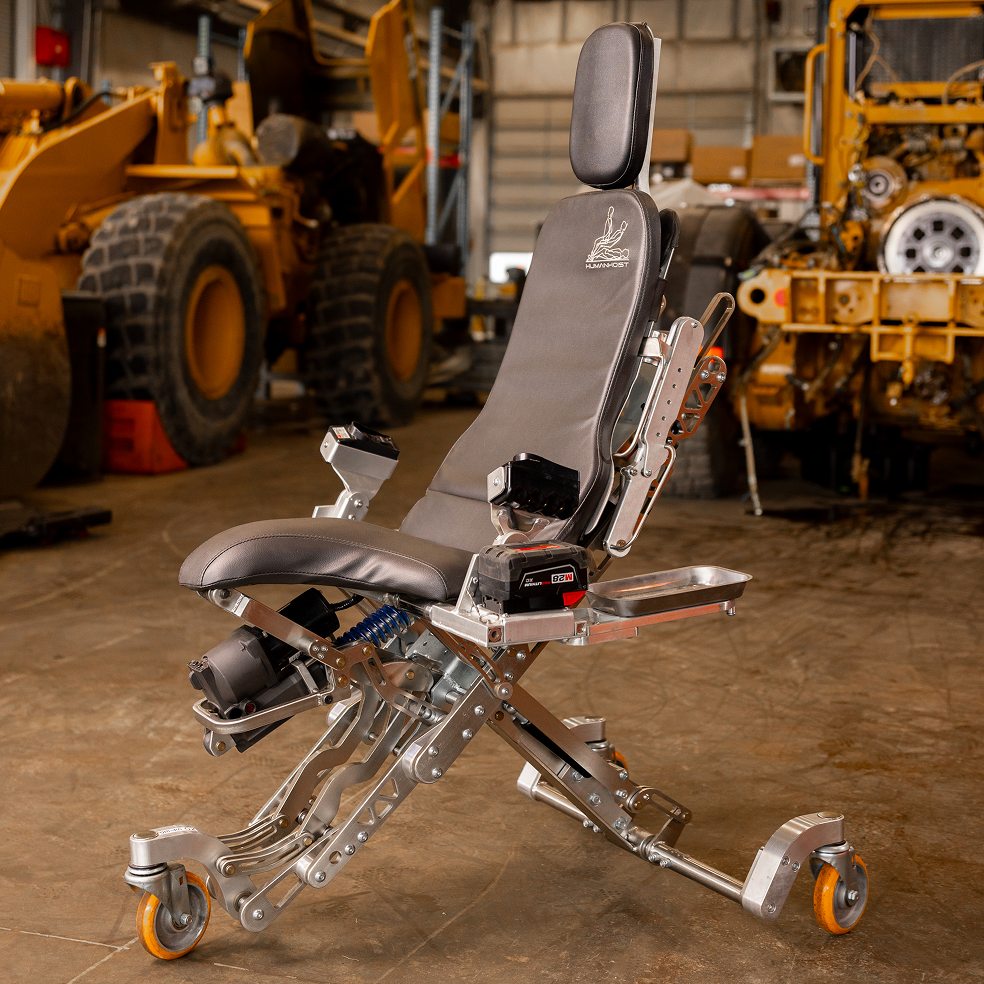
The chair has a slightly wider height range, from approximately 4.5 inches to 26 inches (11.4 cm to 66 cm), and uses a powered system capable of completing adjustments in about 4 seconds. It also maintains the same 300 lb (136 kg) weight capacity.
This added flexibility makes it more suitable for tasks such as under-vehicle work or detailed mechanical operations, where access from multiple angles is required.
Mobility-focused variant for larger facilities
For environments where workers need to move frequently between workstations, Human Hoist also lists a Drive version. This variant combines height adjustment with powered mobility, offering speeds of up to 4 mph (6.4 km/h) and a range of approximately 6 miles (9.6 km) per charge.
While less common than the stool or chair, the Drive version highlights the broader goal of the system: reducing physical strain while maintaining efficiency across larger industrial spaces.
Applications across multiple industries
The Human Hoist stool and related devices are positioned for use in a variety of sectors where repetitive low-position work is common. These include:
- Automotive repair and maintenance
- Manufacturing and assembly lines
- Aerospace and heavy equipment servicing
- Agriculture and machinery upkeep
- Mining and industrial operations
- Medical and rehabilitation environments
In each of these settings, the devices aim to address similar challenges — prolonged awkward postures, repetitive strain, and the need for consistent positioning during detailed tasks.
Focus on ergonomics and injury prevention
A key theme across the Human Hoist lineup is ergonomics. By allowing workers to maintain a more neutral posture, the system is designed to reduce stress on the back, knees, and joints.
This can also have implications beyond comfort. Reduced strain may contribute to lower fatigue levels, more consistent productivity, and potentially fewer workplace injuries over time. In some cases, such systems are also used as part of return-to-work or rehabilitation programs, helping injured workers stay active without exceeding physical limits.
Pricing and availability
The Human Hoist products are not sold through a typical online checkout process. Instead, they follow a direct sales model, where buyers contact the company for purchase or consultation.
- Human Hoist stool: $4,795 + freight (USA)
- Human Hoist chair: $19,995 + freight (USA)
- International pricing: Available on request
This approach suggests that the products are primarily targeted at businesses, workshops, and industrial buyers, rather than individual consumers.
A practical shift in how work is approached
At its core, the Human Hoist stool represents a shift in thinking about physical work. Instead of accepting discomfort as part of the job, it introduces a mechanical solution that changes how workers interact with their environment.
For tasks that require repeated low positioning or long hours in confined spaces, this approach may offer a more sustainable way to work — one that prioritizes both efficiency and long-term physical well-being.
Source: Human Hoist