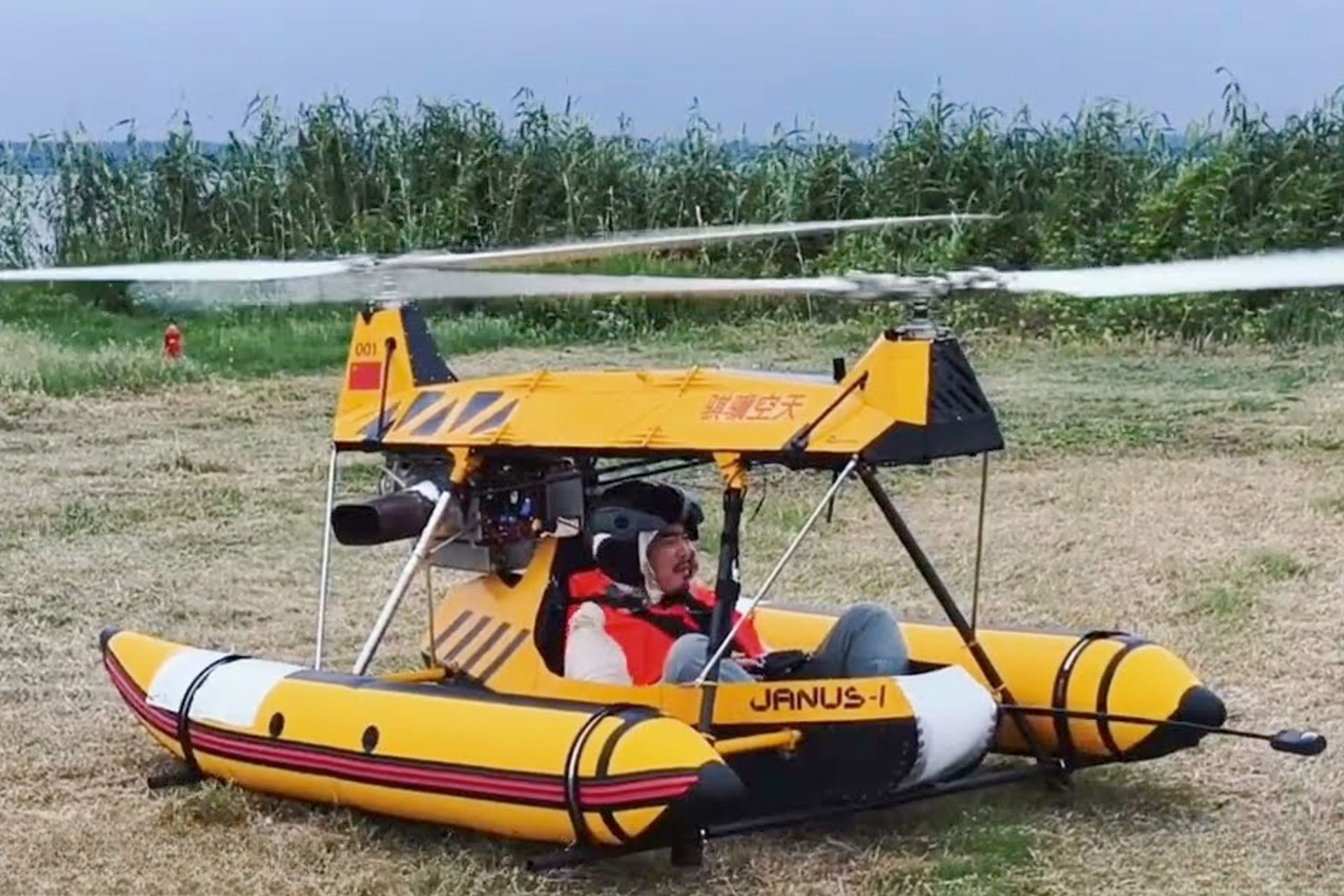
The Janus‑I is being billed as a foldable, one‑seat VTOL aircraft often described as a “flying suitcase” — compact enough to fit in the trunk of a regular car, yet capable of carrying a human and gear into the air.
At its core, Janus‑I is built around a modular frame powered by a turboshaft engine. The core module alone weighs around 70 kg, and the assembled aircraft supports a payload of up to 200 kg. The maximum take‑off weight is listed at 270 kg.
Despite its compact form, Janus‑I reportedly delivers modest — but tangible — performance metrics. Its cruising speed sits around 100 km/h (≈62 mph), with a top speed up to 160 km/h (≈99 mph). Service ceiling is above 6,000 meters (≈19,685 feet), allowing substantial altitude range.
One of the more unusual features: Janus‑I can land on water. With floatation‑capable skids or inflatable “legs,” it doubles as a light amphibious craft — a design choice that opens possibilities for water‑landings, maritime missions, or remote‑access operations.
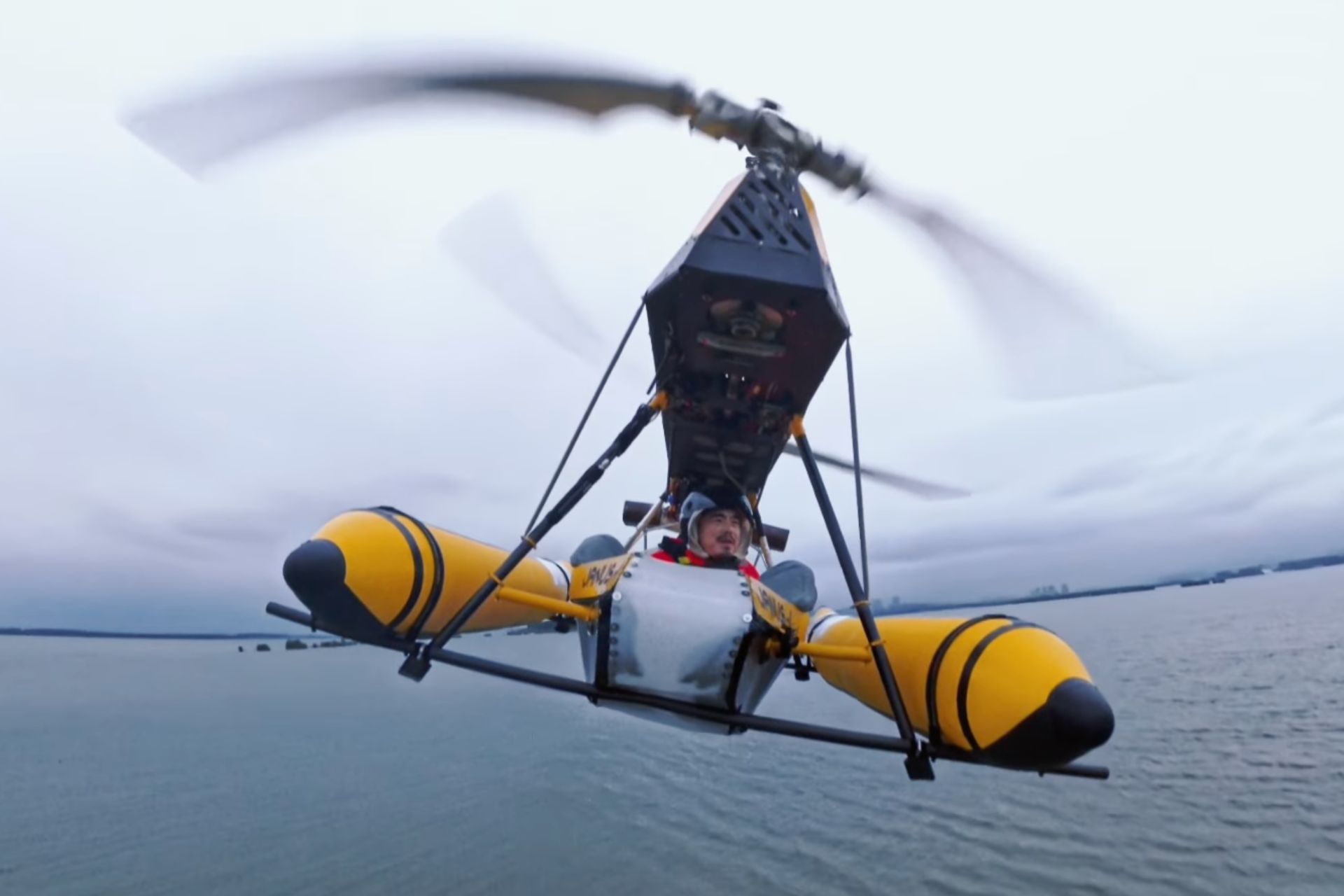
Because Janus‑I qualifies as an ultralight aircraft, its developers claim that no conventional pilot’s license or formal airworthiness certificate is required to operate it.
As of now, Janus‑I remains in a concept/early demonstration phase. Public materials do not yet disclose a retail price or a clear production timeline.
In summary, Janus‑I presents as a highly compact, lightweight personal air vehicle — a unique blend of portability, modest payload capacity, amphibious versatility and VTOL flight. Whether it becomes a practical commuting or recreational craft depends on regulatory approval, real‑world testing, affordability and supporting infrastructure to match its unusual promise.
Product page: Janus-I