A Belgian company is betting that building the shell of a house can be as approachable as assembling a set of interlocking toy bricks. Gablok, founded in 2019, makes insulated timber blocks that stack on top of one another to form the walls of a home, with a stated goal of putting self-construction within reach of people who have no building background.
The idea came from founder Gabriel Lakatos, who spent 25 years in traditional construction and was a longtime fan of interlocking building-block toys. He filed his patent in 2018, and the company says the system was later validated by stability, acoustic, and energy-performance consultants before going to market.
How the system works
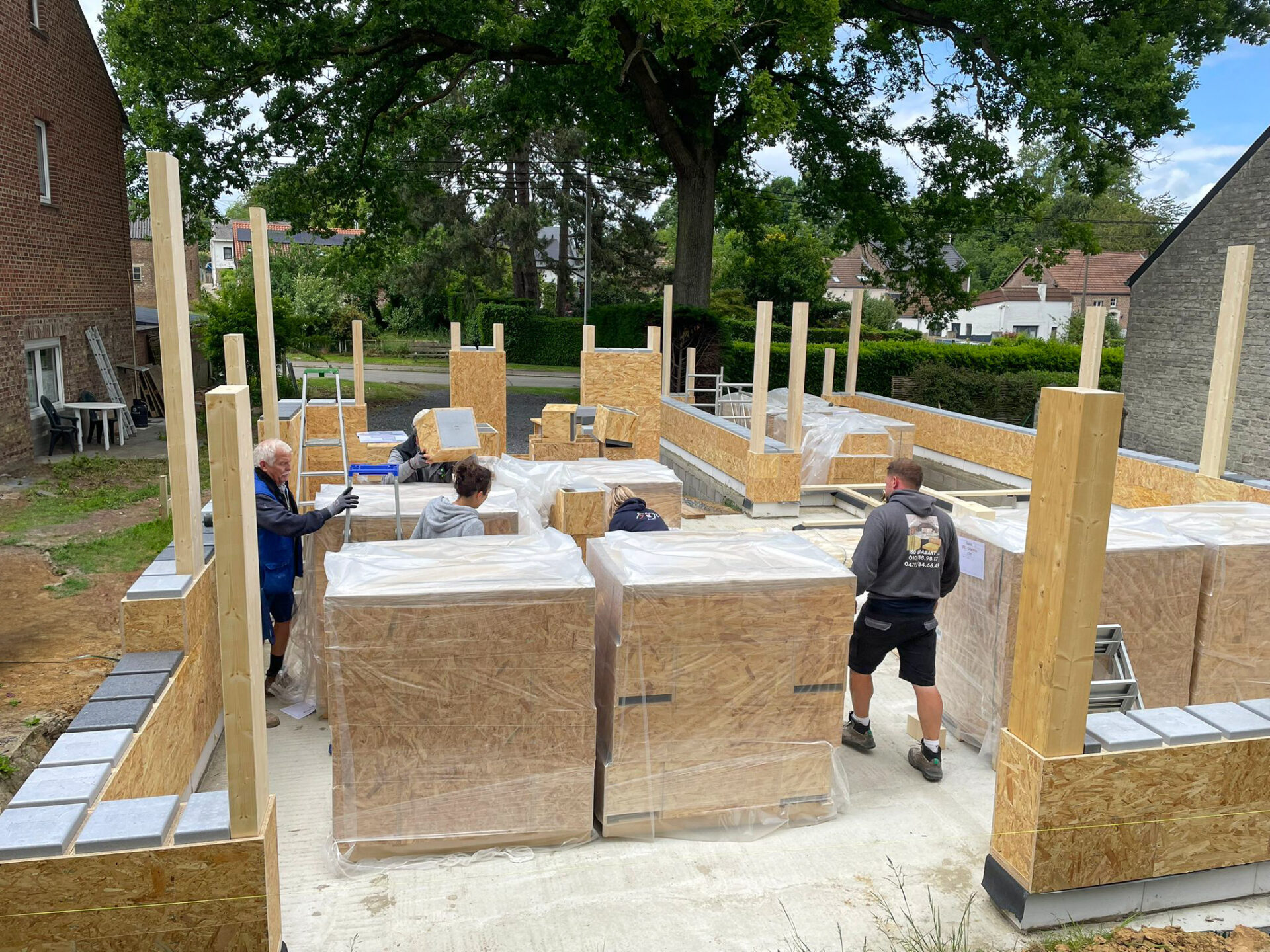
The core of the Gablok concept is a kit of insulated wooden blocks plus a set of complementary components — beams, lintels, and an adapted floor system — that together form the insulated shell of a house. Everything is delivered to the site flat-packed, along with an assembly plan.
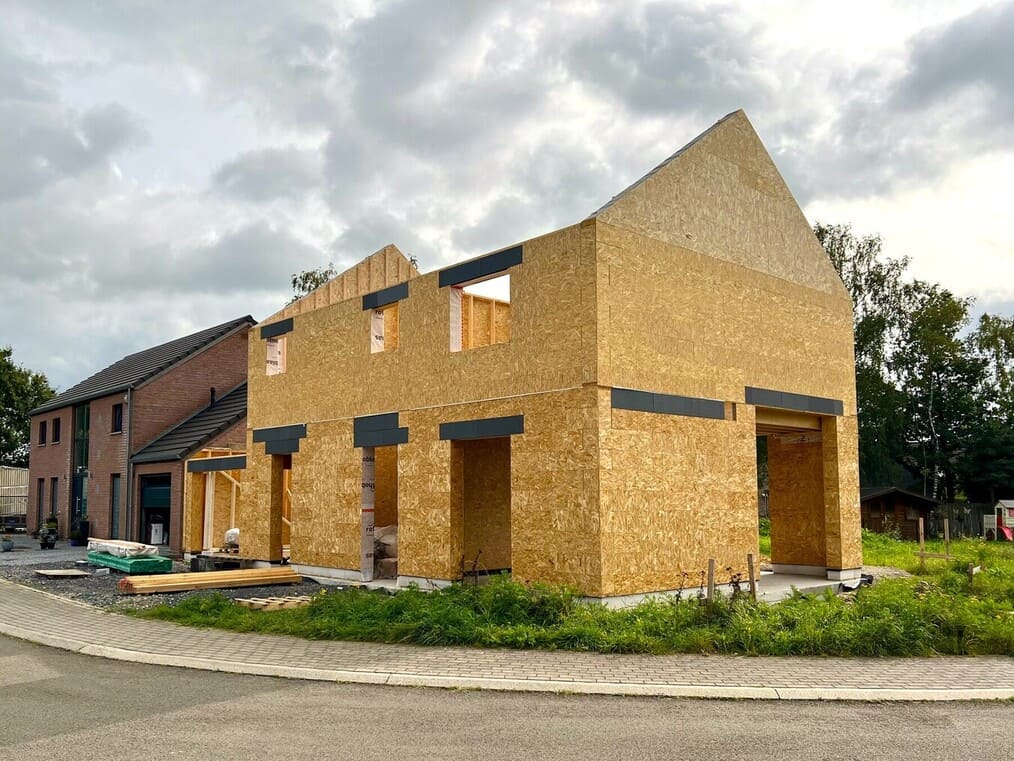
The blocks are made from two main materials: OSB (oriented strand board, a compressed engineered wood) for the outer shell, and expanded polystyrene (EPS) for the insulating core. Gablok uses an EPS with a graphite additive, a material the company notes is roughly 98% air. The EPS is molded by a firm called X-PACK in Verviers, Belgium.
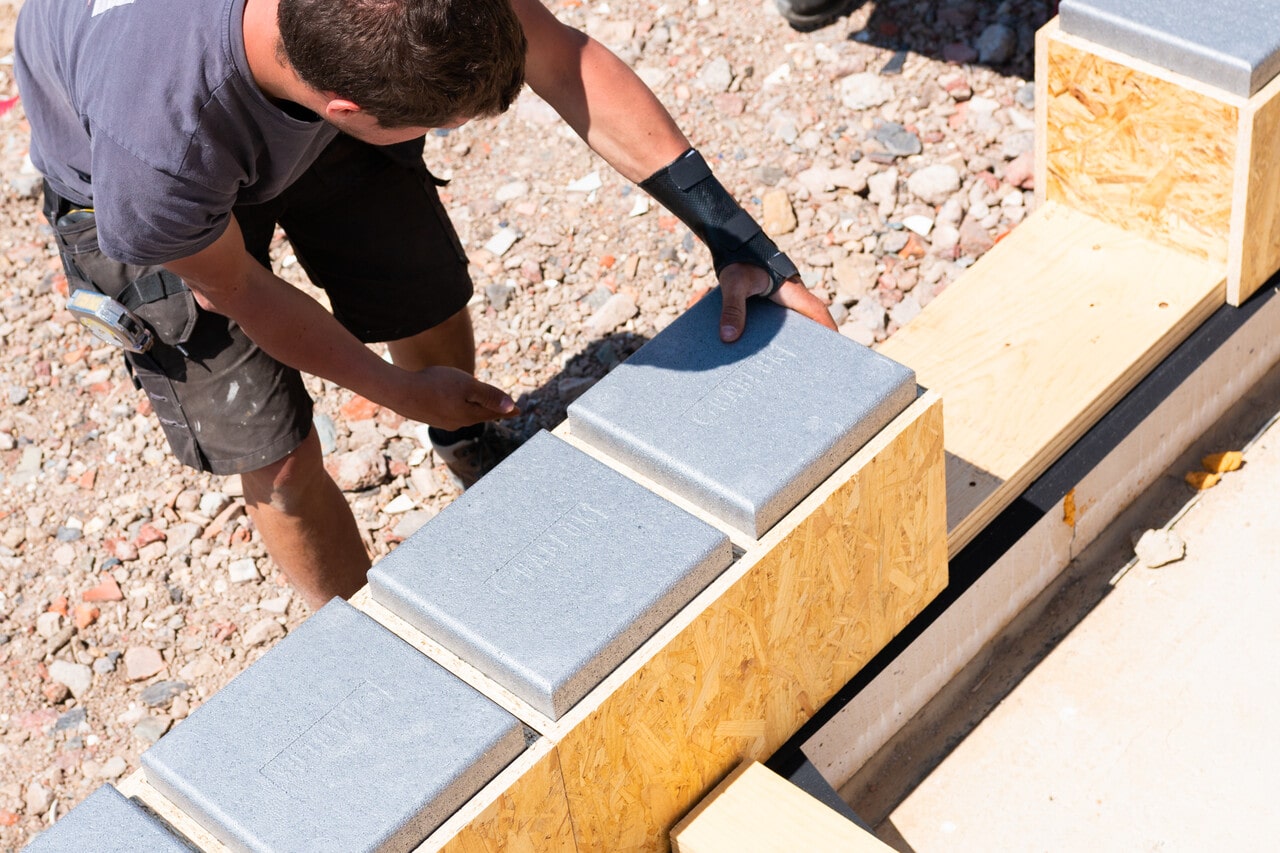
Blocks come in three lengths — 30 cm, 60 cm, and 90 cm (about 12, 24, and 35 inches) — while the height and depth stay fixed at 30 cm (about 12 inches). A 60 cm block weighs 7.5 kg, or roughly 16.5 pounds, and the other kit elements weigh between 7 and 9 kg (about 15 to 20 pounds). That low weight is central to the pitch, since it means the parts can be lifted and placed by hand.
According to Gablok, assembly requires only a ladder, a screwdriver, and the project plan. The company guides builders through pouring the foundation slab and laying the first row of blocks, after which owners follow the plan to stack the rest. The system needs no drying time, which is part of why it can go up quickly.
Speed and performance
Gablok says the walls of a house can be completed in under a week, with a full house taking around three months. One customer testimonial on the company’s site describes the pace bluntly: a self-builder identified as Stéphane R. reported that, “Once the concrete slab was installed, the 40 m² garage was built in one day.” That structure works out to roughly 430 square feet.
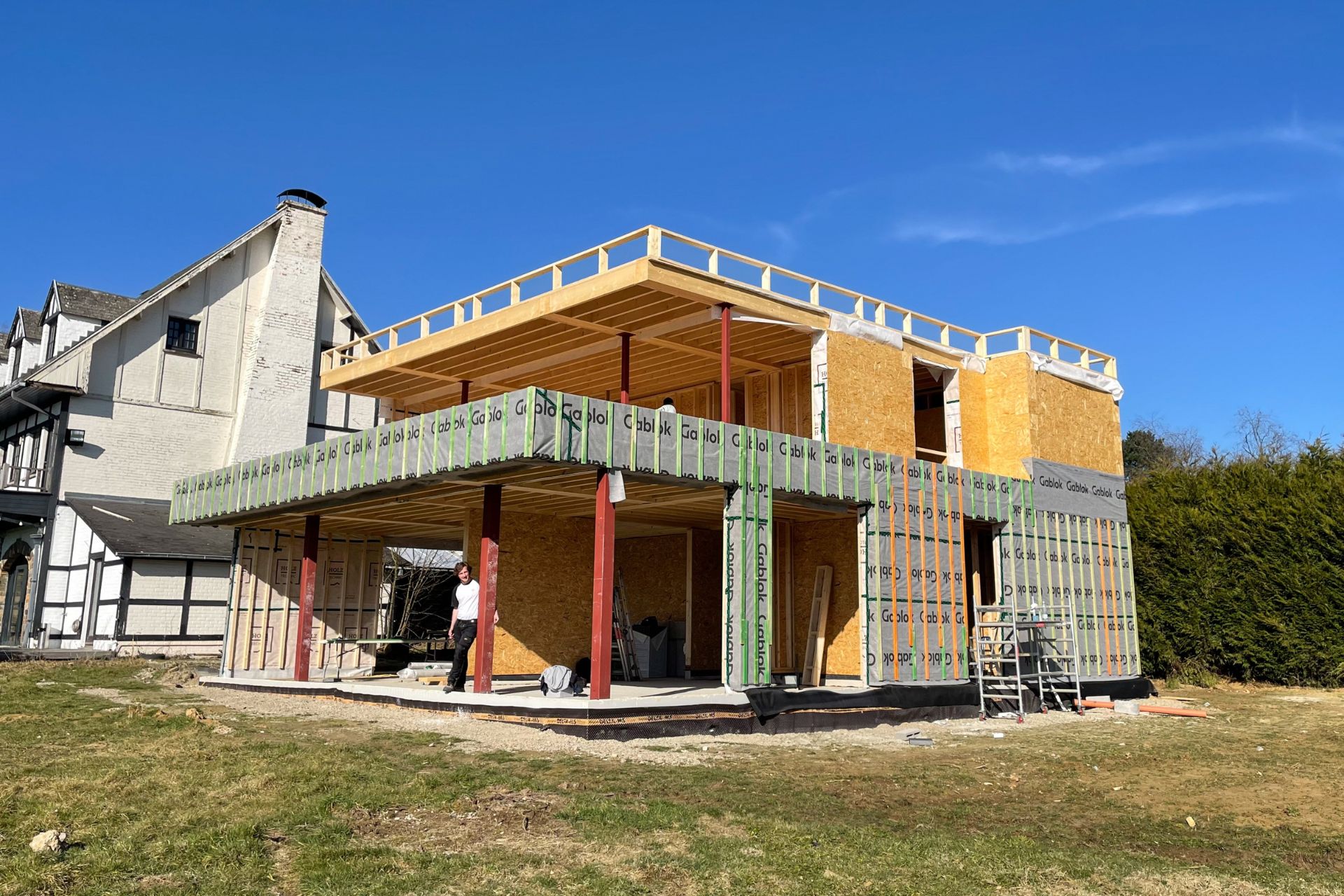
On the energy side, the company states that a wall built with Gablok blocks has a thermal transmittance (U-value) of 0.15 W/m²K — in rough U.S. terms, an insulation level around R-38 — and that the EPS core has a thermal conductivity (lambda) value of 0.035 W/mK. Gablok says the blocks meet Belgium’s 2021 EPB energy-performance requirements.
What’s included, and what isn’t
The kit covers the materials needed to build the shell, but not everything. Gablok is explicit that the roof (framework and roofing) and the foundation slab are not part of the package, and that exterior finishing — plaster, brick, or cladding — and interior finishing such as plasterboard are handled separately. Space left between the battens is designed to route electrical and plumbing runs before the interior is closed up.
The company also points out a workflow benefit: because door and window opening sizes are known once planning permission is granted, owners can order exterior joinery in advance to avoid stoppages on site. The flat-pack approach is also pitched as a way to cut the material waste that comes with cutting and processing on site.
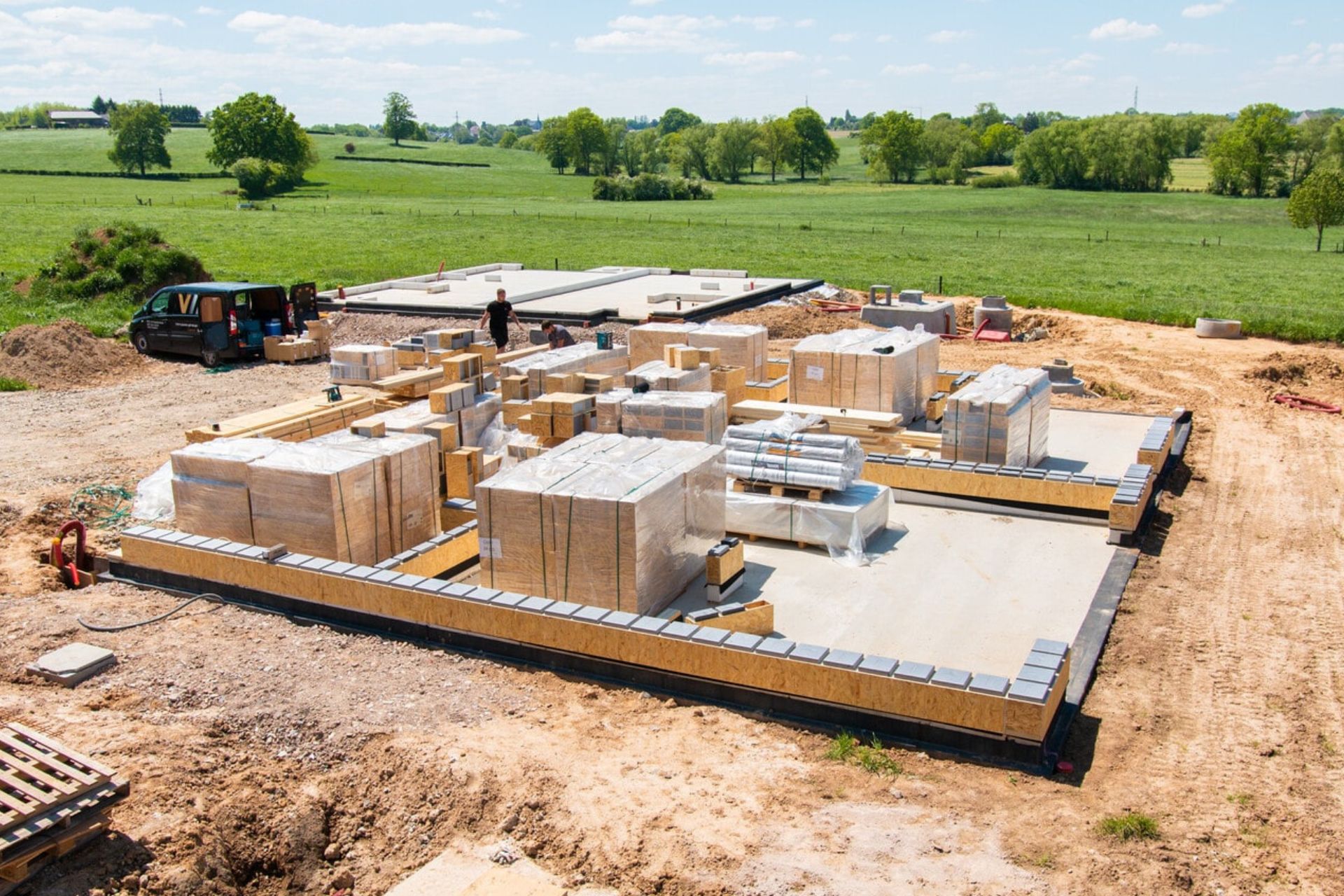
Gablok has used the system on a range of project sizes, including a 189 m² (about 2,030 sq ft) house in Orp-Jauche, a 311 m² (about 3,350 sq ft) house in Overijse, and a 62 m² (about 670 sq ft) two-level extension.
Significance and limitations
Gablok sits within a broader European trend toward prefabricated, low-energy, self-build housing, and its main appeal is accessibility: lightweight parts, simple tools, and a guided plan aimed at non-professionals. The trade-off is that buyers still need to handle the foundation, roof, finishes, and trades themselves, so “self-build” here means assembling the insulated structure, not delivering a turnkey home.
The performance figures and build times come from the manufacturer, and real-world results will depend on the project, the site, and the builder’s pace.
Availability
Gablok is based in Thimister-Clermont, Belgium, and works primarily on projects in Belgium, with a presence in the Netherlands and an international point of contact through gablok.com.
Because each kit is built around a specific project, Gablok doesn’t publish fixed prices. The cost depends on the scale of what you’re building — a small garage or extension sits at one end, a full multi-bedroom house at the other — along with the components your design requires.
As the company puts it, “Don’t hesitate to contact us for a quote on self-building your timber frame house kit.” In practice, that means pricing is worked out per project rather than offered as a set figure.
Anyone considering Gablok outside Belgium would also need to confirm shipping, local building codes, and permitting for their region.
Source: Gablok