

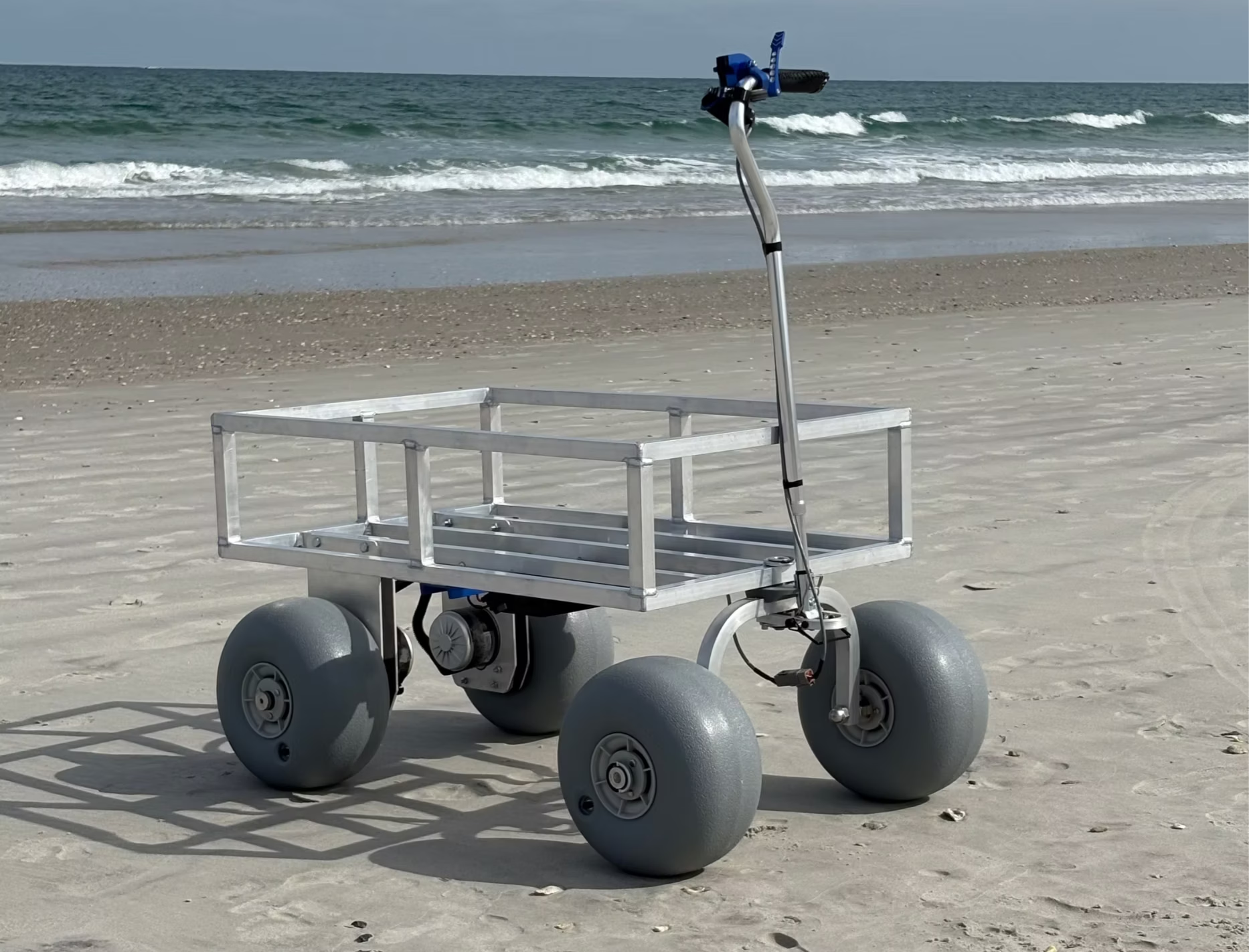
Hauling gear across the beach has never been a particularly elegant experience. Coolers, chairs, umbrellas, boogie boards, and bags all have to make it from the parking lot to the water — usually across soft, uneven sand that defeats standard wagon wheels and wears out the person doing the pushing before the day even starts. A North Carolina company called Beach Mule set out to solve that problem, and what they ended up with is a motorized, all-aluminum cart that runs on the same lithium batteries found at Lowe’s.
The result is the Beach Mule — a fully electric, four-wheel beach cart that the company describes as the first affordable, lightweight, electric beach hauler designed specifically for sand. A four-wheel drive configuration is available, which the company says makes it the only AWD electric beach cart on the market.
Designed from the ground up for sand
The Beach Mule was founded by a manufacturing engineer who, by his own account, was a consumer looking for this type of product before deciding to build it himself. The company has been at it for nearly eight years, developing and refining the design specifically for beach use — something the founders emphasize distinguishes them from competing products they say are repurposed from other vehicle platforms.
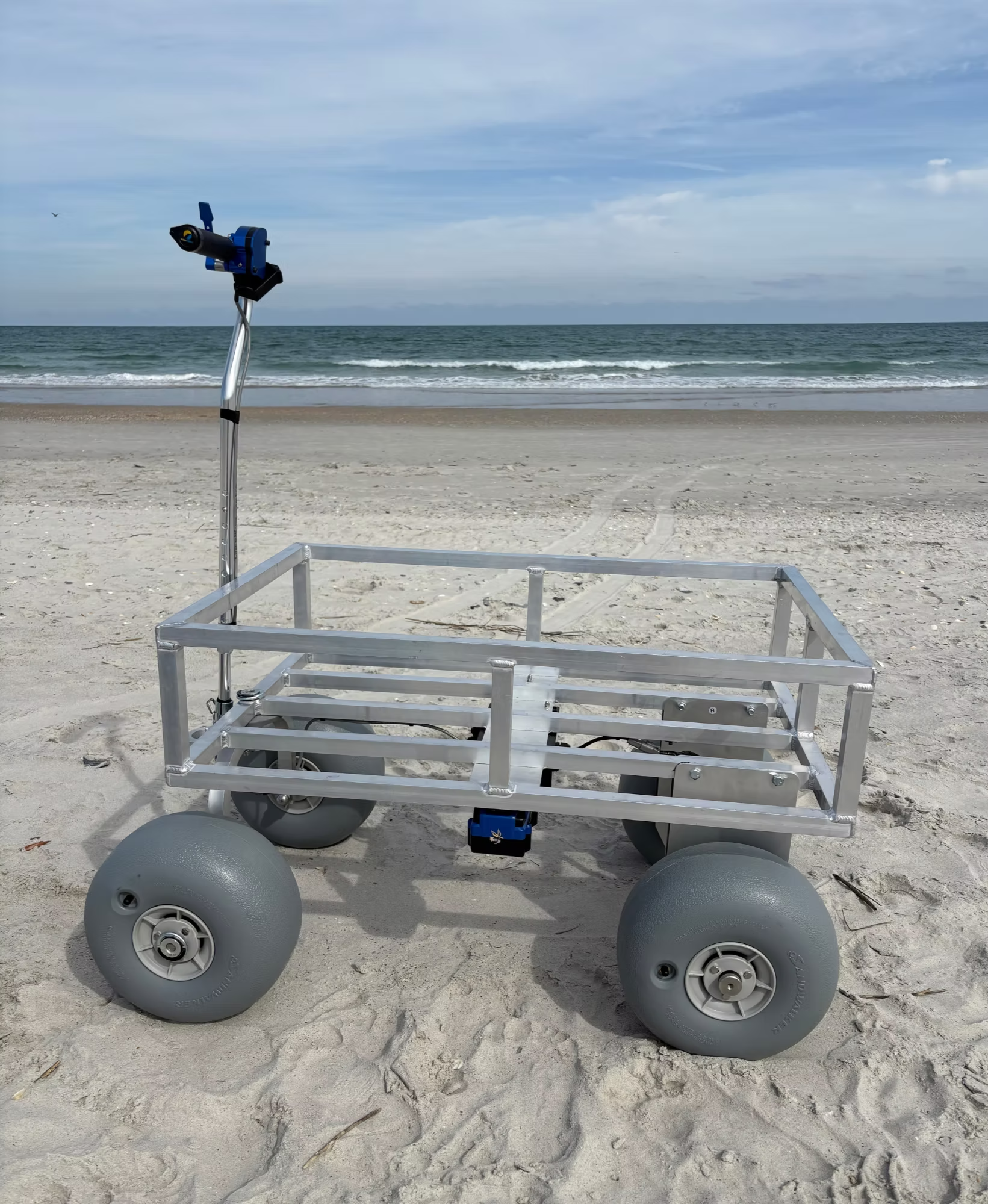
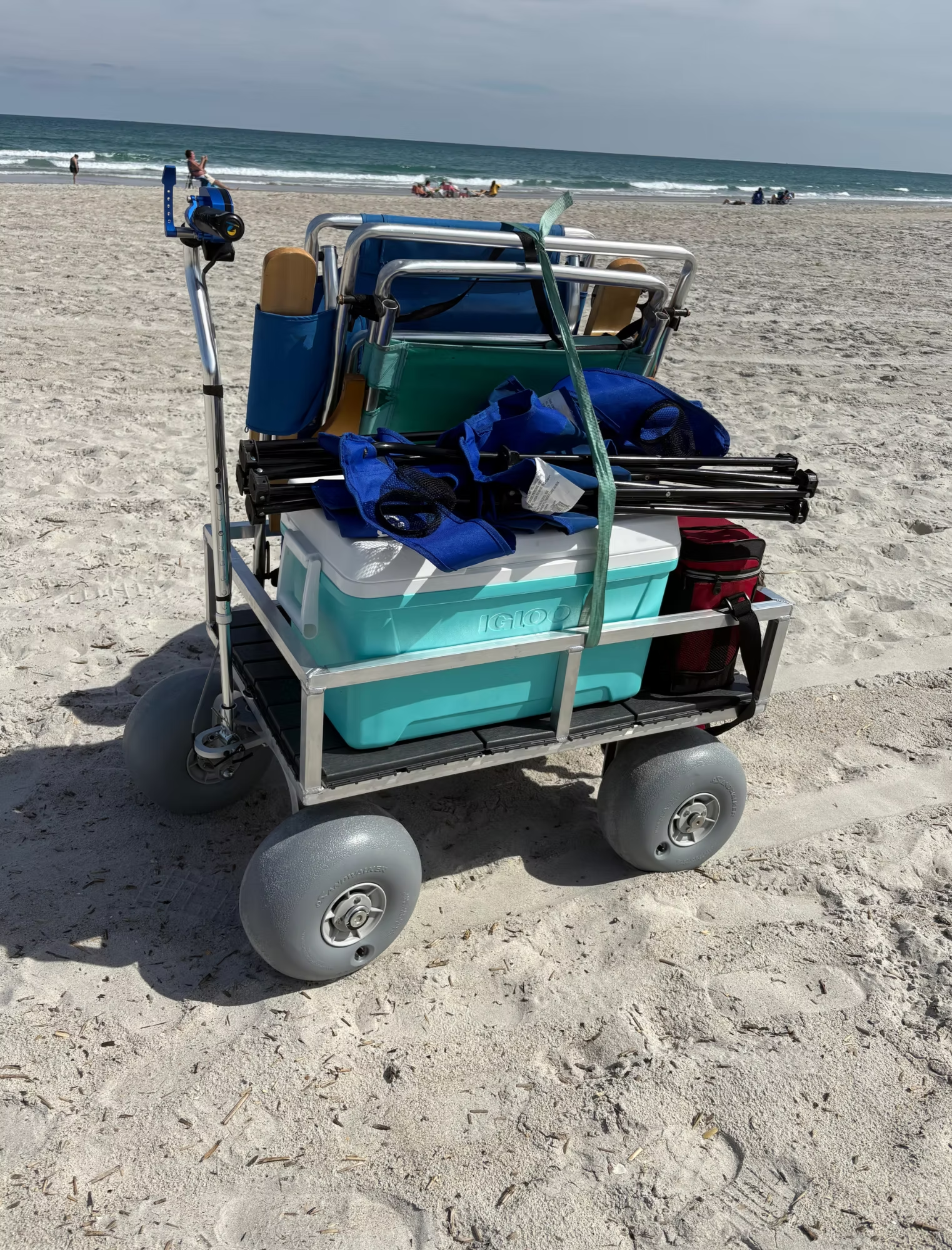
The standard model runs on a rear two-wheel drive system with high-torque motors. The frame measures 2 feet by 3 feet by 10 inches (61 cm × 91 cm × 25 cm) and is constructed entirely from aluminum — a deliberate choice for a product that lives in a salt and sand environment. The full cart weighs just 35 lbs (about 16 kg) unloaded, while supporting a rated payload capacity of 500 lbs (227 kg).
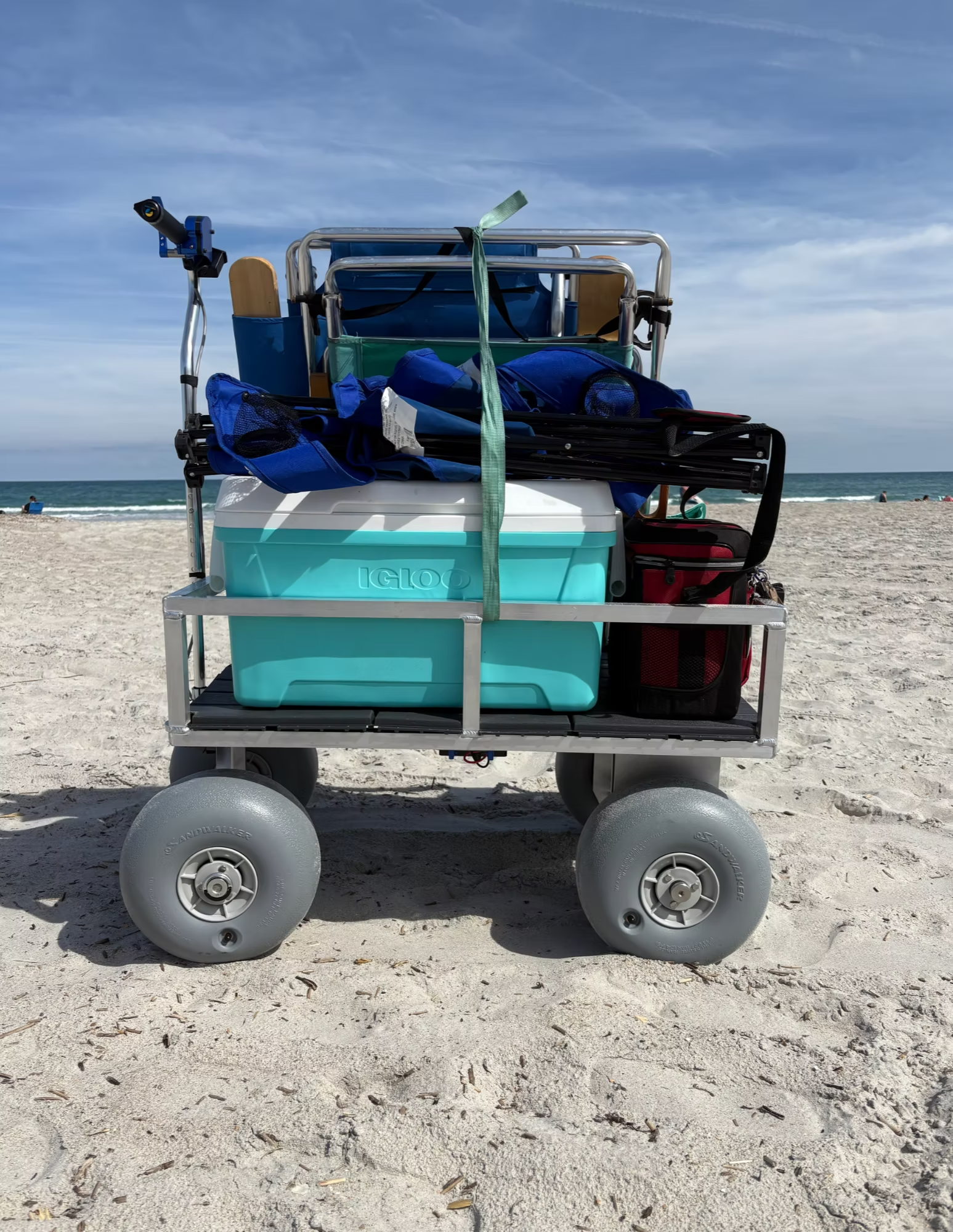
For context, some competing electric beach carts weigh upward of 120 lbs (54 kg) on their own — before anything is loaded into them.
The 13-inch balloon-style wheels are sized to roll across soft sand without sinking, and all materials are described as weather resistant. When not in use, the cart collapses for transport and can be fully disassembled without tools — small enough to fit in the trunk of a standard sedan.
The battery setup: Open-source by design
One of the more practical decisions baked into the Beach Mule’s design is its battery system. Rather than using a proprietary pack that locks users into buying replacements from the manufacturer, the Beach Mule runs on 24V Kobalt-compatible power tool batteries — the same platform sold at Lowe’s Home Improvement stores and widely available on Amazon.
Each cart ships with two 6.0Ah 24V batteries and a charger. The company reports real-world range of approximately 4 to 6 miles per charge under typical conditions. In their own testing — conducted on soft sand at Fort Fisher, North Carolina, with over 200 lbs loaded — they recorded roughly 10 miles of range using both batteries.
Each battery weighs approximately 1 lb (0.45 kg), and the system is engineered to run on a single battery, with the second extending the range. Replacement batteries are available locally or through Amazon for around $50 per pair, according to the company’s site.
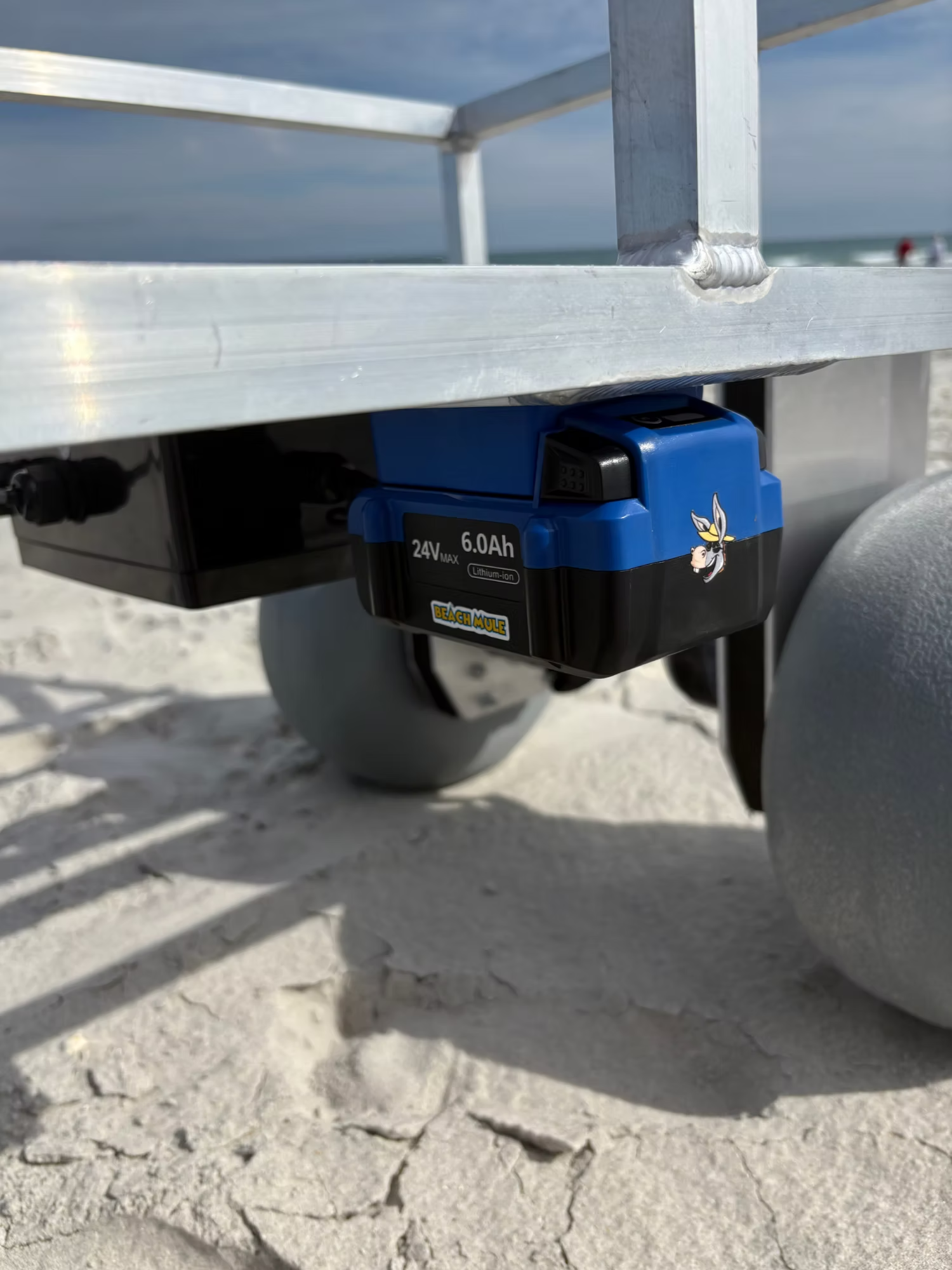
The open-source battery approach appears intentional. The company points out that if a battery dies on a beach trip, users can run to the nearest hardware store and be back before anything melts in the cooler — a scenario they say competing products, with their proprietary battery systems, cannot match.
A four-wheel drive option on the way
The Beach Mule’s current standard model is two-wheel drive, which the company says handles most sand conditions without difficulty. However, they’re developing an AWD add-on upgrade — a front axle kit that converts the base model to four-wheel drive without requiring the purchase of an entirely new unit.
The company holds a patent on the AWD system and states it is the only electric beach cart in the world to offer this capability. The upgrade is expected to be made available to existing Beach Mule owners before new customers, and the company is advising buyers not to wait on purchasing the base model while hoping to buy both simultaneously.
For those dealing with particularly deep, soft sand — or carrying very heavy loads across dunes — the AWD option is positioned as a meaningful upgrade rather than a cosmetic one. The company notes there are beach areas, including some along the North Carolina coast, where four-wheel drive is essentially required to avoid getting stuck.
Built locally, shipped across the country
The Beach Mule is manufactured in North Carolina. Assembly, molding, and packaging involve other local businesses, and the company says it has expanded into a second warehouse dedicated entirely to the Beach Mule product line to meet demand.
The company claims to have sold out within the first two days of its initial launch, and has frequently operated on waiting lists since then. It reports no outside business loans and describes itself as 100% privately owned and customer-order funded.
Shipping to the mainland United States is free, with a targeted delivery window of two to three business days after an order is placed. International dealers are established in Hawaii through Roy’s Fishing Supply (located in Aiea, HI) and in Australia through BeachWheels Australia.
The Beach Mule has also been put to work beyond recreational use — the Flatbed Beach Mule HD model has been adopted by 4Ocean, the ocean plastic cleanup organization, for use in beach cleanup operations along U.S. coastlines.
Who it’s built for
The Beach Mule’s design philosophy comes through in a few specific details. The weight target for the cart was reportedly built around the ability of a 93-year-old veteran to lift it — a practical benchmark that says a lot about the intended user base. Customer Susan M. put it plainly in a testimonial on the company’s site:
“I’m in my early 70s and this has completely changed how I enjoy the beach. I don’t rush anymore, I don’t struggle, and I can actually relax. It pulls everything we need without issue. Simple, sturdy, and clearly well thought out.” — Susan M.
The company explicitly calls out families, older adults, and people with varying mobility needs as part of the design audience. For anyone who has watched a full beach setup get abandoned halfway across a parking lot because the cart sank into the sand, the appeal is straightforward.
Things to keep in mind
The Beach Mule is a purpose-built product for beach environments — not a general-purpose utility cart. Buyers should note that the AWD upgrade is listed as “coming soon” and is not yet available for purchase alongside the base model. Range figures of 4 to 6 miles are manufacturer-reported; real-world results will vary depending on load weight, sand conditions, and terrain.
The company’s website carries a strong comparative tone against competing products, which are described as repurposed overseas components. Buyers doing their own due diligence should evaluate specifications across available options, as the market for electric beach carts has expanded and continues to grow.
The standard model does not include the AWD system. Buyers who anticipate carrying very heavy loads through deep, soft sand may want to wait for the AWD add-on to become available before purchasing.
Pricing and availability
The Beach Mule standard model is priced at $1,995.99 and includes the cart, two 24V 6.0Ah batteries, a charger, and all assembly tools. Free standard shipping is included for orders within the mainland United States. The cart is available directly through the company’s website.
Source: The Beach Mule


