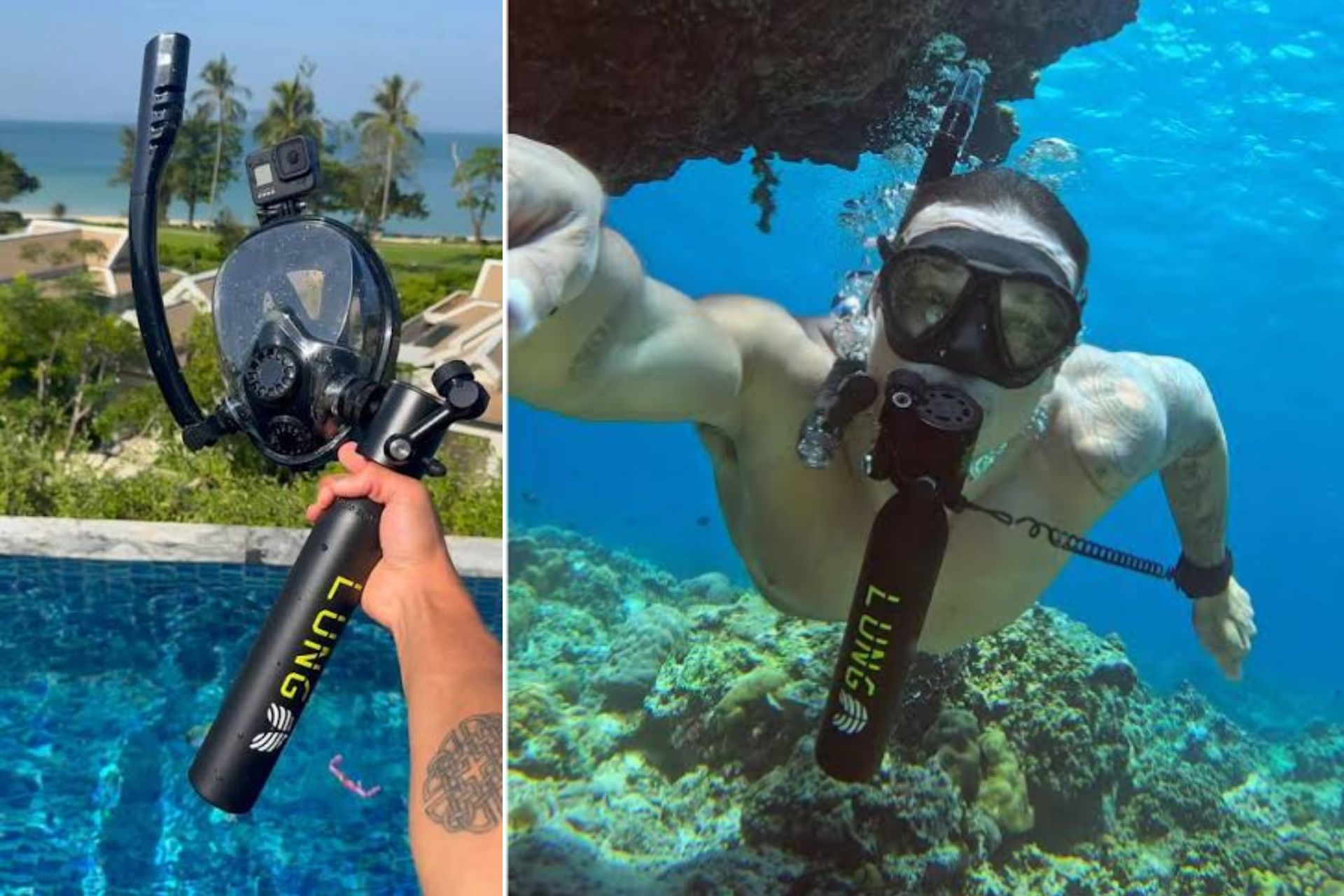
For anyone who has wanted to linger a little longer beneath the surface while snorkeling — to check a boat’s hull, free a snagged anchor, or simply watch a reef without coming up for air — the gap between holding your breath and hauling out full scuba gear is wide. LUNG, an Australian company, sells a line of compact refillable cylinders aimed at that middle ground, letting a user breathe underwater for short stretches and refill the tank without a dive shop.
The system centers on two tank sizes, a battery-powered refill unit, and an optional full-face mask.
Two tanks, two durations
LUNG offers the system in two cylinder sizes. The smaller T-500 is rated for up to 10 minutes underwater and is described as travel-friendly, while the larger T-1000 is rated for up to 20 minutes on a fill. Both work with the company’s full-face Sub-Mask.
Those durations are maximums. Real bottom time depends heavily on depth and how hard the user is breathing, since air is consumed faster the deeper you go — a useful thing to keep in mind rather than treating 20 minutes as a guarantee.
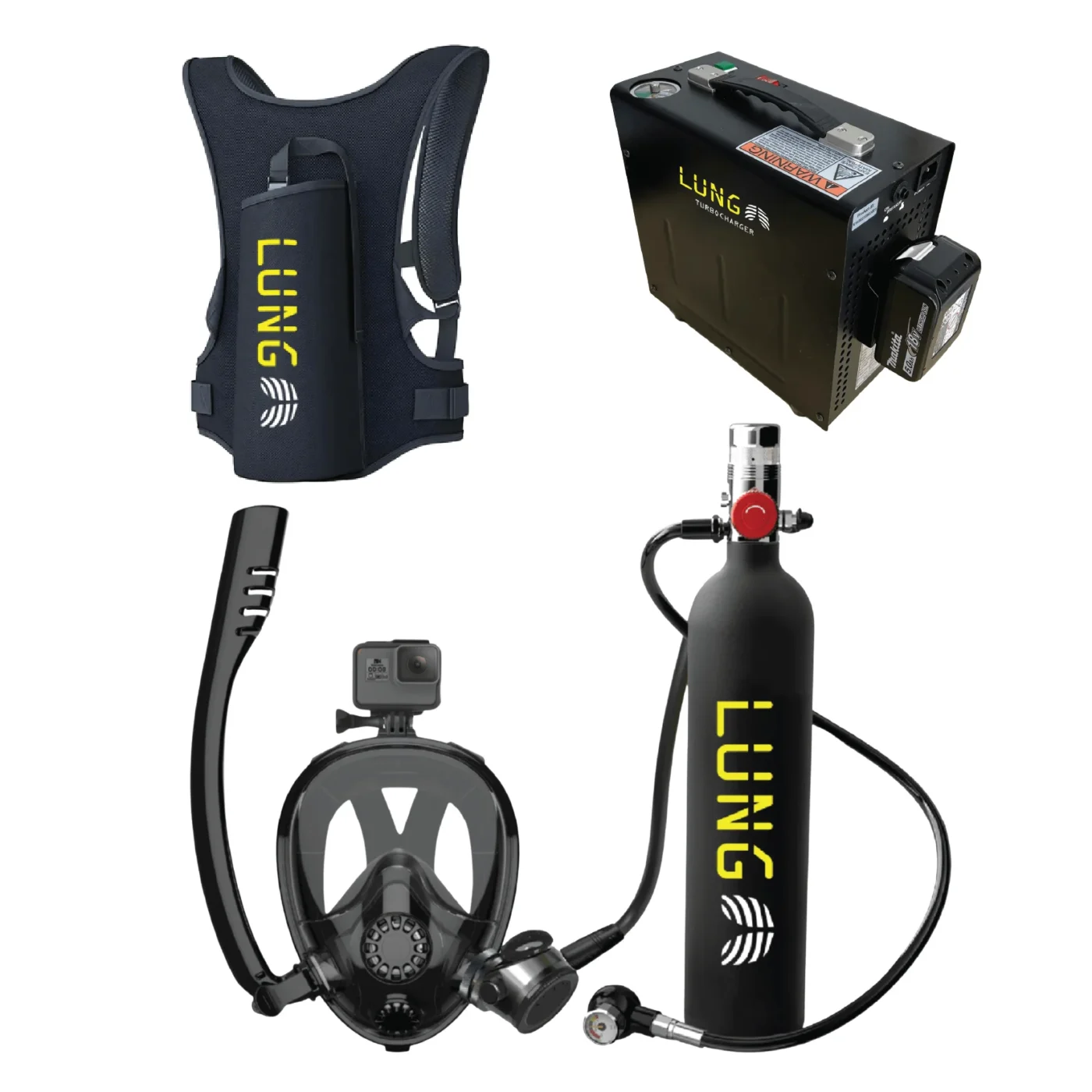
The T-1000 is LUNG’s highest-capacity cylinder. Each one ships with a mouthpiece, an extended pressure gauge so the diver can watch remaining air at a glance, and a backpack-style harness that the company says makes for a more comfortable carry underwater. In LUNG’s product photos, the aluminum cylinder carries a “DOT-3AL” marking, the U.S. Department of Transportation specification for seamless aluminum gas cylinders.
The turbocharger refill unit
The piece that sets the kit apart from a one-and-done pony bottle is the Turbocharger, a battery-powered refill station for the T-1000 or T-500. LUNG says it refills a cylinder anywhere in minutes.
It can be powered two ways: from an 18-volt cordless power-tool battery, or by plugging into a 110V or 220V mains socket. The company lists compatibility with Makita, Milwaukee, Bosch, and DeWalt 18V lithium-ion batteries, which are not included. The unit comes with a high-pressure cable, an auto-stop function, and spare filters, and LUNG describes it as compact and lightweight.
That refill-on-the-go approach is the system’s main argument: instead of swapping or trucking tanks to a shop, the user tops up from a tool battery between dips.
The Sub-Mask
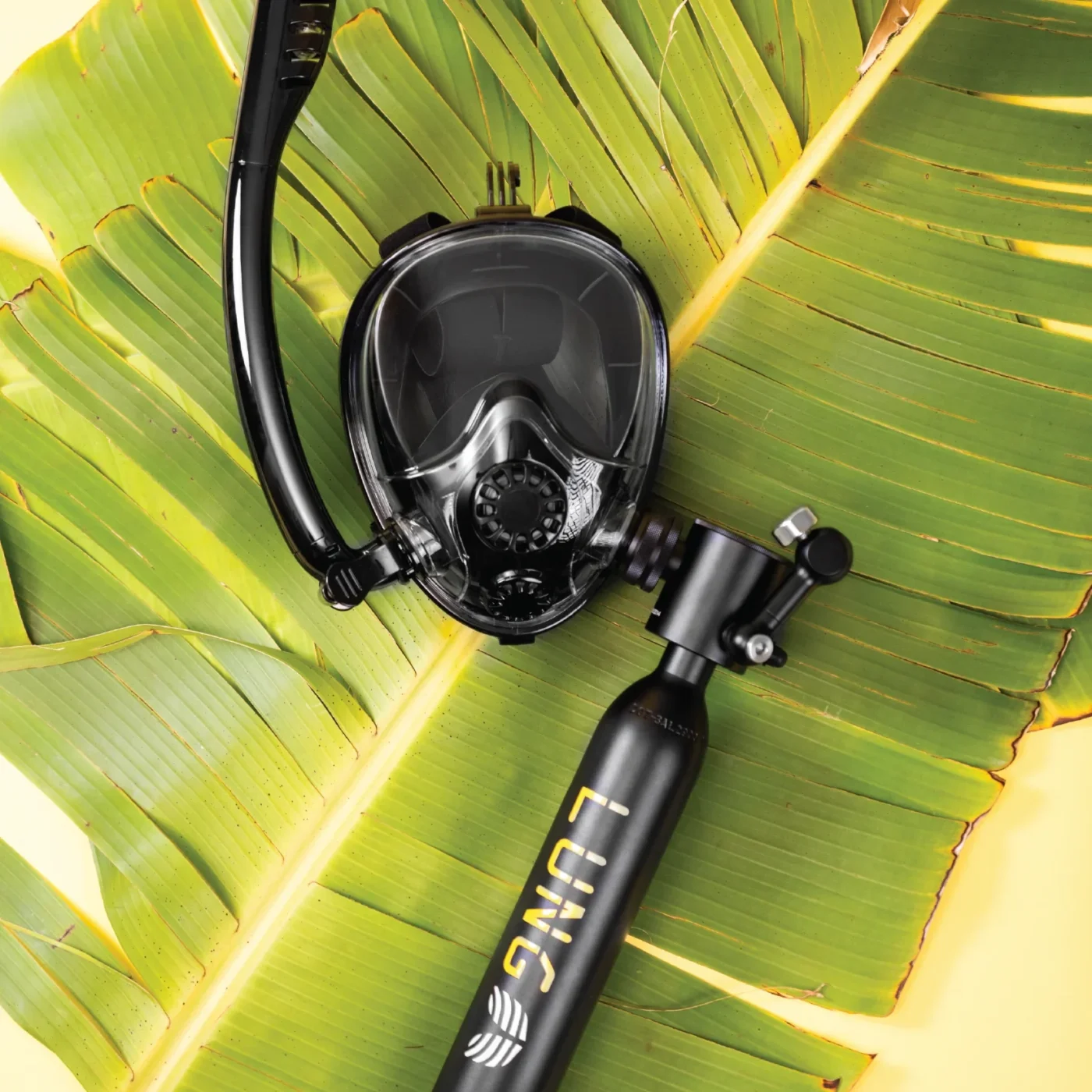
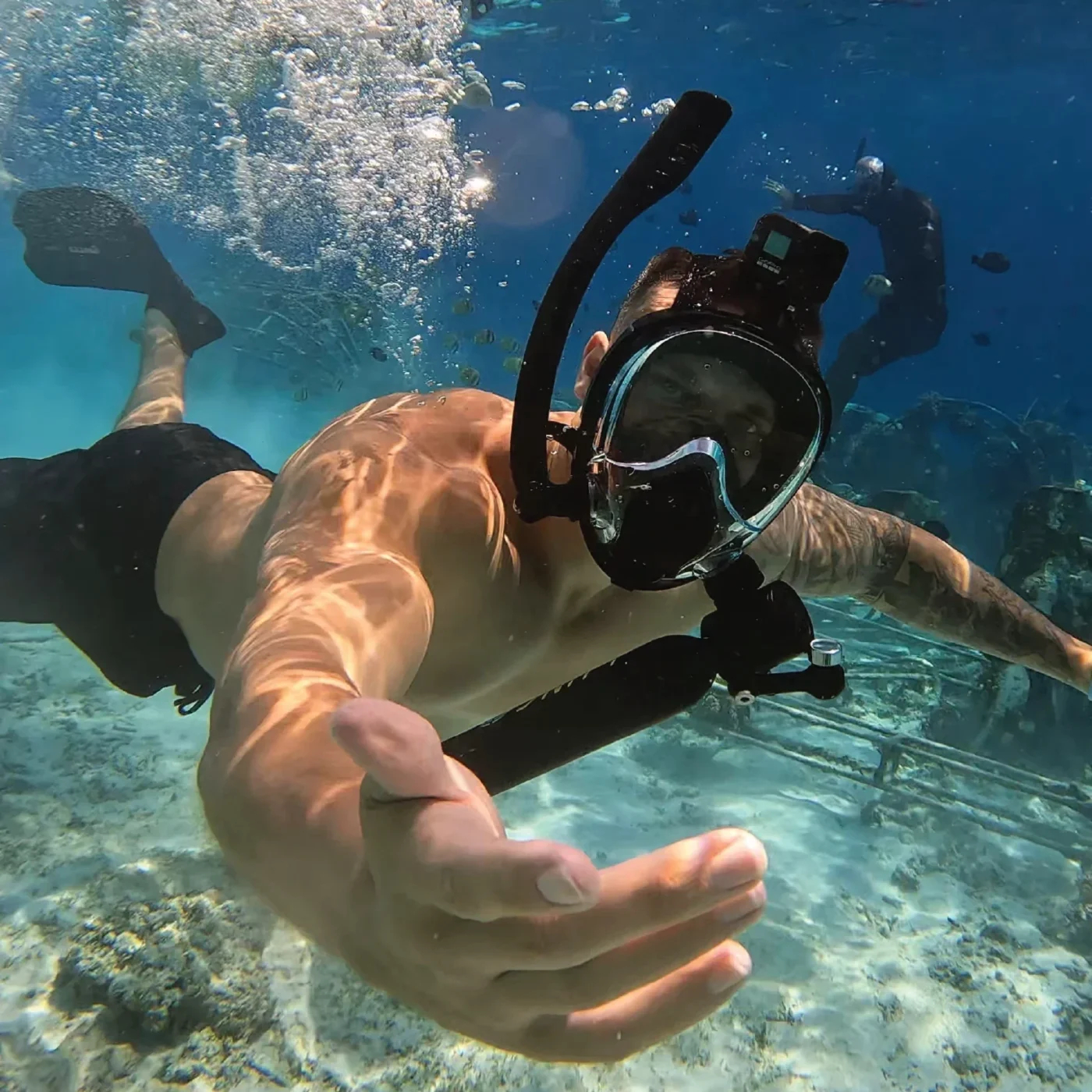
The optional Lung Sub-Mask is a full-face snorkeling mask that connects to either cylinder. On the surface, the user breathes through the snorkel as with any full-face mask; once they dive below, the mask draws from the LUNG cylinder automatically. The mask also has a mount for an action camera, though the company notes a camera is not included in the kit.
Safety and limitations
The kit is pitched at snorkelers, boaters, and pool or shallow-water users who want short, repeatable underwater time without the bulk and logistics of conventional scuba.
LUNG directs buyers to its User Manual and Safety Guidelines and maintains a dedicated safety page; the company describes the equipment as fully certified, and the cylinder markings indicate a DOT-spec tank, but certification of the hardware does not replace training in how to use it. Anyone considering one would be well served by understanding depth limits, ascent rules, and the basics of breathing compressed gas before getting in the water.
These are tools for short, shallow excursions, not for deep or long dives, and they carry the inherent risks of any underwater activity.
Pricing and availability
LUNG sells directly through its website. The full kit — Lung T-1000 with backpack, Sub-Mask, and Turbocharger — is listed on sale at US$1,268, reduced from US$2,114.
Bought separately, the T-1000 cylinder is listed on sale at US$397, the T-500 cylinder at US$217, and the Sub-Mask at US$116 — each currently discounted from higher regular prices. LUNG ships worldwide and is based in Queensland, Australia.
Source: LUNG Tank