

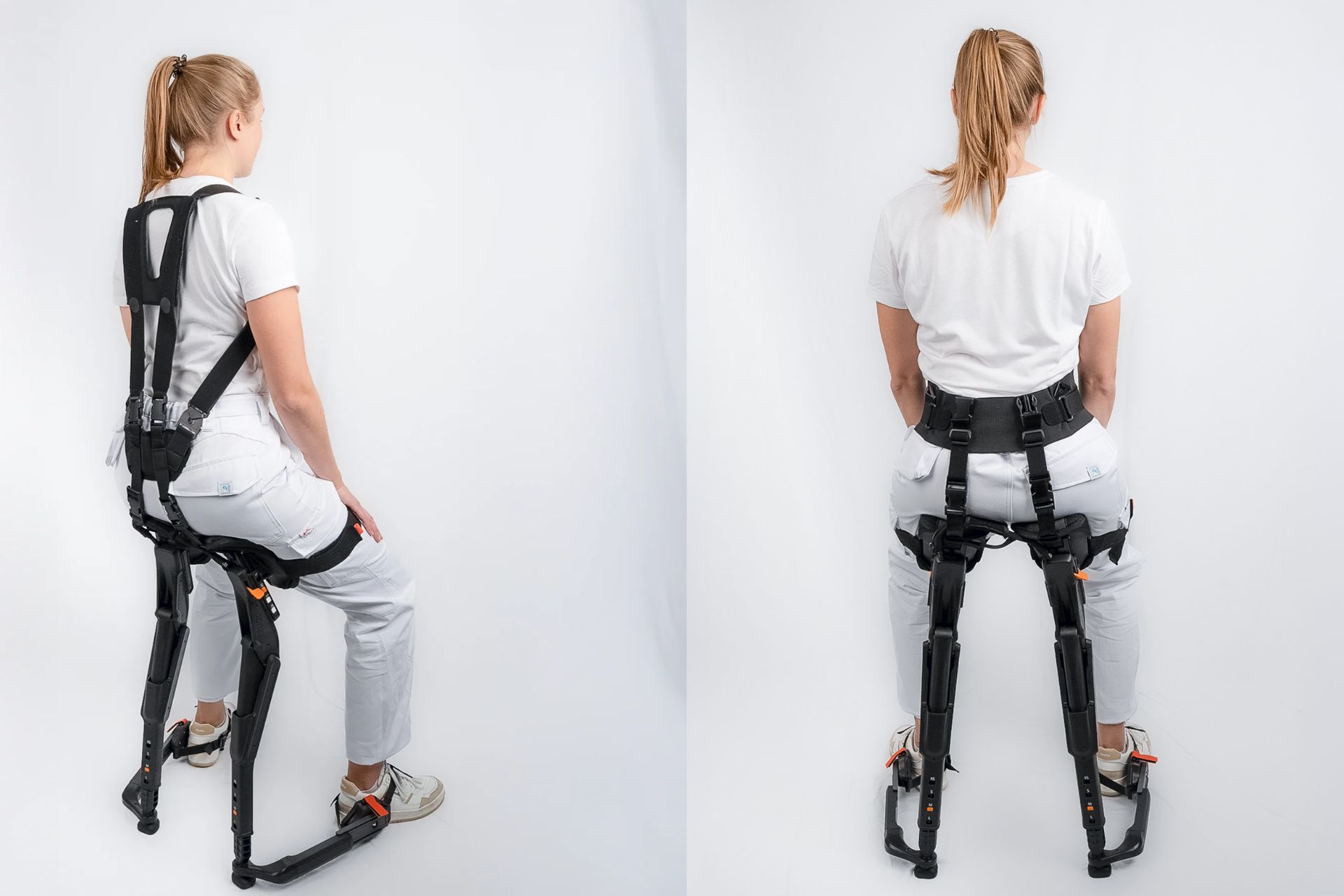
Designed for workers who spend hours on their feet, this passive lower-body exoskeleton from Carl Stahl and noonee lets users switch between sitting, standing, and walking without a chair — and without a battery.
Anyone who has spent a long shift on a factory floor, in a warehouse, or on a construction site knows how quickly standing fatigue builds up. Stools and chairs can help, but many work environments don’t allow workers to stay near a fixed seat. The Chairless Chair 2.0 takes a different approach by turning the seat into something the worker wears.
Developed by noonee, a German ergonomics company founded in 2014 and acquired by Carl Stahl Hebetechnik in 2024, the Chairless Chair 2.0 is a passive lower-body exoskeleton. It contains no motors, batteries, or electronics. Instead, it uses a mechanical locking system that allows users to sit at virtually any location while remaining mobile when needed.
How it works
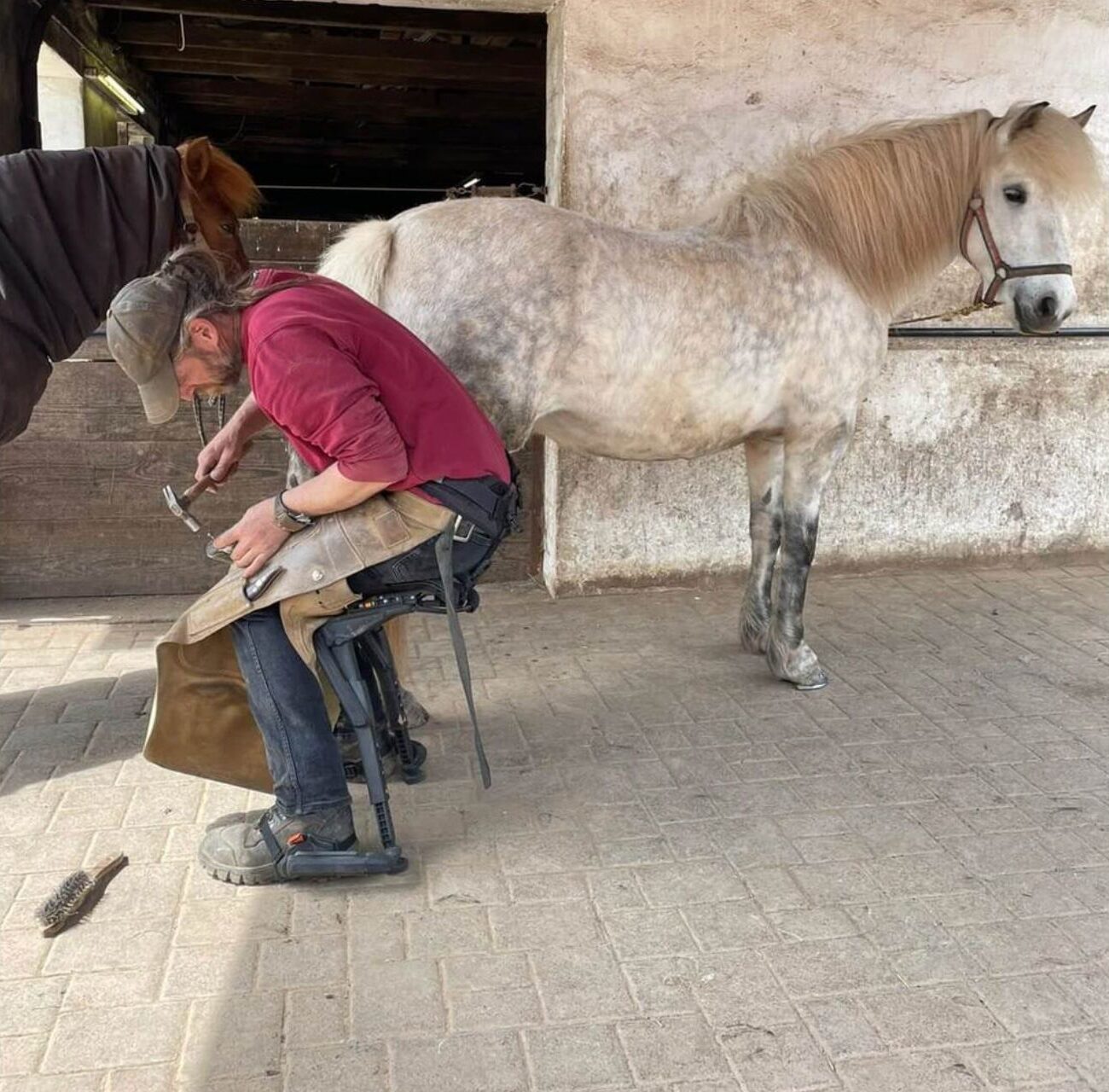
The Chairless Chair 2.0 attaches to the body at three points: the hips via a padded belt, the thighs via straps, and the heels through foot attachments connected to the user’s shoes. Two lightweight fiberglass-reinforced plastic support legs run along the back of the wearer’s legs and incorporate joints that follow the natural movement of the knees.
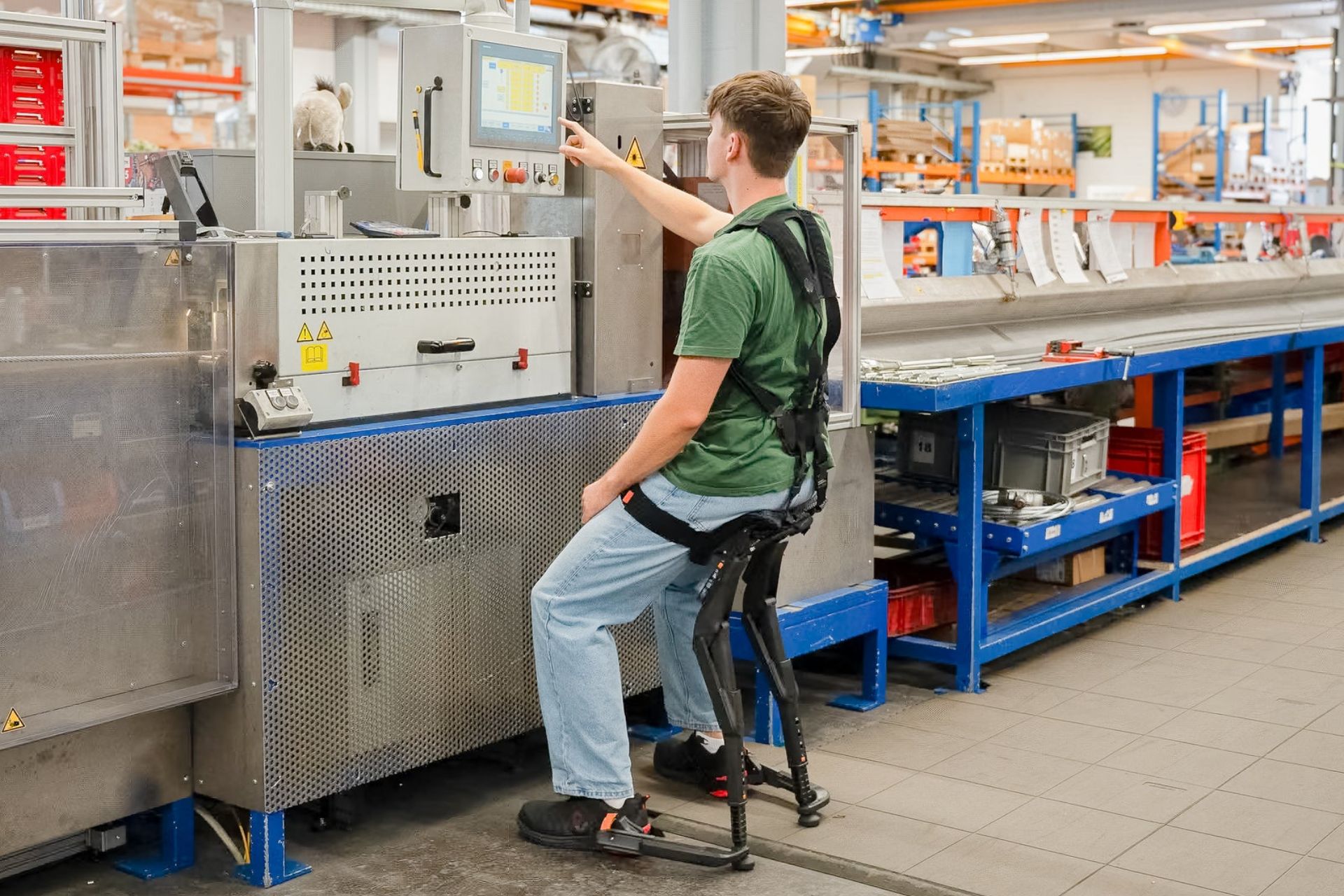
When users want to sit, they bend their knees to the desired height and engage the damper mechanism. The exoskeleton locks into position, transferring body weight through its structural legs into the heel supports on the floor. This removes much of the load from the user’s legs while supporting the thighs and buttocks in an upright posture.
To stand again, the lock is disengaged and the user simply straightens up. The transition takes only seconds and allows workers to alternate freely between sitting, standing, and walking without changing locations or interrupting their tasks.
Because the system is entirely mechanical, there are no charging requirements, software updates, or power cables. The simplified design also reduces maintenance needs and potential failure points.
Physical specifications
The Chairless Chair 2.0 weighs approximately 3.5 kilograms (7.7 pounds), making it about 25% lighter than the previous generation.
The exoskeleton is designed as a one-size-fits-most system that adjusts for users between 1.50 and 2.00 meters tall (4 ft 11 in to 6 ft 7 in). Adjustable frame settings accommodate different body proportions and preferred sitting heights.
Maximum supported user weight is 120 kilograms (265 pounds). The structural components are made from fiberglass-reinforced plastic to balance rigidity and low weight, while the contact surfaces feature padding designed for extended wear.
The complete package includes the exoskeleton frame, chest harness, foot attachments, and a Carl Stahl-branded carry bag.
Why it exists
The Chairless Chair addresses a common workplace challenge: musculoskeletal strain caused by prolonged standing.
According to data cited by German health insurer DAK, three-quarters of working people in Germany experience back pain, with standing occupations particularly affected. Musculoskeletal disorders account for roughly one-quarter of workplace absence days, and the issue is expected to become increasingly significant as workforces age.
As a passive exoskeleton, the Chairless Chair is intended to reduce physical strain rather than increase lifting power. Research involving 25 adult workers aged 18 to 60, each with at least six months of exposure to prolonged standing, examined factors such as plantar pressure, body sway, fatigue, and usability. The study utilized tools including a Podoprint S4 pressure platform and the CR10 Borg fatigue scale.
According to the manufacturer, the device can reduce weight load on the knees and feet by up to 65% while promoting an upright seated posture that relieves pressure on the spine and intervertebral discs.
The Chairless Chair is not a powered exoskeleton and is not intended for rehabilitation. Instead, it is designed for work-related tasks such as assembly, production, and order picking.
Industries and applications
Carl Stahl and noonee market the Chairless Chair 2.0 across a broad range of industries where workers spend extended periods standing or working in semi-squat positions.
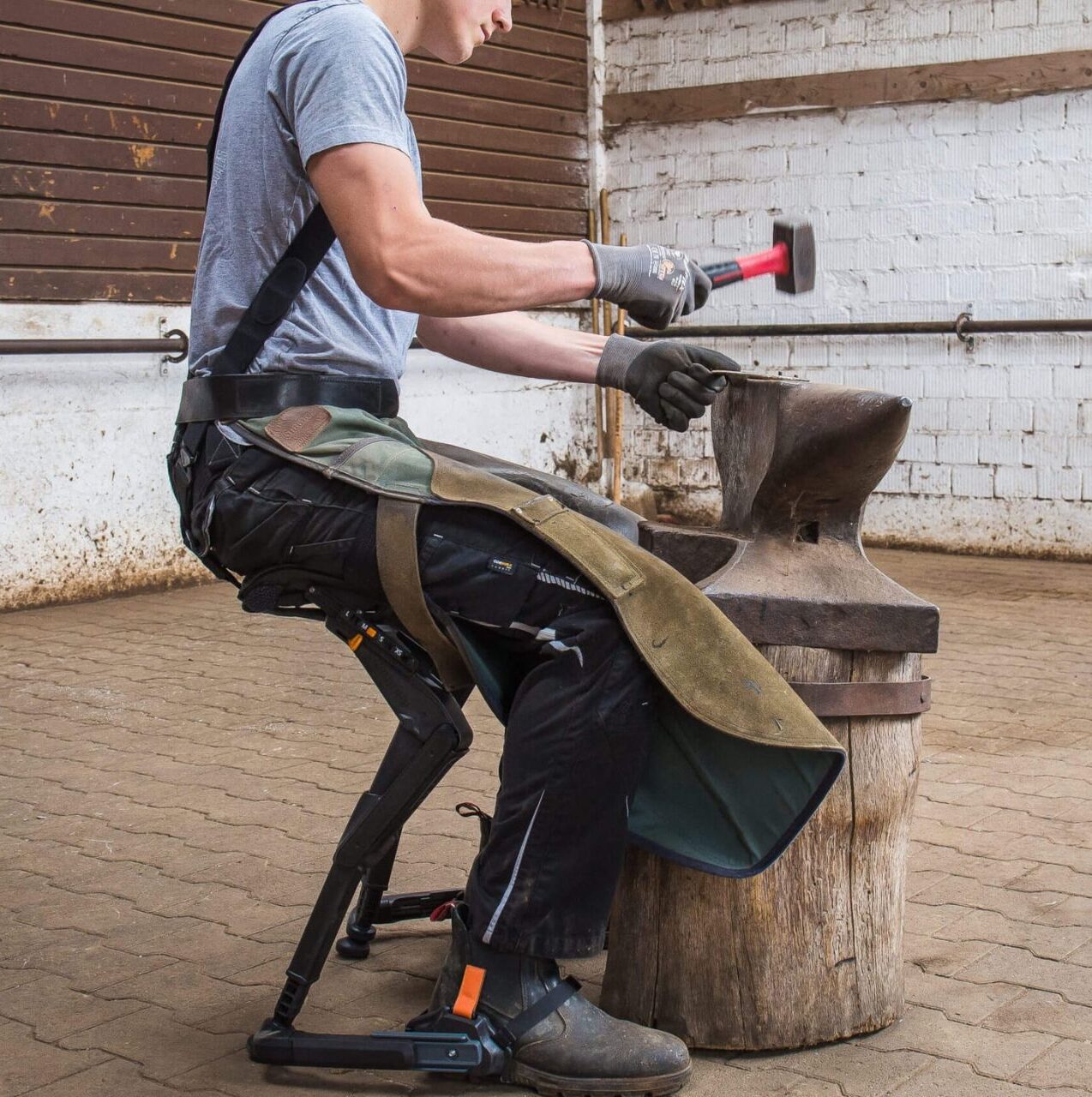
Target sectors include logistics and warehousing, automotive manufacturing, healthcare, construction, agriculture, and farriery — the specialized trade of shoeing horses.
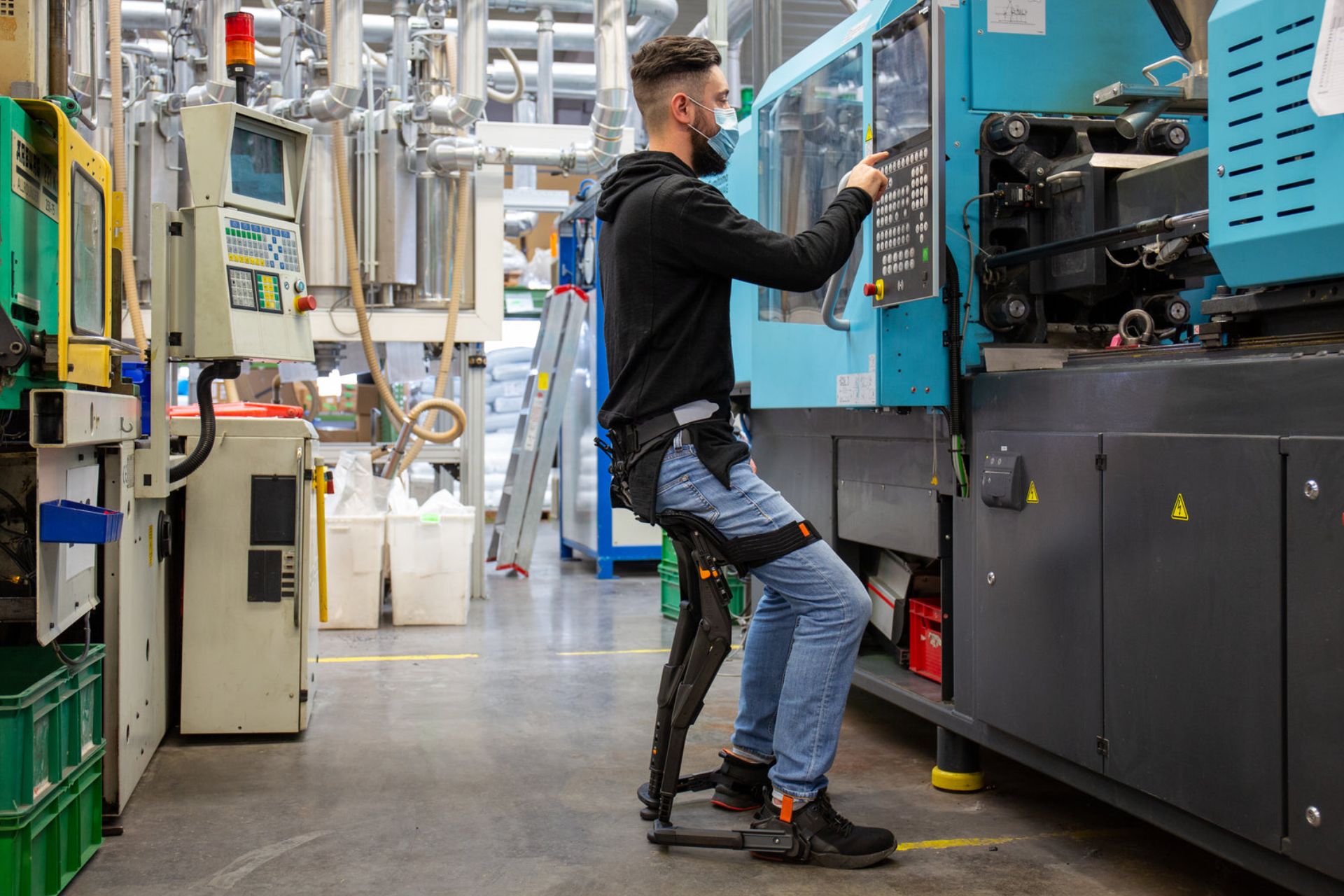
Automotive production has been one of the most active adopters of exoskeleton technology because assembly-line workers frequently maintain fixed postures for long periods. Since the Chairless Chair requires no modification to workstations, it can be deployed in environments where conventional seating is impractical.
Healthcare and agricultural work present similar challenges, where employees often need to remain mobile while performing tasks that involve prolonged standing.
A trial is required before purchase
One unusual aspect of the Chairless Chair purchasing process is that Carl Stahl requires prospective customers to complete a paid trial phase before buying the device.
According to the company, the exoskeleton requires proper explanation, fitting, and adjustment before first use. As a result, buyers must complete a one- to two-week test period before a purchase can be finalized.
The requirement reflects the personalized nature of the product. Frame height, strap tension, and preferred seating angles all need to be adjusted to match the individual user and workplace environment. Carl Stahl also offers exoskeleton consultation services to assist with this process.
Pricing and availability
The Chairless Chair 2.0 is listed at $2,665.56 through Carl Stahl American Lifting for the U.S. market, with a stated delivery time of one to five working days.
As noted, the mandatory trial phase is separate from the purchase price, with costs determined during consultation.
The device is also available through noonee’s own sales platform for approximately $2,693 and is featured alongside other workplace exoskeleton products from manufacturers such as Ekso Bionics and Skelex.
What to keep in mind
The Chairless Chair 2.0 is designed specifically for workplace use and is not intended as a medical device. Carl Stahl notes that it is not meant for private individuals seeking treatment for back problems or mobility issues.
Its passive design offers advantages such as low weight, mechanical simplicity, and no operating costs related to batteries or charging. However, support levels are fixed by the physical structure rather than dynamically adjusted through motors or software, which may limit flexibility compared to powered exoskeletons.
Organizations considering deployment should also account for the required trial period, which adds time to the procurement process but helps ensure proper fitting and effective use before larger purchases are made.
Source: Carl Stahl


