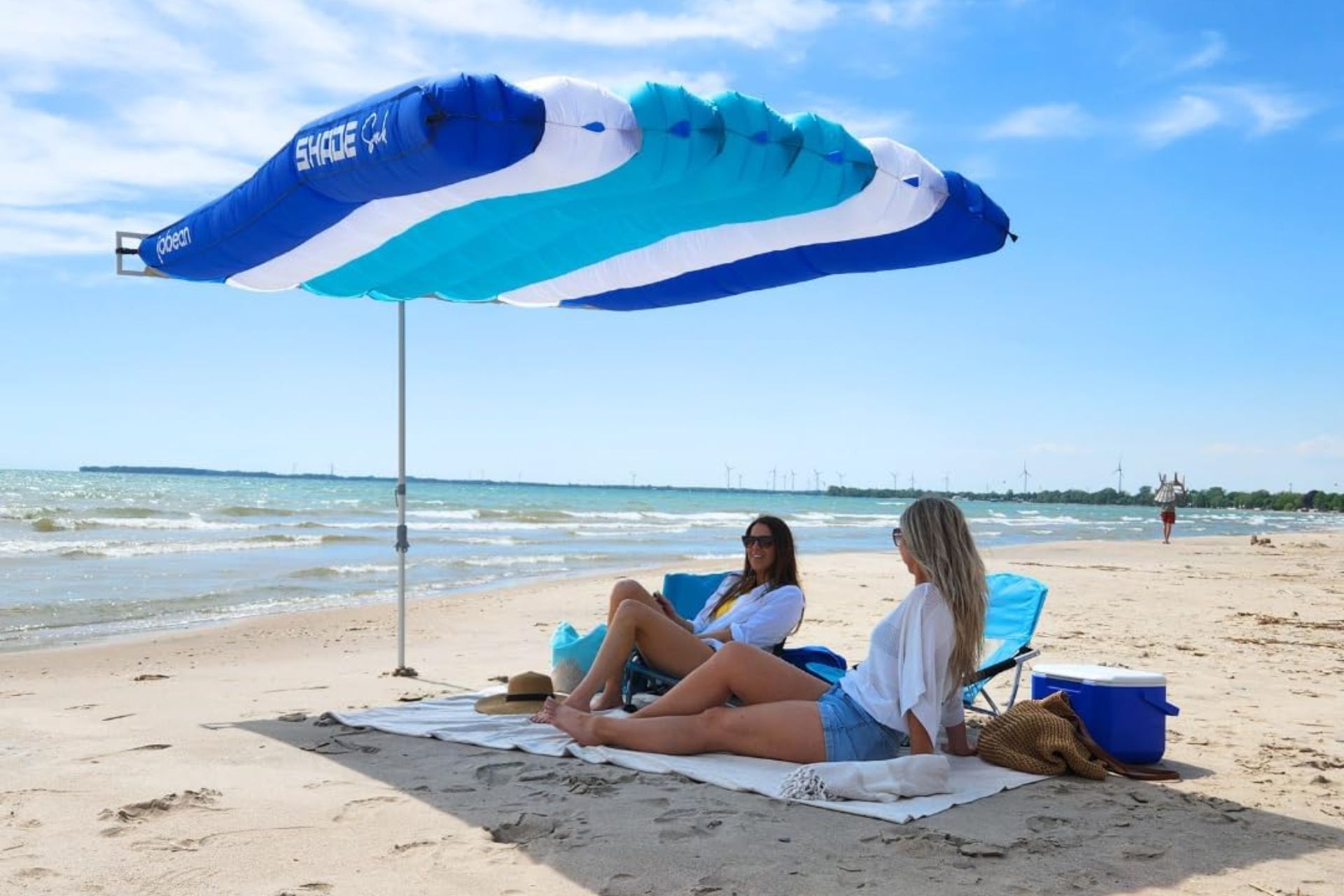
A Canadian beach-gear company called Jobean is selling a canopy that does something most beach shades try to avoid: it lets the wind in. The product, named the ShadeSock, is built to catch a breeze and stay aloft rather than fight against it, and the company markets it as “The Original Wind-Inflating Beach Shade.”
The pitch is simple. Anyone who has spent a windy afternoon at the shore knows the routine — a flapping tarp, a collapsing umbrella, or a canopy that pulls its anchors out of the sand. The ShadeSock approaches the problem differently. Instead of bracing against the wind, it uses the wind as the thing that holds its shape.
How it works
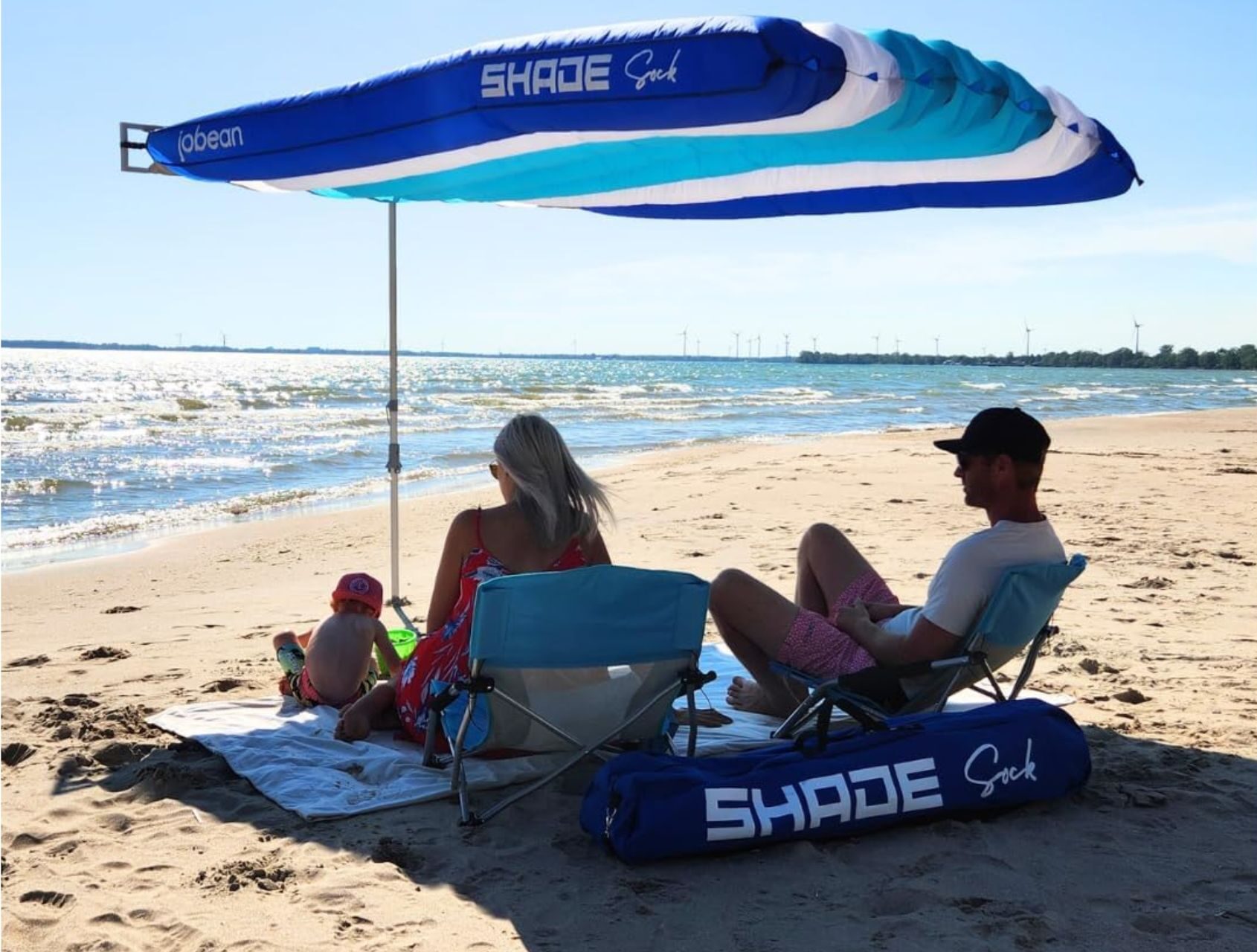
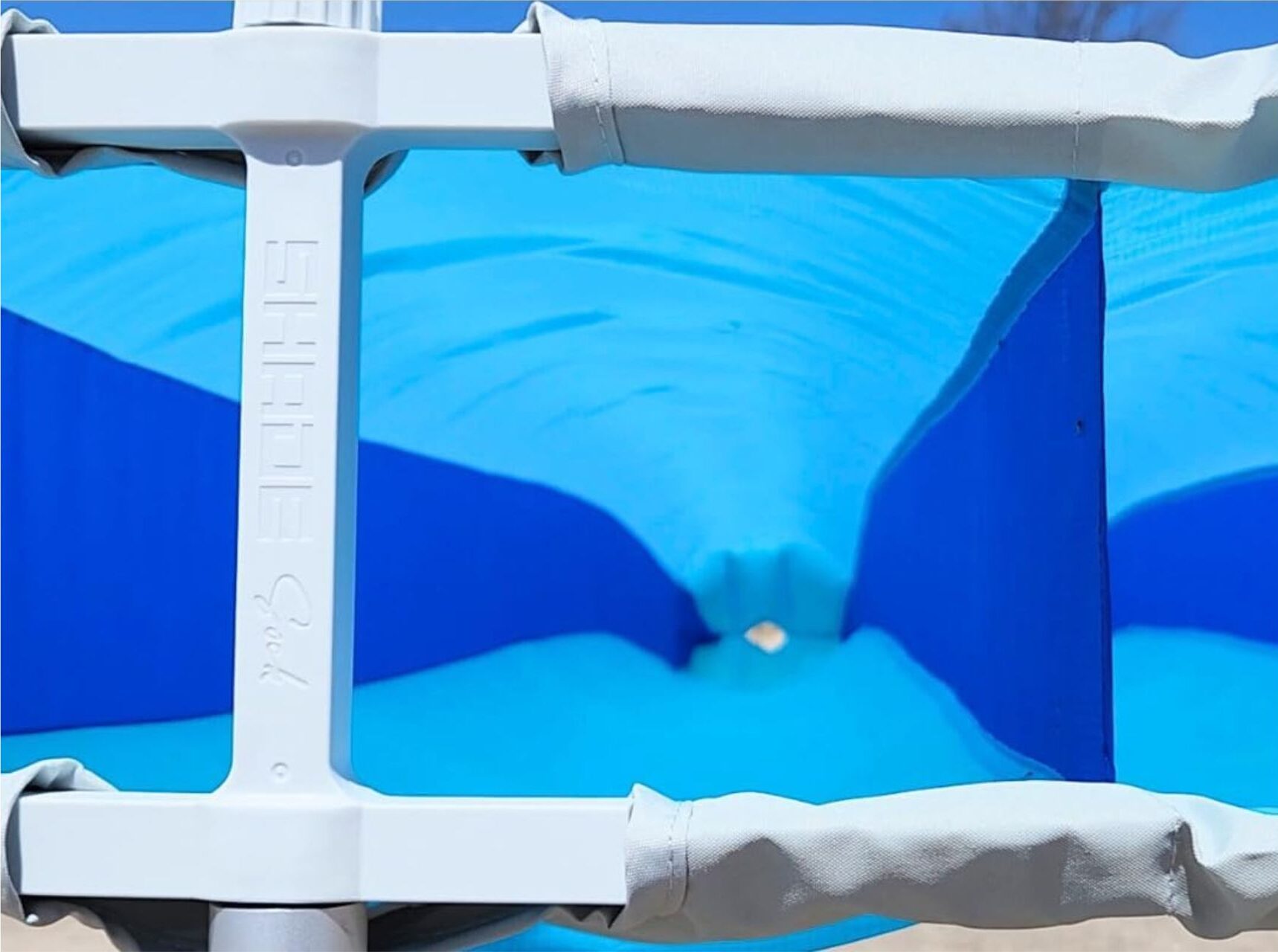
The design centers on a canopy that inflates as air passes through it. According to Jobean, the patent-pending shape captures more wind than it releases, and that trapped pressure keeps the fabric taut. The result, the company says, is a shade that does not flap. “The ShadeSock flies quietly without producing any flapping noise, setting it apart from other flying beach shades,” the company states. Jobean adds that customers have described the floating canopy as “unique and peaceful” and “like a cloud.”
A second feature handles direction. The ShadeSock sits on a 360-degree frame that lets the canopy rotate on its own, so it realigns with shifting wind rather than requiring the user to reposition it by hand. Jobean describes this as self-adjusting, which in practice means the shade tracks the breeze instead of being knocked around by it.
The specifications
The canopy measures 8 by 10 feet (about 2.4 by 3 meters), which Jobean says is large enough to shade up to four people. The fabric is rated UPF 50+, and because of the way the canopy folds over itself, the company notes that sunlight has to pass through two layers of that material before reaching the ground — adding a margin of UV protection beyond a single panel.
The shade is tuned for a specific wind range: 4 to 20 miles per hour, or roughly 6 to 32 kilometers per hour. Below 4 mph there may not be enough air to keep it inflated, so the kit includes low-wind support pegs. For stronger gusts near the top of the range, it ships with a high-wind support rope. Written instructions are included for both scenarios.
Setup is listed at two to three minutes. Everything packs into a dual-compartment canvas carry bag — one side for the canopy, the other for the frame — measuring 46.5 by 5.5 by 4 inches (roughly 118 by 14 by 10 centimeters). One practical caveat from the company: at that length, the bag will not fit inside a standard suitcase, so it is better suited to car trips than air travel.
Where it fits
The ShadeSock targets a familiar gap in beach gear. Traditional umbrellas can be unstable in wind, while staked cabanas can be heavy and slow to pitch. A shade that gains stability from the same wind that defeats other designs is a genuinely different take, though it comes with its own trade-off — it needs a breeze to perform. On a still, windless day, buyers will be relying on those low-wind pegs to do the work the air normally would.
It is also worth noting that the company’s own framing leans heavily on novelty, and independent, long-term durability testing is not something a product page can provide. As with any newer outdoor product, real-world performance across a full season will tell the fuller story.
The ShadeSock is listed at US$279.99 on the company’s online store. It is also available on Amazon for US$279.99 at the time of writing, where readers can check the latest pricing, availability, and shipping options.
Source: ShadeSock