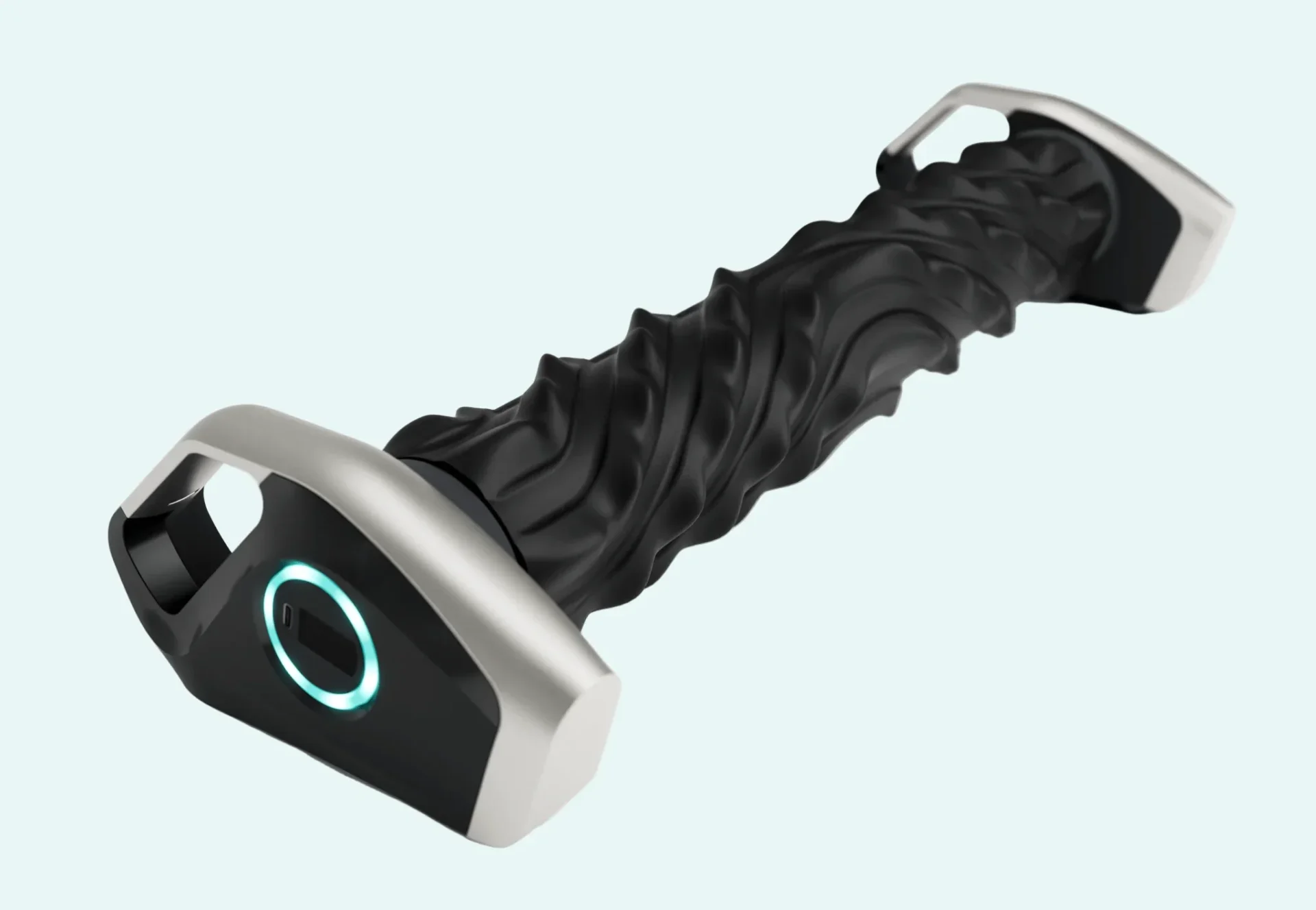
Foam rolling has been a staple of athlete recovery routines for decades, but it has always come with a catch: you have to do it yourself. Grinding a dense cylinder along a sore quad or stiff thoracic spine takes effort, coordination, and — if you’re being honest — a fair amount of willpower after a hard workout. The RheoFit A1 is built around the premise that none of that should be necessary.
The device, which made its public debut at CES 2025, is a motorized, hands-free massage roller that moves under your body autonomously while you lie or lean on it. Rather than requiring you to push yourself across a static cylinder, the A1 uses its own motor to generate rolling motion, applying pressure through 84 massage nodes across your muscles. The company describes the underlying mechanism as its proprietary DeepPower technology — a high-torque brushless motor miniaturized to roughly the size of a bottle cap that produces up to 16Nm of torque and generates up to 300N of thrust, enough to support users weighing up to 300 pounds (135 kg).
What that means in practice is that the device can sustain consistent, deep contact against muscle tissue without the user needing to actively control pressure or speed. Traditional foam rolling can be inconsistent — too much force in the wrong spot, not enough on a stubborn trigger point, and the whole routine devolves into guesswork. The A1 maintains steady mechanical pressure, which RheoFit says is more effective at reaching deeper layers of muscle fascia than manual rolling. The device generates a unique tangential shear force during use, stretching and releasing tight fascia simultaneously — a characteristic the company says distinguishes it from both conventional rollers and standard percussion massagers.

The AI component comes through the companion app, which offers three primary modes. A free mode lets users roll at their own pace and preference. An activity mode delivers therapist-designed routines tied to specific sports or workout types — useful for runners targeting calves and hamstrings, or lifters working on thoracic mobility before pressing sessions. The third mode uses an AI scan to assess areas of stiffness and generate a personalized massage plan based on the user’s reported soreness and activity level. The app covers 12 smart solutions across fitness categories and provides step-by-step guided sessions for each. Over-the-air updates mean the device continues to receive new features and programming after purchase.
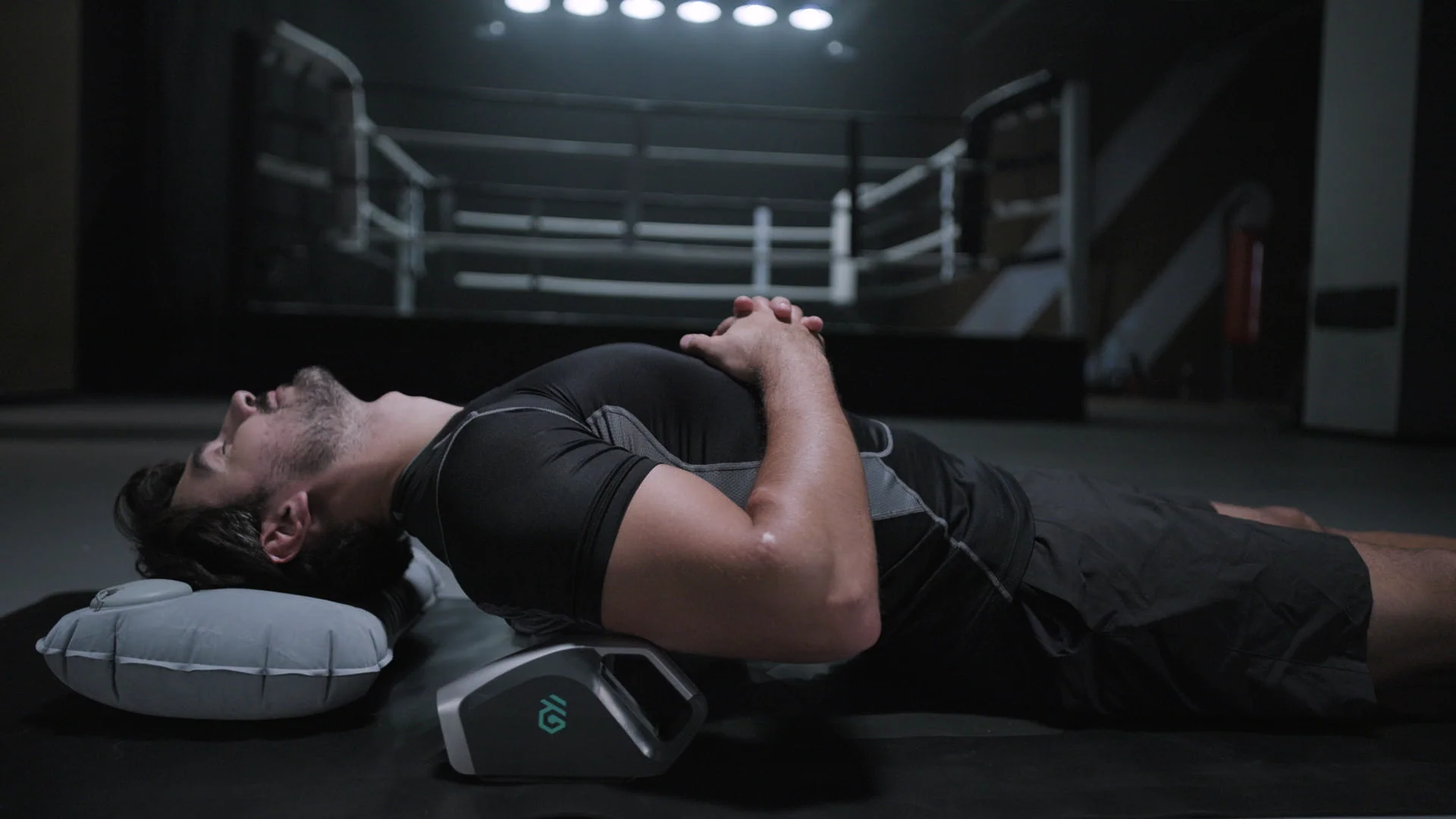
The physical design addresses one of the more overlooked limitations of conventional foam rollers: surface customization. The A1 ships with two interchangeable massage attachments — the LightDeep pad, which offers softer, broader contact similar to palm pressure, and the ProDeep pad, which delivers firmer, more targeted pressure closer to forearm-deep tissue work. Swapping between them requires no tools. The device weighs approximately 2.45 kg (about 5.4 lbs), and its contoured, wave-pattern surface is engineered to conform around different muscle group geometries rather than applying uniform pressure across varying body shapes.
Battery life is a practical strong point. The A1 uses a 2,600mAh cell with USB-C PD 25W fast charging and delivers up to 360 minutes of runtime per charge — the equivalent of roughly 24 full-body sessions, according to the company, though actual performance varies with body weight and massage intensity. A gesture control feature allows for an emergency stop without reaching for the device or opening the app, which is a useful safety detail when the roller is working on areas the user can’t easily monitor.
The certifications on record include FCC ID, CE-EMC, CE-LVD, CE-RED, RoHS, and REACH, covering the major regulatory requirements for the U.S., European, and broader international markets. Duty-free shipping is available to the U.S. mainland, UK, EU, Canada, and Australia.
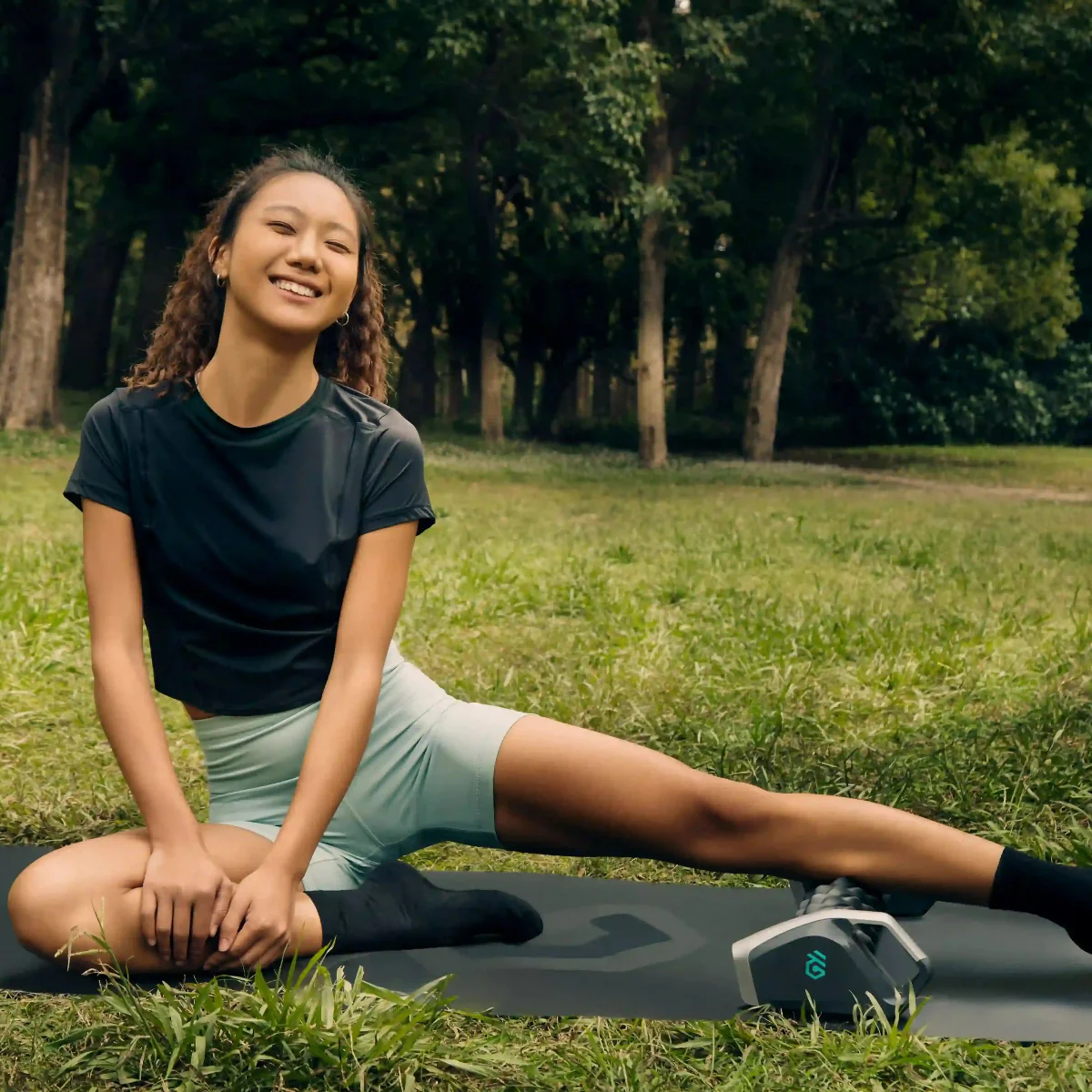
The RheoFit A1 is positioned for athletes, fitness enthusiasts, and desk workers dealing with persistent muscle tightness — anyone who would benefit from consistent myofascial release but doesn’t always have the time, energy, or technique to execute it manually. Early reviewers have noted a learning curve in getting body positioning right, particularly for upper back work, and the device functions best when used with proper head support in that region. For most lower body muscle groups — calves, hamstrings, quads, glutes — the setup is more straightforward.
What the A1 offers is a clear middle ground between consumer foam rollers and professional massage equipment — more capable than a static cylinder, far less expensive than regular physio visits, and considerably more passive than anything currently available in the category. For users who know they should be rolling consistently but rarely do, the removal of manual effort may be the friction reduction that turns an occasional habit into a daily one.
The RheoFit A1 is currently priced at $399 through RheoFit’s official website, where it includes the ProDeep and LightDeep massage attachments along with lifetime access to the company’s AI-powered recovery features. The device is also available on Amazon for $379, making it the lower-cost option at the time of writing.
Product page: RheoFit A1