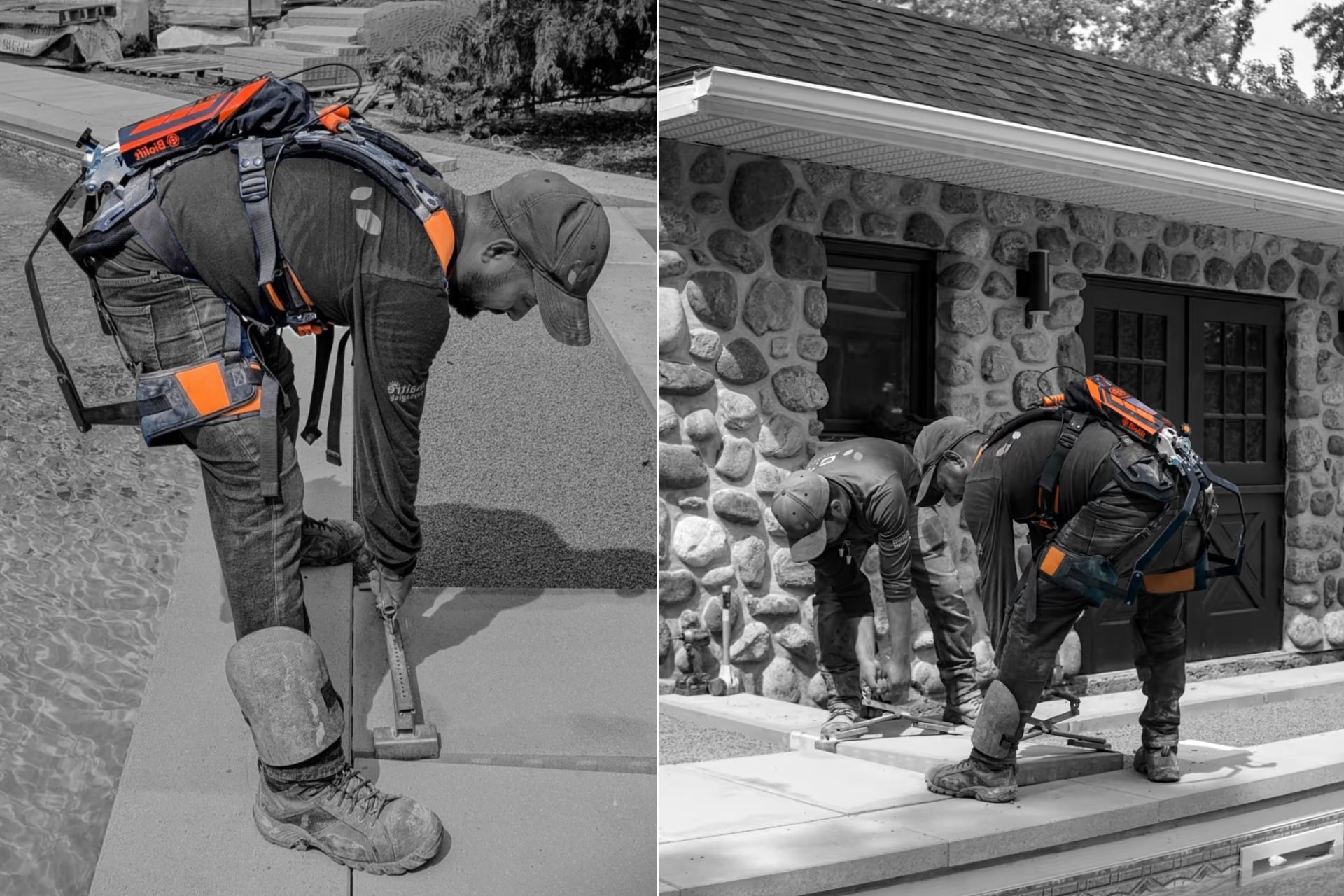
Back pain is one of the most common occupational hazards in construction and other physically demanding trades. Whether it’s laying pavers, landscaping, shoveling, or repeatedly lifting heavy materials, workers often spend hours bent over, placing constant stress on their lower backs. While powered exoskeletons have emerged as one solution, many rely on batteries, motors, and electronic systems that add weight, require charging, and may not be ideal for harsh jobsite conditions.
Canadian company Biolift has taken a different approach. Its wearable lower-back exoskeleton is entirely mechanical, using a spring-loaded system to help reduce the effort required during repetitive bending and lifting. With no batteries, motors, or electronics, the device is designed to provide consistent support throughout the workday while allowing users to move naturally.
A passive exoskeleton built for demanding work
Biolift is what is known as a passive exoskeleton. Rather than generating powered assistance, it stores and releases mechanical energy through an integrated spring mechanism.
As the wearer bends forward, the springs compress and store energy. When the user stands back up, that stored energy is released, helping support the movement and reducing the load placed on the lower back. According to the company, the system can provide up to 60 pounds (27 kg) of back support with every bend. Importantly, this does not increase the weight a person can safely lift; instead, it is intended to reduce muscular effort and fatigue during repetitive tasks.
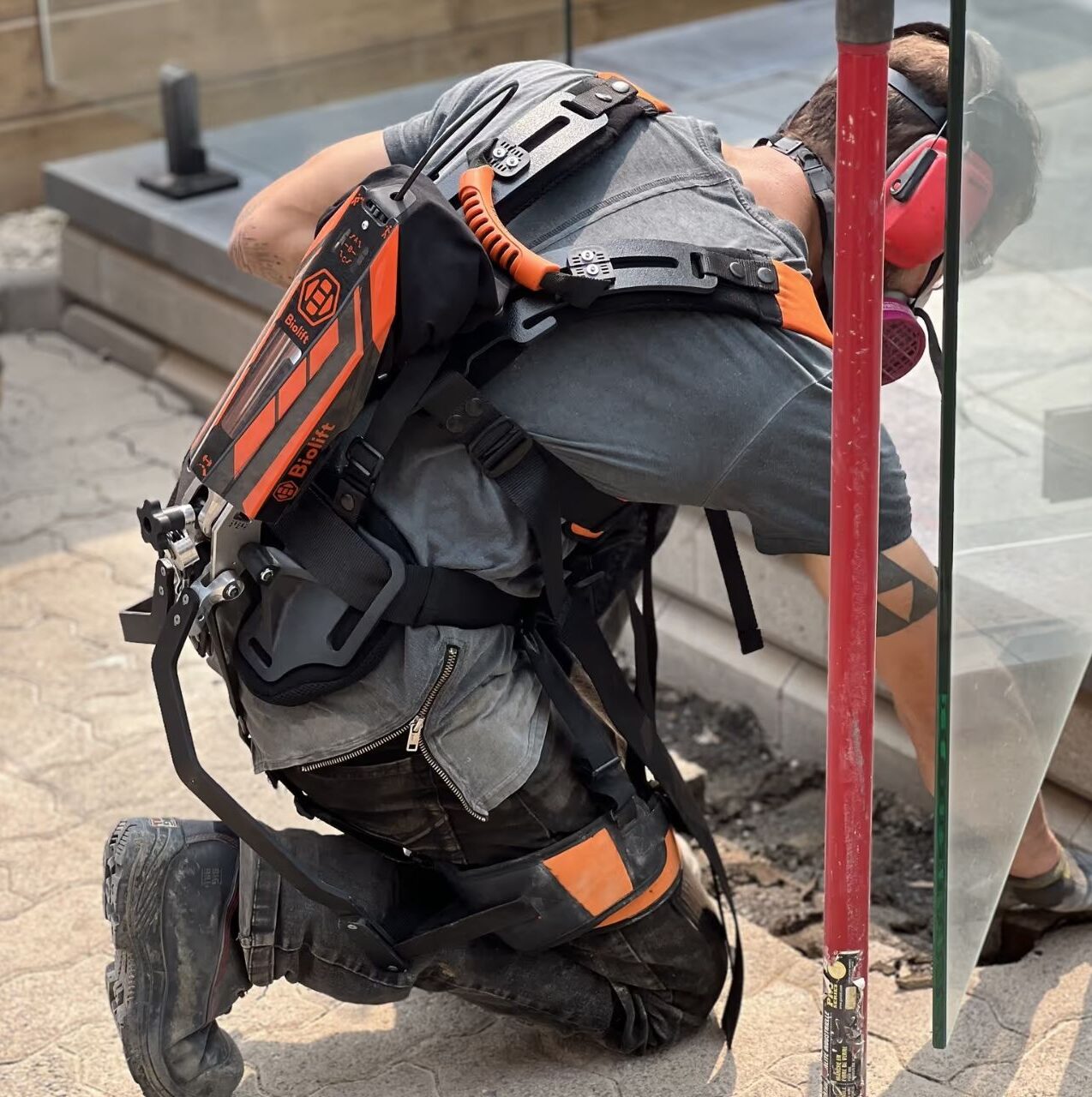
The concept is similar to compressing a spring while lowering your body and then using that stored energy to help during the return movement.
No batteries, no charging, no downtime
One of Biolift’s biggest selling points is its simplicity.
Unlike powered industrial exoskeletons, the device contains:
- no batteries
- no electric motors
- no hydraulics
- no compressed air
- no electronic controls
Because of this, users never need to recharge it or worry about battery life during a shift. The company says the mechanical design also minimizes maintenance, requiring little more than basic cleaning and occasional inspection of moving components.
The absence of electronics also allows the exoskeleton to be used in challenging outdoor environments where dust, rain, and snow are common.
Designed to move naturally
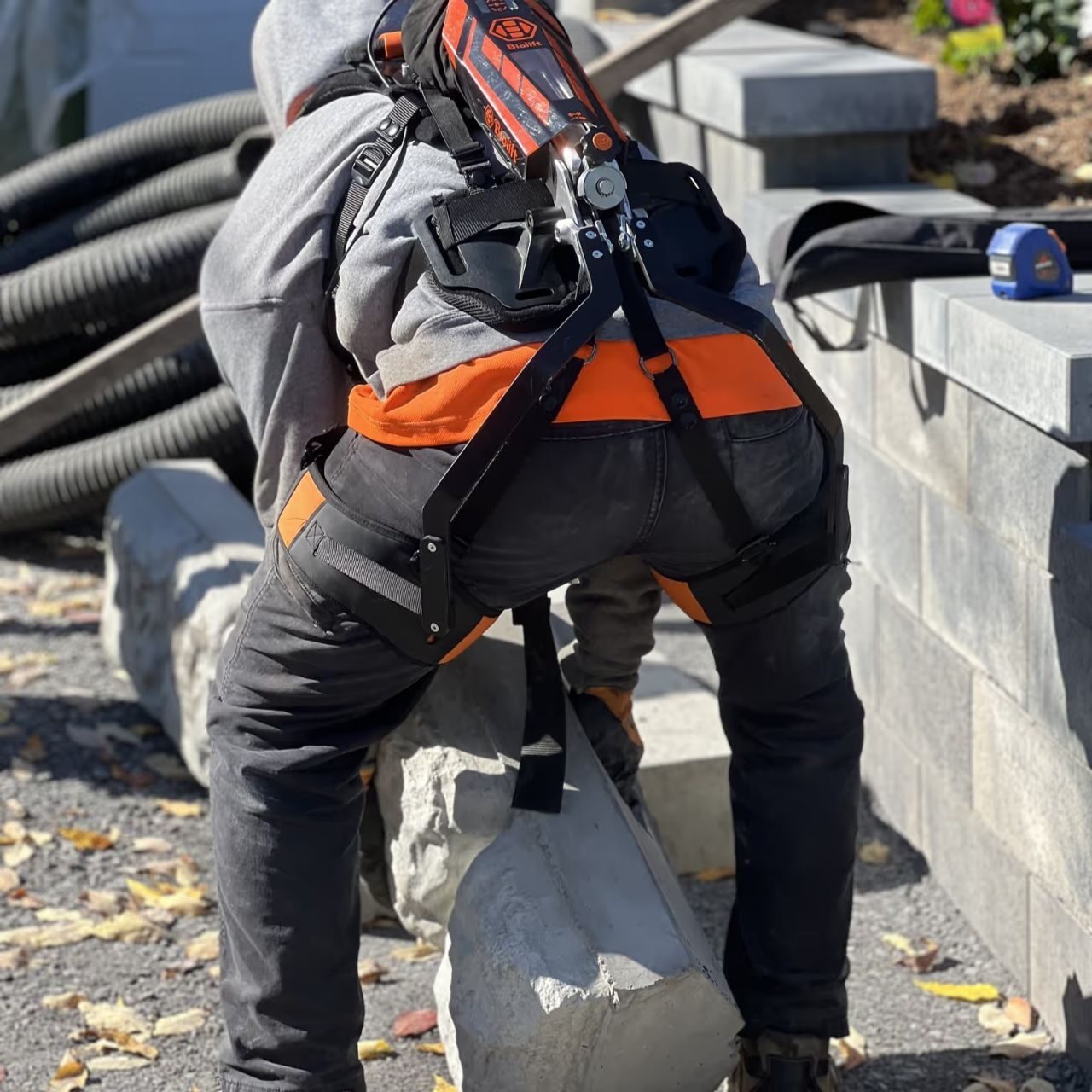
Many wearable support systems restrict movement by placing rigid components across the front of the body. Biolift instead routes its support structure around the hips and shoulders, leaving the front relatively unobstructed.
According to the manufacturer, users can continue to:
- bend naturally
- twist their torso
- kneel
- walk
- climb
- carry tools
without feeling confined by the exoskeleton. The company says preserving natural movement was a key design objective because construction and landscaping work rarely involves repeating a single motion in a perfectly controlled environment.
Built for repetitive bending and lifting
Rather than trying to replace good lifting technique, Biolift is intended for jobs that require workers to bend repeatedly throughout the day.
The company highlights applications including:
- installing pavers
- laying sod
- landscaping
- grading
- shoveling
- cutting pavers with demolition saws
- installing retaining wall blocks
- repetitive material handling
These are tasks where workers may perform hundreds of bending motions during a single shift, allowing small reductions in effort to accumulate over time.
Adjustable support
The exoskeleton can be adjusted to suit different users and different jobs.
According to product specifications published by Biolift distributors, the level of assistance can be adjusted from approximately 18 to 60 pounds (8 to 27 kg) depending on the application. The initial engagement angle can also be changed so the support activates at different body positions, making it suitable for standing work, forward bending, or kneeling tasks.
Sizing is also designed to accommodate a wide range of body types. Distributor specifications indicate one size fits users from roughly 5 ft 2 in (157 cm) to 6 ft 8 in (203 cm), although the company recommends confirming fit when ordering.
A tool rather than a strength enhancer
Biolift is careful about how it positions the product.
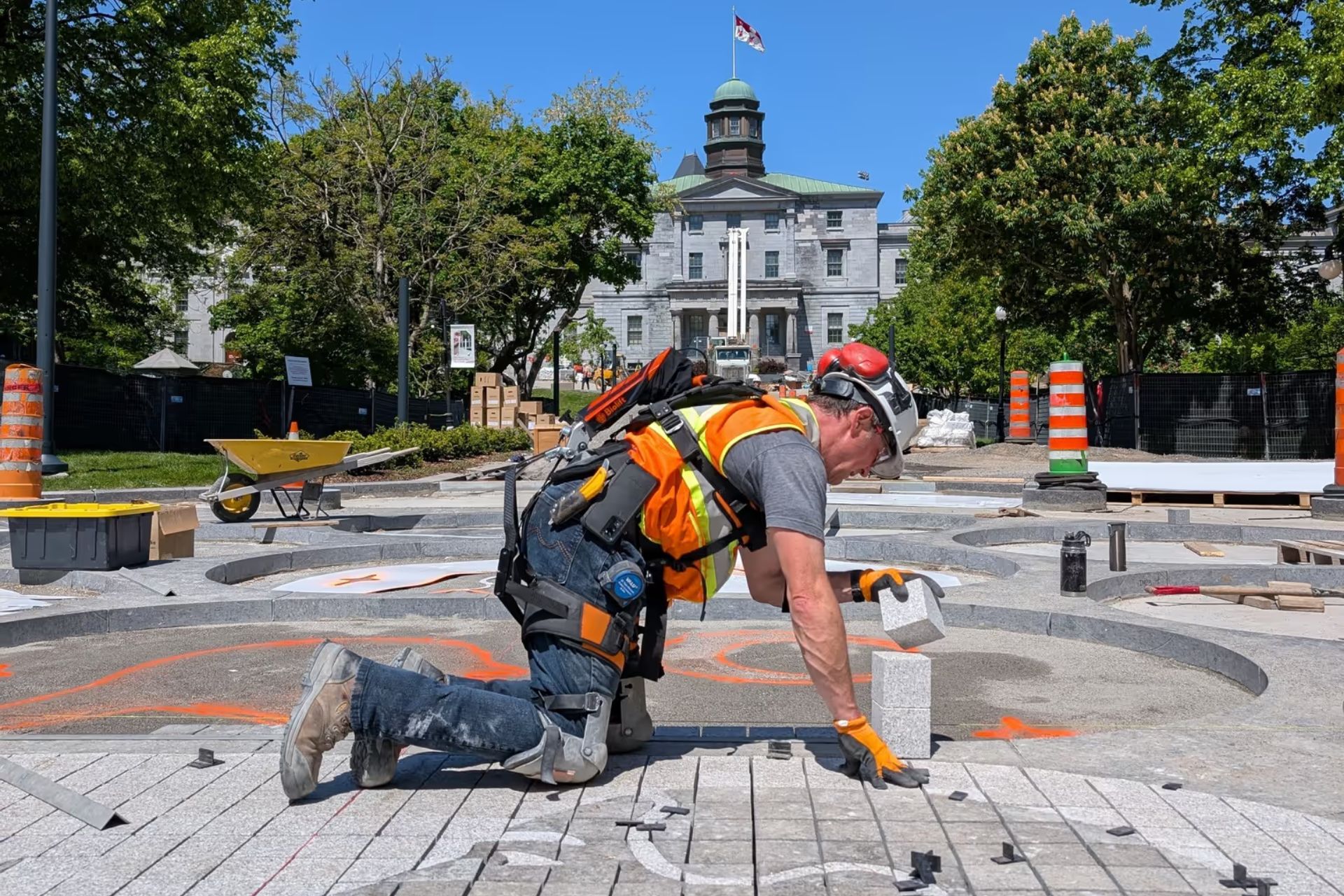
The company repeatedly states that the exoskeleton is not designed to make workers stronger or encourage them to lift heavier loads. Instead, it describes the device as a professional tool that helps workers preserve their natural strength by reducing unnecessary strain on the back during repetitive movements.
To illustrate the idea, Biolift compares the device to using a chainsaw instead of a handsaw. The tool does not replace skill or technique; it simply reduces the amount of physical effort required to perform the job.
Productivity and safety claims
Biolift markets the exoskeleton primarily to contractors and employers rather than individual consumers.
According to the company, users commonly report feeling less fatigued at the end of the day and maintaining their energy for longer periods. Biolift estimates this can translate into 30 to 60 minutes of additional productive work per employee per day, although this figure is a manufacturer estimate rather than an independently verified study.
The company also says that across more than 200 users over approximately two years, it has received zero reported injury incidents involving the exoskeleton. As with any manufacturer safety claim, this should be viewed as company-reported data rather than independent certification.
Biolift further argues that preventing even a single serious back injury could allow many employers to recover the cost of the device within a few months through reduced workers’ compensation costs and improved productivity.
Learning to use it
Because there are no electronic controls or software settings, the learning curve is relatively short.
The company says most users become comfortable wearing the exoskeleton within about an hour after receiving fitting guidance. The adjustable design also allows multiple workers to share a unit if necessary, although Biolift notes that many crews eventually prefer dedicated units for regular users.
Pricing and availability
Biolift does not publish retail pricing on its official website. Instead, prospective buyers are encouraged to request a quote, arrange an on-site demonstration, or purchase through the company’s dealer network.

Third-party retailers and industry publications provide some indication of pricing. Elements Home, an authorized Belgard vendor, lists the Biolift Lumbar Exoskeleton with an MSRP of US$3,500, while Fine Homebuilding recently reported a list price of approximately US$4,000, noting that promotional discounts may be available through distributors or at trade shows.
The bottom line
Biolift offers a different take on industrial exoskeletons by removing the electronics altogether. Instead of relying on batteries and powered actuators, it uses a simple spring-assisted mechanical design to reduce lower-back strain during repetitive bending and lifting.
Its combination of passive assistance, unrestricted movement, and low maintenance makes it particularly well suited to construction, landscaping, masonry, and other trades where workers spend long hours on physically demanding tasks. While the upfront cost may be significant, the company believes the potential benefits—reduced fatigue, lower injury risk, and improved productivity—can make it a worthwhile investment for employers seeking to protect experienced workers over the long term.
Source: Biolift