Keeping young children safe on a bicycle usually comes down to a well-designed child seat, a properly fitted helmet, and careful riding. While modern child seats already offer strong structural protection, they have one unavoidable limitation: they cannot cushion a child’s head and upper body during the moment of impact if the bicycle falls over or is involved in a collision.
French safety specialist Helite believes airbags can fill that gap. Best known for developing wearable airbag systems for motorcyclists, cyclists, equestrians, and emergency responders, the company has introduced what it describes as the world’s first bicycle child seat airbag. Called the Helite Kid’Guard, the system is designed to detect a crash and inflate around the child before they hit the ground, adding another layer of protection during some of cycling’s most common accidents.
Bringing automotive-style airbags to child cycling safety
Unlike wearable airbags that must be worn by the rider, the Kid’Guard is integrated directly into the bicycle child seat. This means the child does not need to wear any additional protective equipment beyond a helmet.
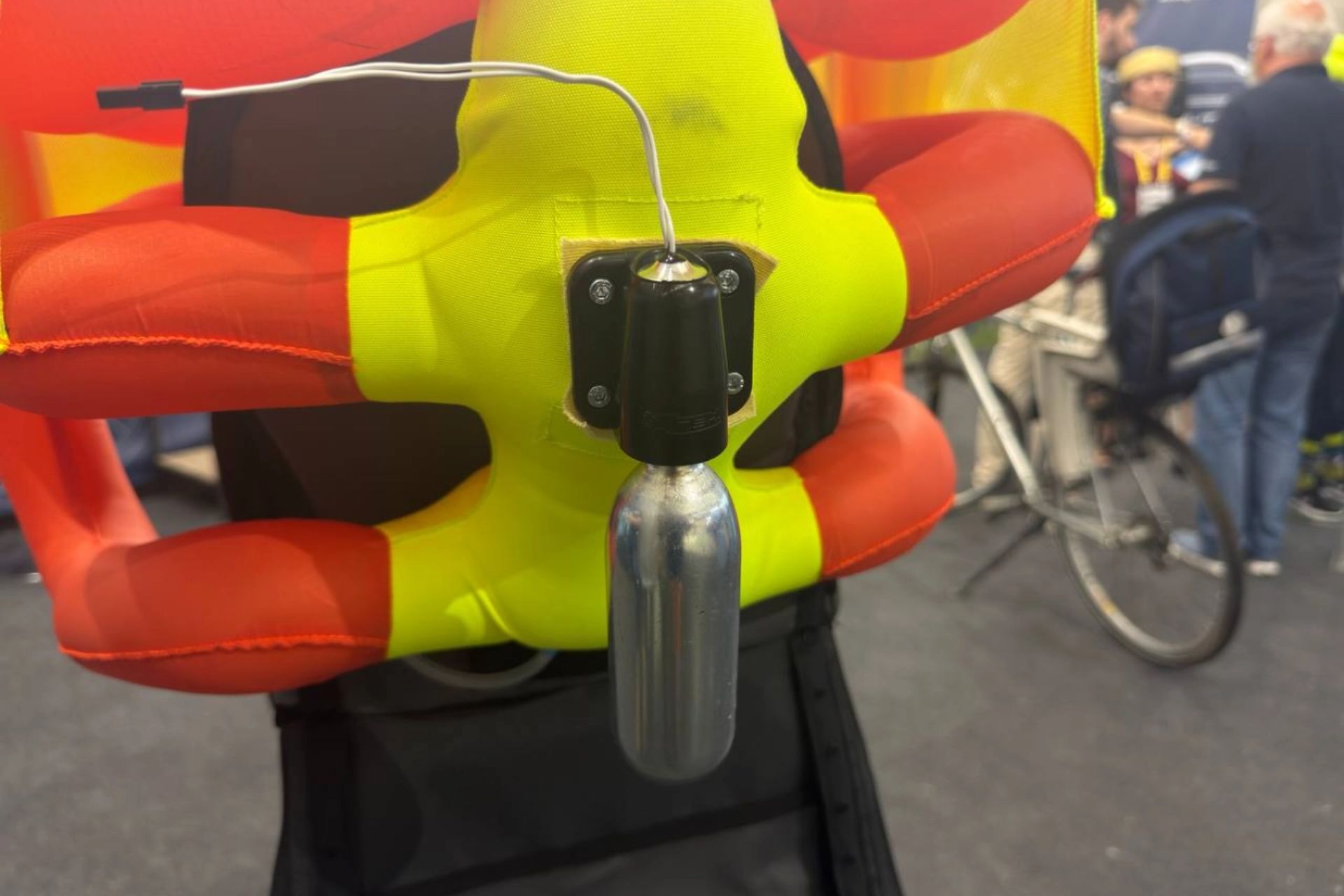
The system consists of a compact module mounted behind the seat. Inside are electronic sensors, a folded airbag, a gas cartridge, and the deployment mechanism. During normal riding, the electronics continuously monitor the movement of the bicycle, looking for patterns that indicate a genuine accident rather than everyday bumps or vibrations.
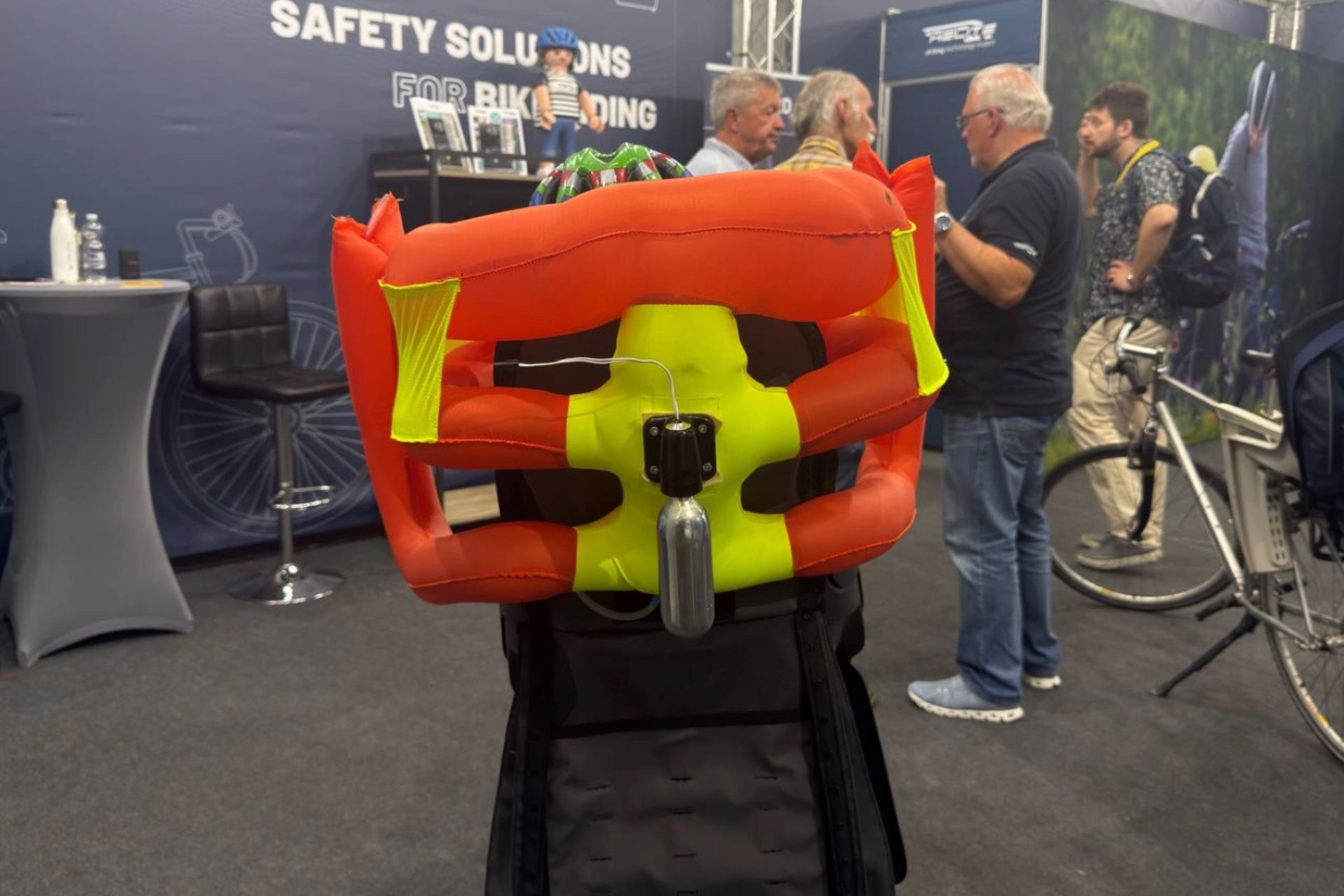
If the system detects a crash, it inflates the airbag almost instantly. The airbag wraps around the child’s head and upper body, creating a protective cushion intended to reduce the forces experienced during impact with the ground or surrounding objects.
Designed to react before impact
The effectiveness of any airbag depends on timing. Inflating too early could interfere with riding, while inflating too late would provide little benefit.
Helite says the Kid’Guard uses sophisticated motion sensors and algorithms to distinguish between normal riding and genuine accidents. According to the company, the system is capable of detecting several common crash scenarios, including:
- Side falls
- Front impacts
- Rear impacts
Once one of these events is recognized, the compressed gas cartridge rapidly fills the airbag before the child reaches the ground.
Rather than protecting only one area, the inflated airbag surrounds much of the seating area around the child’s head and torso. This creates a much larger protective zone than could be achieved using padding built into the seat alone.
Building on two decades of airbag expertise
The Kid’Guard is not Helite’s first airbag product. Founded in France in 2002, the company has spent more than 20 years developing wearable airbag technology for a wide range of activities.
Its products are used by:
- Motorcyclists
- Cyclists
- Horse riders
- Skiers
- Emergency services
- Industrial workers
Many of these systems use similar principles: sensors detect a crash or separation event, triggering rapid inflation before the user experiences the full impact.
The Kid’Guard adapts this experience to one of the most vulnerable passengers on a bicycle—a young child seated behind or in front of the rider.
Protection without changing the riding experience
One advantage of integrating the airbag into the seat instead of clothing is convenience.
Parents do not need to remember to dress the child in a special airbag vest before every ride, nor worry about sizing as the child grows. The protection remains with the bicycle seat itself, ready whenever it is needed.
Because the airbag is housed inside the seat module, the overall riding experience remains unchanged during everyday use. The system only becomes visible when deployed during an accident.
Reusable after deployment
Unlike many people assume, airbag systems are not always single-use products.
After deployment, the Kid’Guard is designed to be reset. The airbag can be folded back into its housing and the used gas cartridge replaced with a new one, allowing the system to be used again after inspection.
This approach is similar to several of Helite’s existing wearable airbag products, helping reduce long-term ownership costs compared with replacing the entire unit after every activation.
A new direction for bicycle safety
Airbags have become commonplace in cars, motorcycles, and even some cycling products, but child bicycle seats have remained largely unchanged for decades.
By integrating electronic crash detection with automatic airbag deployment, Helite is introducing a completely new category of child cycling protection.
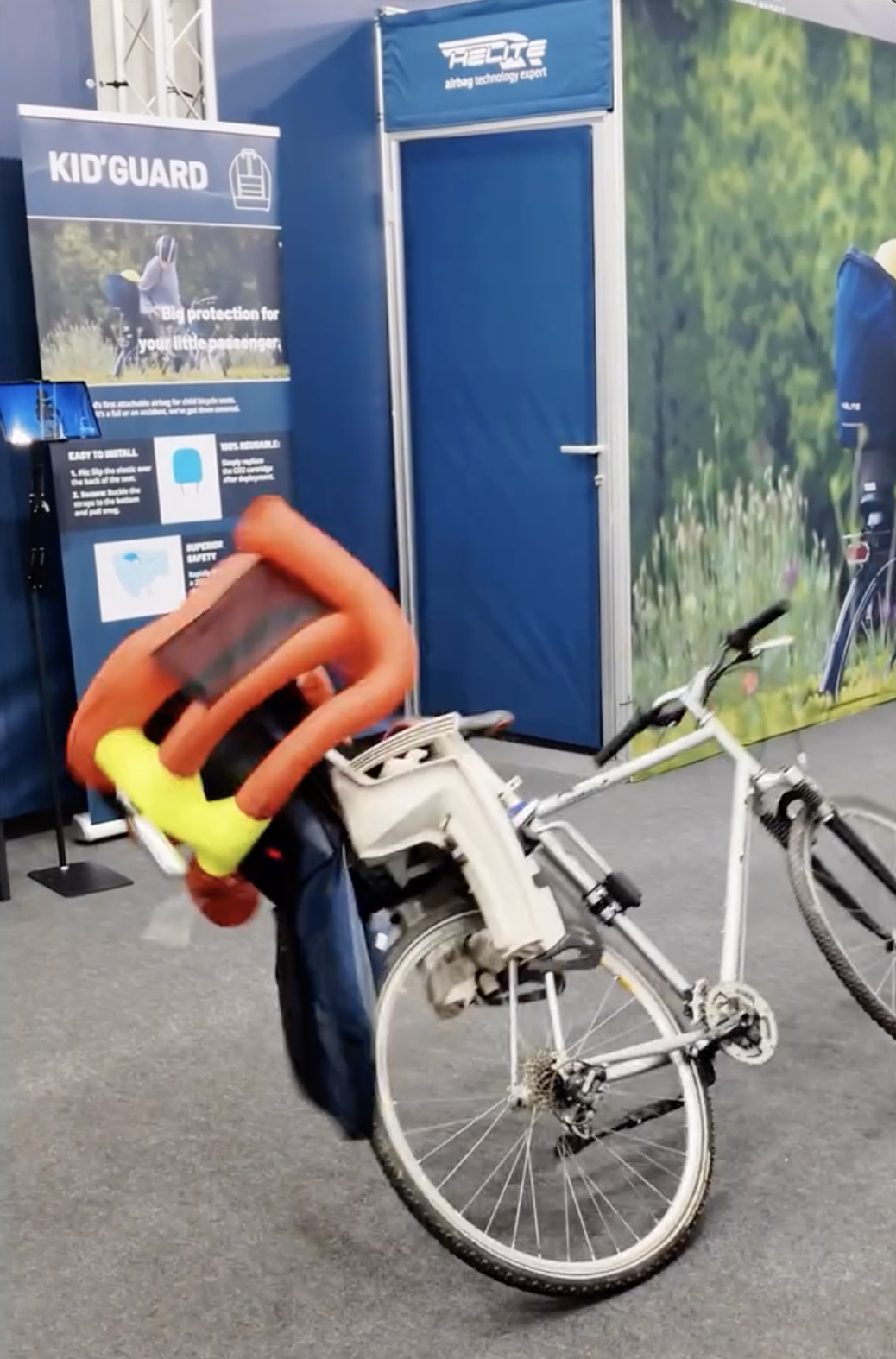
The product is intended to complement, not replace, existing safety equipment. Children should still wear properly fitted cycling helmets, while parents should continue using certified child seats and following safe riding practices.
The Kid’Guard simply adds another level of protection for situations where a fall or collision cannot be avoided.
Pricing and availability
Helite officially unveiled the Kid’Guard during Eurobike 2026, where it was presented as the world’s first bicycle child seat airbag.
The company says the product is fully developed and will be available for purchase through its website in the near future. However, at the time of writing, Helite has not announced an official release date or pricing.
As bicycle safety technology continues to evolve, products like the Kid’Guard show how innovations long associated with the automotive and motorcycle industries are beginning to make their way into family cycling. While no safety device can eliminate the risk of accidents, adding an intelligent airbag to a child seat represents a significant step toward providing young passengers with an extra layer of protection when it matters most.
Source: Helite (Instagram)