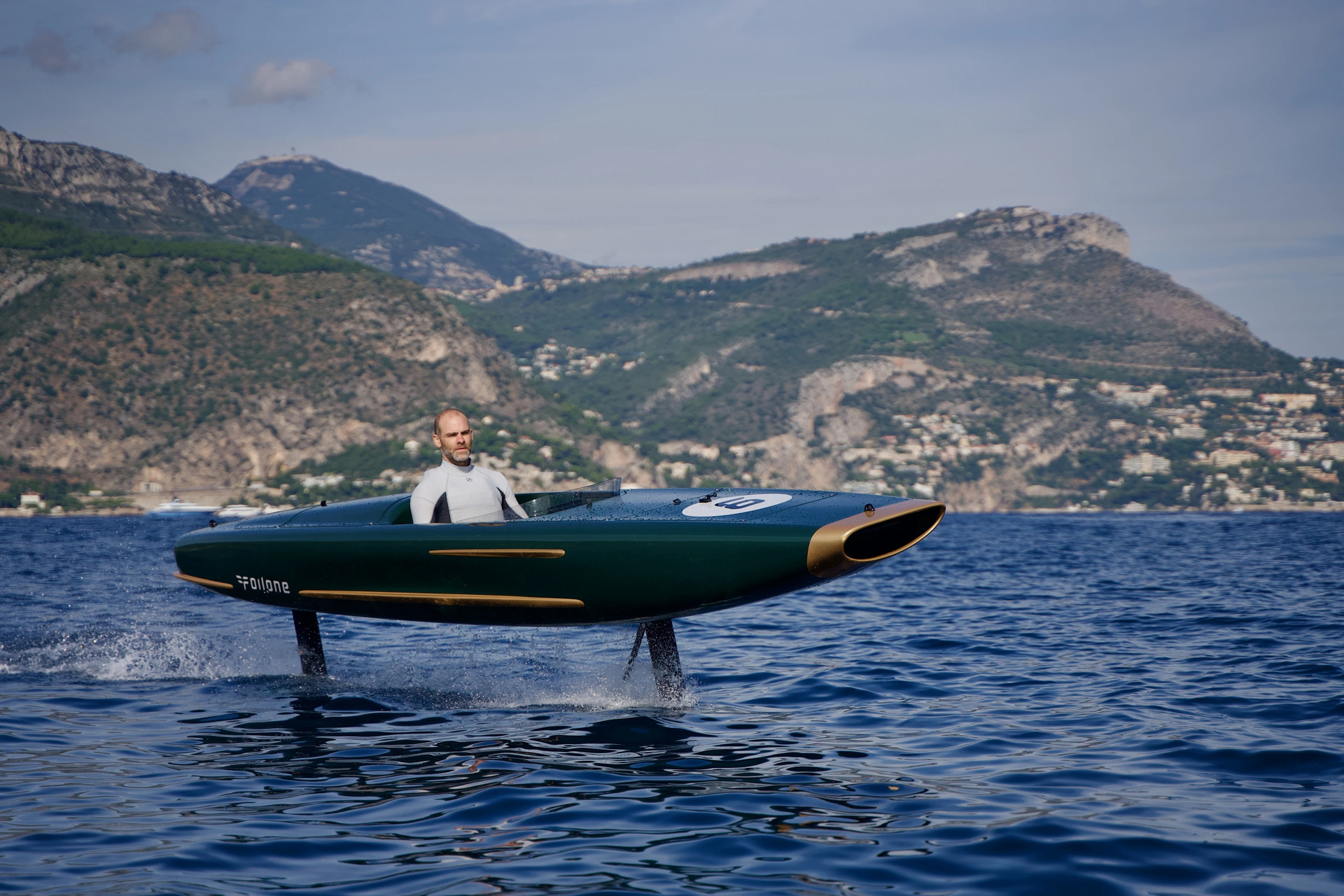
Most small powerboats stay firmly on the surface, pushing a substantial part of their hull through the water and leaving a wake behind them. The Foilone Pegasus is designed to do something very different.
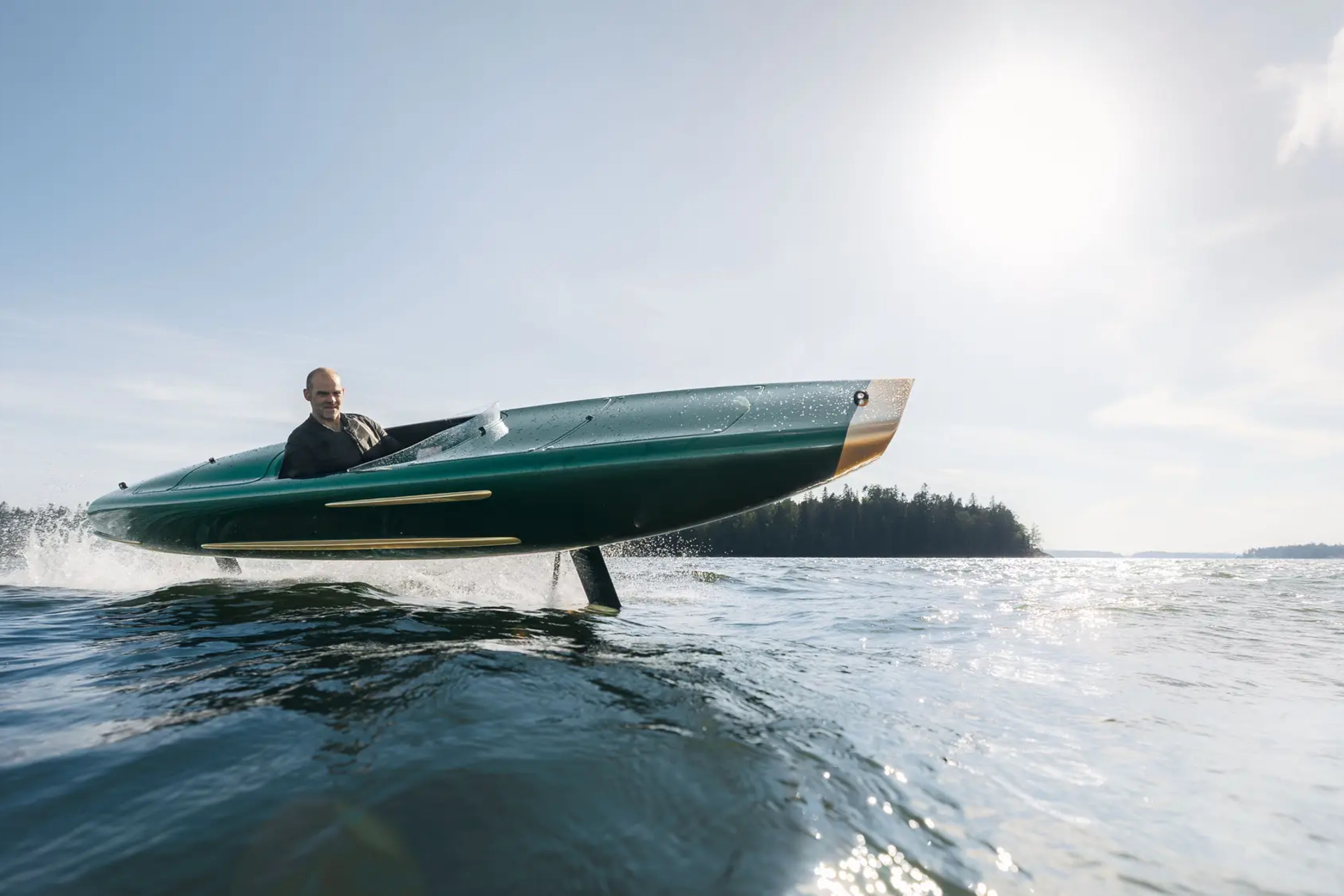
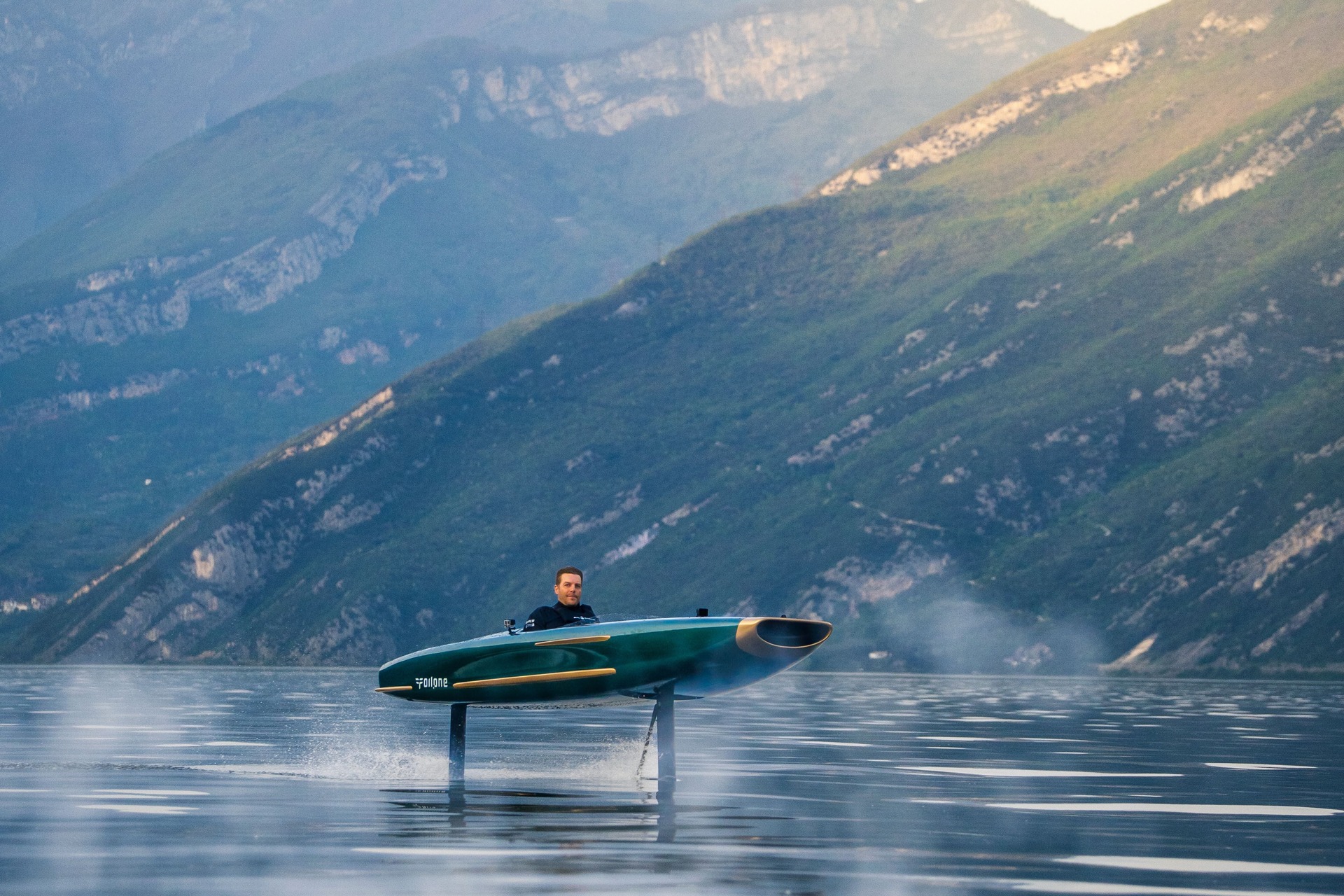
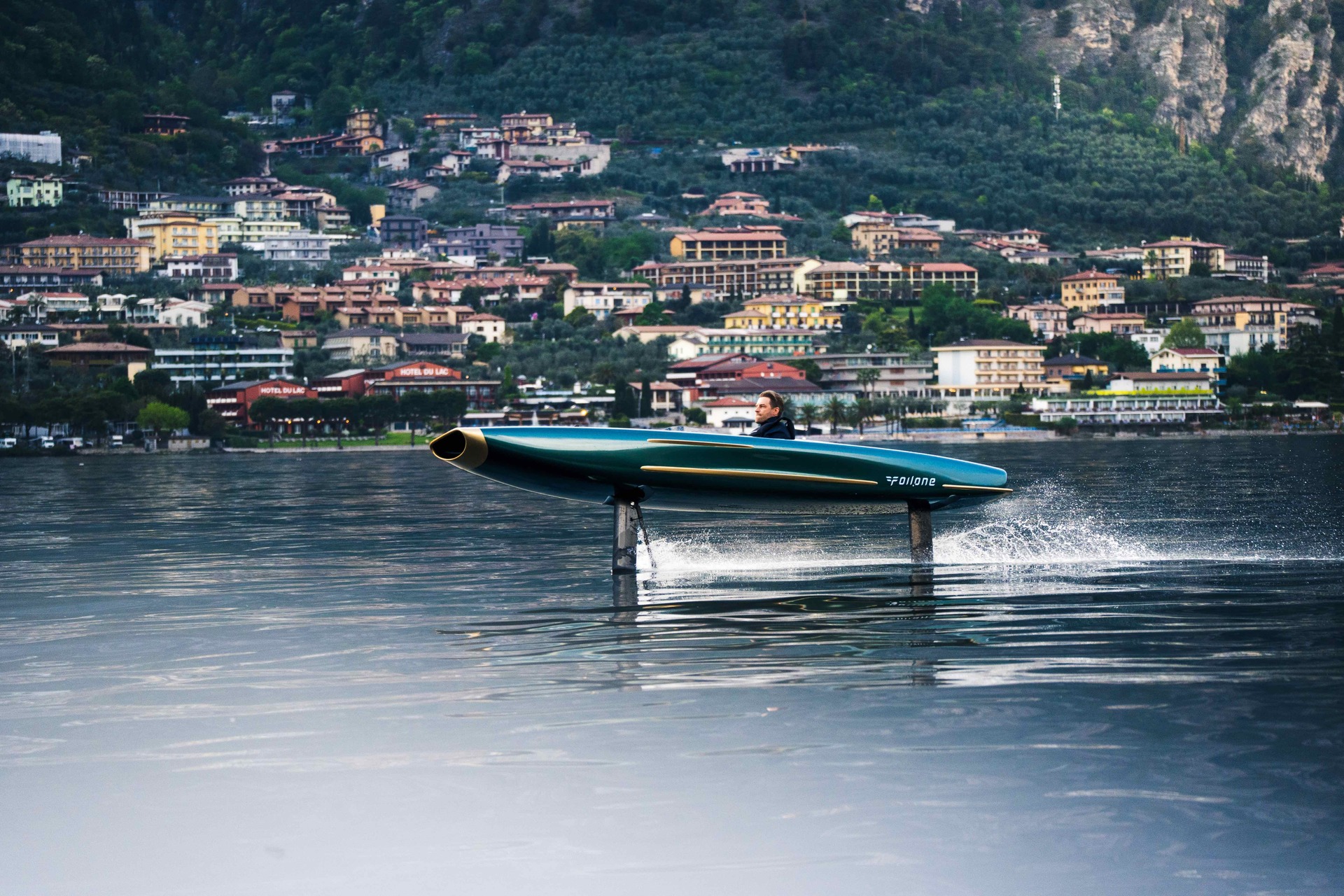
Accelerate to around 10 knots (11.5 mph or 18.5 km/h), and two underwater wings begin lifting the slender carbon-fiber hull clear of the surface. Once airborne, only the narrow foil struts and propulsion system remain in the water.
The result is a single-person electric boat that looks somewhere between a vintage racing car, a fighter aircraft and a hydrofoil racing machine.
Two foils arranged like bicycle wheels
Most conventional boats steer using a rudder or by turning propulsion hardware at the stern. Pegasus instead places two foils in a straight line beneath its hull and steers through the front foil.
Inside the cockpit, the pilot uses two handles in a motion similar to operating bicycle handlebars: push with one hand and pull with the other. A pressure-sensitive pedal under the right foot controls the electric motor.
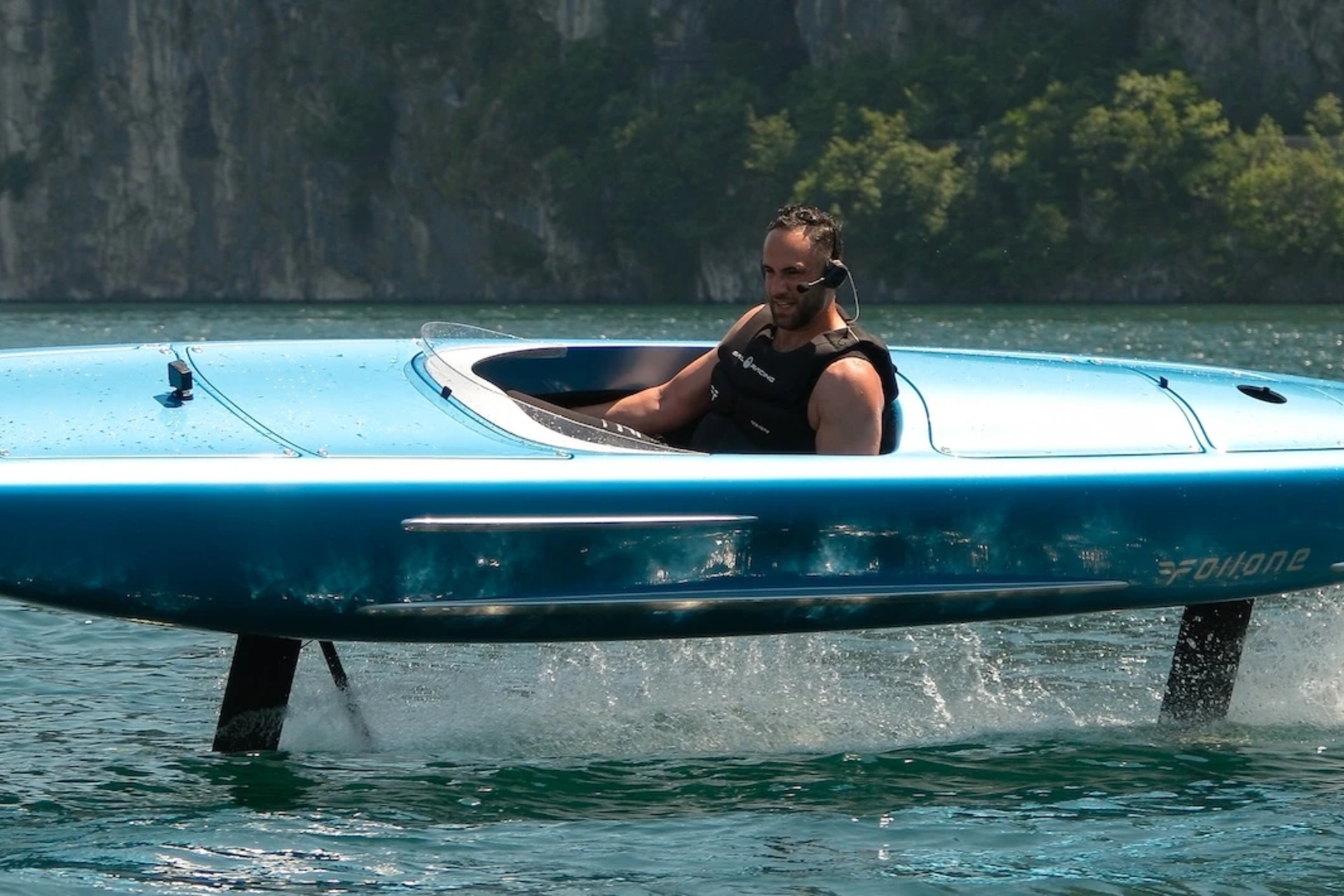
The front-steering arrangement helps the pilot balance the narrow craft in the same basic way a cyclist continually steers a wheel beneath their center of mass. Turning begins with a small countersteering input, allowing Pegasus to lean into a corner before the pilot guides it through the turn.
Foilone says lateral balance remains the pilot’s responsibility, so riding Pegasus involves more active control than simply steering an ordinary boat.
A mechanical system controls the flying height
The pilot may control balance, direction and speed, but does not have to manually keep the hull at the correct height above the water.
A mechanical surface-sensing wand is connected to a flap on the front foil. When Pegasus flies too low, water pressure pushes the wand backward, increasing the flap’s angle and generating more lift. As the boat rises, a bungee pulls the wand forward and reduces lift.
That creates a self-regulating ride-height system without depending on electronic height sensors or software.
A custom gearing mechanism lets the pilot alter how sensitively the foil responds to the surface. A higher ratio filters more wave movement for smoother cruising in choppy conditions, while a lower ratio provides more direct feedback on calmer water.
Once the hull is lifted clear, its wetted area and hydrodynamic drag drop considerably. That allows the relatively modest electric powertrain to maintain useful speed while producing little wake.
Up to 30 knots from a 14.9-kW motor
Pegasus uses a 14.9-kW electric motor and two Torqeedo Power 48-5000 batteries, providing a combined nominal capacity of about 10 kWh.
Foilone lists a cruising speed of 18–22 knots (21–25 mph or 33–41 km/h) and a top speed of 30 knots (34.5 mph or 55.6 km/h). The company quotes more than two hours of operating time, while its FAQ specifies more than 2.5 hours at cruising speed.
Actual endurance will depend on speed, rider weight, water conditions and how much time the boat spends foiling rather than operating in displacement mode.
With a Torqeedo fast charger, each battery can be charged from 0–100% in under two hours, according to Foilone. Because there are two batteries, charging arrangements and available electrical supply will affect the total turnaround time.
The electric powertrain produces no exhaust emissions while operating. Foiling also creates much less wake and significantly less propulsion noise than a combustion-powered speedboat, although claims about the boat’s complete environmental impact would also need to account for manufacturing and electricity generation.
A full carbon-fiber, single-seat hull
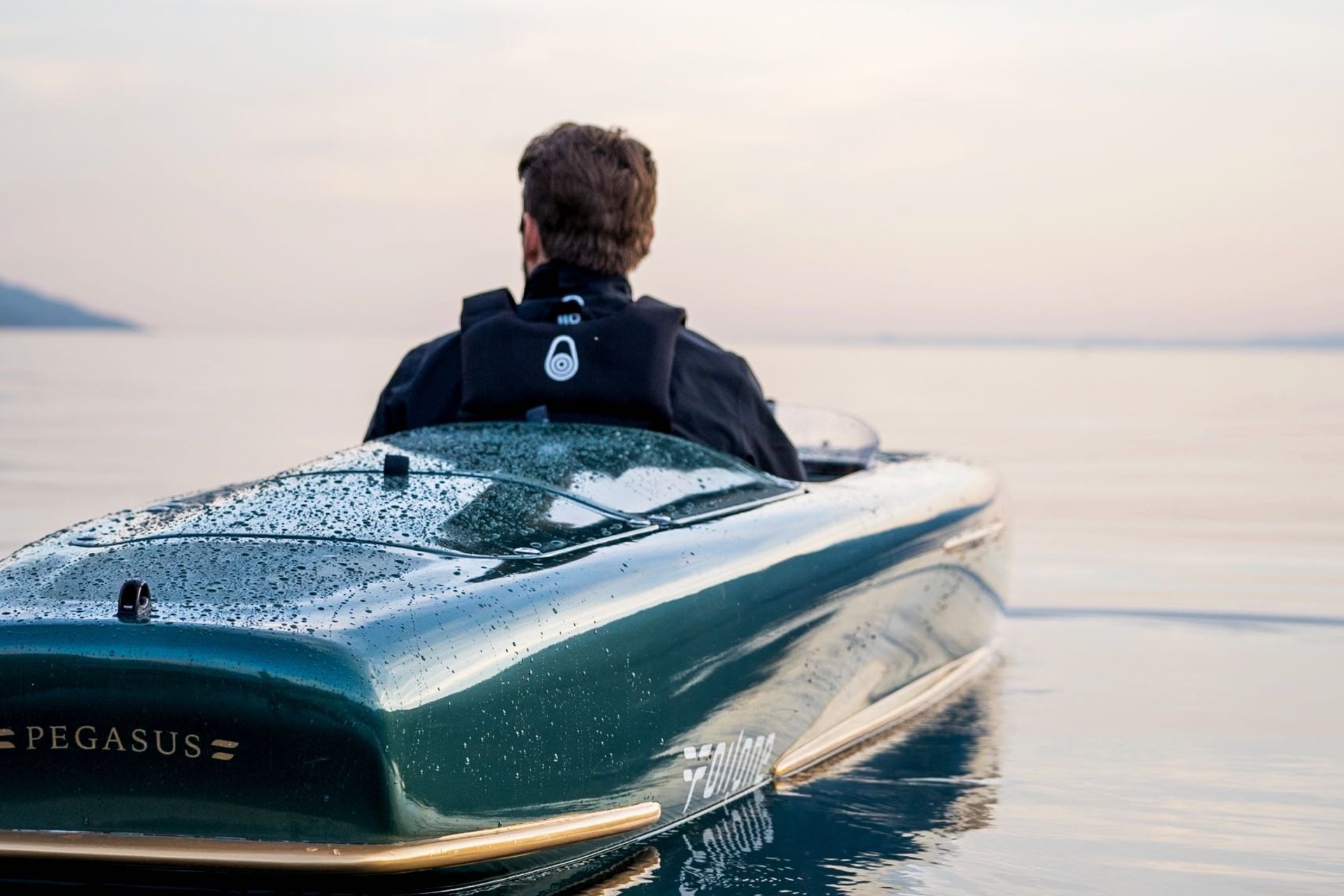
The boat measures 4.88 m (16 ft) long but only 0.95 m (3.1 ft) wide. It weighs 128 kg (282 lb) without batteries and 200 kg (441 lb) ready to operate with them installed.
Its hull is made from carbon fiber to combine low weight with the stiffness needed to keep the two foils precisely aligned. Marine-grade aluminum is also used in the structure and hardware.
Draft is listed at 1 m (3.3 ft) with the foils extended while operating in displacement mode. It falls to approximately 0.3–0.4 m (1–1.3 ft) during foiling and about 0.3 m with the foils raised.
Foilone lists an automatic shut-off, navigation equipment, paddle and bailer among the safety equipment. The company recommends lifting the boat out between uses and rinsing it with fresh water after saltwater operation.
You can learn to fly one on Lake Como
Buying Pegasus is not the only way to operate one. Foilone runs an Earn Your Wings experience at Hotel Nautilus on Lake Como, Italy, during summer 2026.
The sessions are designed for beginners and include an initial briefing, live headset coaching and a dedicated support RIB. Foilone says participants progress from low-speed displacement operation to controlled foiling, with a full refund offered if they do not foil during the session.
The standard solo experience costs €390 and includes 75 minutes on the water. A two-person session—where participants take turns piloting the single-seat boat—has 90 minutes of water time and is normally listed at €450, although the page currently advertises a €390 promotional price using a code.
Longer Master Your Wings sessions cost €490 for one participant or €590 for two. Participants must be at least 18, weigh under 100 kg (220 lb), be able to swim, understand basic English and have no major health conditions.
Pricing and availability
Foilone currently itemizes the standard Pegasus package at €73,576, excluding VAT and supplied ex works in Finland.
That comprises €32,550 for the white carbon-fiber hull, €14,750 for the front foil and its steering and height-control systems, €17,000 for the aft foil and electric propulsion, and an indicated €9,276 for two Torqeedo batteries with a fast charger.
The batteries and charger are supplied by a local Torqeedo dealer, so Foilone warns that their price can vary by time and location.
The configurator offers several paid choices, including blue or British Green paint, custom colors, silver or gold trim, a windshield, leather upholstery, Flexiteek or teak flooring and a seven-inch B&G display. Options include a bilge pump, premium fender mounts, single-point lifting hardware, a shore cradle and an €8,500 dedicated road trailer.
Buyers submit their chosen configuration to request a quote rather than completing a conventional online purchase. Foilone says each Pegasus is hand-built in Finland.
It is an expensive and highly specialized machine for one person, not a practical replacement for an ordinary family boat. But its combination of electric propulsion, active rider control and mechanical hydrofoil engineering creates something unusual: a boat that does not merely travel across the water—it asks its pilot to balance and carve above it.
Product page: Foilone Pegasus