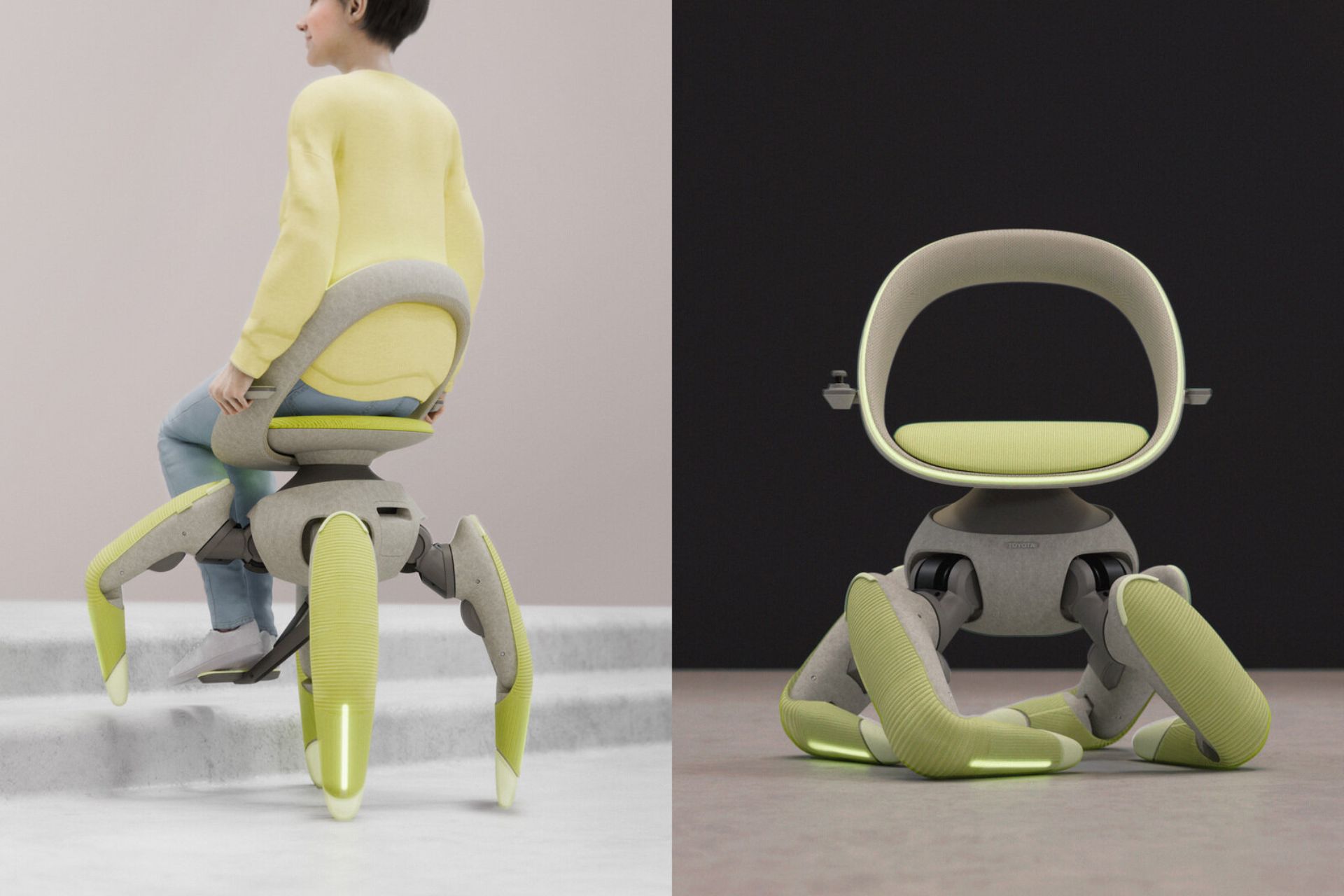
Most wheelchairs depend on wheels, which makes stairs, high curbs and uneven terrain persistent obstacles. Toyota is exploring a radically different solution: a mobility chair that walks on four robotic legs.
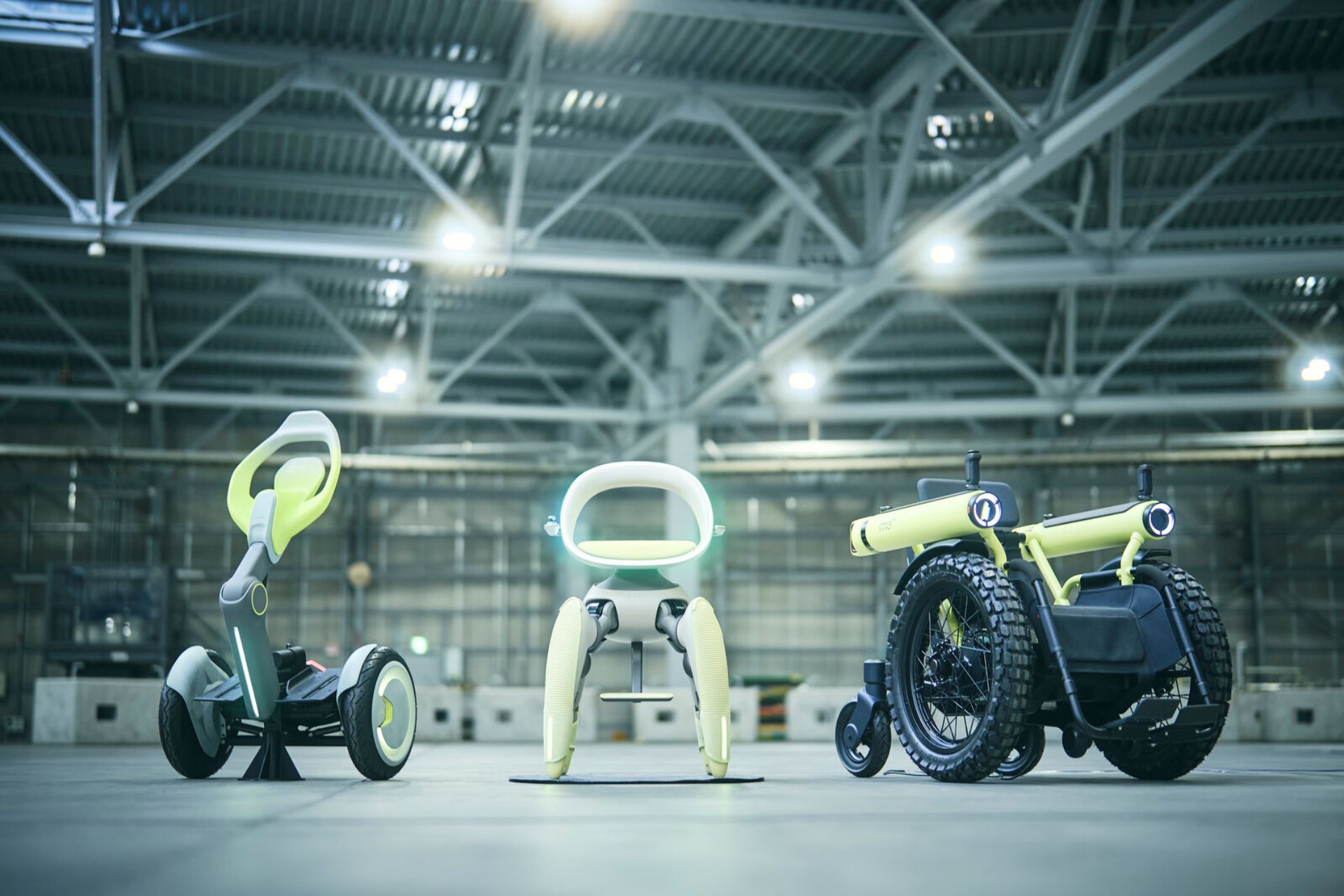
Called walk me, the experimental machine can raise and place each leg independently, allowing it to negotiate steps and move through places that conventional wheelchairs may struggle to reach. It forms part of Toyota’s three-model “me” series, alongside a hands-free sports machine called boost me and the outdoor-focused challenge me.
Toyota first presented the concepts at the Japan Mobility Show 2025. The company has now placed them at the centre of a new 60-second Japanese commercial released on September 11, 2026, under its “TO YOU” brand campaign.
The commercial shows the machines climbing stone steps, travelling beside a river and enabling people with and without disabilities to enjoy sports together. Although the scenes offer an ambitious glimpse of future personal mobility, Toyota stresses that all three machines remain concept prototypes.
A mobility chair that walks instead of rolling
Toyota describes walk me as an attempt to go “one step beyond the wheelchair.” Instead of rolling on wheels, the chair travels on four articulated legs that balance and reposition themselves as it moves.
This arrangement is intended to help the machine cross changes in height and terrain that would otherwise interrupt a journey. In Toyota’s vision, a user could move around confined indoor spaces, climb stairs while remaining seated and continue outdoors without transferring to a different mobility device.
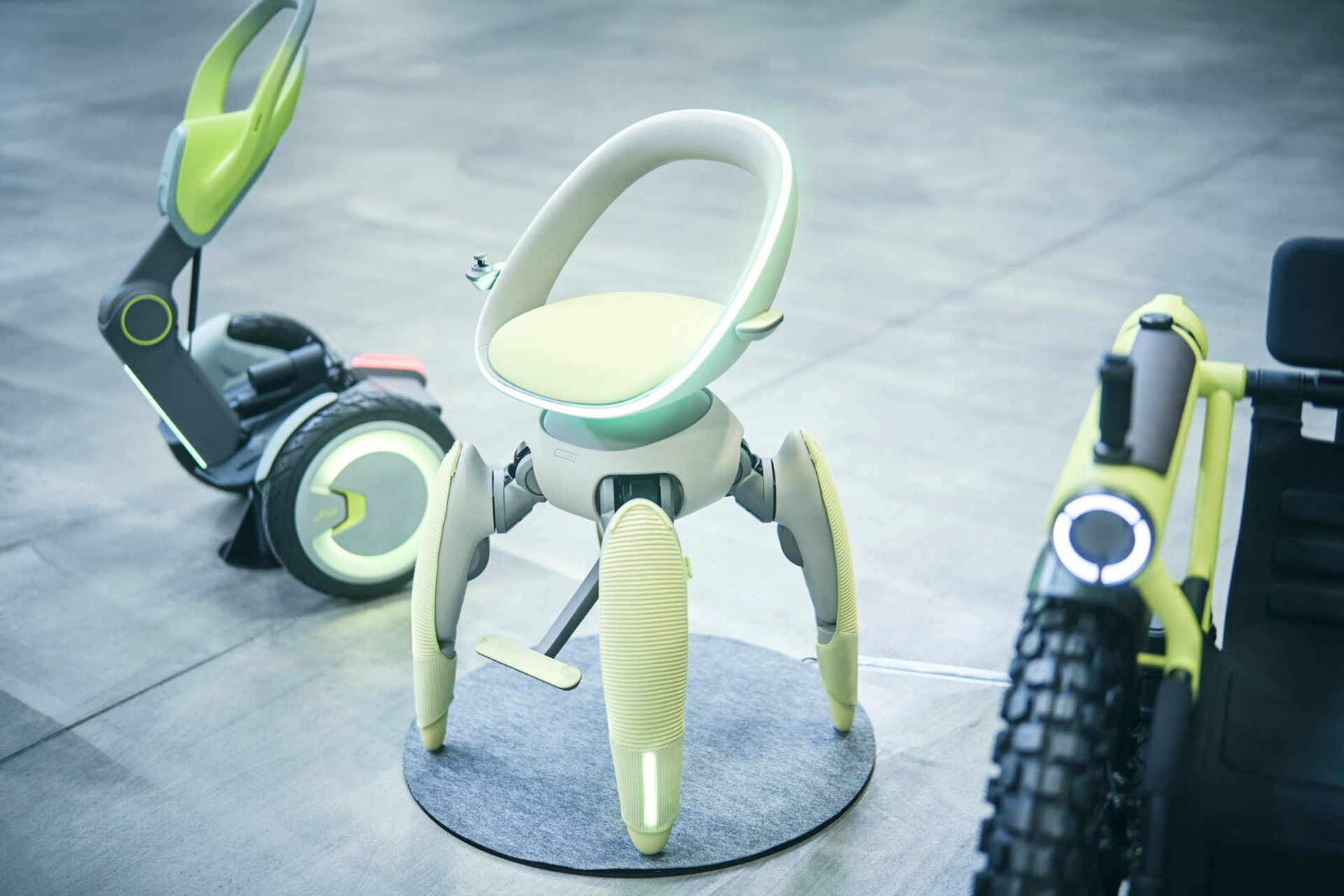
The chair can also vary the height of its seat. This could make it easier for someone to transfer to another chair or enter a vehicle without being manually lifted. Toyota says the movement used to raise the chair incorporates elements of the Japanese motion of standing from a kneeling position.
According to Toyota Times, walk me’s development also involves large-scale movement simulations through which the machine learns effective ways to move. Toyota ultimately imagines the chair responding to voice instructions and coordinating with other forms of mobility, although these remain longer-term ambitions rather than confirmed production features.
Toyota Chairman Akio Toyoda has reportedly taken a personal interest in the idea. After seeing walk me during an early development stage, he asked the team to make it a reality before he turns 80.
boost me leaves the rider’s hands free for sport
While walk me focuses on overcoming physical barriers, boost me is designed to expand participation in sport.
The compact mobility platform responds to shifts in the rider’s centre of gravity. This leaves the hands available for activities such as basketball and tennis instead of requiring the user to operate conventional controls continuously.
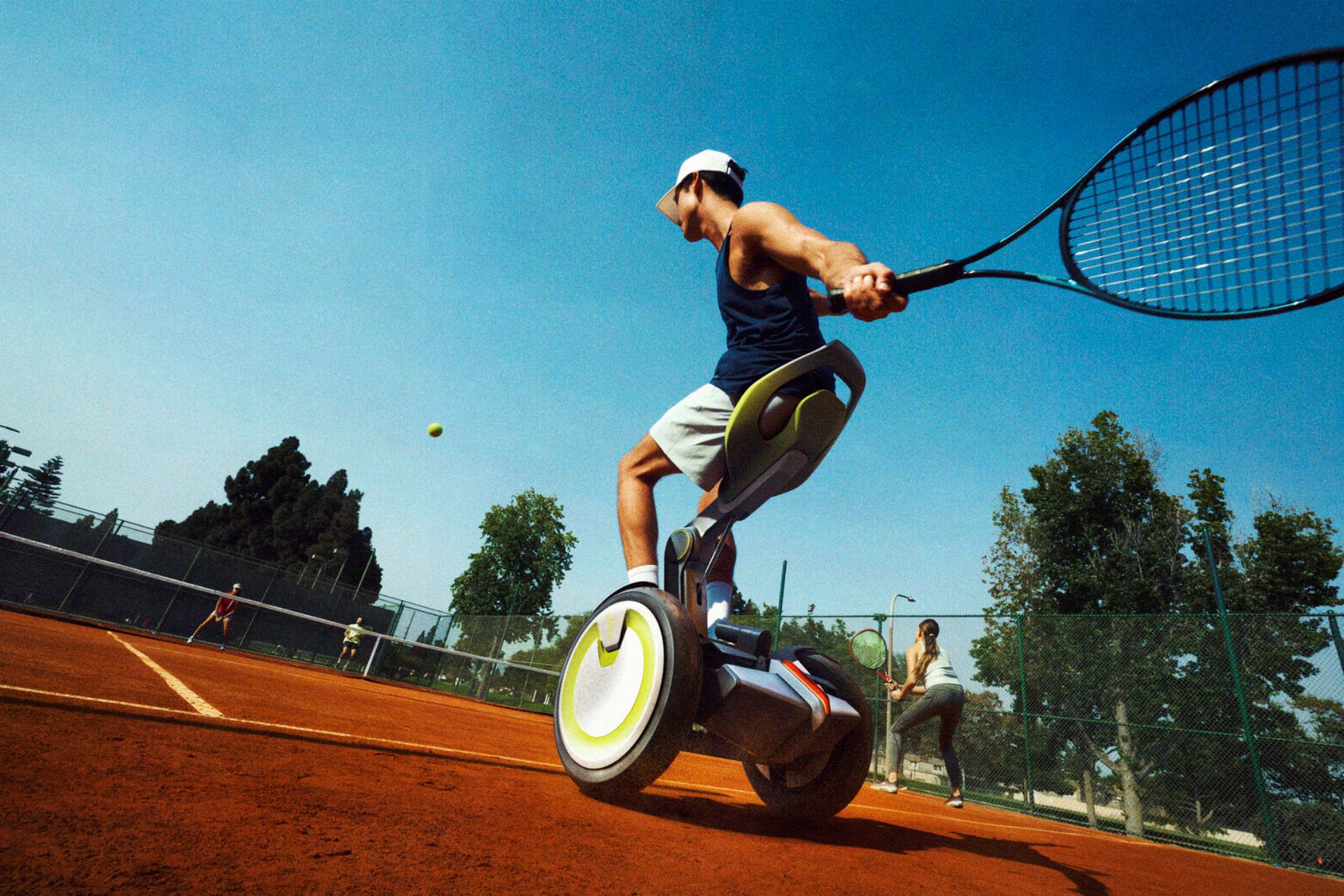
Toyota wants the concept to create an environment where people with and without disabilities can participate together using the same type of equipment. Bringing players to a similar eye level could also reduce some of the physical and social separation that can exist between wheelchair users and standing participants.
Because every rider has a different body shape, boost me’s seat is produced using 3D printing to create an individual fit. Toyota is also considering a model in which users could own their personalised removable seats while renting or sharing the powered base. That could potentially reduce the cost of accessing the machine if it ever reaches production.
Toyota Chief Branding Officer Simon Humphries has compared boost me’s potential appeal to that of skateboards and inline skates. The aim is to create something that people choose because it looks exciting—not simply because they need a medical mobility aid.
challenge me takes mobility beyond paved surfaces
The third model, challenge me, is a rugged electric wheelchair concept intended for outdoor recreation.
The rider uses grips for physical support and a joystick to control the machine. Its tubular armrests accommodate the battery and control equipment, while the overall design provides water resistance for use away from smooth, dry pavement.
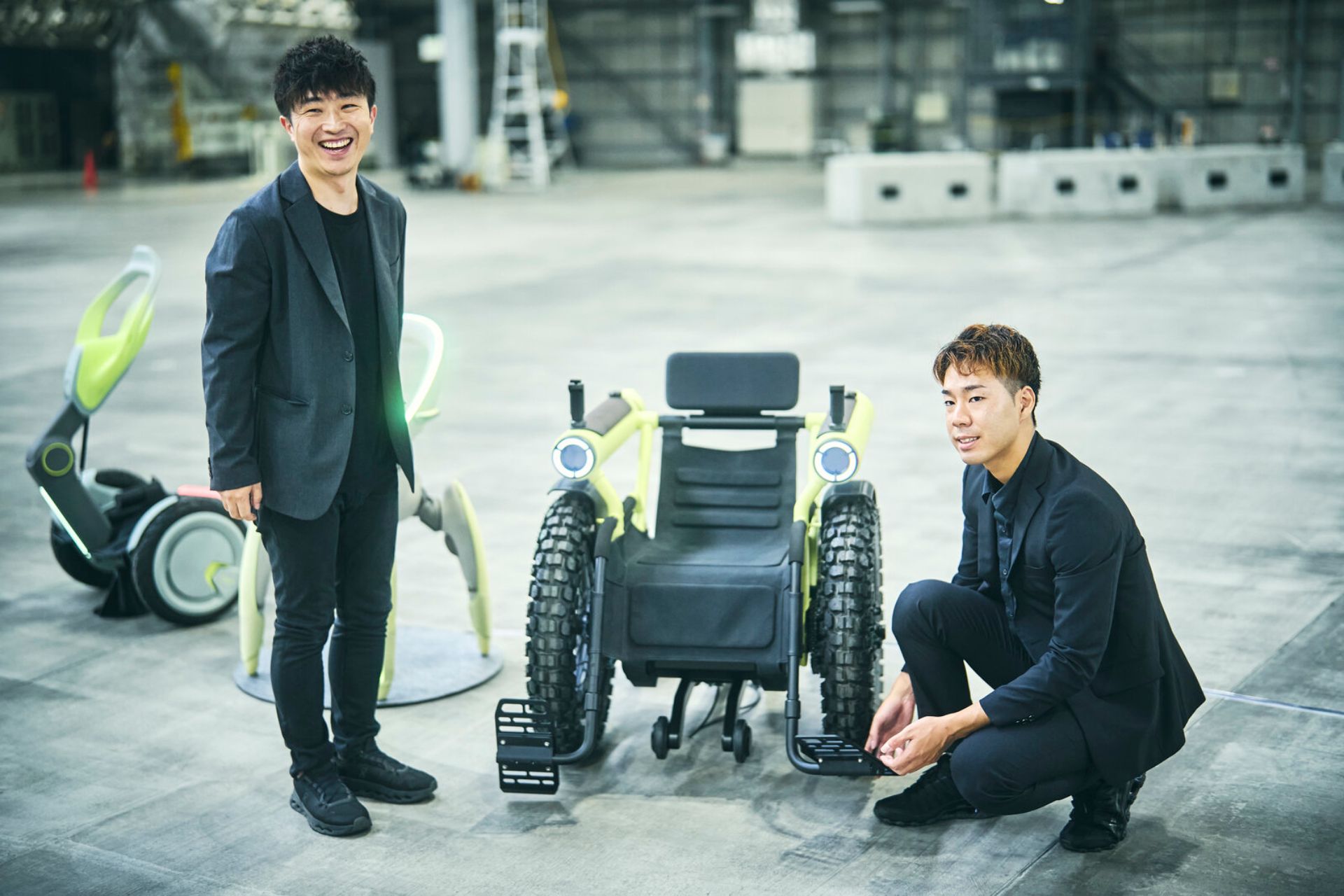
Toyota imagines challenge me enabling wheelchair users and older people to enjoy hiking, fishing and off-road exploration. Toyota Times likened its positioning to a “Land Cruiser for wheelchairs,” reflecting its emphasis on adventurous travel rather than everyday indoor movement.
In the new commercial, challenge me is shown beside the water and moving through a forest environment. As with the other two concepts, Toyota has not published detailed performance figures such as speed, range, weight or battery capacity.
Mobility designed around the individual
The “me” name represents Toyota’s ambition to expand each person’s capabilities. Humphries describes the underlying idea as “me to the power of X”—using technology to take an individual’s possibilities to another level.
All three concepts share a bright yellow, sporty appearance. That design language is deliberate: Toyota wants future mobility products to inspire affection and excitement instead of looking purely clinical.
The company also sees the project as part of its transition from an automaker into a broader mobility company. Under that vision, mobility does not always have to mean a conventional car. It can include machines created around the needs and ambitions of a particular person.
This approach is closely connected to Toyota’s “Mobility for All” philosophy and the idea of leaving no one behind. Rather than developing separate products that visibly divide disabled and nondisabled users, Toyota hopes technology can eventually create more activities and spaces that everyone can share.
Still concepts, not products for sale
Despite their polished appearance in Toyota’s commercial, walk me, boost me and challenge me are not commercially available. Toyota has announced no prices, release dates or production plans for the three machines.
Humphries acknowledged that viewers cannot purchase the vehicles after seeing the advertisement. Instead, Toyota is using the campaign and public exhibitions to demonstrate its direction, encourage discussion and collect feedback for future development.
The company plans to display the “me” series at venues connected with the 2026 Asian Games and Asian Para Games in Aichi-Nagoya, where visitors will be able to share their reactions with Toyota representatives.
Turning these concepts into safe, affordable and reliable consumer products would require considerable additional development. Nevertheless, they present a compelling alternative to simply modifying the traditional wheelchair—one in which mobility technology adapts to the destination rather than asking the user to avoid it.
Source: Toyota Times