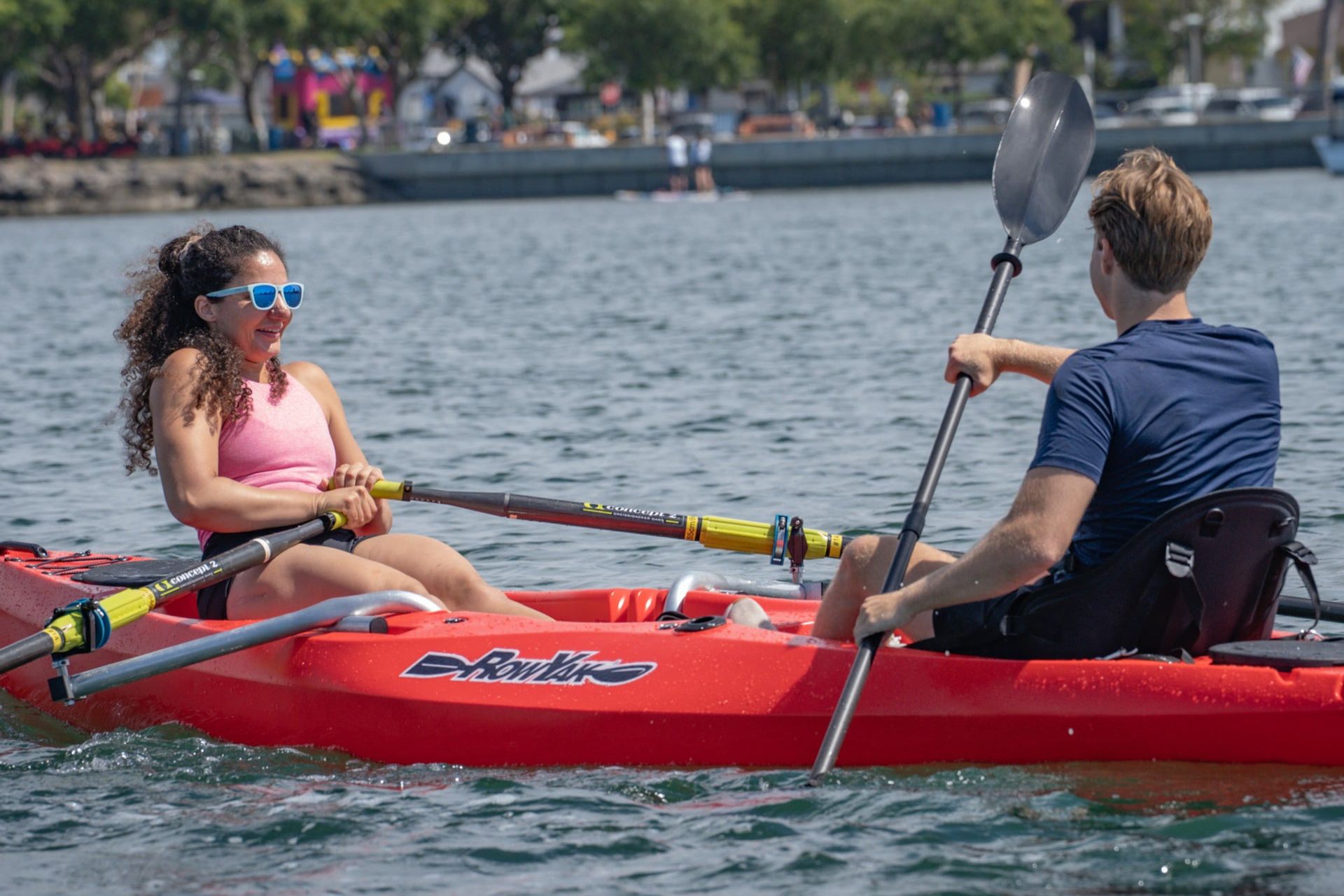
Sharing a tandem kayak does not always mean sharing an easy conversation. With one person sitting behind the other, even a simple exchange can involve turning around, raising a voice, or talking to the back of someone’s head. For a boat often chosen by couples, friends, and families, that arrangement creates an awkward compromise.
The RowYak rowing kayak takes a different approach. Described by the company as the world’s first face-to-face rowing kayak, its design is patent pending, according to RowYak. It combines a sit-on-top kayak hull with a sliding-seat rowing system, allowing one occupant to row while the other paddles. Because those activities naturally use opposite seating orientations, the two riders face each other while moving the same boat through the water.
The Cleveland-based company’s central idea is straightforward: make conversation part of the outing, alongside the exercise and scenery.
A river trip inspired the design
According to RowYak’s September 4, 2026 press release, co-founder Daniel Shain came up with the idea while paddling hundreds of miles down the Mississippi River with his son. They had gone out to spend time together, but their conventional tandem kayak made talking difficult.
Shain discussed the problem with his nephew, Ariel Travis, an entrepreneur with experience in product development and manufacturing. Together, they brought in kayak and rowing-shell designer Celliers Kruger, whose portfolio includes Fluid, Vagabond, Swell Watercraft, and Lekker.
The resulting design addresses a social limitation through the boat’s physical layout. Instead of asking two kayakers to sit unusually, it combines a rowing position with a paddling position that already faces the opposite way.
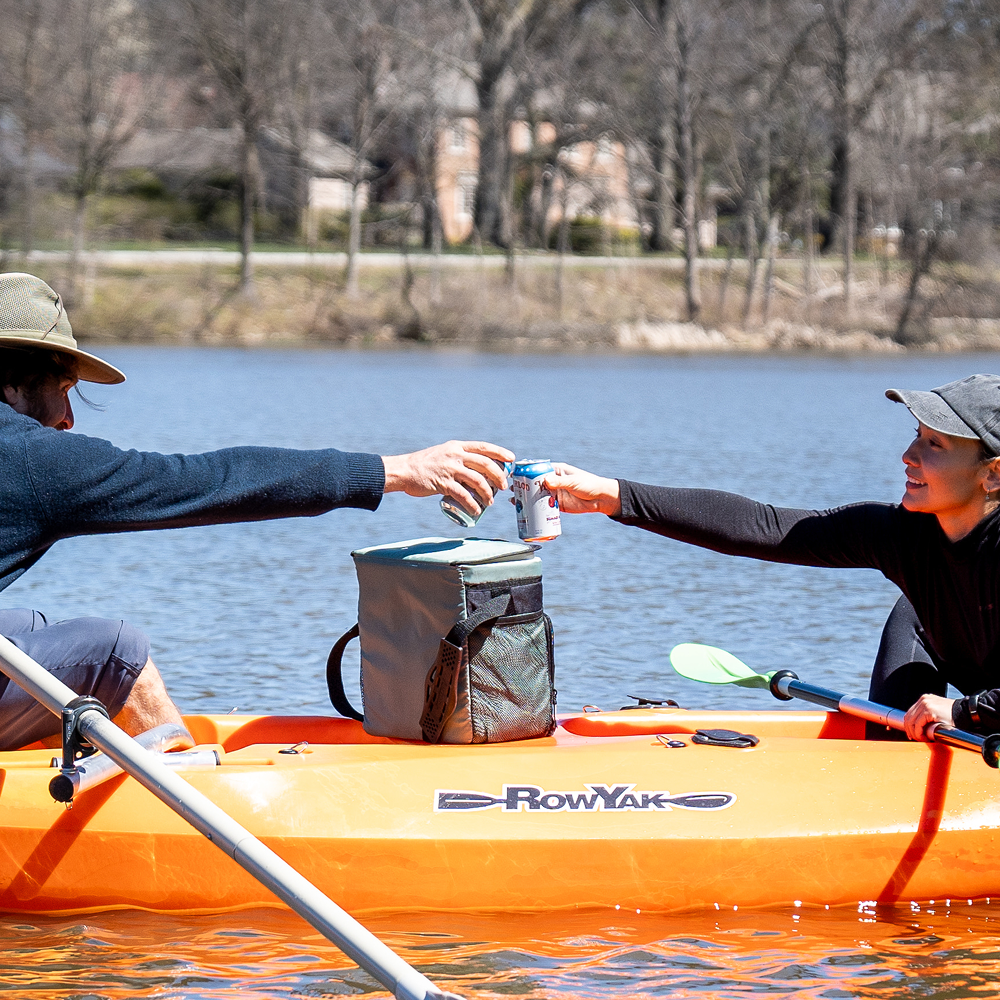
RowYak was covered by Paddling Life in September 2025. The company’s September 2026 announcement concerns wider U.S. availability and distribution, rather than the first unveiling of the concept.
How the face-to-face arrangement works
In conventional rowing, the rower faces the stern and looks away from the direction of forward travel. A kayaker normally faces the bow. RowYak places these two stations opposite each other, allowing both occupants to contribute to propulsion while looking toward their companion.
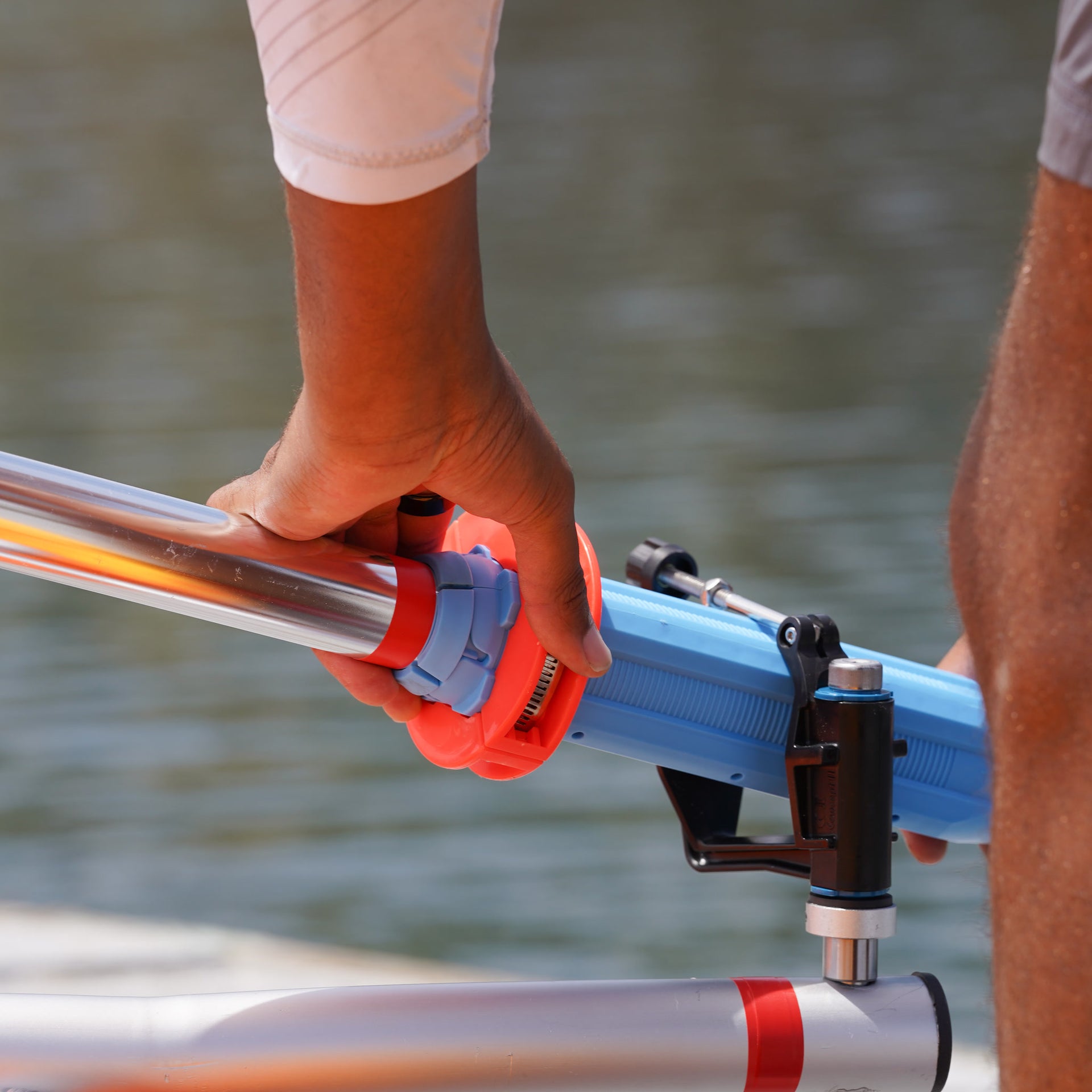
The rowing station includes a sliding seat, snap-on riggers, Concept2 oarlocks, and a pair of sculling oars. The second occupant uses a kayak paddle and has a forward view of the route.
The rower still faces backward relative to forward movement, just as in conventional rowing. What changes is the relationship between the occupants: the person ahead becomes someone to talk to and observe, rather than someone whose back dominates the view.
The two users also perform different strokes. This is a mixed rowing-and-paddling arrangement, rather than two people using identical paddles in tandem. That distinction is central to understanding both the boat’s appearance and its purpose.
A sliding seat brings rowing into the kayak
The sliding seat is an important part of the rowing setup. In sliding-seat rowing, the seat moves as the rower bends and extends the legs, coordinating that movement with the torso and arms. It provides a different exercise pattern from paddling from a fixed kayak seat.
Sliding-seat rowing offers a full-body workout, with rowing-fitness guidance commonly citing engagement of about 86% of the body’s muscles. This is a general estimate associated with rowing, rather than a measurement specific to RowYak. Kayak paddling, meanwhile, provides a core and upper-body workout, engaging the abdominal muscles, back, shoulders, and arms.
RowYak supplies 7.5-foot recreational sculling oars. Its adjustable riggers attach without tools, according to the company, while the oarlocks provide the pivot points for the rowing strokes. The package also includes the kayak paddle.
For someone interested in recreational rowing, the appeal is having that equipment integrated into a kayak-based platform. A partner can paddle from the other station, allowing the outing to combine two activities instead of requiring both people to take up the same one.
Three configurations for different outings
The boat can be used in three modes: combined rowing and kayaking, solo rowing, or solo paddling. Configurable seating allows the owner to choose a mode for the outing, so using the craft does not always depend on finding a companion.
The flexibility broadens the concept beyond its distinctive tandem arrangement. The same owner might want a rowing session on one day and a shared recreational trip on another. Solo use also offers an option when a regular paddling partner is unavailable.
A broad hull with room for equipment
The rotomolded high-density polyethylene hull measures 13 feet 11 inches long and 3 feet 3 inches wide, approximately 4.24 meters by 0.99 meters. Its listed depth is 1 foot 5 inches, or around 43 centimeters.
RowYak lists the hull at 90 pounds, or approximately 41 kilograms. This is the hull weight, rather than a confirmed total with all supplied rowing equipment and accessories installed.
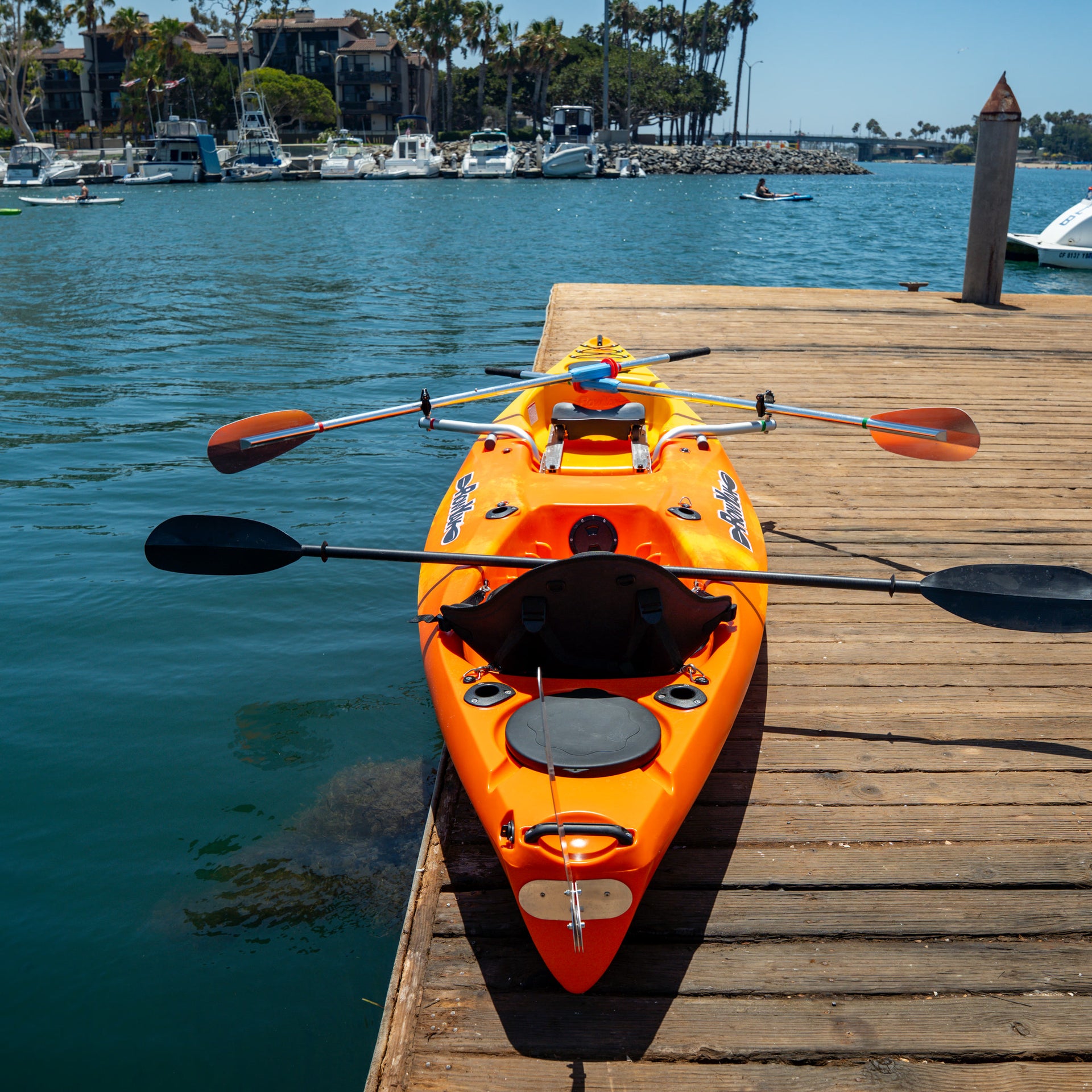
The company describes its wide, flat hull as prioritizing stability over speed. That positioning fits its recreational focus, although it should not be read as an independently measured comparison with other kayaks or rowing shells.
The maximum stated capacity is 550 pounds, approximately 249 kilograms. This includes occupants and equipment, so bags and other items count toward the same limit. It is a combined load allowance, not a per-person figure.
Three hatches and bungee tie-downs provide storage options, while bottle and fishing rod holders add convenience. These details help explain how the craft is intended to accommodate more than a short exercise session, with places to organize equipment for a longer outing.
Conversation, coaching, and recreation
Couples and friends are an obvious audience for the face-to-face layout, but RowYak also identifies rowing coaches, athletes, families, rental operators, and beginners among its users. The press release says early owners span several of these groups.
For instruction, facing a learner gives a coach a direct view of the person practicing. For recreation, the benefit is less technical: both riders can see each other’s expressions and share a conversation as the outing unfolds.
The built-in rod holders also support fishing as a potential use. Across these activities, the common feature is the shared space between the occupants. The boat’s appeal rests on how people use that space, as much as on the rowing equipment itself.

Pricing and availability
At the time of writing, RowYak is listed at US$2,499, including the rowing setup, sculling oars, and kayak paddle. The September 2026 press release specifies free shipping within the continental United States.
The company says it is expanding direct sales and seeking retailers, rental businesses, rowing clubs, outfitters, international distribution partners, and licensing and strategic partners. Its website currently states that shipping is limited to the United States.
For buyers drawn to the concept, the proposition remains clear: rowing and kayaking in a boat designed to make time together more conversational.
Source: RowYak