Late spring frost can wipe out a grape harvest in a single night. A hailstorm that lasts twenty minutes can do the same. Heat stress during flowering can reduce berry set dramatically, and heavy rain at the wrong moment can wash away the fungicide treatment a grower applied days earlier. These are not rare edge cases — they are recurring risks that winemakers in France, Italy, the United States, and virtually every major wine region face with increasing frequency as climate patterns grow more erratic.
The traditional responses each come with significant tradeoffs. Permanent enclosure structures protect crops but block the environmental exposure — rain, breeze, natural temperature variation — that defines a terroir. Frost candles and helicopter disturbance techniques are energy-intensive, labor-dependent, and limited in scope. Insurance absorbs some financial loss after the fact but does nothing to save the vintage.
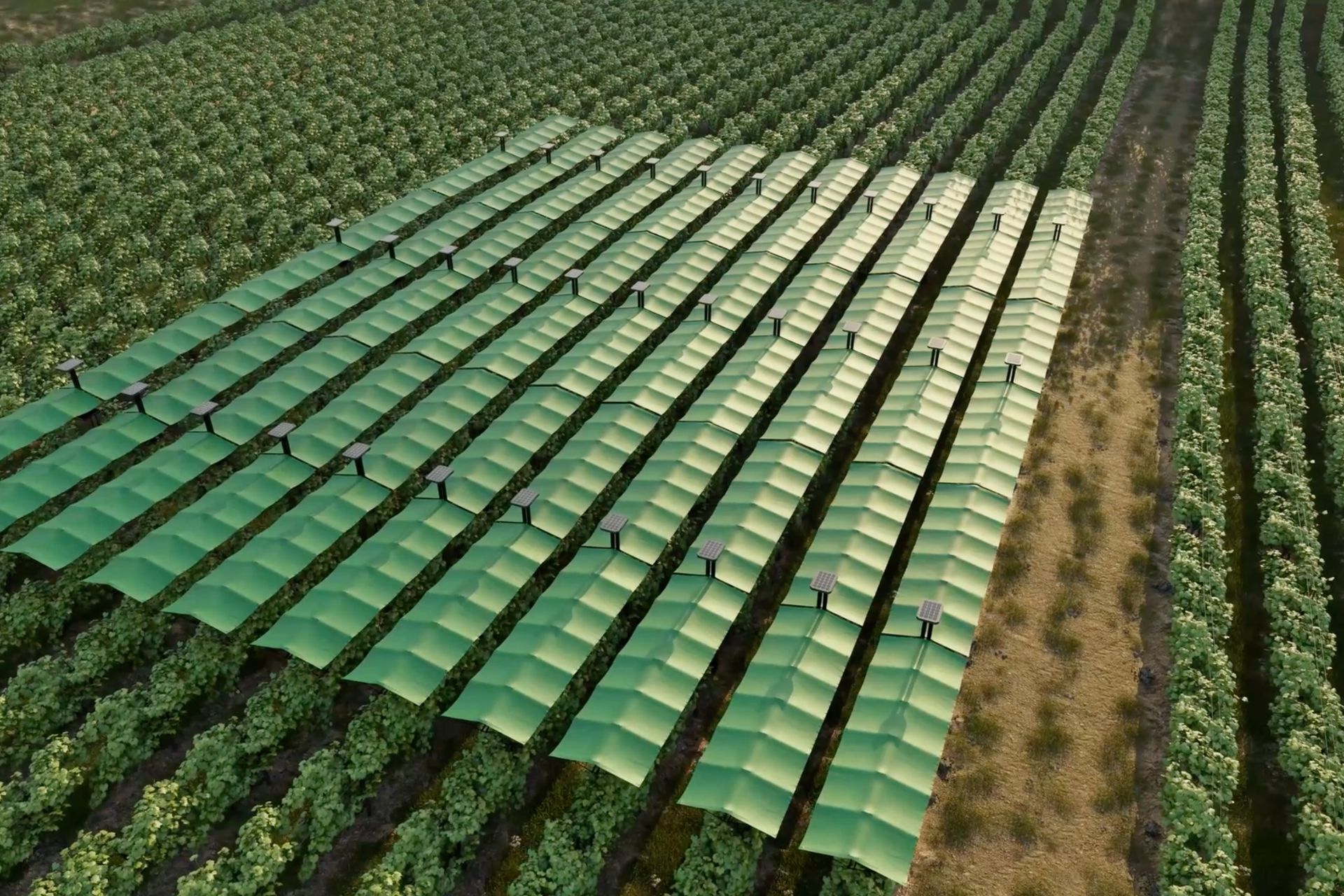
BIENESIS, a French agri-tech startup, is proposing a different model: a remotely deployable, solar-powered canopy system that sits invisibly within the vine row until it’s needed, then opens across a 6-meter span on command, protects the crop through the weather event, and retracts again when conditions clear. The system is called the Smart Canopy, and after two seasons of independent field trials in Burgundy, the company is now moving toward broader deployment across France, Italy, and the United States.
The core concept: Targeted deployment, not permanent coverage
The fundamental design principle behind the BIENESIS Canopy is that a vineyard doesn’t need a roof most of the time — it needs one at specific, predictable moments. Frost alerts, hail forecasts, and heat wave warnings all arrive with some lead time. The question is whether a protection system can respond to that information quickly and selectively enough to matter.
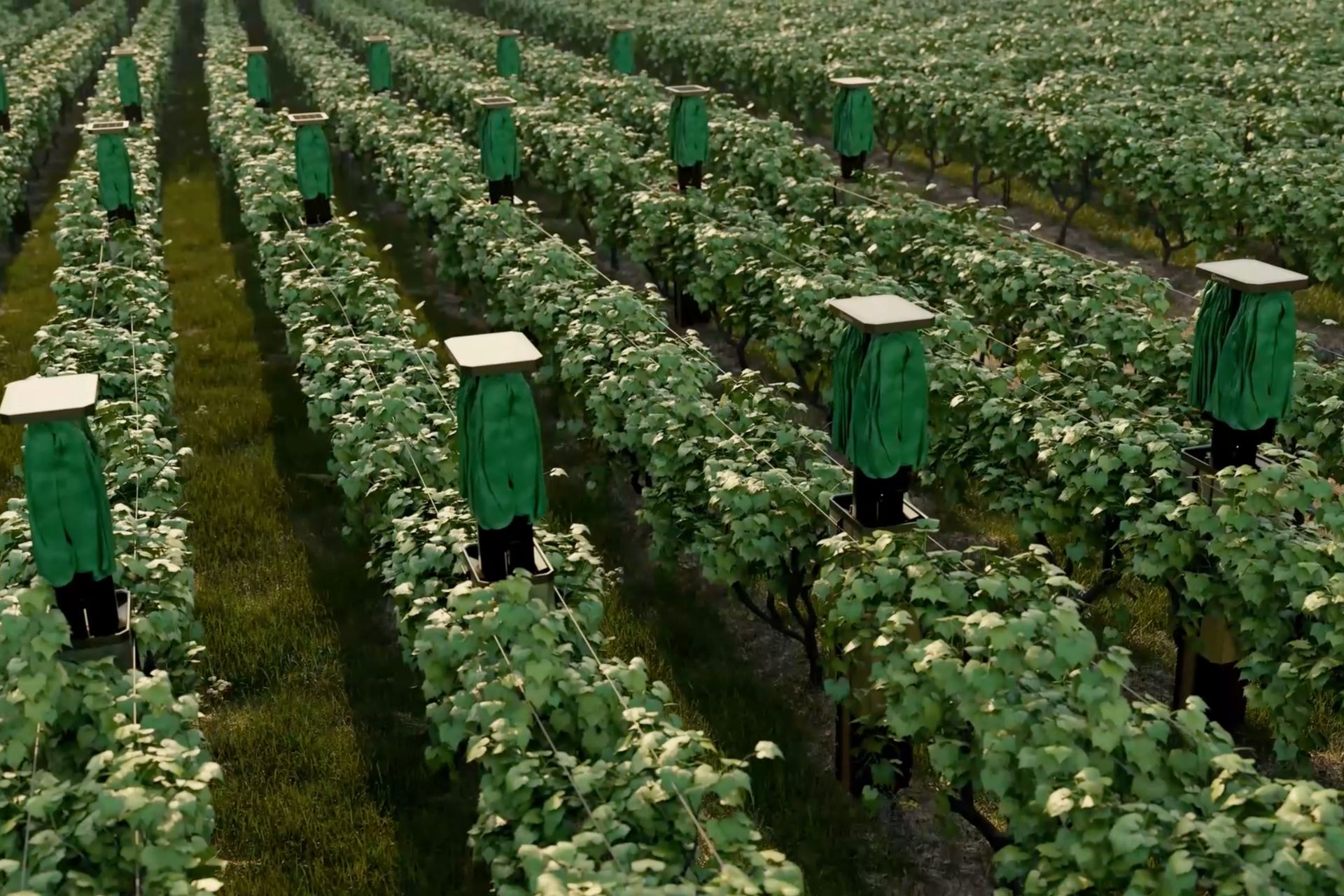
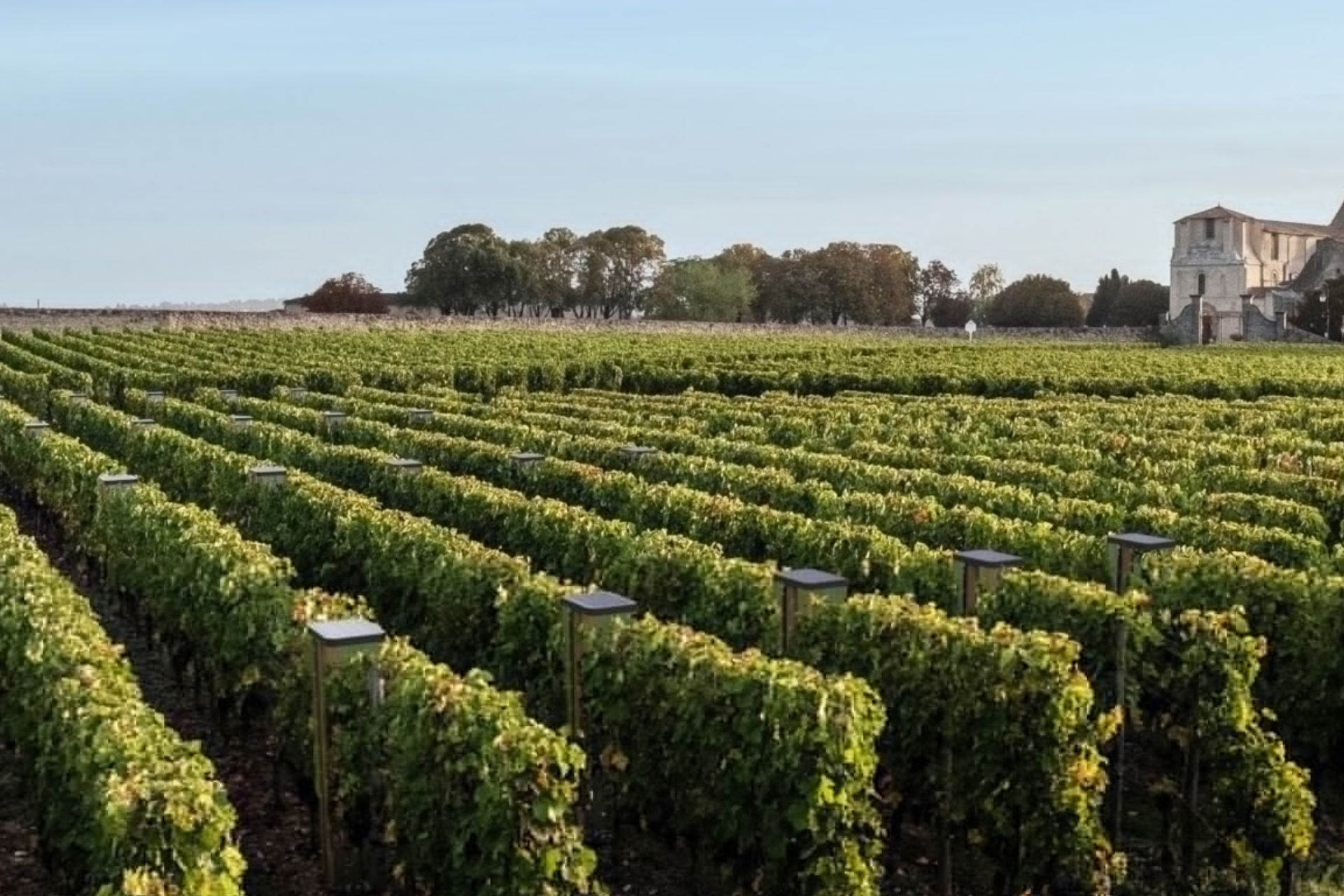
BIENESIS addresses this with a canopy that is retracted and stored 98% of the time inside a compact housing unit measuring 22 × 35 cm — roughly the footprint of an A4 sheet of paper (about 8.5 × 13.8 inches). That housing sits integrated within the vine row at trellis height, essentially invisible when viewed from a distance. When a deployment alert is triggered — either manually by the grower via a smartphone app or automatically by the system’s algorithms — two robotic arms, each 3 meters (approximately 10 feet) long, extend across the row and unfurl a lightweight, high-density protective fabric that spans the full 6-meter (about 20-foot) width of the covered area.
The deployment and retraction are controlled remotely via 4G, with no additional labor required at the time of the weather event. The grower receives an alert, confirms or schedules the deployment from their phone, and the system handles the rest.
What it protects against
The Smart Canopy is designed as a multi-hazard tool, not a single-use solution. The same physical cover serves different protective functions depending on the threat:
For frost, the fabric retains heat stored in the soil during the day, creating a microclimate beneath the canopy that buffers overnight temperature drops during the critical spring period when new growth is most vulnerable.
For hail, the high-density fabric is lightweight but resistant enough to absorb and deflect hailstones. The system is wind-tested to 50 mph (80 km/h), which BIENESIS notes covers approximately 80% of hail events. Above that threshold, the fabric is designed to partially release at the ends to shed wind load while remaining attached to the main structure — a deliberate safety feature that prevents the canopy from becoming a sail in extreme wind.
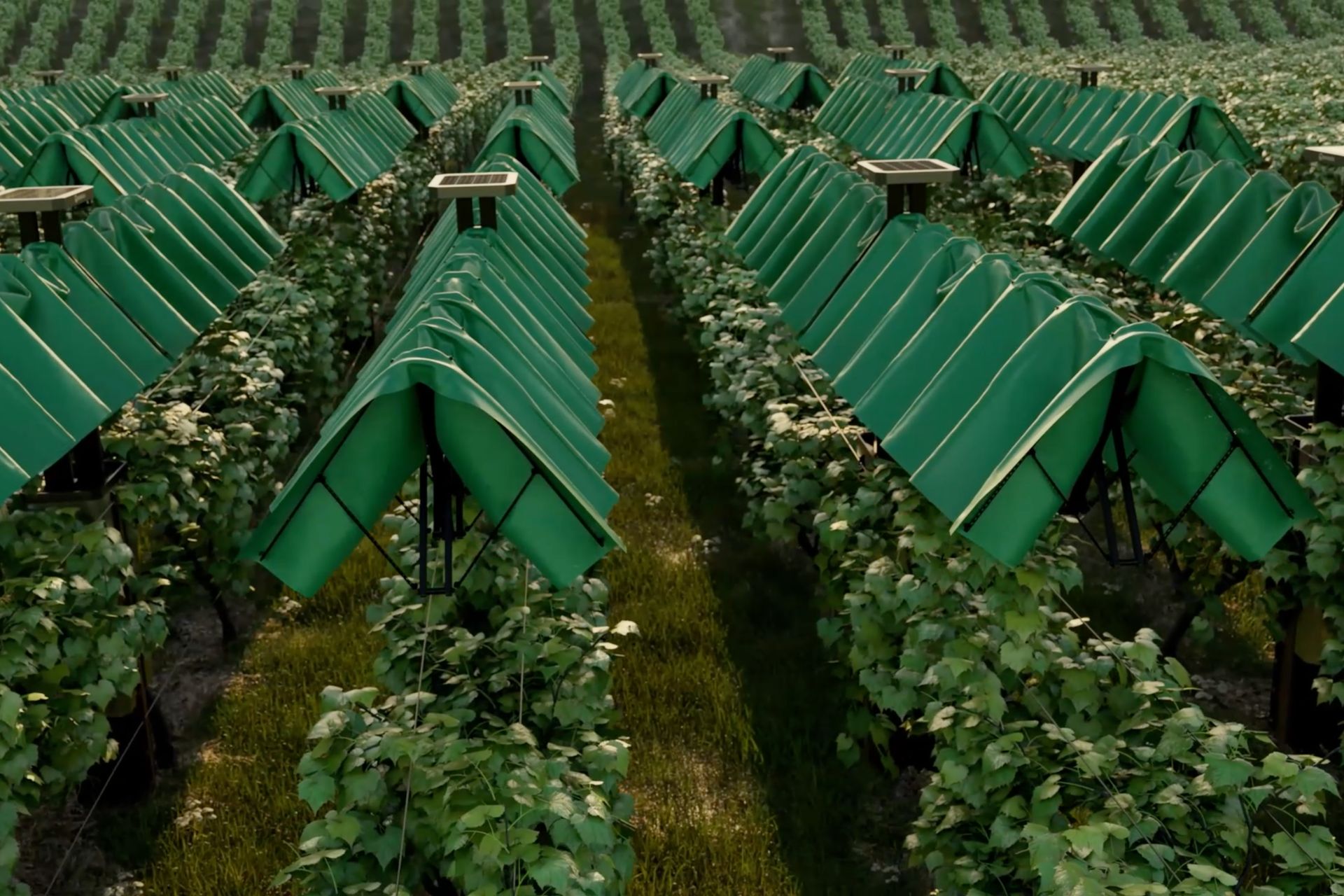
For heat stress during summer and flowering periods, the fabric reduces solar radiation by more than 90% and lowers berry surface temperature when deployed during high-heat events. The design also supports airflow beneath the canopy, which helps cut evapotranspiration — BIENESIS estimates potential water savings of up to 30 cubic meters per hectare per day during heatwaves, a meaningful figure for growers managing irrigation costs.
For heavy rainfall, the cover limits direct leaf wetness and reduces the wash-off of fungicide and pesticide treatments. This has downstream effects on input costs: BIENESIS reports that optimized deployments during rain events can reduce agrochemical inputs by 30% to 70% depending on the season, by reducing the number of reapplications needed after treatment loss.
How the system works
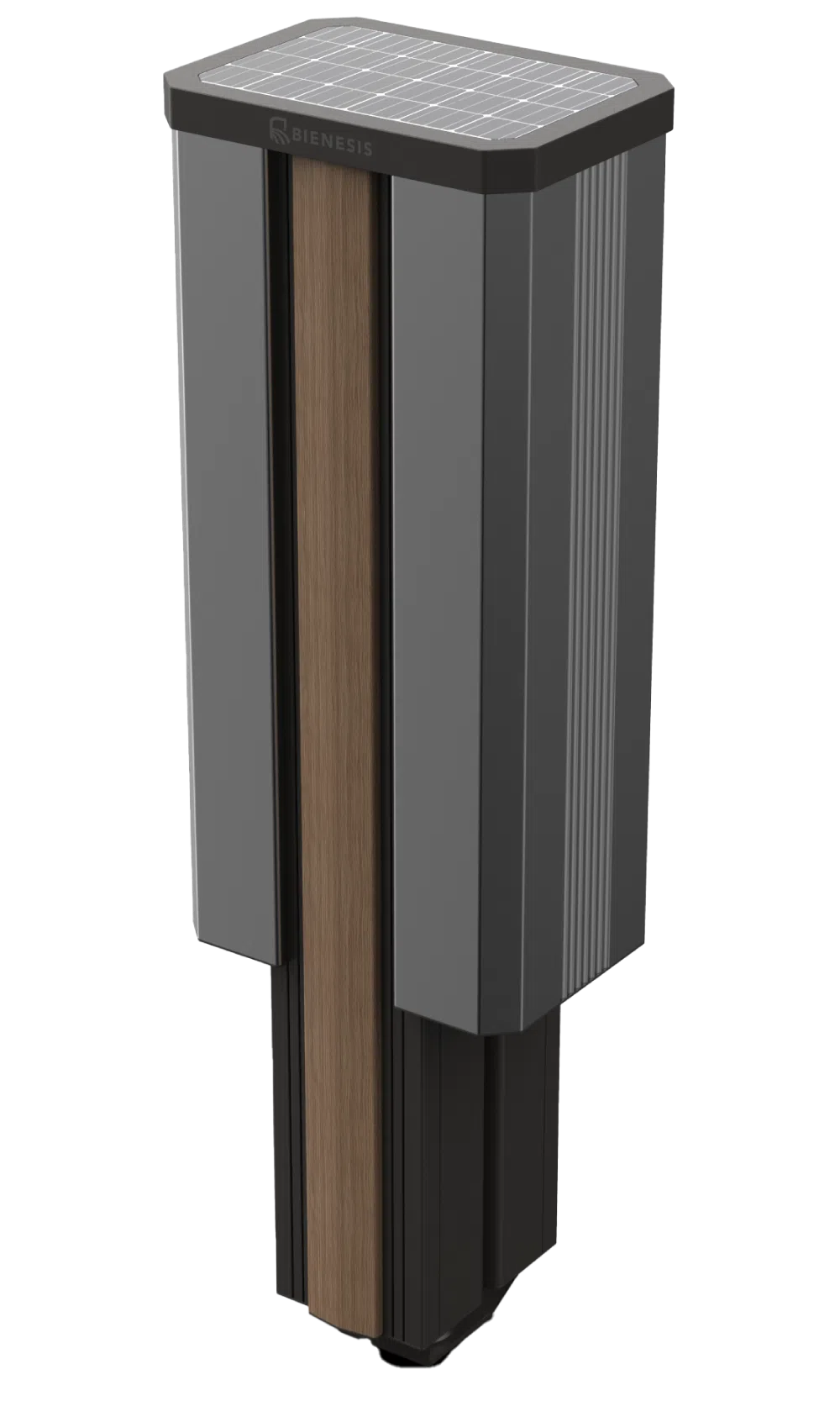
Each canopy unit is fully energy autonomous, powered by an integrated solar panel. There is no external electrical cabling required, which is one of the reasons BIENESIS positions the installation as comparable in complexity to putting in a standard trellis post. Anchors are reversible and compatible with rocky and soft soils alike, and the system adapts to slopes of up to 30% — a meaningful specification for hillside vineyards in regions like Burgundy, Beaujolais, and the Rhône Valley.
The canopy housing sits at trellis height, with side notches designed to accommodate existing trellising wires without interference. The assembly is compatible with all standard vineyard machinery: soil work, trimming, spraying operations, and mechanical harvest were all validated in 2025 trials without modification to normal operating sequences.
The deployment logic is handled by patented algorithms developed with viticulture experts. In-field sensors provide real-time data on temperature, humidity, and other local conditions, which feed into the BIENESIS app’s alert and recommendation system. Growers can configure their own decision thresholds, schedule deployments in advance, or allow the system to act automatically during sudden events. In the 2024 and 2025 seasons, optimal yield protection was achieved with just 13 to 19 deployments per season across trial sites — a figure that underscores how targeted the system is designed to be.
“What I really appreciated about BIENESIS is that they took the time to understand our constraints as winegrowers and delivered a solution that perfectly meets our needs,” said Jean-Yves Bizot, a winegrower in Vosne-Romanée, one of the trial participants.
Two seasons of field trials — and what they showed
BIENESIS ran its first field trials in 2024, focusing on a single Burgundy parcel and monitoring mildew-related outcomes. The primary mechanism in that season was reducing direct leaf wetness during intense rainfall events associated with primary contamination risk. Independent monitoring was conducted by the French Vine and Wine Institute (IFV) and the Chamber of Agriculture — a deliberate choice by BIENESIS to anchor its results in verifiable, third-party data.
The 2025 season expanded the trial to four parcels: “Les Jachées” in Vosne-Romanée (Domaine Bizot), Clos de la Roche in Morey-Saint-Denis (Domaine Hubert Lignier), an IFV experimental parcel in Beaujolais, and a fourth site. The focus shifted toward protection during flowering and high-heat events. Deployments ranged from 13 at the Beaujolais parcel to 19 at Clos de la Roche.
Across both seasons and all trial sites, BIENESIS reports yield improvements of +23% to +129% on protected plots compared to unprotected reference rows. The range reflects the variability of weather conditions across sites and seasons — a parcel that faced more severe hail or heat events saw larger protection gains.
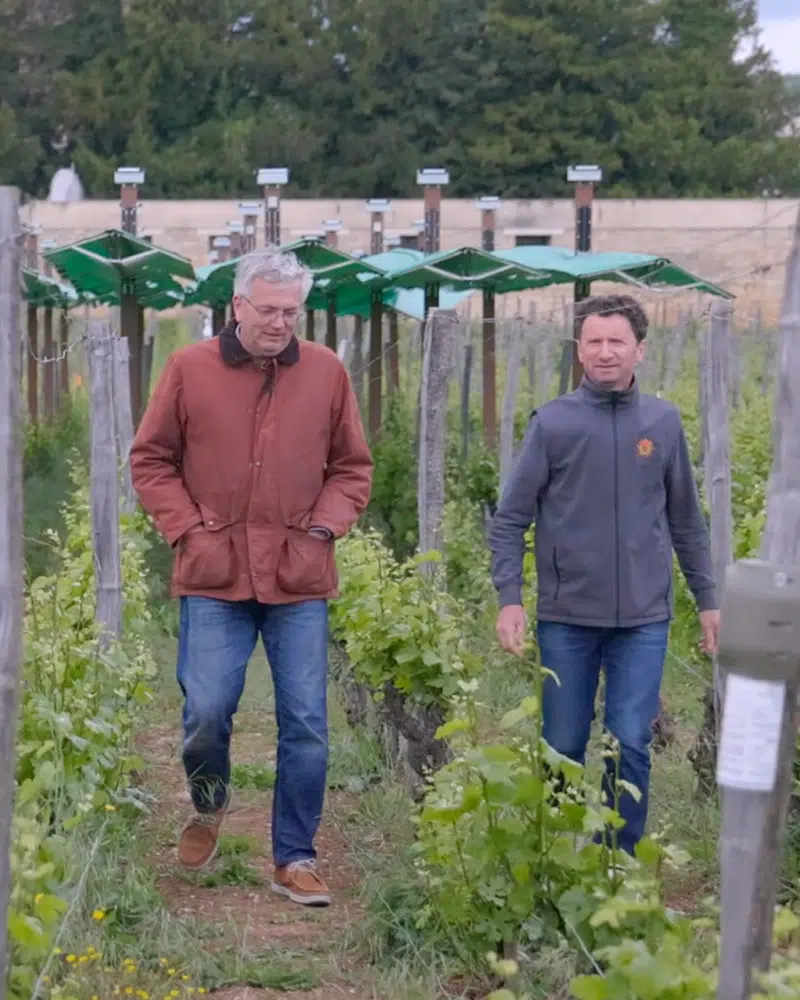
“I’ve been using BIENESIS prototypes in my vineyards for two seasons now, and the results in terms of yield have been truly spectacular,” said Laurent Lignier, winegrower at Domaine Hubert Lignier in Morey-Saint-Denis.
The company notes that its trial protocol is specifically designed to confirm not only that the canopy improves yields, but that it has no negative impact on vine health or wine quality — a prerequisite before any broader commercial deployment.
Design priorities: Invisible, durable, and farmable
BIENESIS has been deliberate about the aesthetic and operational footprint of the system. In summer, the retracted housing sits within the foliage wall and is largely invisible. In winter, when vines are dormant, the unit echoes the visual lines of standard trellis infrastructure. The company describes this as integration rather than imposition — a system that changes the vineyard’s risk profile without visually dominating it.
On the durability side, BIENESIS estimates a 20-year lifespan for the mechanical structure and more than 10 years for the fabric and electronics — longer projections that, if validated over time, would significantly affect the economics of adoption. The materials are stated to be more than 90% recyclable.
Ongoing maintenance — wear parts, routine inspections, software updates, and incident response — is included as a managed service delivered by BIENESIS and its partner network, rather than left to the grower to coordinate independently.
What comes next: Constellation 2026
Following two positive growing seasons, BIENESIS is launching what it calls Constellation 2026: a network of demonstrator sites across every major French wine region, plus expansion into Italy and the United States. The program is designed both to generate additional regional data across diverse terroirs and climates, and to give winegrowers in new markets the opportunity to assess the system in conditions comparable to their own.
The expansion to the United States is particularly notable. American wine regions face many of the same climate pressures as European ones — late frosts in Napa and Sonoma, hailstorms in Oregon and Washington, and escalating heat events across California. Whether the system’s regulatory pathway, cost structure, and service infrastructure can scale to meet demand in those markets remains to be seen, but the technical foundation has now been validated under genuine field conditions by independent scientific bodies.
For growers interested in participating in the Constellation 2026 demonstrator network, BIENESIS is accepting inquiries through its website.
Source: BIENESIS