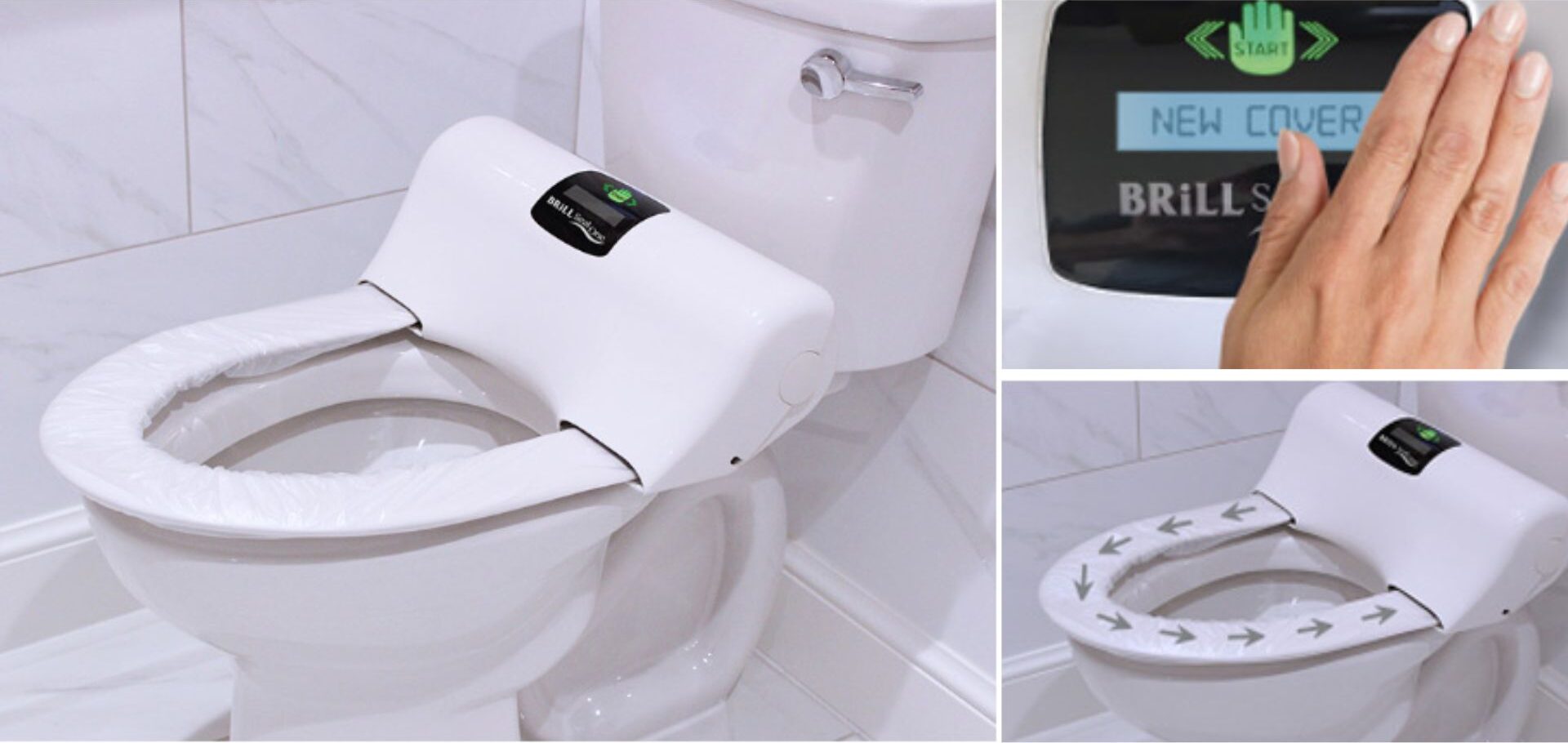
Walking into a public restroom and hovering over the toilet seat rather than sitting on it is a near-universal habit — and for good reason. Whatever was on that seat before you arrived is anyone’s guess. Paper seat covers, when available, offer a partial solution, but they shift, tear, and end up on the floor as often as they stay in place. A Florida-based company called Brill Hygienic Products has spent more than three decades working on a more reliable answer: a system that automatically wraps the toilet seat in a fresh, clean film cover before each use, triggered by nothing more than a wave of the hand.
The company’s two products — the Brill Seat-One and the Brill Wall Mounted Sensor Seat — are now installed in thousands of commercial locations across the U.S. and internationally, including airports, hospitals, casinos, schools, and sporting arenas.
From concept to thousands of locations
Brill Hygienic Products Inc. was founded more than 35 years ago by Alan Brill, a military veteran, and David Jablow, who serves as the company’s Chief Operating Officer. The company is based in Delray Beach, Florida, where it also manufactures its products — making it, by its own account, the only American manufacturer of hands-free electronic sanitary toilet seat dispensers.
The founders identified a straightforward problem: public toilet seats are high-contact surfaces in high-traffic environments, and the existing solutions — paper covers, manual cleaning, or nothing at all — either fail in practice or depend too heavily on user and maintenance compliance. The Brill system removes the variable of human behavior from the equation almost entirely.
How the system works
The core mechanism is the same across both Brill products. A roll of clean plastic film tubing sits on the left side of the toilet seat housing. That tubing wraps around and encases the toilet seat ring, providing a fresh surface for each user. After the seat is used, the soiled film is advanced, split by an internal razor blade built into the housing, and rewound onto the right side of the unit — where it cannot be accessed or re-used.
The result, in the company’s framing, is effectively a new toilet seat cover for every single person who sits down.
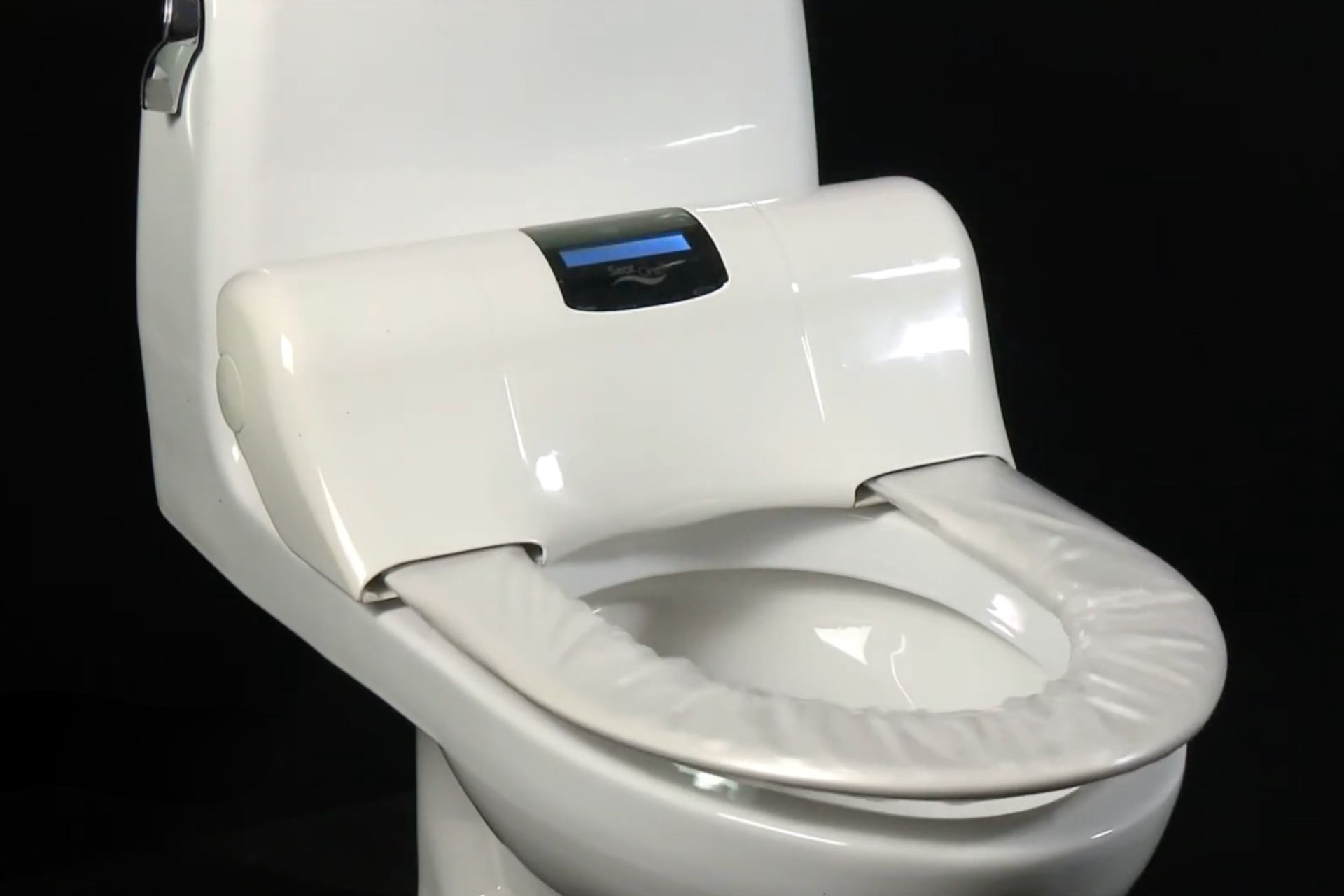
Activation requires no physical contact with the seat itself. On the Brill Seat-One, a wave of the hand over the sensor mounted on the seat housing advances the film and signals readiness with an LED display. The wall-mounted version uses a separate sensor unit installed on the bathroom wall, with a backup push button on the seat for environments where that setup is preferred.
The two models: Seat-One vs. Wall Mounted Sensor Seat
The Brill Seat-One is the company’s more advanced model. It operates on a rechargeable battery pack rated for up to 6,000 seatings per charge — a figure that makes it practical for high-traffic environments without frequent maintenance. Each roll provides 165 seatings. The unit includes an LED display that automatically flags low film and low battery conditions, and the system is covered by a two-year warranty.
The Brill Wall Mounted Sensor Seat is the earlier model and uses a different power setup: an AC/DC transformer wired at 12 volts, capable of running up to 10 units from a single connection. Each roll in this system provides 100 seatings. Activation works the same way — a hand wave in front of the wall sensor, or a button press on the seat housing. This model carries a one-year warranty.
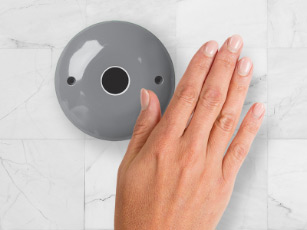
Both models use the same internal razor-blade failsafe that prevents any portion of used film from being advanced back over the seat.
Where it’s being used
The Brill system is positioned as a commercial and institutional product rather than a residential one. The company lists airports, casinos, hospitals, country clubs, offices, factories, schools, and sporting arenas among its installation locations — environments where restroom throughput is high and the cost of a poorly maintained bathroom is measured in customer experience, employee satisfaction, and in some settings, health outcomes.
The company notes that its automatic seat covers reduce restroom maintenance demands as well. Unlike paper seat covers, which frequently end up on the floor or in the toilet bowl, the Brill film advances and rewinds within the sealed housing — reducing floor litter and the risk of clogged plumbing.
Practical considerations
The Brill system is not a consumer product sold at hardware stores — it is a commercial hygiene solution sold to facility managers, building operators, and institutional buyers. Pricing is available through direct quote via the company’s website. Replacement film rolls are part of the ongoing supply relationship.
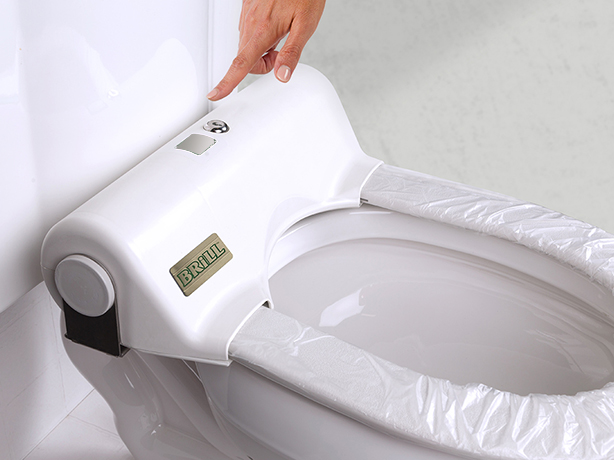
Installation requires swapping the existing toilet seat for the Brill unit. The Seat-One operates on battery power with no hardwiring required, while the Wall Mounted Sensor Seat requires low-voltage wiring to the wall unit. Both are designed for standard elongated commercial toilet bowls.
The system does not include a bidet function, air dryer, or heated seat — it is focused specifically on the seat cover mechanism and the hygiene problem it addresses.
Source: BRILL Hygienic Products