

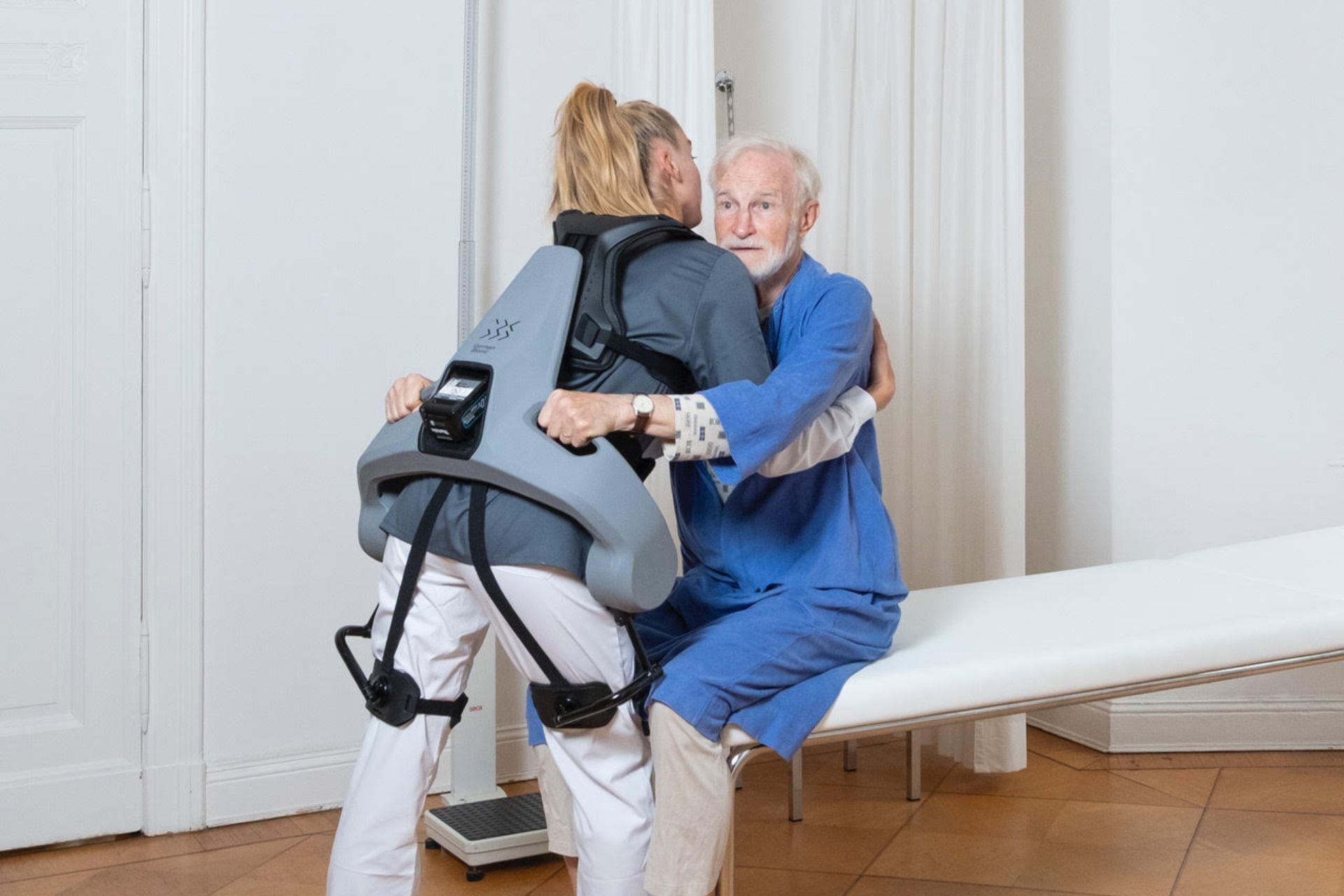
Back injuries are one of the biggest occupational hazards for caregivers, nurses, warehouse workers, and many other professionals whose jobs involve frequent lifting. Whether it’s transferring a patient from a wheelchair to a bed or repeatedly moving heavy equipment, the physical demands can take a serious toll over time.
German Bionic believes wearable robotics can help.
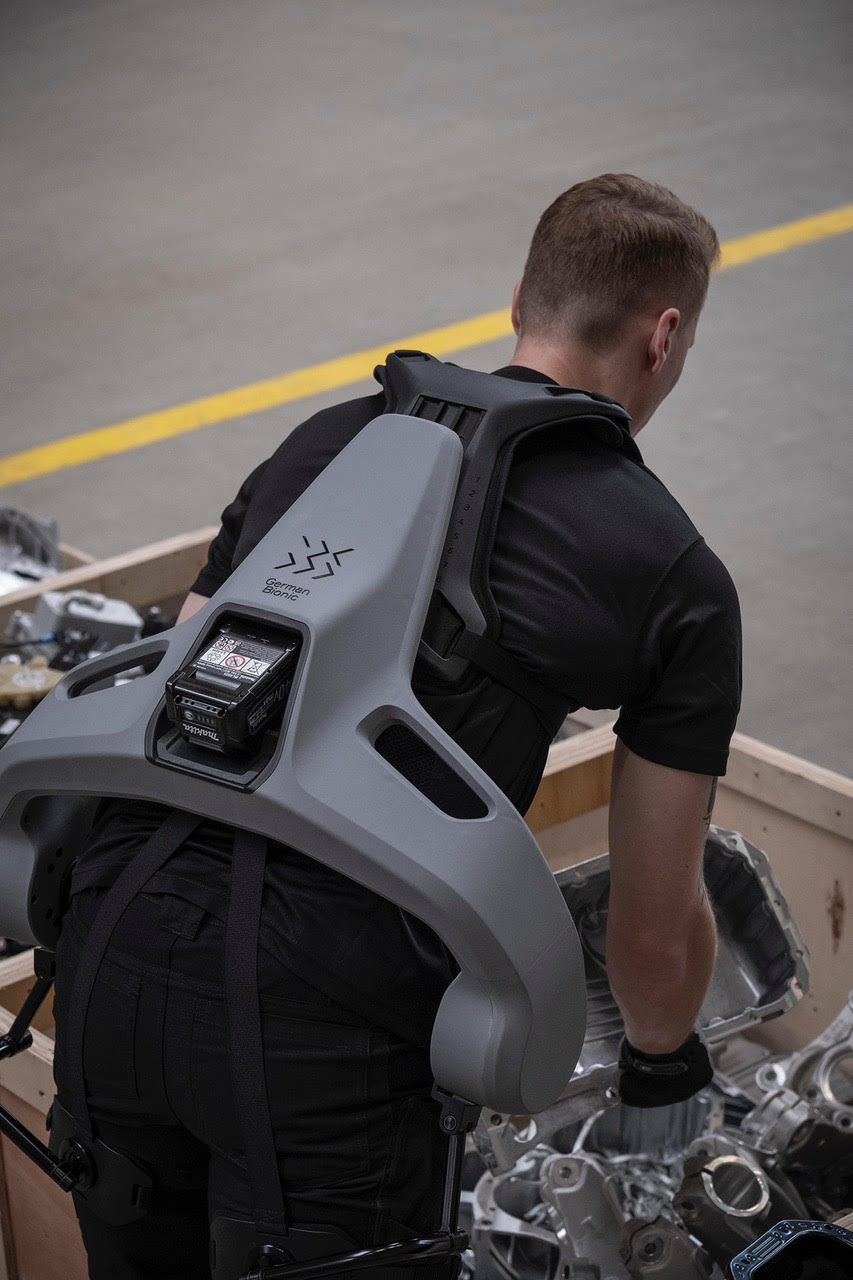
Its latest AI-powered exoskeleton, Exia, is designed to reduce the strain of physically demanding work by providing powered lifting assistance while allowing users to move naturally. Rather than replacing the person doing the job, the wearable works alongside them, helping to reduce stress on the lower back during lifting, bending, carrying, and other repetitive movements.
A wearable robot that assists every lift
Unlike industrial robots that remain fixed in one place, Exia is worn directly on the body.
The exoskeleton supports the user’s movements by providing up to 38 kg (84 lb) of dynamic lifting assistance when needed. Sensors continuously monitor body movement and posture, allowing the system to deliver assistance at the right moment while maintaining natural freedom of movement.
This means users still perform the task themselves, but with significantly less physical effort placed on the lower back.
For healthcare workers, this can make everyday activities such as helping patients stand, repositioning them in bed, or transferring them between a wheelchair and bed considerably less demanding.
Built with artificial intelligence
One of Exia’s biggest differences from traditional powered exoskeletons is its AI-driven approach.
German Bionic says the system continuously adapts to the individual wearer and the specific task being performed. Instead of providing the same level of assistance for every movement, the exoskeleton uses artificial intelligence trained on billions of real-world data points to optimize support for different users, work environments, and industries.
The goal is to make assistance feel as natural as possible while improving comfort throughout the workday.
Designed for more than healthcare
Although videos of Exia often highlight caregivers safely moving patients, healthcare is only one of the industries the company is targeting.
German Bionic has designed Exia for physically demanding work across multiple sectors, including:
- Healthcare and aged care
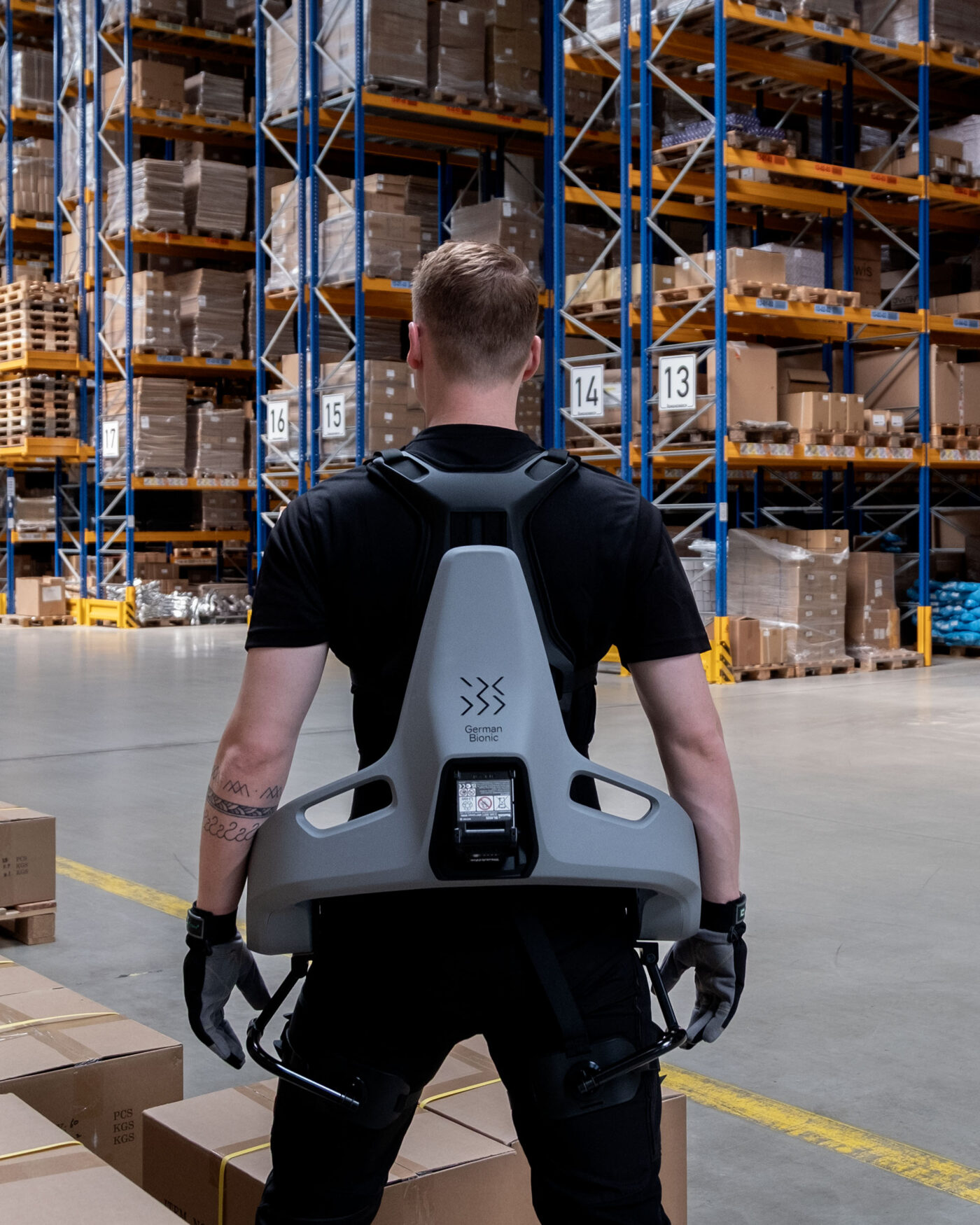
- Logistics and warehousing
- Manufacturing
- Construction
In each environment, the objective is similar: reduce the physical burden of repetitive lifting while helping workers perform demanding tasks more safely.
Helping reduce injuries and fatigue
Musculoskeletal injuries remain one of the leading causes of lost work time in physically intensive professions.
German Bionic says Exia has been developed to help reduce lower-back strain, improve workplace ergonomics, lower the risk of work-related injuries, reduce sick leave, and even help extend careers for employees in physically demanding roles. The company also positions the technology as one way to address labour shortages by making demanding jobs more sustainable over the long term.
For employers, that could mean fewer injuries and improved workforce retention.
For workers, it may mean finishing a shift with less fatigue and less cumulative strain on the body.
Supporting caregivers without replacing them
One of the most compelling applications for Exia is patient care.
Moving patients safely often requires multiple caregivers or mechanical lifting equipment. When staffing levels are limited, these transfers can become physically exhausting and increase the risk of injury for both the caregiver and the patient.
An exoskeleton like Exia doesn’t eliminate the need for proper lifting techniques or established safety procedures, but it can provide additional physical assistance during demanding transfers, helping caregivers perform their work with less effort while maintaining close, hands-on interaction with the person receiving care.
Rather than replacing healthcare professionals, the technology is intended to support them.
A growing role for wearable robotics
As populations age and labour shortages continue to affect healthcare and industrial sectors around the world, wearable robotics are becoming an increasingly practical solution.
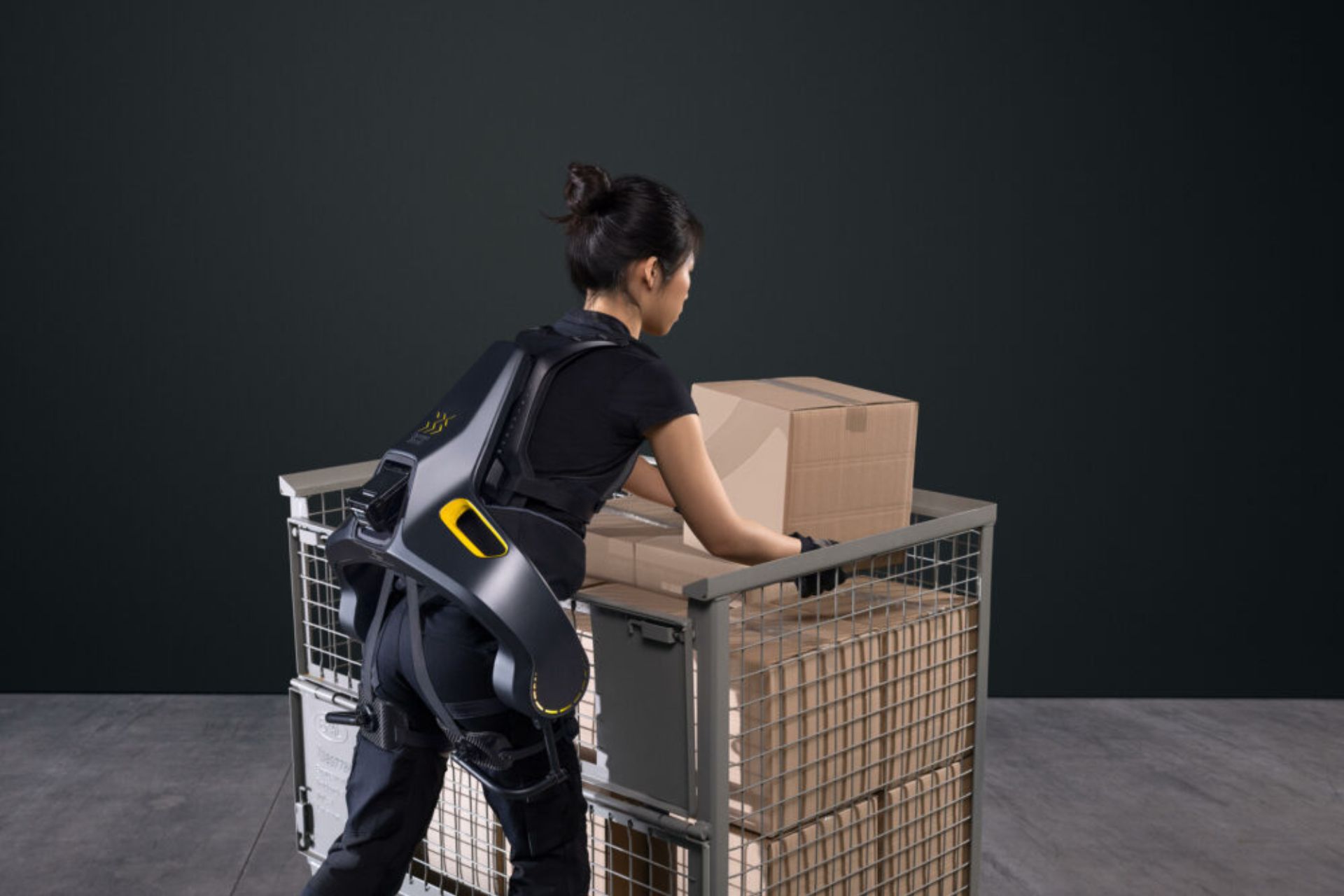
Instead of relying solely on stronger equipment or additional personnel, exoskeletons offer another approach by augmenting human capability without fundamentally changing how work is performed.
German Bionic’s Exia represents one of the latest examples of this trend, combining powered assistance with artificial intelligence to help workers lift more safely while reducing physical strain throughout the day.
Pricing and availability
At the time of writing, German Bionic has not published public retail pricing for the Exia exoskeleton.
The company offers Exia as a professional solution for organisations in sectors such as healthcare, logistics, manufacturing, and construction. Businesses interested in deployment can contact German Bionic directly for product information, demonstrations, and commercial enquiries.
Source: German Bionic

 of lifting assistance to help reduce back strain for caregivers and industrial workers.)