Warehouse automation works best in facilities with plenty of space. Older warehouses, however, often have narrow aisles, tightly packed storage, and layouts that make it difficult for traditional forklifts and automation systems to operate efficiently.
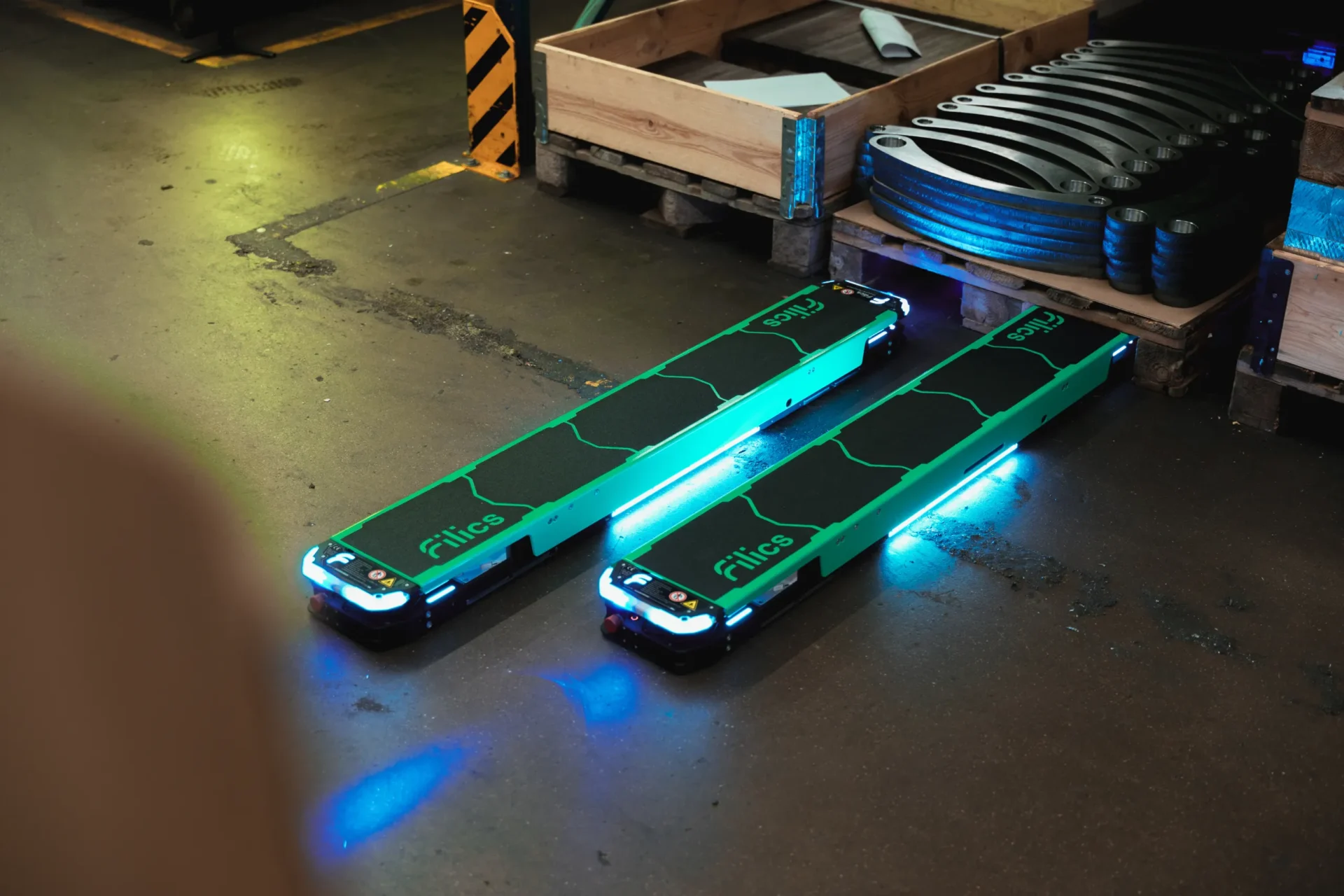
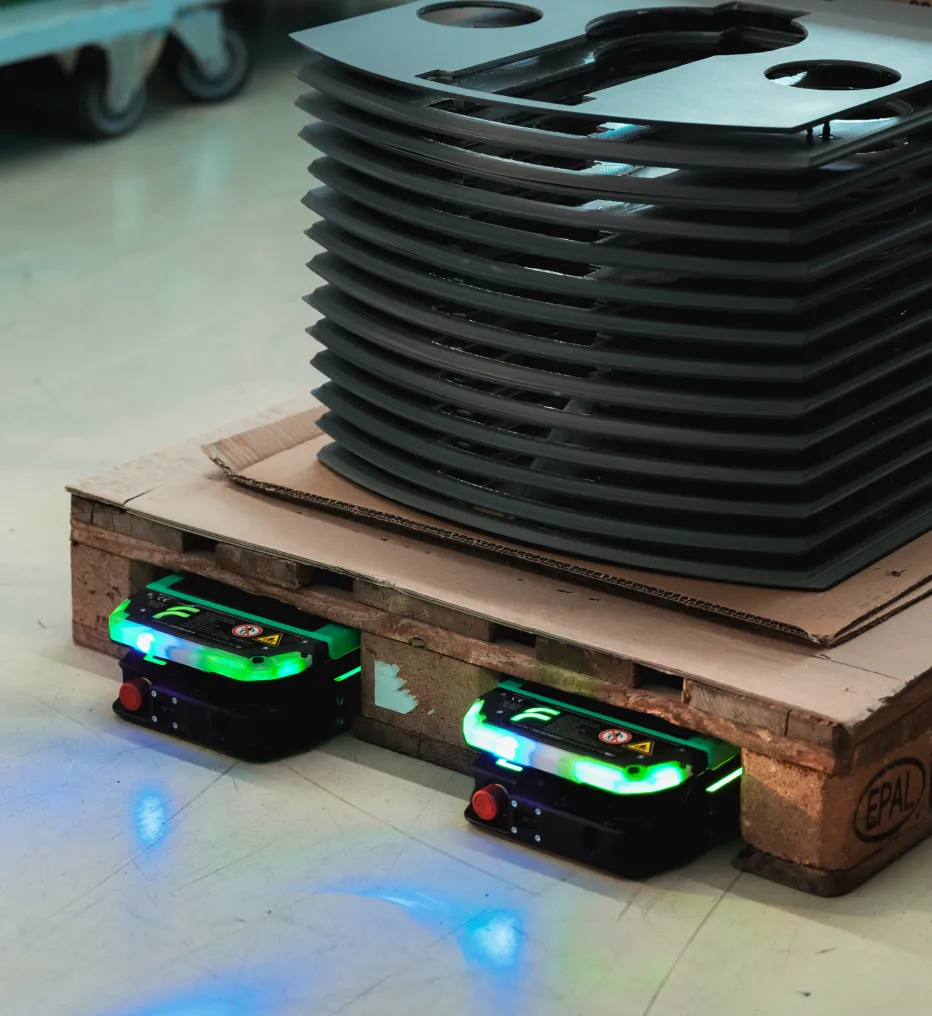
A German startup called Filics believes the answer isn’t a bigger machine, but a smaller one. Its flagship product, the Filics Streamliner, is an autonomous pallet-moving system made up of two ultra-flat robots that slide underneath a pallet, lift it, and transport it together. The company says the system can move pallets in areas where conventional forklifts and many autonomous mobile robots (AMRs) struggle to operate.
The technology is already being used by major companies including DHL, Coca-Cola Europacific Partners, and the Nagel Group, suggesting it has moved beyond the pilot stage and into real-world logistics operations.
A different approach to pallet transport
Instead of relying on a single vehicle, the Streamliner uses two synchronized runners that work as a pair.
Each runner measures 1,350 × 200 × 92 mm (approximately 53 × 8 × 3.6 inches), making the robots remarkably low-profile. The runners approach a pallet from opposite sides, slide underneath it, lift the load, and then transport it together.
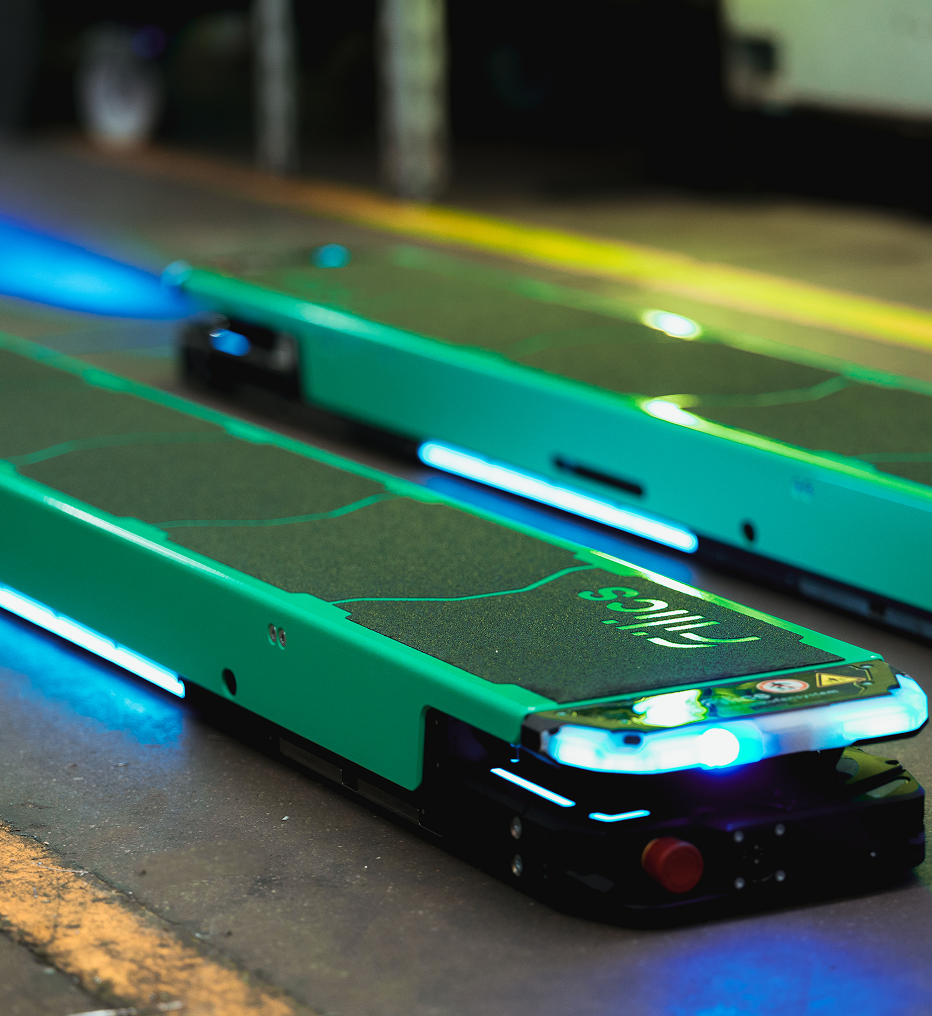
Because the robots move underneath the pallet rather than carrying it from the outside, they require very little room to maneuver. Filics says the system needs only a 1.7-meter (about 5.6-foot) diameter turning area, significantly less than a traditional forklift and less than many conventional AMRs.
This compact design allows the Streamliner to operate in warehouses where every square meter matters.
Accessing pallets without reshuffling inventory
One of the system’s biggest advantages is its ability to access pallets located in the middle of a storage row.
Traditional equipment often requires surrounding pallets to be moved first before reaching a specific load. The Streamliner can approach a pallet directly from below, reducing the need for repositioning nearby inventory.
Because the robots lift the pallet from underneath, all four sides remain accessible during transport. This can be useful for warehouse processes such as labeling, inspection, or order picking while the pallet is being moved.
Payload, speed, and charging
The Streamliner is designed for standard warehouse operations rather than high-speed transportation.
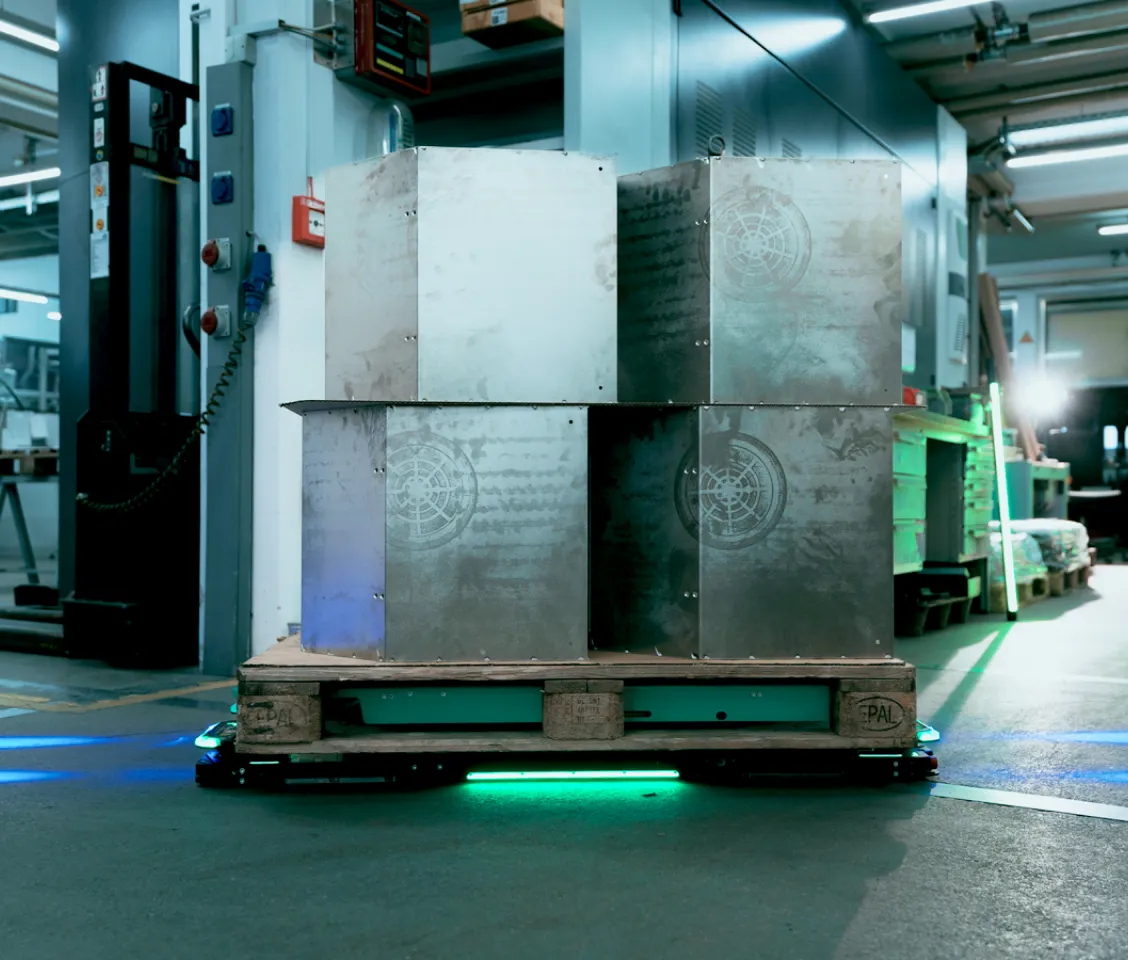
Each robot pair can handle payloads of up to 800 kg (approximately 1,760 lb) and travel at speeds of up to 1.2 m/s (about 2.7 mph).
Power comes from an onboard battery system that can be recharged in about 30 minutes. According to Filics, that charge provides up to six hours of continuous operation. When battery levels become low, the robots can automatically return to their charging stations without requiring human intervention.
Navigation is handled through laser-based sensors, eliminating the need for floor markers, embedded guidance systems, or major facility modifications. This allows the system to be installed in existing warehouses without significant construction work.
Built for operation around people
The Streamliner was designed to operate in environments where workers and robots share the same space.
The system complies with DIN EN ISO 3691-4 Performance Level D safety requirements and carries CE certification for industrial use.
To help prevent collisions, the robots use 360-degree environmental sensing, visual and audible alerts, and floor-projected warning lights that notify nearby workers when a unit is approaching. These safety features are intended to support operation in busy warehouses where forklifts, pedestrians, and automation systems often work side by side.
Software modules for different workflows
Filics offers the Streamliner as a modular platform with optional software packages for different warehouse requirements.
The base Streamliner system focuses on standard point-to-point pallet transport.
An optional module called OmniCarrier expands compatibility beyond standard EPAL Euro pallets to support additional load carrier types.
OmniFlow adds more advanced warehouse functions, including block storage handling, dynamic row management, and conveyor-style sequential pallet movement.
Another module is designed specifically for truck loading and unloading. Filics says the system can complete a full truck loading cycle in approximately 10 minutes.
Fleet management and integration
Transport orders and fleet management are handled through a web-based interface that can be accessed from virtually any device.
The Streamliner also supports integration with warehouse management systems through the VDA 5050 interface standard, allowing it to fit into existing logistics workflows.
Software updates are delivered over the air, reducing maintenance requirements and allowing new features to be deployed without taking the fleet offline.
The company says operators can scale the system gradually by adding additional units as demand grows, rather than investing in a large automation project all at once.
Who is it designed for?
Filics is targeting industries including manufacturing, food and beverage, consumer goods, third-party logistics, and pharmaceuticals.
These environments often have space constraints, regulatory requirements, or existing buildings that make large-scale warehouse automation difficult to install.
The Streamliner is intended to solve a specific problem: moving pallets efficiently at floor level inside existing facilities without requiring major infrastructure changes.
What it doesn’t replace
The Streamliner is not intended to replace every warehouse automation system.
Applications such as high-speed sortation, automated storage and retrieval systems (ASRS), and vertical warehouse storage still benefit from specialized equipment designed for those tasks.
Instead, Filics is focusing on one of the most common warehouse operations: moving pallets from one location to another. By reducing the space required for pallet handling and avoiding expensive infrastructure upgrades, the company aims to make automation practical for facilities that may have previously considered it too complex or costly.
With a distinctive design, growing customer list, and focus on retrofitting existing warehouses rather than rebuilding them, Filics has introduced a different take on warehouse automation—one that starts by shrinking the vehicle instead of expanding the facility.
Source: Fillics