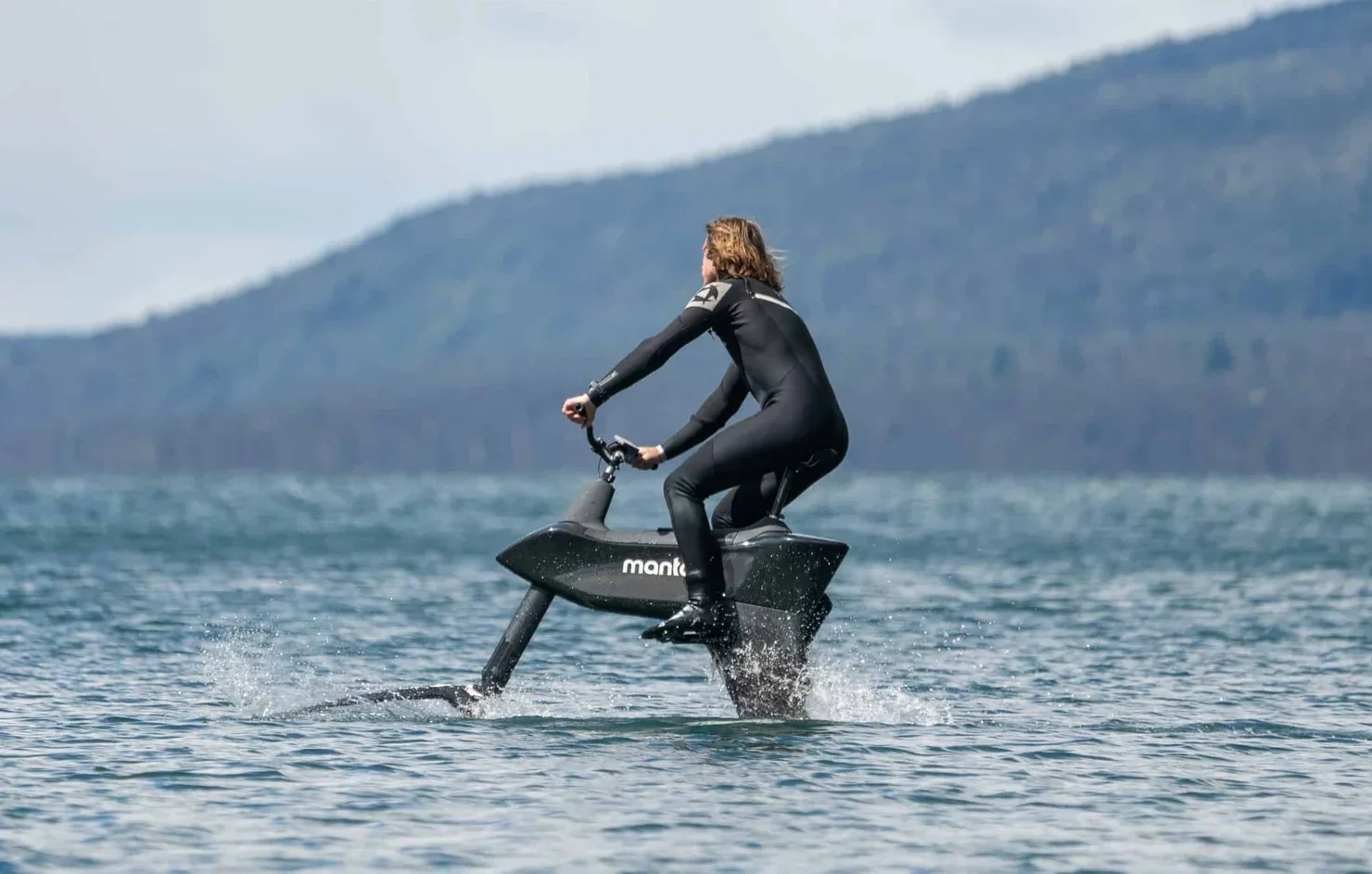
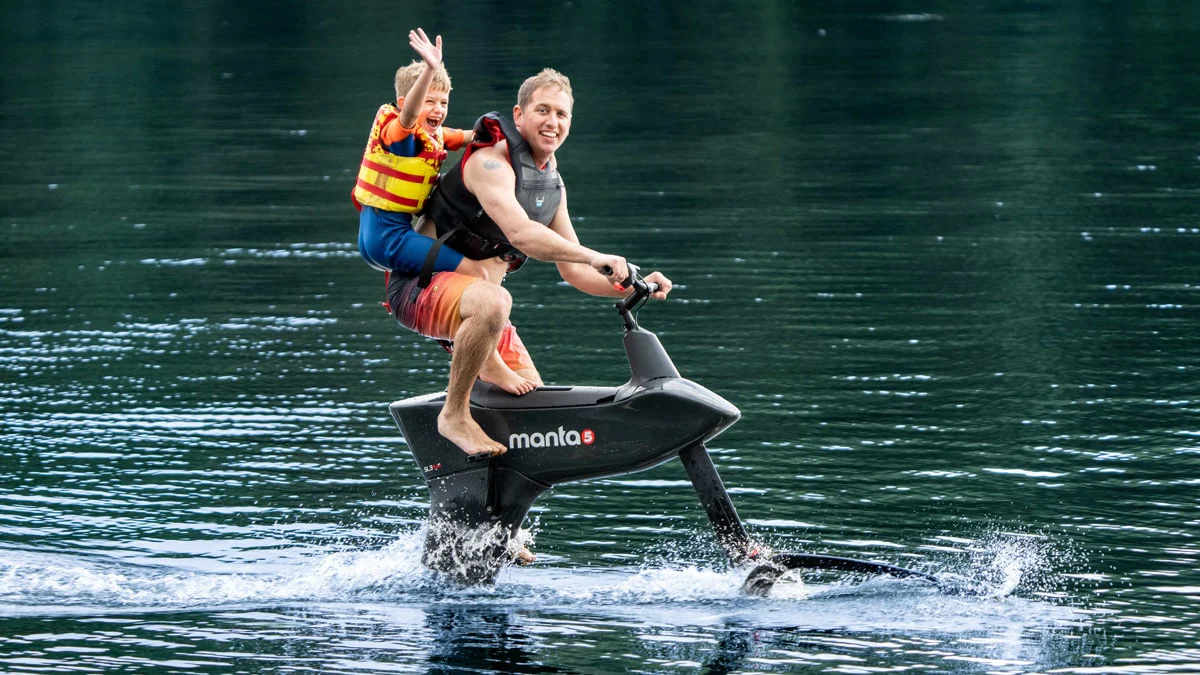
Most watersports ask you to move through the water — paddling, swimming, rowing, or steering a hull across the surface. The Manta5 Hydrofoiler takes a different approach. The New Zealand-designed electric hydrofoil bike uses pedal power and a motor-assist system to lift the rider above the water on underwater wings, replicating the physical experience of cycling while traveling elevated above the chop and swell. The company describes the result as the world’s first electric hydrofoil bike, and the SL3 is its current and most refined production model.
The SL3 range has three variants — the SL3, the SL3+, and the SL3 Pro — each built around the same core chassis and drivetrain but differentiated by foil configuration and included equipment. Here is a detailed look at how it’s engineered, what separates the three variants, and who it makes practical sense for.
From New Zealand to open water: How Manta5 built a product with no predecessor
Manta5 is based in New Zealand and operates its own product development and sales infrastructure, selling directly through its website at manta5.com as well as through a network of Ride Spot operators — licensed partners who offer demos, lessons, and product sales at waterfront locations. The company has built the Hydrofoiler from the ground up as a purpose-designed product rather than a modification of an existing bicycle or watercraft platform.
The SL3 carries a Red Dot design award, reflecting recognition from the international industrial design community for its engineering and visual execution. The product has no direct equivalent in the consumer market — there is no comparable electric hydrofoil bike from a competing manufacturer at the same production scale or specification level.
Same posture, same pedals, completely different surface
The Hydrofoiler’s central design argument is visible in a side-by-side comparison the company uses in its own marketing: a rider on a conventional road bike and the same rider on the Manta5, in an identical position, pedaling with identical form. The body position, handlebar grip, saddle height, and pedaling motion are the same on both. The only difference is the surface beneath.
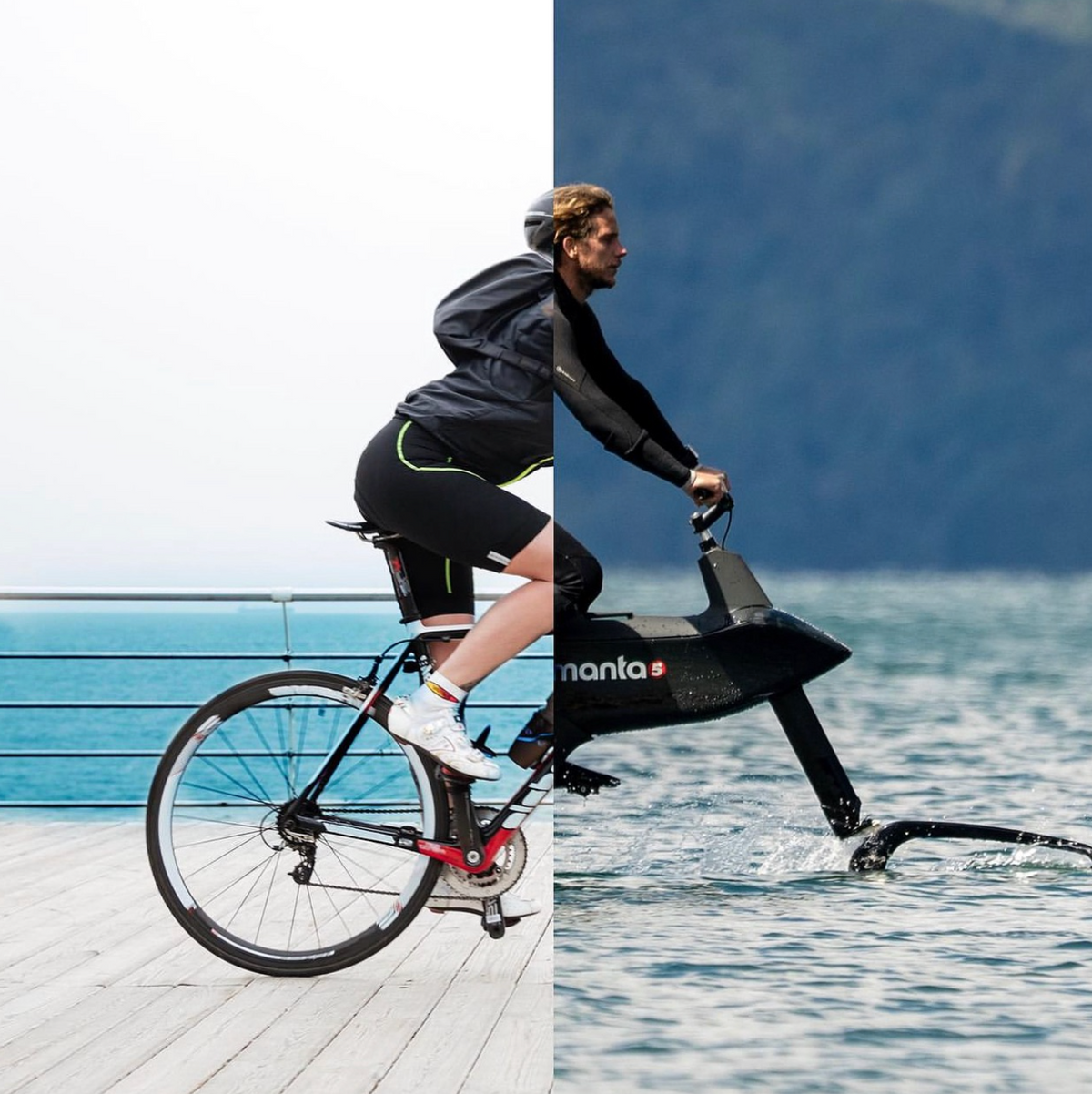
This matters practically. Learning to ride the Hydrofoiler does not require learning a new physical vocabulary from scratch. The rider pedals, steers with the handlebars, and shifts their weight the way they would on any bicycle. As Manta5 states directly: “If you can ride a bike and swim, you can ride the Hydrofoiler SL3.”
Each SL3 ships with both short and small stems to accommodate different rider heights, which the company says allows the bike to be adjusted to suit the whole family without additional hardware purchases.
What actually lifts the bike off the water
The Hydrofoiler uses the same physical principle as competitive sailing foils and kiteboard foils: underwater wings generate lift as the craft accelerates, raising the bike and rider above the water surface. Once elevated, drag drops significantly, which is why sustained foiling requires less effort than the launch phase suggests.
The rider pedals normally, and the motor assist engages based on torque and cadence input from the drivetrain. Power delivery is managed through a wired remote on the handlebars with ten pedal-assist levels, and a Boost mode provides full throttle for maximum speed when needed. The motor is a custom in-line unit sealed to IP67, rated at 2,500 watts, connected to a custom planetary gearbox with torque, speed, and temperature control. The drivetrain uses three purpose-built Manta5 sealed gearboxes rated to IPX8, with an aluminium driveshaft, stainless steel propeller shaft, and a carbon-fibre reinforced nylon propeller.
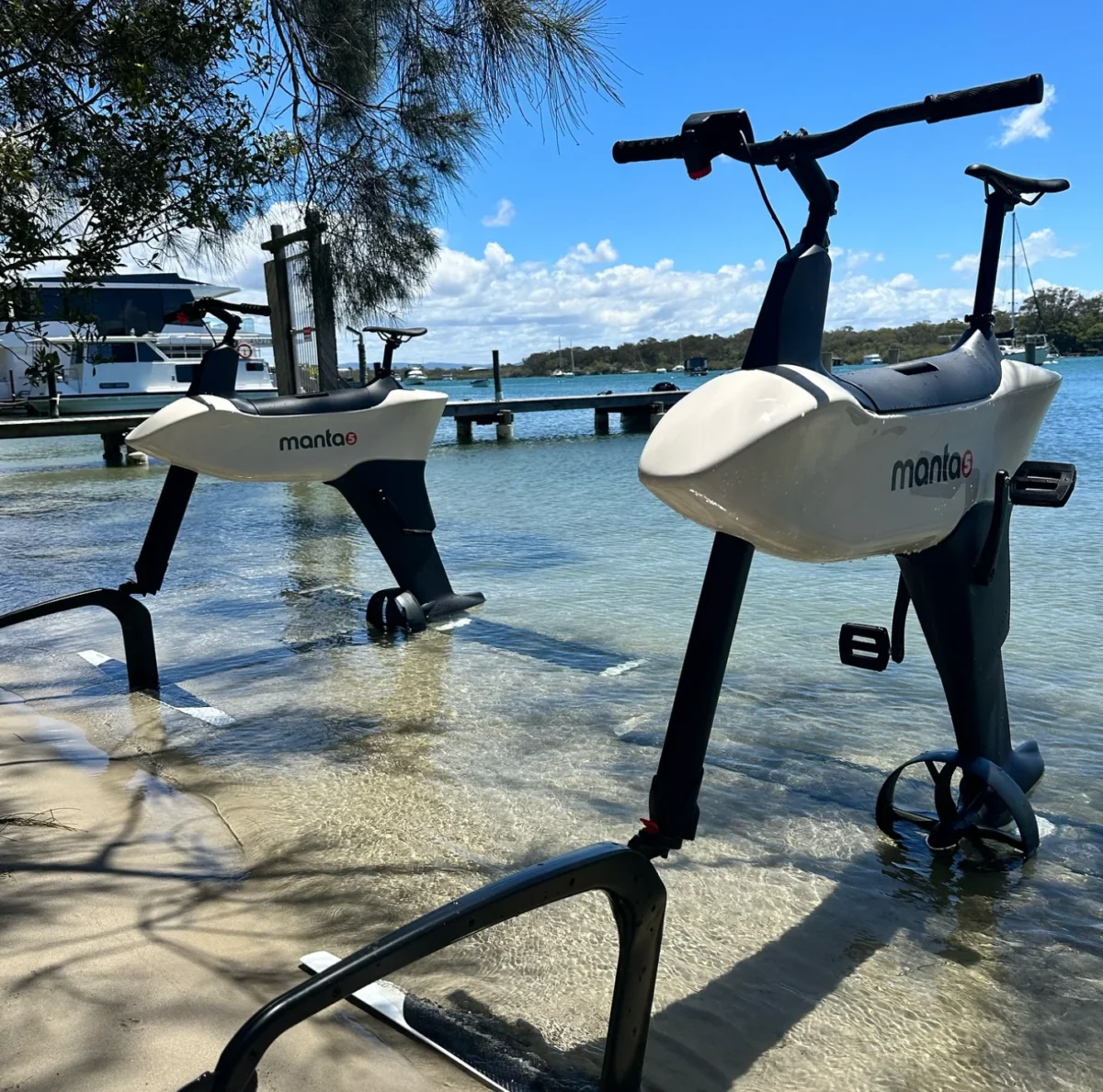
The handlebar display unit features an integrated LCD screen showing live battery level, assist level, throttle position, rider power output, cadence, and system warnings. Firmware updates are delivered via Bluetooth.
Three models, one platform, two different foils
The SL3 lineup currently consists of three models, all built on the same chassis platform and sharing the same core drivetrain. What separates them is primarily foil configuration and battery specification.
The base SL3 ships with the FC2 Fixed Chord rear foil — a wide, stable wing designed specifically for learner riders and hire operators who need a durable, forgiving entry point. The SL3+ sits in the middle of the range and shares the same foil configuration with additional specification upgrades.
The SL3 Pro is the top-tier variant and is the only model that ships with both foils included — the FC2 Fixed Chord for learning and low-speed stability, and the HE2 Carbon rear foil for experienced riders who want higher efficiency and maximum performance. The HE2 Carbon is super lightweight and high strength, with a high aspect ratio of 10 and a wingspan of 6’6″ (2 meters). The SL3 Pro chassis is finished in Sharkskin Grey and includes the Hydropack 1000 battery as standard.
What the numbers say: Speed, power, and battery life
Battery options are the Hydropack 1000 at 1,000 Wh and the Hydropack 600 at 600 Wh, both using 52V nominal lithium-ion chemistry with a peak discharge of 3,000W. The housings are dual-layer marine grade rated to IP67, with a clear outer layer for easy visual inspection and an integrated battery management system with continuous pulse monitoring. Charge time for the Hydropack 1000 is three hours from a standard 110/240V AC input.
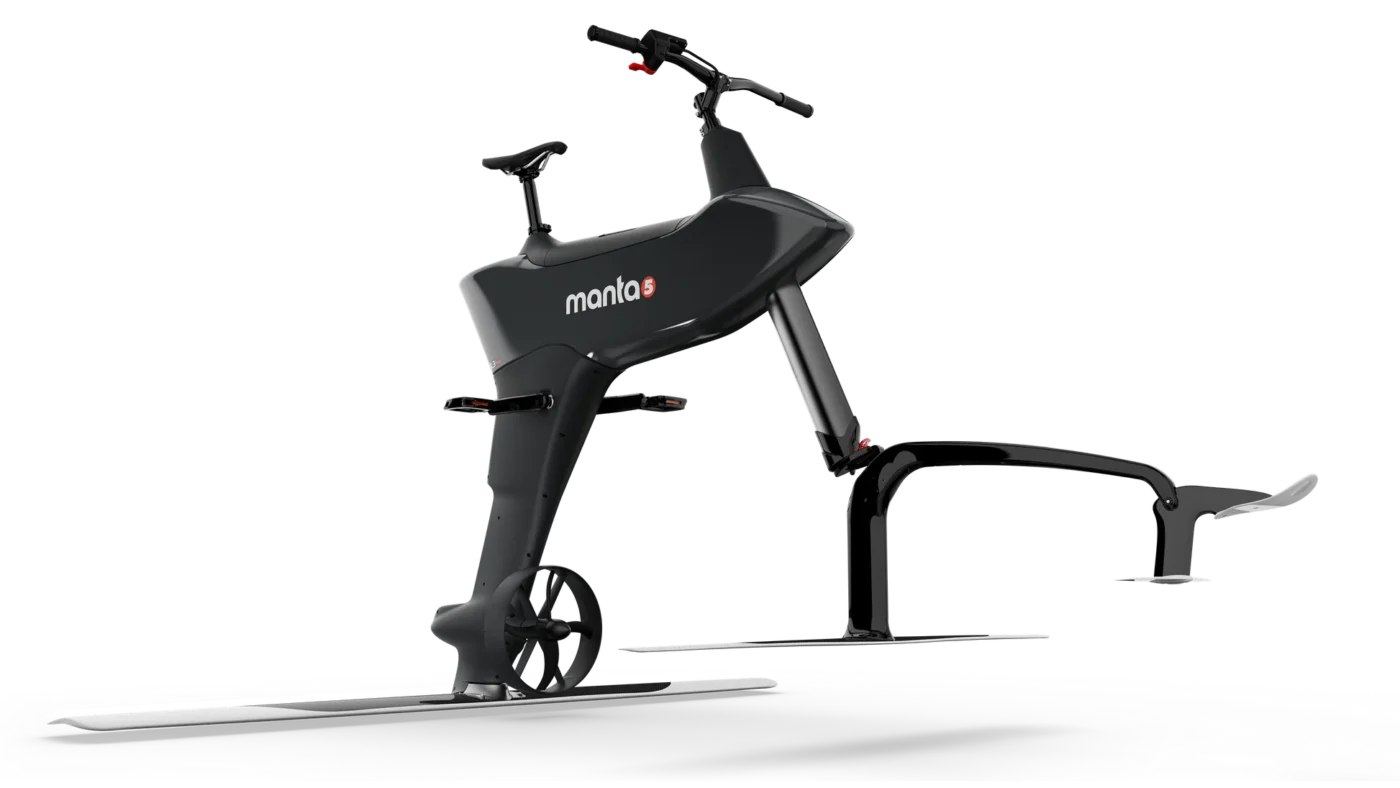
On speed, performance varies with rider weight, conditions, and assist level. Top-end speed is 20 kph (12 mph), cruising speed is approximately 11 kph (7 mph), and the minimum foiling speed — the slowest pace at which the bike maintains lift — is 6 kph (4 mph). The chassis is a composite frame with integrated buoyancy, weighing 10.1 kg (22 lbs), with the heaviest individual module across the full assembly coming in at 13.9 kg (30 lbs). The fully assembled dimensions are 1.4 meters high, 2 meters wide, and 2.2 meters long (approximately 4.5 ft high, 6.5 ft wide, and 7.2 ft long).
Five pieces, no tools, fits in any SUV
One of the more practically useful aspects of the SL3 is how it’s designed to be transported and stored. The bike breaks down into five smaller assemblies using toolless quick-connection points — no spanners, no allen keys, and no specialist knowledge required. The individual modules are compact enough to be carried by hand from a car park or boat dock to the water’s edge, and the assembled bike fits in any vehicle with the rear seats folded or in the boot of a larger SUV.
The modular approach also has a meaningful maintenance advantage. When a component fails, only the affected module is replaced rather than the entire assembly — an approach Manta5 describes as producing “affordable repair” across the product’s ownership life. Access to individual sub-assemblies requires fewer tools than a conventional integrated frame, and the component-level repair model keeps ongoing costs more predictable than with products requiring full unit replacement on failure.
The learning curve is shorter than it looks
Manta5 has structured the SL3 around a clear learning progression. The FC2 Fixed Chord rear foil included with all three variants is built for learners — its wide, stable chord makes the early stage of getting the bike up on foil more forgiving, and it is durable enough for rental and demo use in commercial settings.
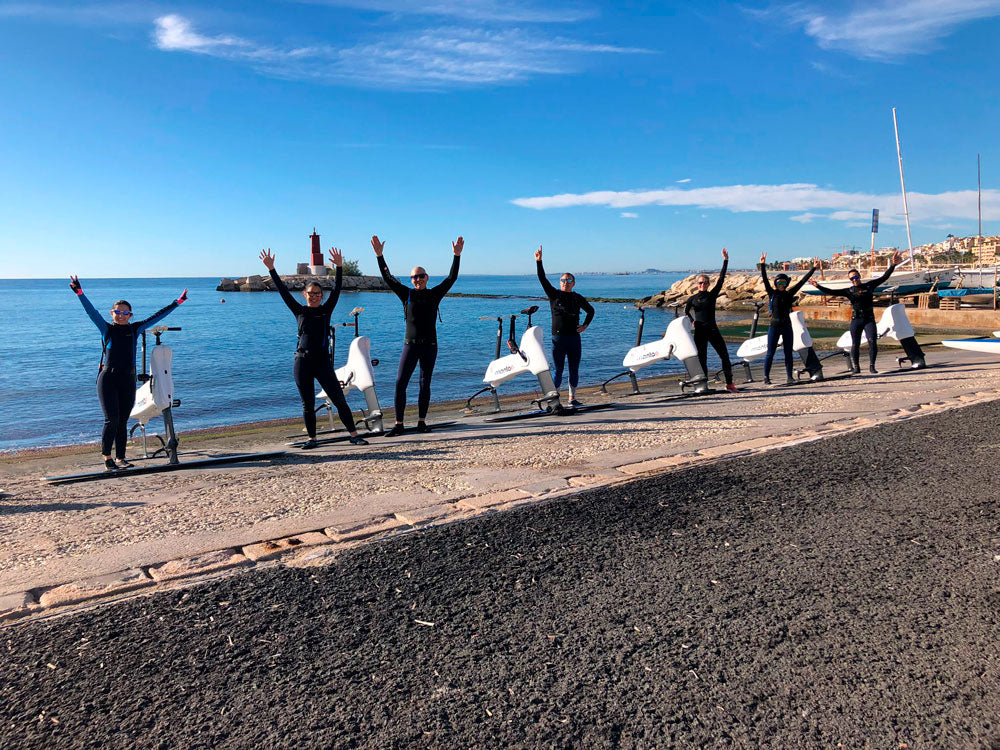
For buyers who want to experience the product before committing, Manta5 operates a global Ride Spot network of operators at waterfront locations where demo rides and lessons are available for a fee. A Ride Spot locator is available on the company’s website. Once on the water, the combination of familiar cycling body position and gradual motor-assist progression means most new riders reach a functional foiling state within a single session.
Rinse it down and put it away
Post-ride maintenance is straightforward — a simple hose wash after salt water use is the primary requirement. There are no high-wear drive components comparable to a bicycle chain, derailleur, or brake cables, which Manta5 describes as resulting in ultra-low maintenance requirements relative to a conventional bicycle.
The modular architecture simplifies servicing further. Each sub-assembly can be accessed and replaced independently, which means a fault in one area of the bike does not require the entire unit to be shipped or taken off the water for an extended period. For owners who ride regularly in salt water, the sealed drivetrain components and marine-grade battery housing mean the primary post-ride task remains a simple freshwater rinse.
The rider this bike is actually built for
The Hydrofoiler SL3 suits physically active adults who are comfortable on both bicycles and in the water, and who want a watersport that combines familiar physical effort with an environment elevated above the water surface. The pedal-assist system and ten power levels mean that fitness level and age are less of a barrier than they would be for paddleboarding or distance kayaking, though a basic comfort level in open water remains a prerequisite.
It is also a practical fit for waterfront businesses looking to add a differentiated activity to their offering. Manta5’s Ride Spot program provides a structured commercial framework including drop-ship logistics, commission structures on product sales, and operator support resources — designed to make it straightforward for a beach club, marina, or outdoor activity center to introduce the product without holding significant inventory.
The SL3 is less suited to riders who want a purely passive experience, to those who are uncomfortable in open water, or to buyers looking for a device usable in very shallow or confined waterways where foil clearance is a concern. The SL3 rewards confidence and physical engagement — it is not a device designed for passive cruising.
What the SL3 cannot do
The minimum foiling speed of 6 kph means the bike requires sustained pedaling effort to maintain lift. It is not a sit-still device, and rider fatigue will eventually limit session length in a way that a fully motorized watercraft would not. Battery life will also vary significantly from the headline 1,000 Wh figure depending on assist level used, rider weight, wind, and water conditions. Buyers should treat the Hydropack 1000 capacity as a ceiling rather than a guaranteed session length figure.
The SL3 requires open, accessible water with sufficient depth for the foils to operate freely. It is not a product for sheltered shallows or congested waterways.
How to order and what the SL3 costs
The Manta5 Hydrofoiler SL3 range is priced as follows: the base SL3 at US$11,545, the SL3+ at US$12,595, and the SL3 Pro at US$14,695. The Manta5 website offers USD and EUR display options at checkout for international buyers.
Source: Manta5