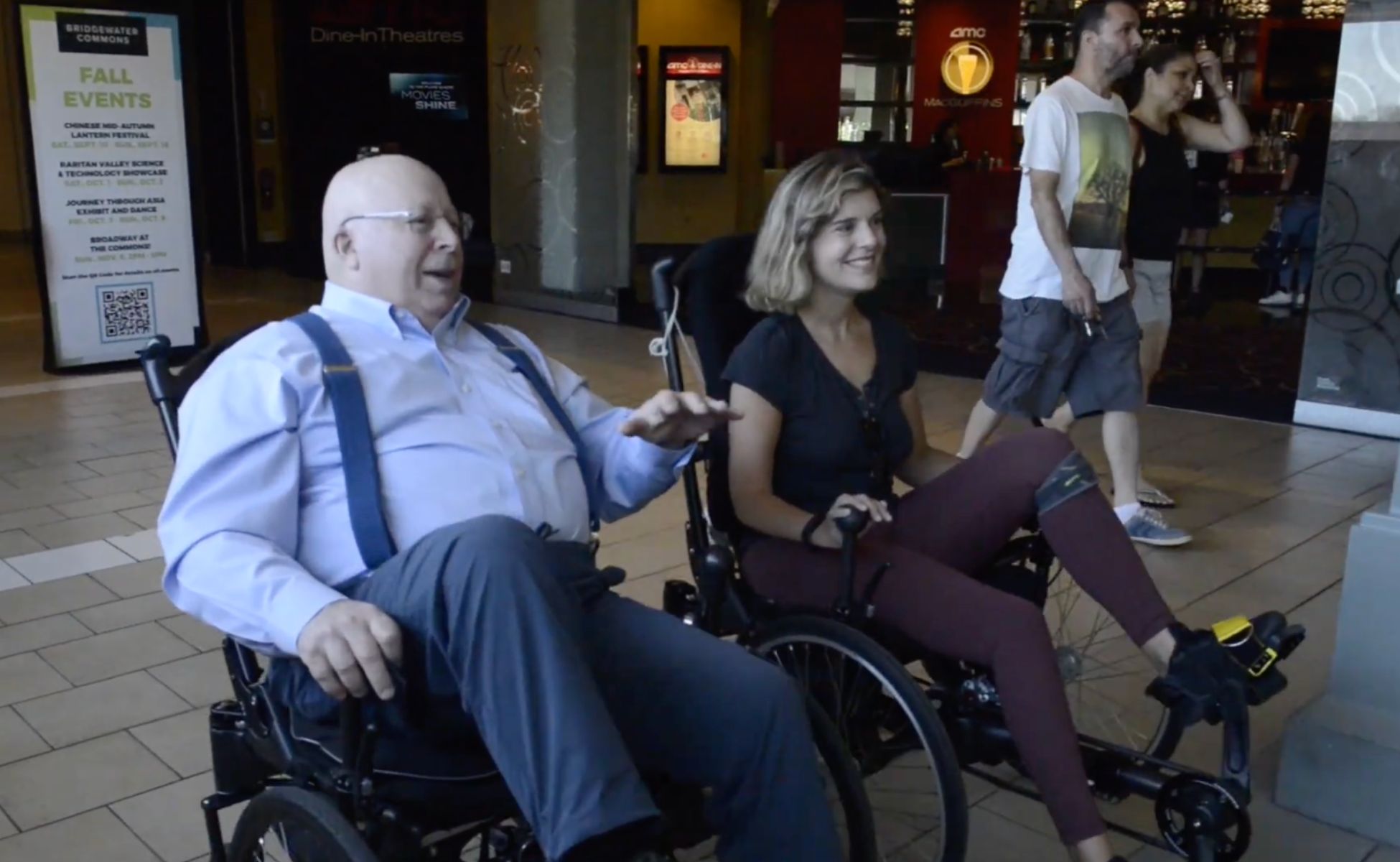
Most mobility devices are designed primarily to move people from one place to another. The VeloChair takes a different approach. Instead of relying on hand rims or electric motors, it uses a recumbent pedaling system that allows users to propel themselves using their legs while remaining seated and supported.
Designed for people who struggle with balance, walking, or standing for extended periods, the VeloChair combines elements of a wheelchair and a recumbent bicycle. Its goal is not only to provide mobility, but also to encourage gentle physical activity by engaging the user’s muscles and promoting blood circulation during everyday travel.
A personal solution to a mobility problem
The VeloChair was developed by New Jersey inventor Kenneth Simons after he was diagnosed with Ossification of the Posterior Longitudinal Ligament (OPLL), a condition that causes spinal ligaments to harden over time.
A lifelong runner and skier, Simons found that traditional mobility devices helped him move around but did little to keep him physically active. He set out to create a device that would restore independence while still allowing users to exercise their remaining lower-body function.
The result was the VeloChair, a mobility device protected by multiple U.S. patents and now used by people with a wide range of mobility challenges.
How the VeloChair works
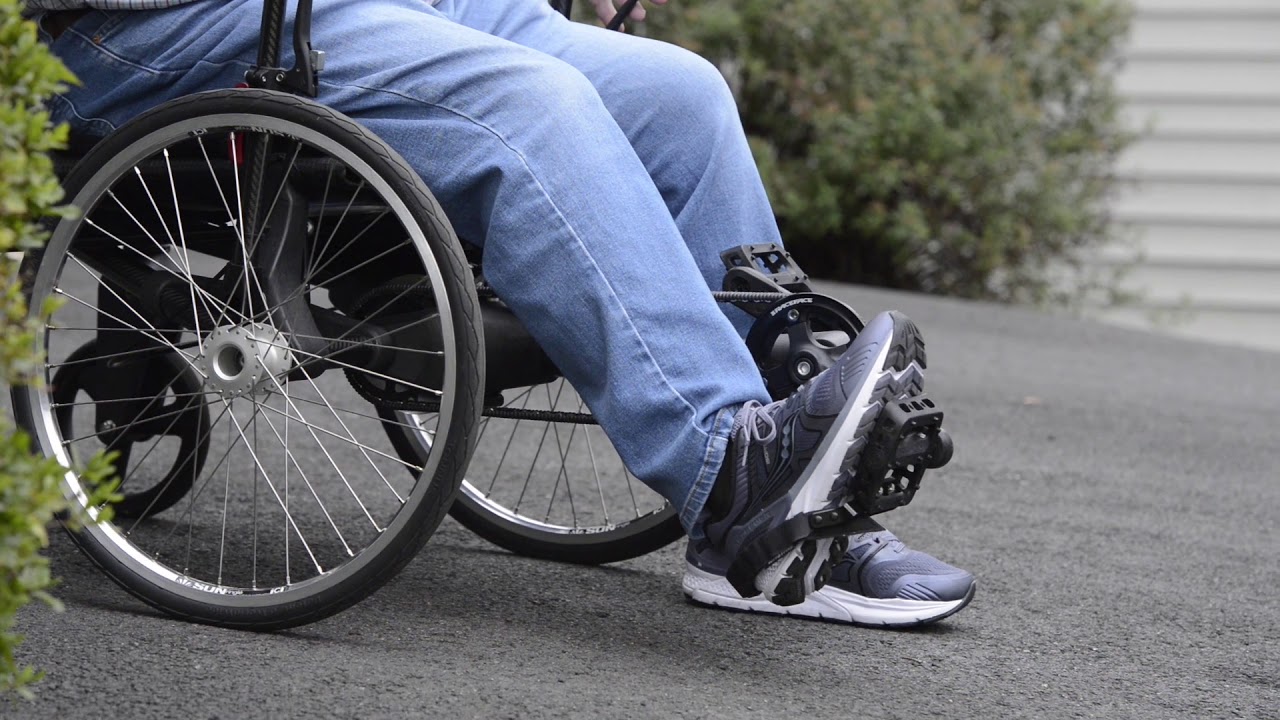
The operating concept is simple. Users sit in a reclined seat and pedal to move. Pedaling forward drives the chair forward, while pedaling backward reverses it.
Unlike traditional wheelchairs, steering is handled through dual side-mounted tillers that control the rear wheels. This arrangement gives the VeloChair a tight turning radius, making it suitable for homes, stores, sidewalks, and other everyday environments.
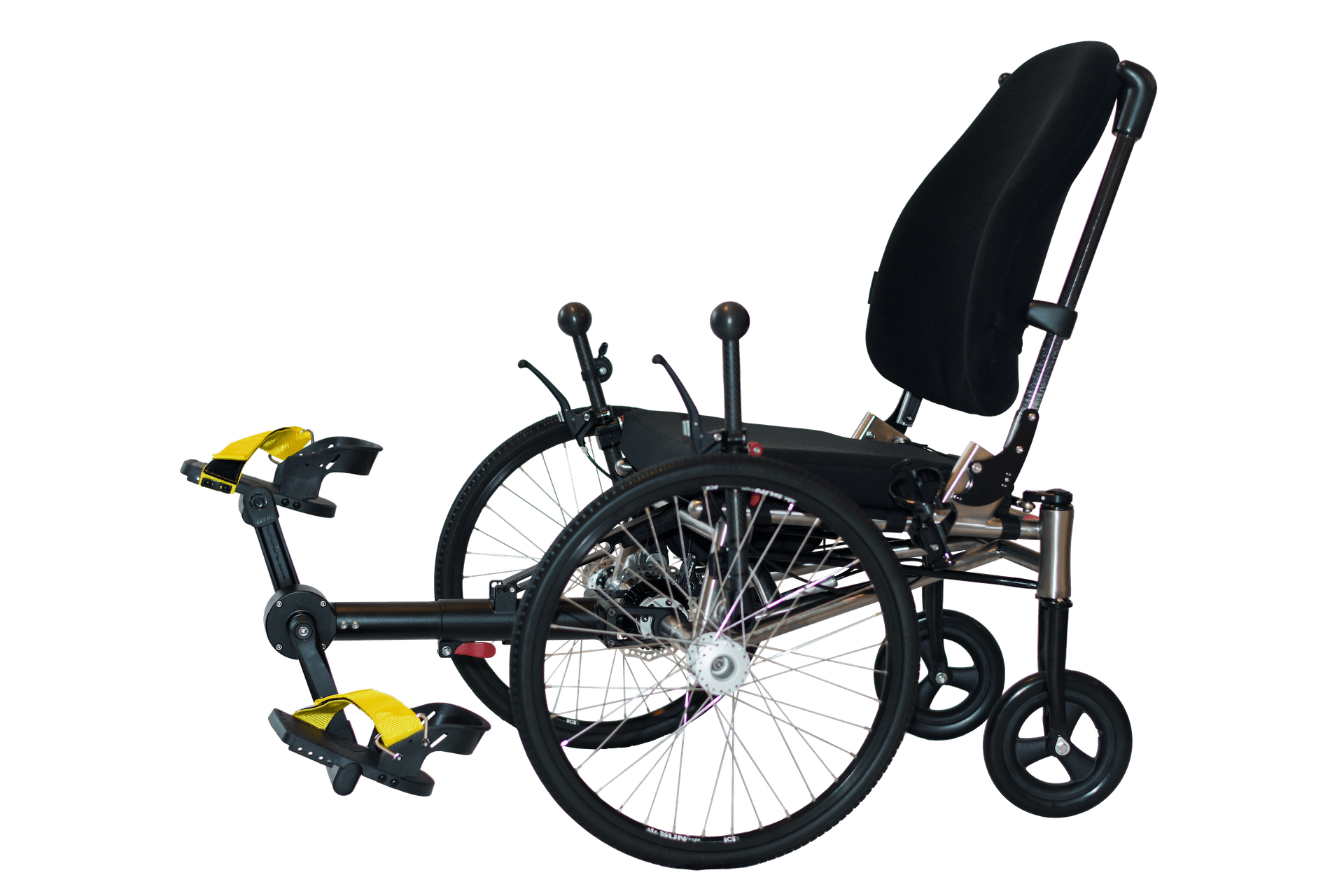
Either tiller can be operated independently, allowing one-handed use for people with weakness or limited function on one side of the body. The tillers can also be removed quickly to simplify transfers into and out of the chair.
Brakes are integrated into the tillers and can be operated from either side. In addition to stopping the chair and acting as parking brakes, they can also help regulate speed when traveling downhill.
The VeloChair’s boom, which connects the pedals to the frame, can be adjusted in both length and angle to accommodate different users. The seatback is adjustable as well, allowing riders to find a comfortable seating position. Optional supports and pedal modifications are available for users who require additional leg positioning assistance.
Built for everyday use
The VeloChair is designed and assembled in the United States using titanium, aluminum, and carbon-fiber components.
The chair weighs approximately 42 pounds (19 kg), making it considerably lighter than most power wheelchairs while remaining sturdy enough for daily use. It folds for transport and can fit into many SUVs, hatchbacks, and minivans without requiring specialized vehicle lifts or modifications.
According to the manufacturer, the chair can accommodate users ranging from approximately 4 feet to 6 feet 4 inches tall and supports rider weights up to 300 pounds.

Other specifications include:
- Weight: approximately 42 lb (19 kg)
- Maximum recommended user weight: 300 lb (136 kg)
- Adjustable for users from 4 ft to 6 ft 4 in tall
- Maximum speed: about 4 mph (6.4 km/h)
- Folding dimensions: 44 x 28 x 28 in
- Seat height: 16–18 in depending on cushion configuration
- Airless puncture-proof tires
- Indoor and outdoor capability
The four-wheel design provides stability while maintaining a relatively tight turning radius for maneuvering in confined spaces.
Who it’s designed for
The VeloChair is intended for individuals who retain some leg function but have difficulty walking, standing, or maintaining balance.
Potential users include people living with:
- Multiple sclerosis
- Stroke-related weakness
- Spinal cord injuries with partial mobility
- Muscular dystrophy
- Post-surgical mobility limitations
- Age-related mobility decline
Because propulsion relies on leg movement, the VeloChair is generally not intended for individuals with complete lower-body paralysis.
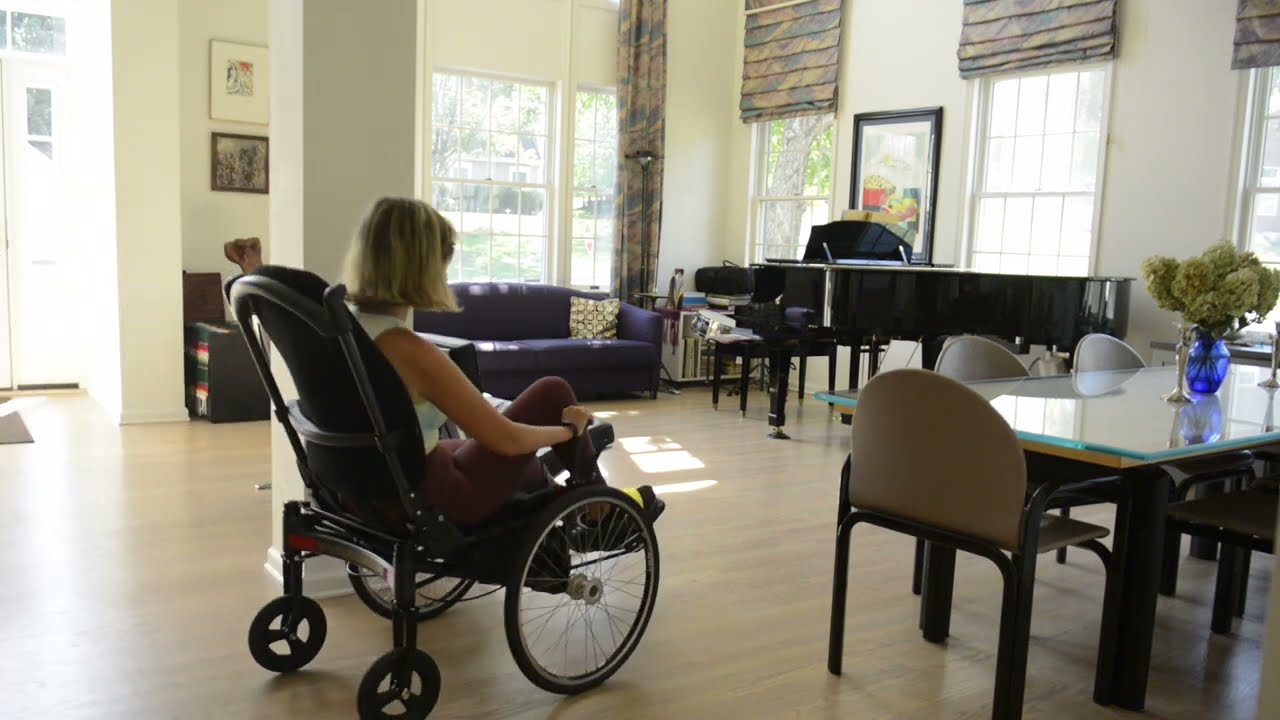
One of the device’s main selling points is that it turns everyday mobility into a form of low-intensity exercise. The company describes the chair as providing a light cardiovascular workout while helping users remain independently mobile.
Healthcare professionals have also highlighted this dual-purpose approach. Kelly Papa, a Physical Therapist Assistant and Clinical Supervisor for a Gait and Balance Program, described the VeloChair as a “life changing” mobility device that helps users regain independence. Orthopedic surgeon Dr. Michael Pollack has noted that it promotes exercise and blood flow while remaining intuitive to use.
Real-world benefits
Several long-term users report using the VeloChair not only for transportation but also for recreation and fitness.
Users have described taking trips to parks, shopping centers, community events, and neighborhood trails. Some report measurable improvements in leg strength and endurance after regular use.
The chair’s design also offers psychological benefits that are often overlooked in mobility discussions. By allowing users to propel themselves rather than relying entirely on caregivers or electric assistance, it can help restore a sense of independence and participation in everyday activities.
The company frequently highlights common use cases such as grocery shopping, walking the dog, visiting the mall, running errands, and exercising outdoors.
Limitations
Like any mobility device, the VeloChair is not suitable for everyone.

Users must have enough lower-body function to pedal. Those with severe paralysis or conditions that prevent leg movement are unlikely to benefit from the design.
Although the chair folds for transport, its 42-pound weight may still be challenging for some users to lift into a vehicle without assistance. Transfers in and out of the chair may also require support depending on the user’s physical condition.
Outdoor use can be affected by weather, and users may need time to become comfortable navigating inclines or uneven terrain.
Pricing and availability
The VeloChair is available directly from the company’s website and through selected U.S. dealers.
According to the official VeloChair website, the standard VeloChair is priced at approximately $5,500, with customization included as part of the fitting process. The price includes accessories such as pedals, cushions, a storage bag, and a bell, though shipping costs may vary.
Potential buyers can arrange demonstrations and test rides through the company or participating retailers.
Final thoughts
The VeloChair occupies a niche that traditional wheelchairs and rehabilitation equipment do not fully address. By combining self-powered mobility with light cardiovascular exercise, it offers an alternative for people who still have some leg function but need support to remain active and independent.
For the right user, it provides more than transportation. It turns routine activities such as shopping, exercising, and visiting local attractions into opportunities for movement, helping bridge the gap between mobility assistance and everyday physical activity.
Source: VeloChair