Power wheelchairs have transformed mobility for millions of people, but they still face one common limitation: the world isn’t always built for wheels.
Stairs, curbs, gravel paths, uneven sidewalks and rough outdoor terrain can quickly become obstacles that require detours or assistance. While accessibility has improved considerably over the years, many everyday environments still present challenges for conventional power wheelchairs.
The iBOT Personal Mobility Device (PMD) from Mobius Mobility was developed with a different philosophy. Instead of expecting users to avoid obstacles, it is designed to help overcome many of them.
Best known for its remarkable ability to travel up and down stairs, the iBOT also balances on two wheels to elevate the rider, traverses grass and gravel with ease, and offers multiple driving modes that adapt to different environments. Rather than simply being another powered wheelchair, it is designed as a personal mobility device that expands where users can comfortably go.
More than a conventional power wheelchair
At first glance, the iBOT resembles a premium power wheelchair. Look a little closer, however, and it quickly becomes clear that it is built for a very different purpose.
The chair incorporates advanced sensors, self-balancing technology and multiple drive configurations that allow it to adapt to situations that would normally stop many power chairs.
Instead of offering a single driving mode, the iBOT gives users several operating modes, each designed for a specific type of environment or obstacle.
This flexibility means users can remain in the same chair whether navigating a living room, crossing a gravel parking area, travelling through a park or approaching a flight of stairs.
The goal isn’t simply mobility—it is reducing the environmental barriers that often limit where wheelchair users can comfortably travel.
Stair Mode changes what’s possible
The feature that attracts the most attention is undoubtedly Stair Mode.
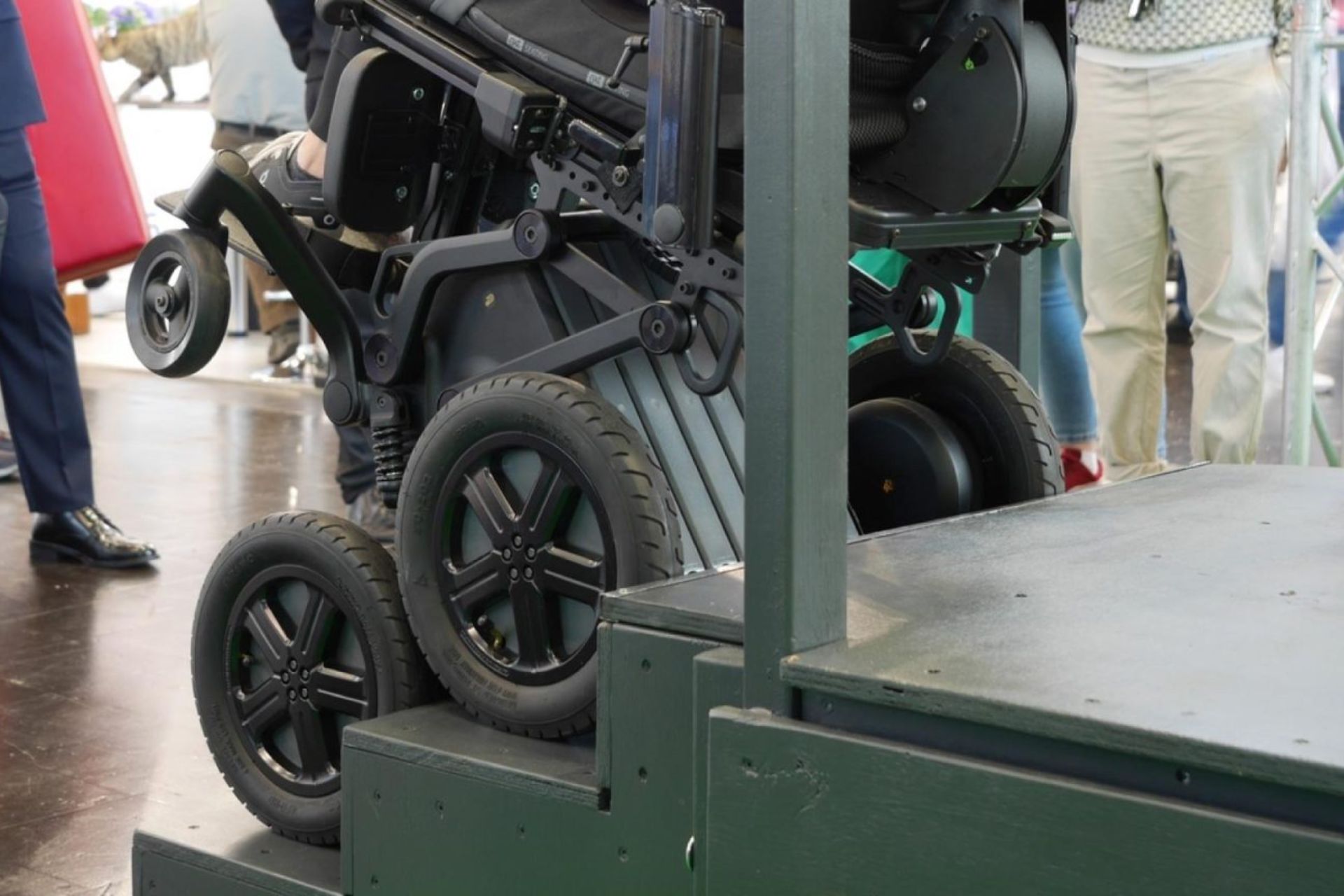
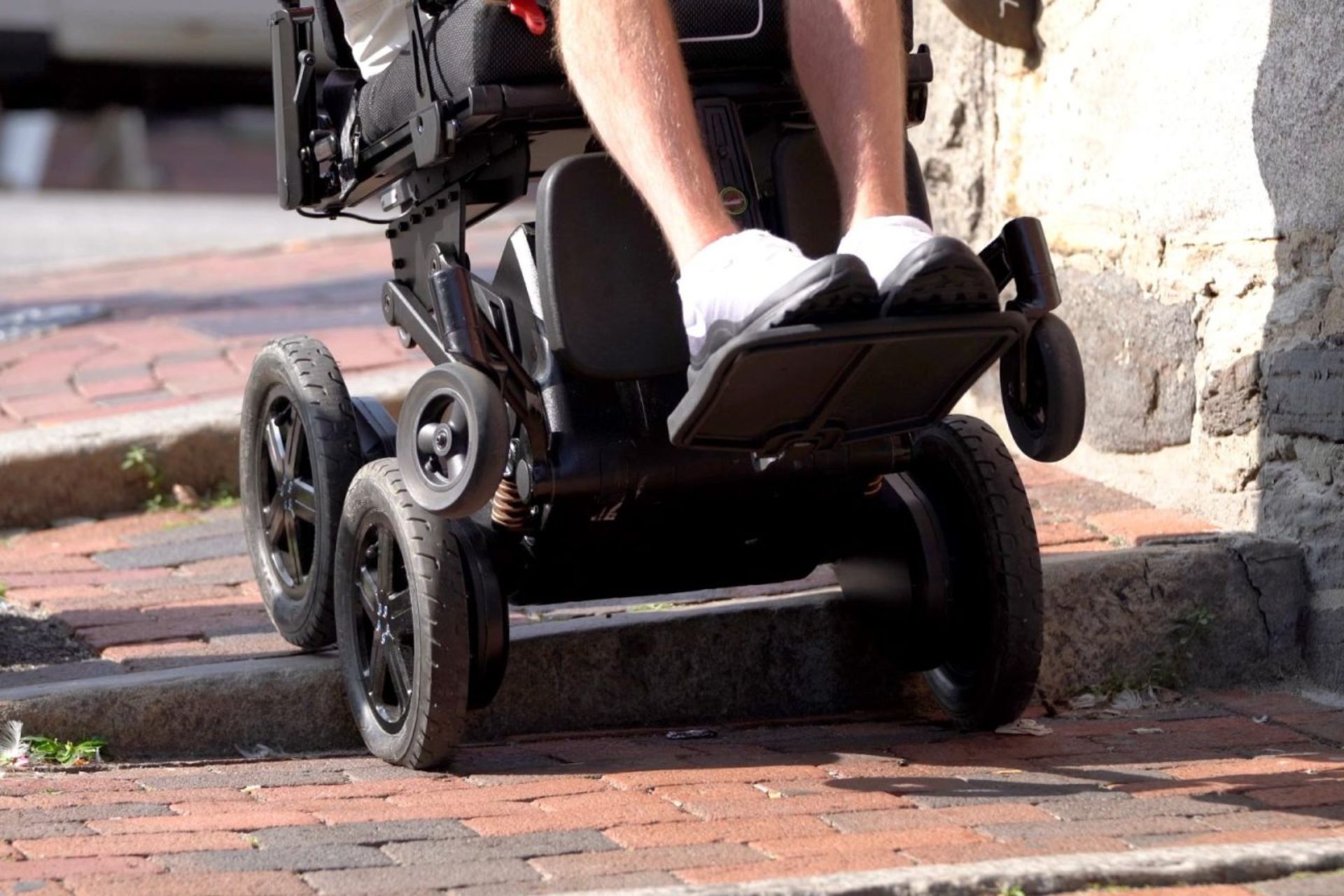
Using an advanced control system, the iBOT can carefully climb or descend many staircases while maintaining the rider in a stable seated position.
Rather than bouncing or dragging across each step, the chair moves methodically from one stair to the next, continuously adjusting its position throughout the journey.
For safety, Stair Mode is intended to be used with a trained assistant positioned behind the chair, and every iBOT user receives dedicated training before using this capability.
Although stair navigation isn’t something users will need every day, it can make an enormous difference in situations where elevators or ramps are unavailable, allowing access to places that might otherwise remain inaccessible.
Standing eye to eye with Balance Mode
Another defining capability is Balance Mode.
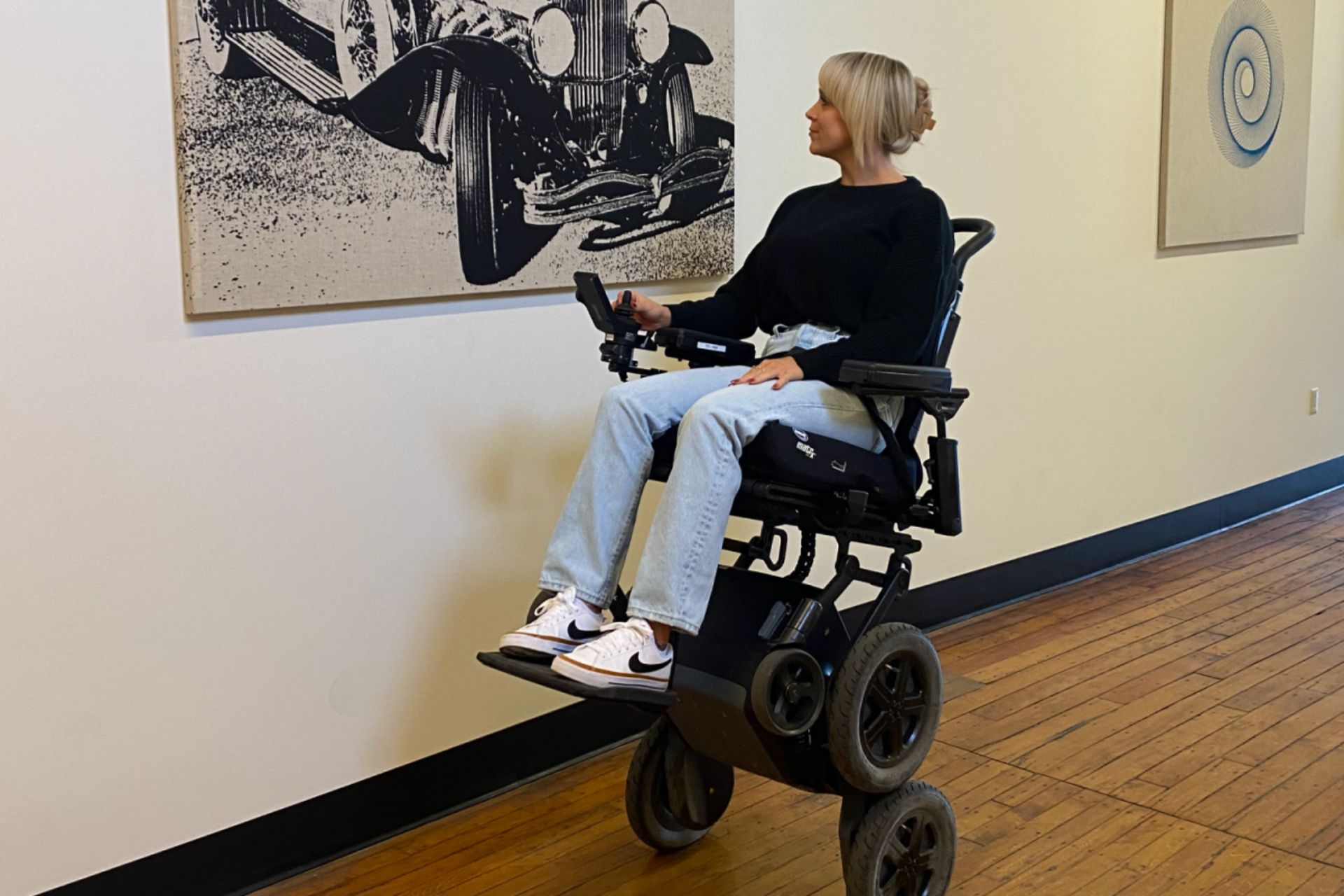
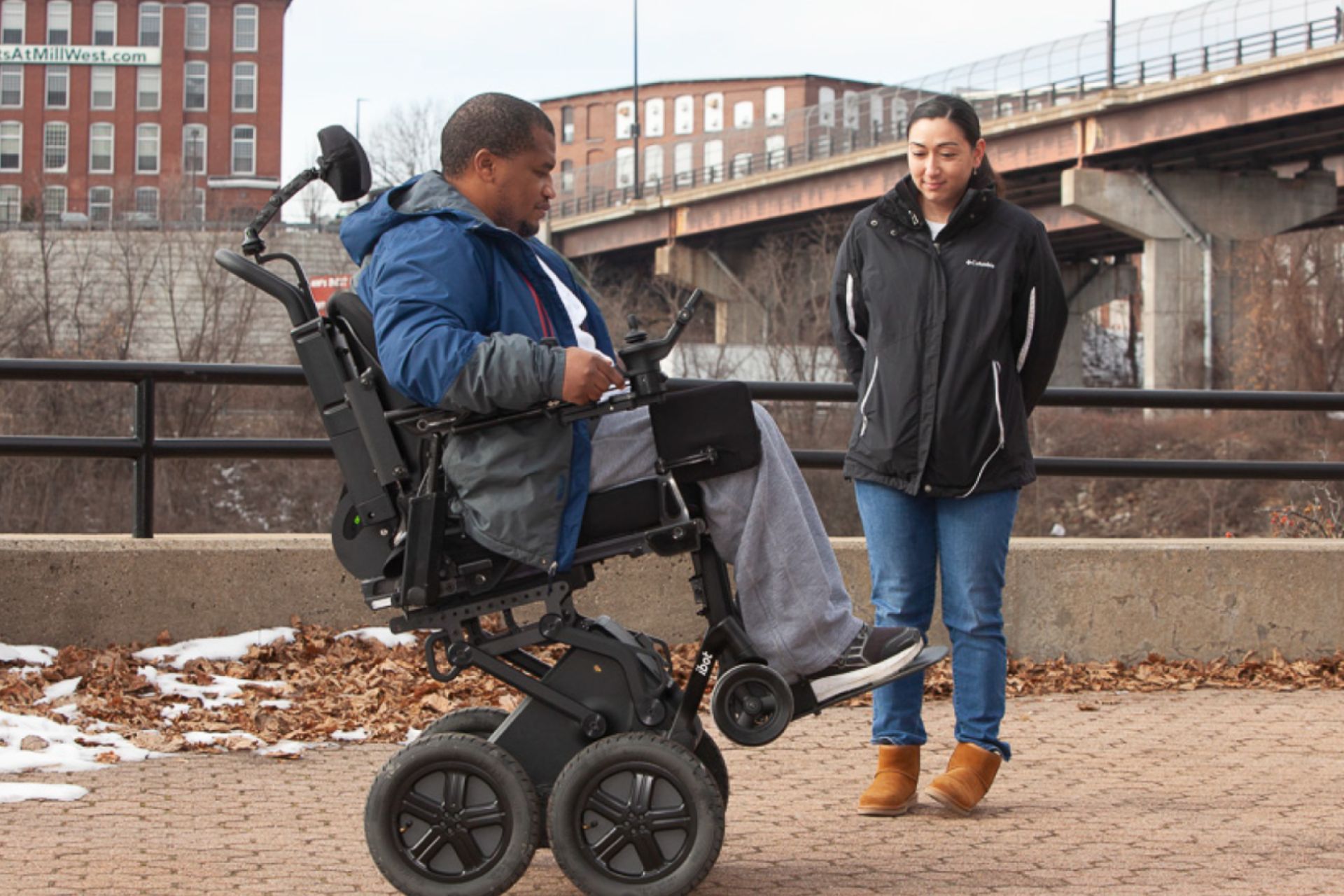
With the push of a control, the chair rises onto two wheels while maintaining its balance electronically. This elevates the rider to approximately eye level with standing adults, making conversations feel more natural and reducing the height difference that many wheelchair users experience in everyday interactions.
The additional height can also make practical tasks easier, such as reaching higher shelves, countertops or work surfaces.
Behind the scenes, sophisticated sensors continuously monitor the chair’s position and make thousands of tiny adjustments to maintain stability throughout the balancing process.
Built for more than smooth pavement
The iBOT’s capabilities extend well beyond stairs.
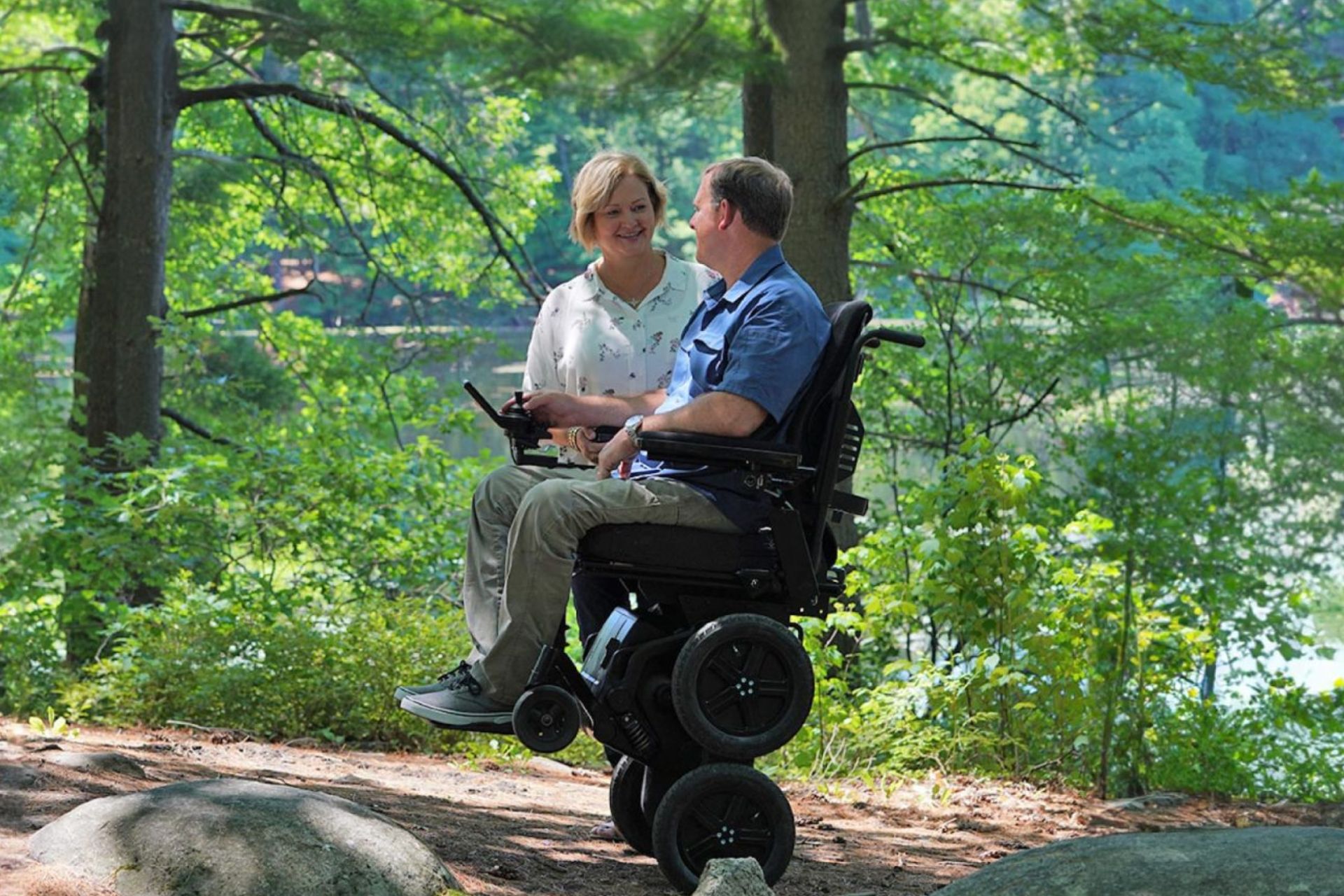
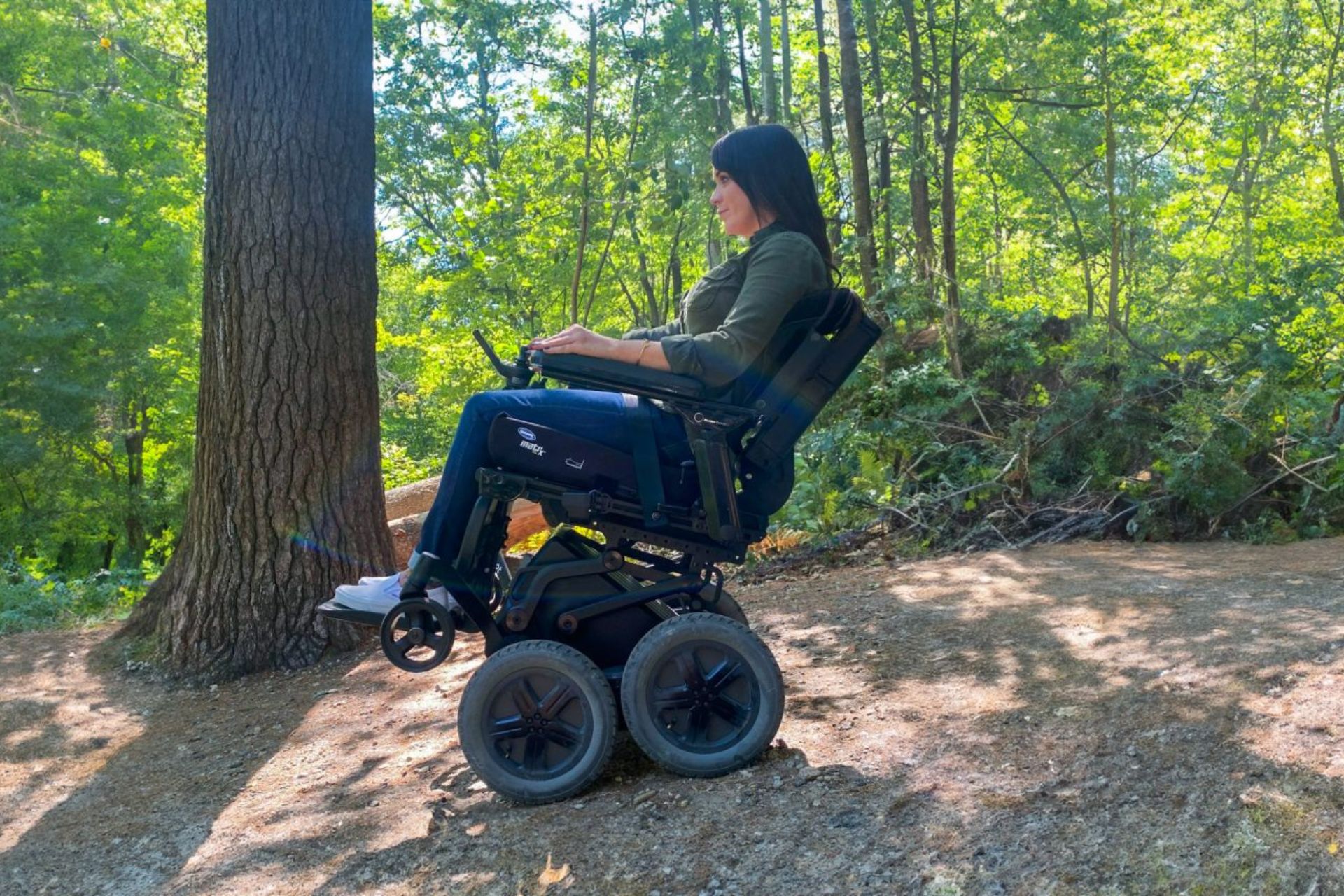
Its 4-Wheel Mode is specifically designed for rougher outdoor environments, allowing users to travel across surfaces such as grass, gravel, sand, snow and curbs that can be difficult for many conventional power wheelchairs.
This versatility means users don’t necessarily have to stop where the pavement ends. Parks, campsites, sporting events and other outdoor locations become much more practical destinations without changing mobility devices.
For people who enjoy spending time outdoors, that additional freedom can be just as valuable as the chair’s more dramatic stair-climbing ability.
Multiple modes for different situations
The iBOT includes several operating modes, each intended for different circumstances:
- Standard Mode for everyday indoor mobility.
- 4-Wheel Mode for rougher terrain and outdoor travel.
- Balance Mode for elevated, eye-level interaction.
- Stair Mode for navigating many staircases.
- Docking Mode, compatible with EZ Lock vehicle docking systems.
- Remote Mode, allowing an unoccupied iBOT to be repositioned or loaded more easily into vehicles.
Rather than forcing users to compromise between indoor manoeuvrability and outdoor capability, these modes allow the chair to adapt as environments change throughout the day.
Practical everyday performance
Beyond its headline features, the iBOT is also designed for everyday use.
Depending on the selected operating mode, the chair reaches speeds of up to 6.8 mph, with lower speed limits in Balance and 4-Wheel Modes to maximise stability and control. Optional extended-range battery configurations are available for users who require additional travel distance between charges.
The device also supports custom seating options and numerous accessories, allowing clinicians to configure the chair to meet individual mobility and positioning needs.
Training is part of the experience
Because the iBOT performs tasks that traditional wheelchairs cannot, every user completes dedicated fitting and training before using the device.
This includes learning how to operate the different driving modes, when each should be used and how to safely use advanced functions such as Stair Mode and Balance Mode.
The personalised fitting process also ensures the chair is configured appropriately for each user’s physical needs and seating requirements.
Engineering that expands accessibility
The iBOT demonstrates that improving mobility isn’t only about increasing speed or battery range.
Instead, it focuses on removing the barriers that often prevent wheelchair users from accessing everyday places.
Whether it’s descending a staircase, travelling across rough terrain or simply joining a conversation at eye level, the chair aims to make environments feel more accessible without requiring extensive infrastructure changes.
More than two decades after the original iBOT first captured public attention, the latest generation continues to showcase how advanced engineering can reshape personal mobility and help users navigate the world with greater confidence.
Pricing & Availability
The iBOT Personal Mobility Device is available directly from Mobius Mobility in the United States and through authorised distributors in Europe. Pricing is not publicly listed, as each device is configured to the individual user. Interested buyers can schedule a demonstration or consultation through Mobius Mobility. The company can also bill Medicare and certain private insurance plans for eligible users, while qualified U.S. veterans may be able to receive an iBOT through the Department of Veterans Affairs.
Source: Mobius Mobility