An old railway line usually has two possible futures: bring back conventional trains at considerable cost, or leave the track unused. A German research team is exploring a third option with a vehicle that looks unlike almost anything else on rails.
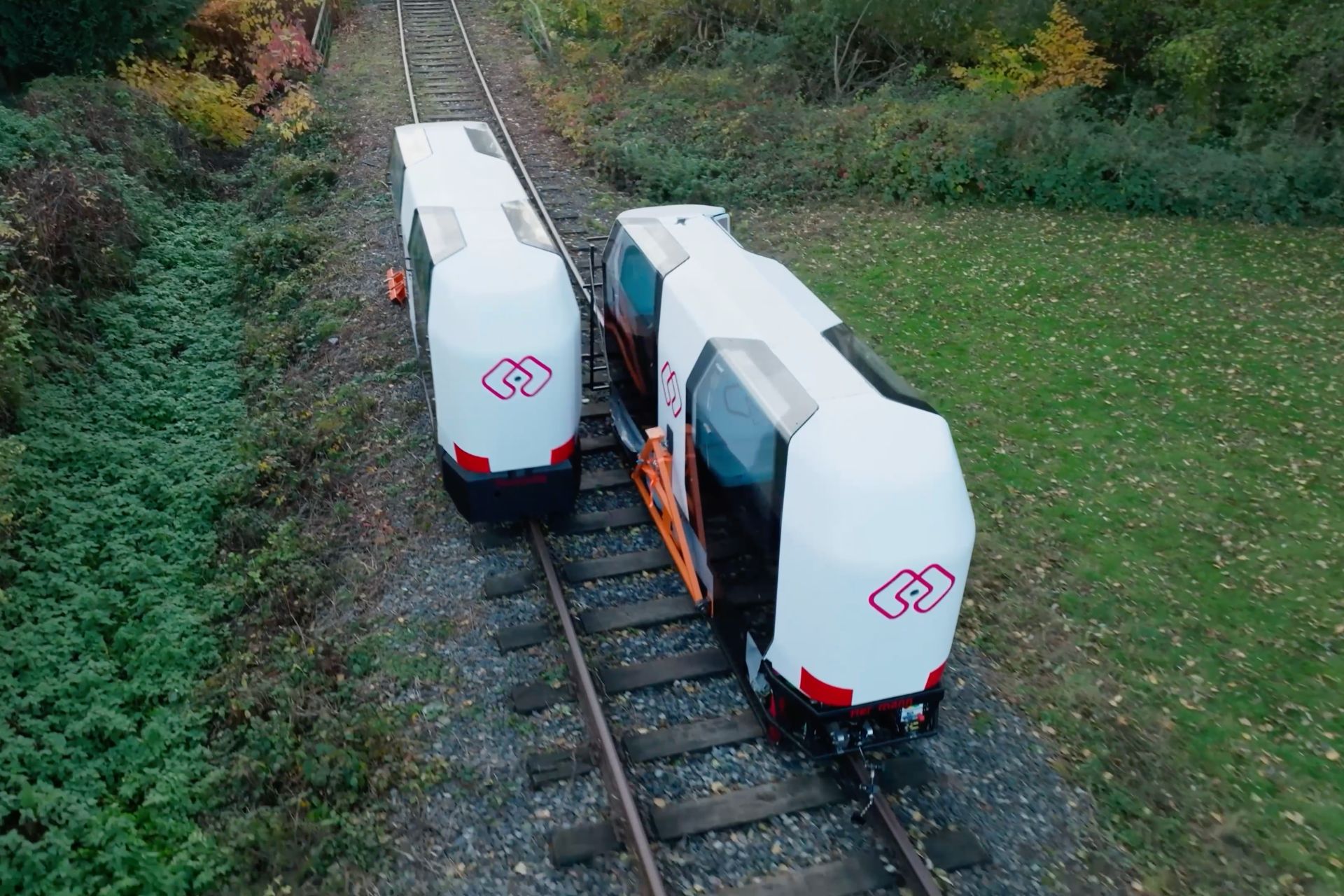
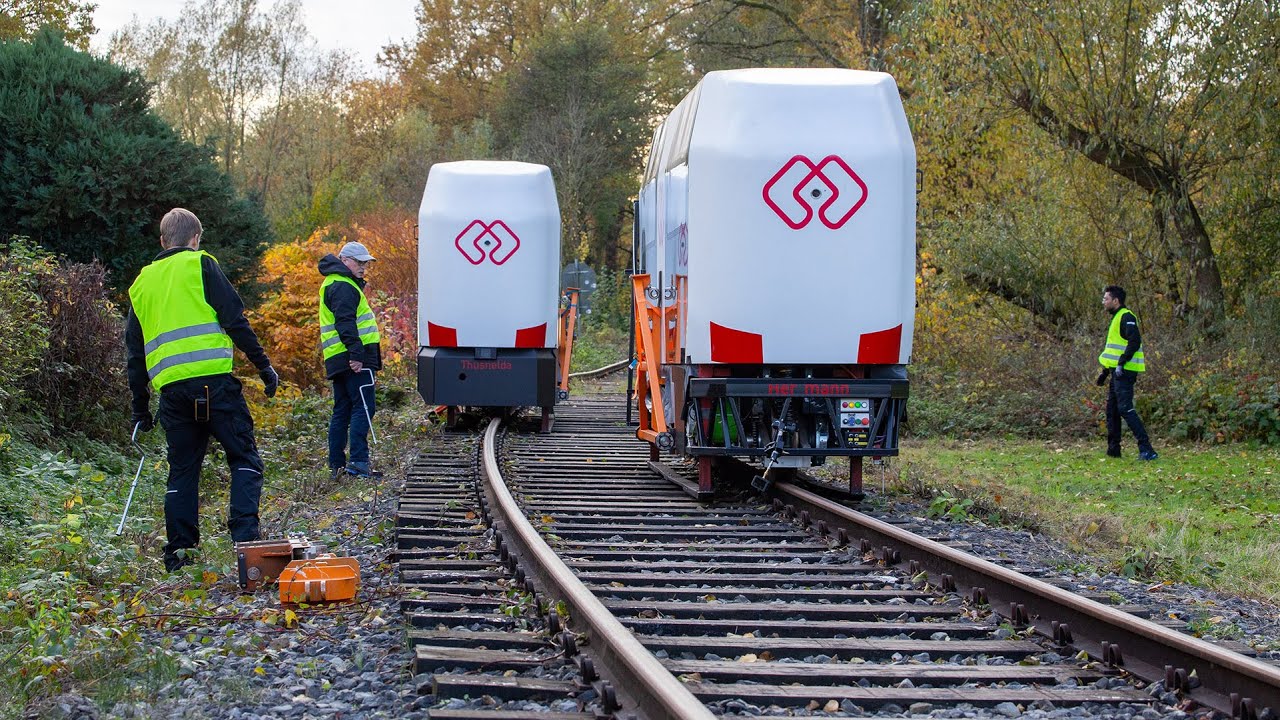
The MONOCAB is a narrow, battery-electric cabin designed to balance on one rail of an existing railway track. Because each vehicle occupies only half the track, MONOCABs travelling in opposite directions could pass one another without a second railway line.
The longer-term plan is to operate small autonomous cabins that passengers summon through an app, creating an on-demand service for rural communities where frequent buses or full-sized trains may not be economical.
It is an ambitious idea, but an important distinction is needed: the engineering demonstrator has completed track testing, while the polished four-to-six-passenger vehicle shown in renderings represents the intended future system. MONOCAB is still a publicly funded research project rather than a transport service people can book today.
How does a train balance on one rail?
A conventional train distributes its weight across both rails. MONOCAB instead uses an actively controlled stabilization system to keep its narrow body upright over a single rail.
The current demonstrator combines control-moment gyroscopes with a laterally movable mass. Rapidly spinning flywheels create gyroscopic forces that counter dynamic disturbances, while the shifting mass corrects slower changes in balance—for example, when weight moves inside the cabin or wind pushes against its side.
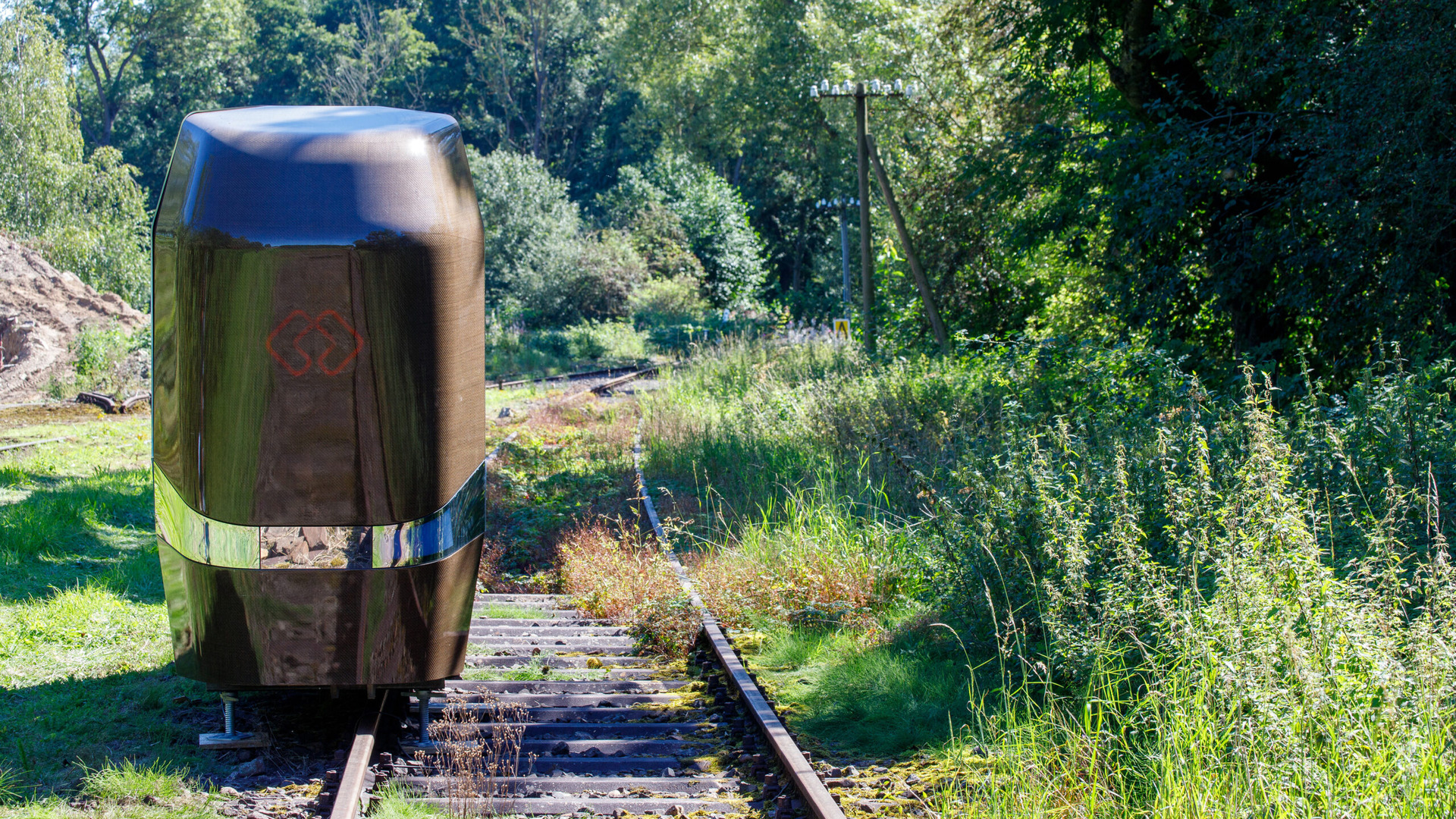
Custom wheels guide the vehicle along the rail, and the stabilization controller continually responds to movement and external forces. This is more sophisticated than simply placing a large gyroscope inside a train: the gyroscopes, movable weight, sensors, power electronics and software have to work as one system.
The underlying idea dates back more than a century. Irish-Australian inventor Louis Brennan demonstrated a full-size gyroscopic monorail in the early 1900s, but the concept never entered regular service. Modern sensors, electric actuators and real-time control hardware have given researchers an opportunity to revisit it.
Two-way travel on a single-track railway
Balancing on one rail is not merely a visual trick. It addresses one of the operational limitations of conventional single-track lines.
Ordinary trains travelling in opposite directions need passing loops or carefully coordinated schedules. The proposed MONOCAB vehicles are narrow enough for one to use the left rail and another to use the right, allowing them to pass on the same section of track.
The project compares the circulation pattern to a paternoster lift: multiple cabins could remain distributed along a route instead of one large train moving to a fixed timetable. A passenger would request a trip through an app and use the next available cabin.
That could provide shorter waits while matching capacity more closely to rural demand. However, it also creates a difficult fleet-management problem. Vehicles must know where every other cabin is, coordinate at stops and junctions, detect obstacles and remain safely separated.
Designed to drive itself
MONOCAB is being developed for autonomous operation rather than carrying a driver in every small vehicle.
The current perception system combines radar and camera data. Its software corrects and aligns the sensor feeds, detects objects in real time and estimates their movement using a specially trained machine-learning model. The automated train-operation system is intended to control acceleration and braking while responding to other vehicles and obstacles.
Communication is another part of the design. Vehicle-to-vehicle and vehicle-to-infrastructure links would coordinate the fleet, while an external control centre could supervise or remotely control operations. Researchers have also tested 5G communication for low-latency monitoring and control.
These capabilities remain under development. Reliable automation must work through poor visibility, changing weather, vegetation near the track and interruptions to communication—not only during controlled demonstrations.
A flexible cabin for four to six passengers
The passenger concept is designed to carry four to six adults. Its interior uses folding seats and adaptable furniture so the same small cabin could accommodate passengers, luggage, bicycles, a stroller or a wheelchair.
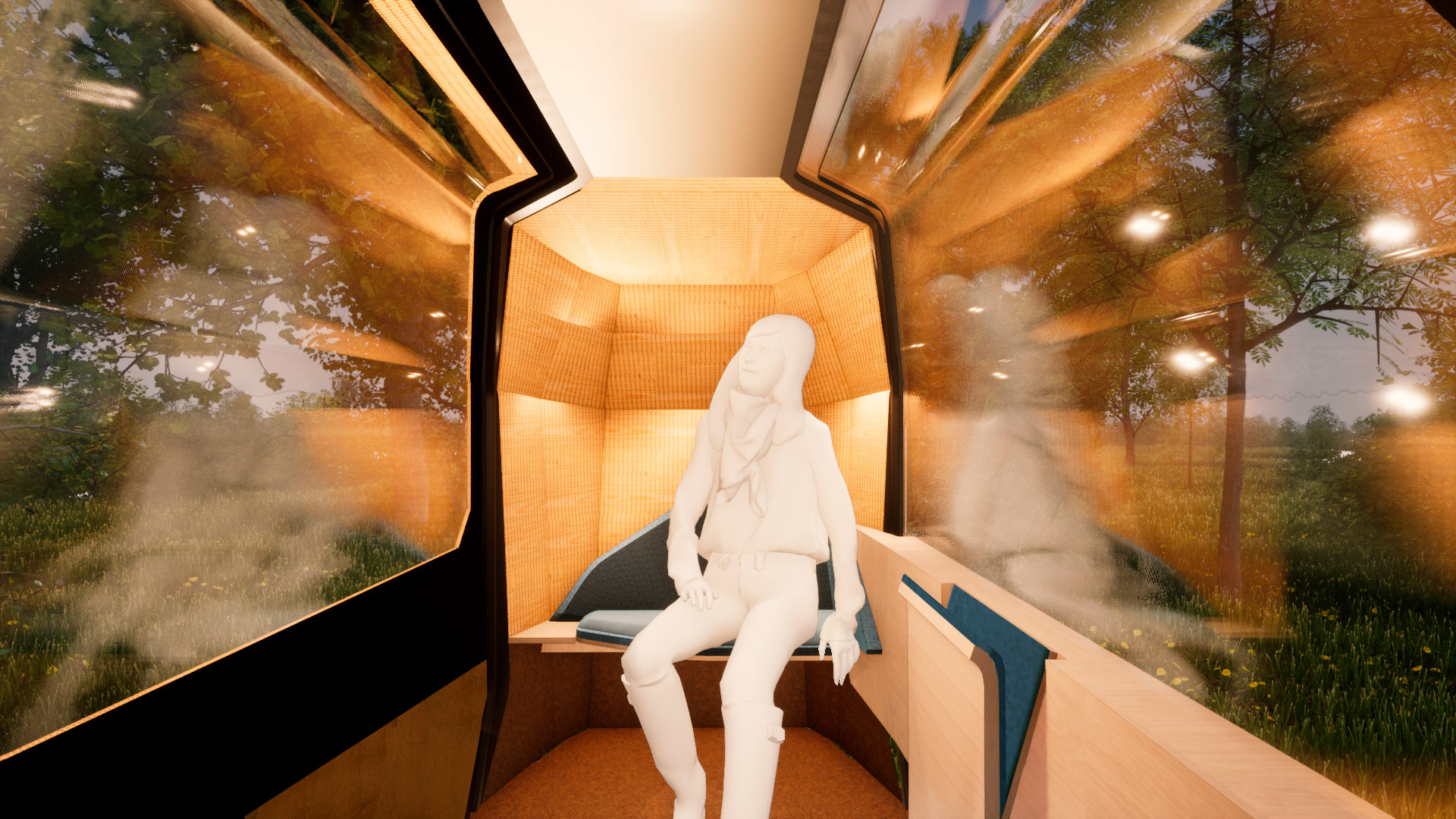
The design team proposes level, gap-free boarding, with enough space for a wheelchair user to enter and reposition inside. The wide doors and folding seating are meant to make accessibility part of every cabin rather than requiring a separate vehicle.
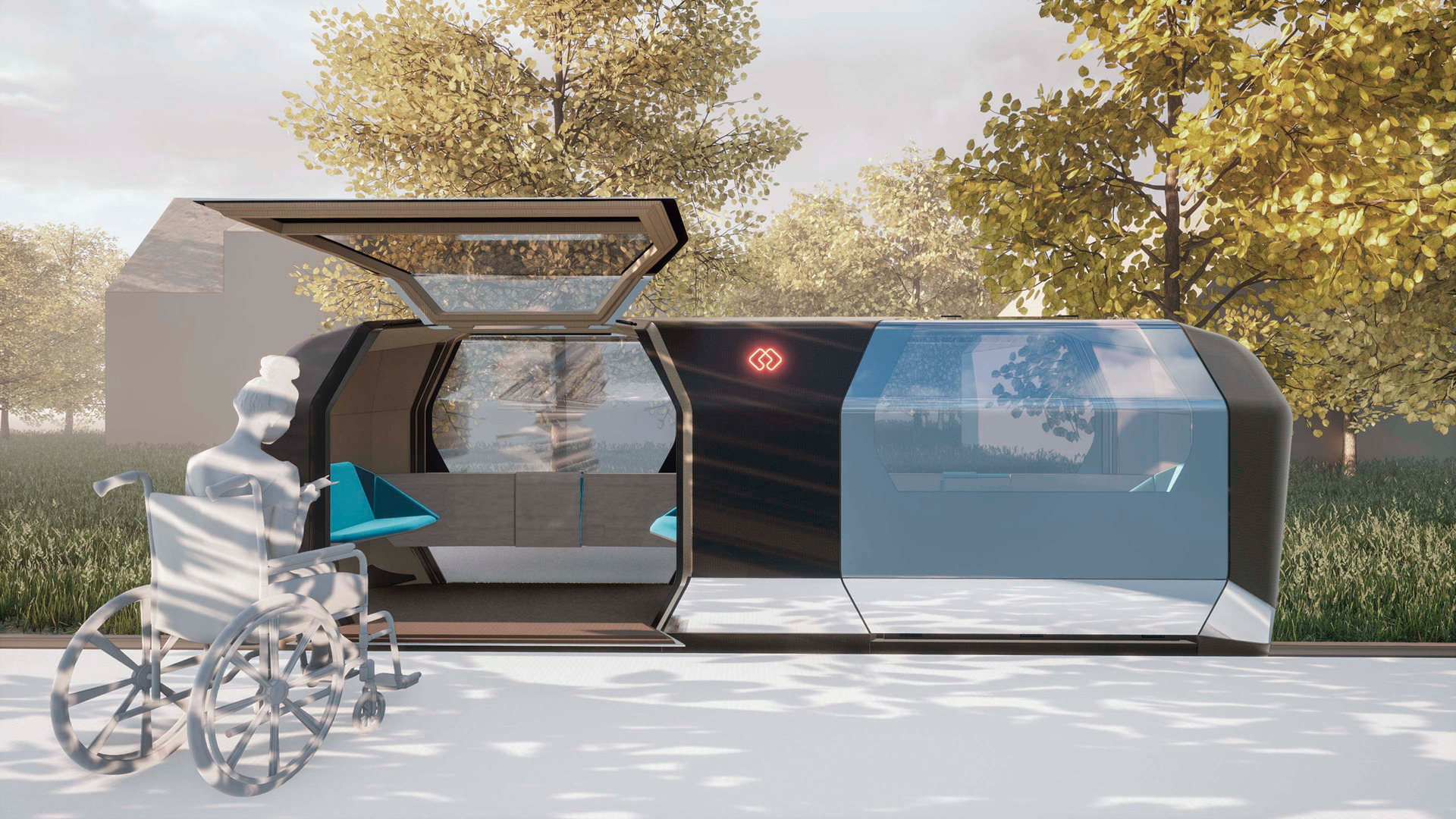
Panoramic glazing makes the interior feel less confined, while proposed materials include moulded wood, cork, natural-fibre composites and recycled plastics. These details come from the passenger-experience demonstrator and design study; the final production cabin could change as engineering, fire-safety and certification requirements are resolved.
Current speed and development status
Recent reporting from the European Commission and Euronews says the approximately three-tonne test vehicle is currently travelling at around 25 km/h (16 mph) and is being developed for speeds of approximately 60 km/h (37 mph).
The project says it has reached Technology Readiness Level 5, meaning the system is being tested in a relevant operational environment. Trial runs have begun on a decommissioned section of the historic Extertal railway between Bösingfeld and Rinteln in North Rhine-Westphalia.
The functional vehicle is deliberately less polished than the passenger mock-up. Its purpose is to validate systems such as stabilization, positioning, communication and the running gear before they are integrated into a near-production prototype.
According to the official roadmap, the team wants to begin a test-regulated operation with an initial fleet in 2028, first in Extertal and potentially on other selected routes. The wider aim is to reach series-production maturity by 2032.
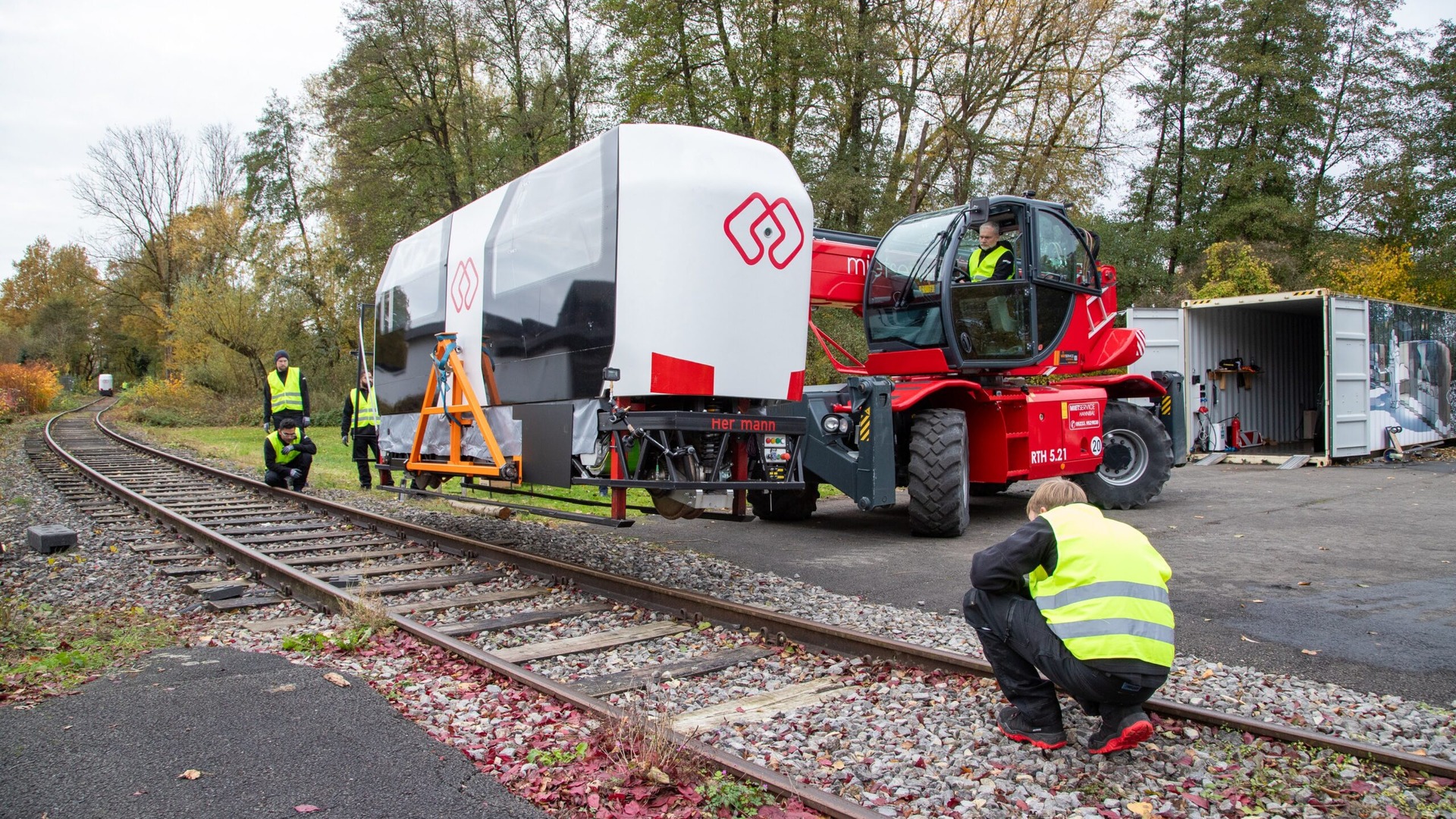
Those dates are targets, not confirmed public-service launch dates. Railway approval, infrastructure assessment, autonomous-operation safety cases, accessible stations, fleet control and a viable funding model must all be addressed before passengers can use the system routinely.
Why not simply run buses or small trains?
MONOCAB is intended for a specific situation: communities that already have usable but inactive railway infrastructure and too little demand for frequent conventional trains.
Its advantage is that it could reuse existing corridors, avoid road congestion and offer on-demand departures with vehicles much smaller than a train. Battery operation also removes the need to install overhead electrification along the entire route.
The trade-offs are equally important. Tracks, bridges, crossings and stations may still need rehabilitation. A low-capacity cabin cannot match a conventional train during busy periods, and the active balancing system introduces machinery and controls that ordinary two-rail vehicles do not require. Buses remain more flexible because they are not confined to a railway alignment.
The project is therefore evaluating not only whether MONOCAB can balance and move, but whether it can operate safely, reliably and economically as part of a real transport network.
A research project with a longer road ahead
MONOCAB is led by OWL University of Applied Sciences and Arts in collaboration with Bielefeld University of Applied Sciences and Fraunhofer IOSB-INA. The concept originated with Thorsten Försterling of the heritage-rail organization Landeseisenbahn Lippe.
Its first major research phase ran from 2020 to 2023 and produced the demonstrators. Several follow-on projects now cover key technologies, automated driving, infrastructure and regulatory preparation. The initiative won the European Commission’s RegioStars Award in 2025 in the “A Connected Europe” category.
The award and successful demonstrations do not mean the technical and commercial questions have been solved. They do show that the idea has progressed far enough to be tested on real railway infrastructure.
If the next development stages succeed, abandoned tracks could gain a very different second life: not with full-sized trains returning on an hourly timetable, but with small electric cabins arriving when rural passengers actually request them.
Sources: MONOCAB System, European Commission, Euronews