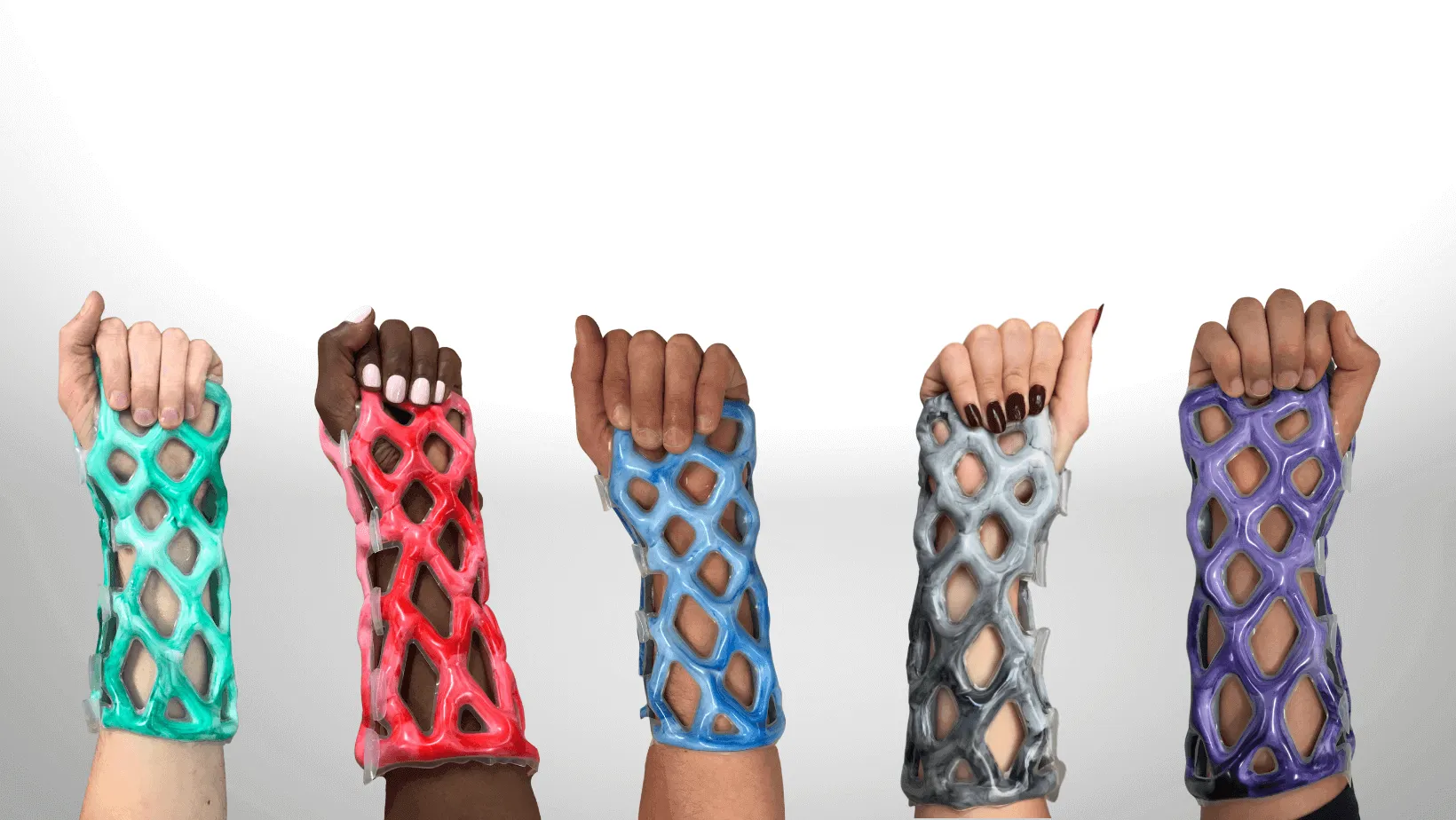
Anyone who has worn a traditional plaster or fiberglass cast knows the experience well — weeks of itching, no showers, a bulky sleeve that draws stares, and a final appointment with a loud cast saw to end the ordeal. Cast21, a medical device company based in the United States, has built a product aimed squarely at replacing that experience with something considerably more tolerable.
The Cast21 immobilization system is an open-lattice net sleeve that a clinician slides over the injured limb, fills with a fast-curing resin, and leaves to set — the whole process taking about three minutes from start to finish. Once hardened, the resin creates a rigid, structural support through the lattice framework, immobilizing the area in the same way a conventional cast would, but with a profile that looks and functions quite differently.
The core structural difference is the open-net design. Where traditional fiberglass or plaster casts enclose the limb in a solid shell, Cast21’s lattice structure leaves large portions of the skin exposed to air. The company says this allows for airflow that can help prevent skin issues associated with conventional casts, including itching, odor, dermatitis, and minor infections — complaints that are nearly universal among patients in traditional casting.
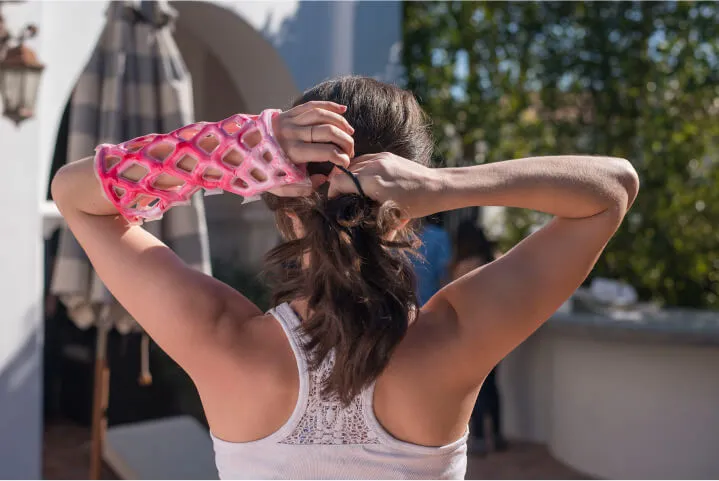
The waterproof claim is perhaps the most practically significant departure from standard orthopedic casting. Conventional casts — both plaster and fiberglass — are damaged by prolonged water exposure, which means showering requires plastic bag workarounds and swimming is off the table entirely for the duration of recovery. Cast21’s resin-hardened lattice is fully waterproof, meaning patients can shower, swim, and engage in water-based activities without restriction or protective measures.
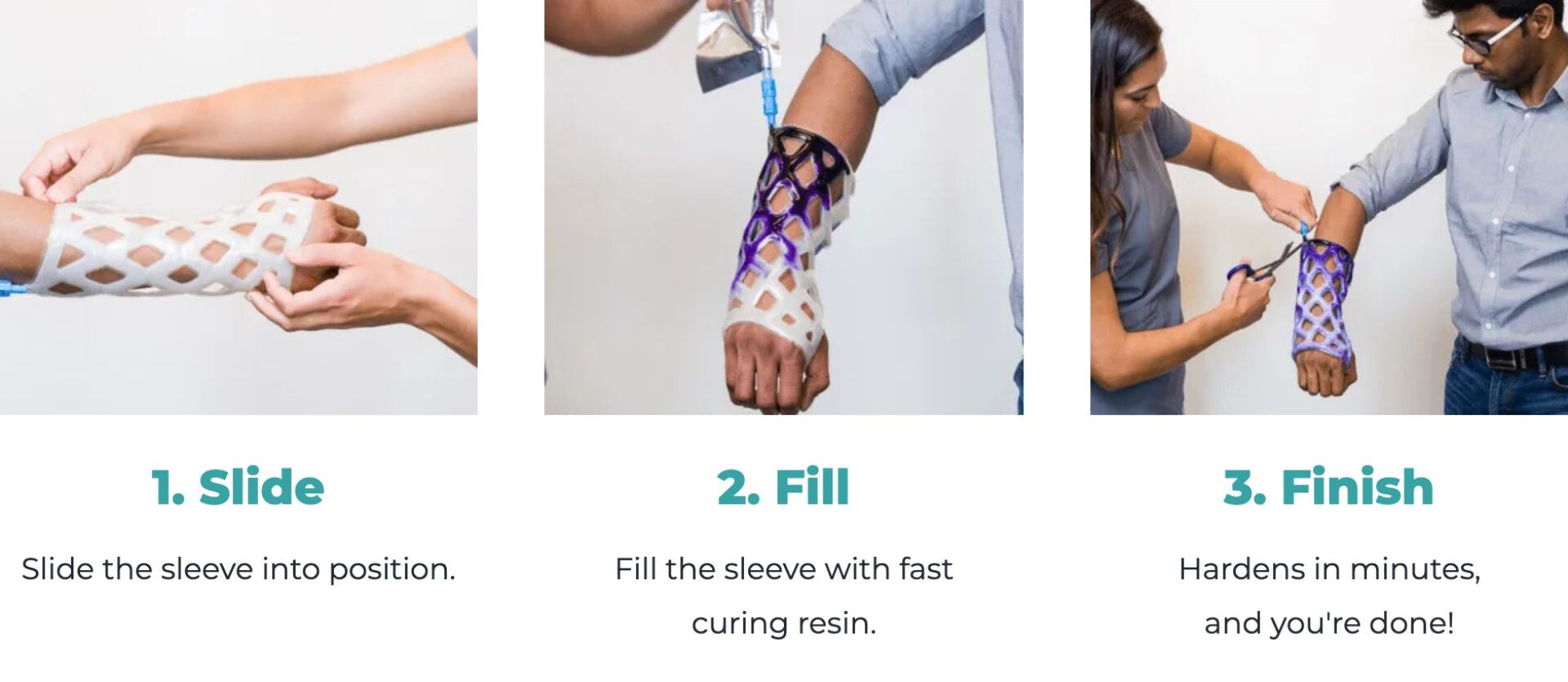
From a clinical workflow perspective, the application method is also meaningfully different. The sleeve slides on over a liner, the resin is injected via a port at the top of the sleeve, and the material sets within minutes without mess, mixing equipment, or the wet-cast waiting period familiar to clinicians who apply plaster. There is no cast saw required for removal — a detail that matters particularly in pediatric care, where the saw is a common source of patient anxiety. The product is FDA Listed and CE marked, and is currently used across orthopedics, sports medicine, pediatrics, family medicine, and urgent care settings.
The lattice structure is also notably lightweight compared to fiberglass or plaster equivalents. Because the material only needs to occupy the structural network of the net rather than forming a continuous shell, the total material volume — and therefore weight — is substantially lower. For patients recovering from wrist fractures, sprains, ligament injuries, dislocations, or conditions like carpal tunnel syndrome and ganglion cysts, that weight reduction has real quality-of-life implications over a multi-week recovery period.
Color selection is built into the product line. Cast21 offers multiple resin colors that cure to gradient blends, giving patients — particularly younger ones — some agency over the appearance of their cast. The colors visible across the product range include teal, red, blue, grey, and purple, among others. As the company notes on its website, friends and family can still sign the cast using a permanent marker on the outer surface, preserving that particular tradition of the broken-bone experience.
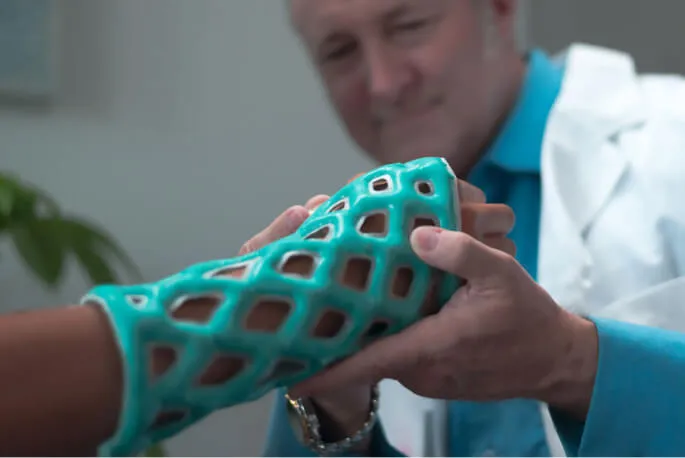
For clinicians, the efficiency argument is straightforward. Faster application means shorter patient visits. No cast saw removal reduces equipment requirements and patient anxiety.
The product is distributed globally and available through authorized partners in the United States, including a channel that serves VA facilities through a Service-Disabled, Veteran-Owned Small Business network. Patients interested in access can use Cast21’s clinic locator tool to find nearby providers, or contact the company to be connected with a certified clinician.
One area where Cast21 does not currently position itself as a universal replacement is in cases where a conventional cast remains the clinical preference — the company advises patients to discuss suitability with their doctor before requesting the product. The range of injuries it is indicated for is broad but not unlimited, and clinical judgment on fit remains part of the process.
For a category of medical device that has remained largely unchanged for decades, Cast21 represents a practical, patient-centered rethinking of what the recovery experience can look like — without requiring clinicians to overhaul their workflow to adopt it.
Source: Cast21