Tesla and SpaceX have selected Grimes County, Texas, for an enormous semiconductor manufacturing complex intended to supply the companies with advanced chips for artificial intelligence, robots, autonomous vehicles and computing systems in space.
Called Terafab, the project’s first phase is expected to require more than $16.8 billion in capital investment from the two companies, according to an August 6 announcement from SpaceX and the office of Texas Governor Greg Abbott.
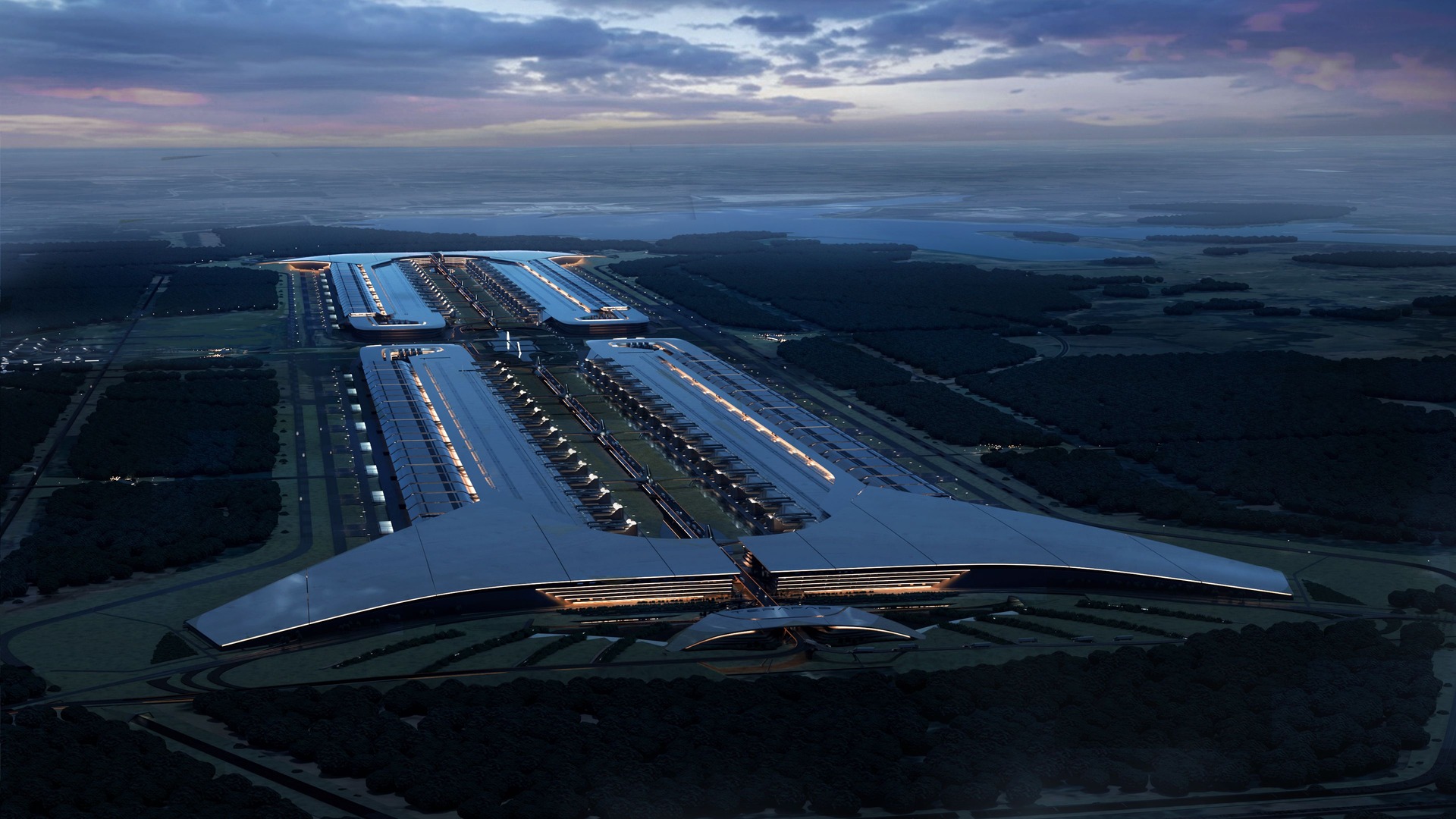
The companies describe Terafab as a vertically integrated semiconductor facility that would bring the manufacturing, packaging and testing of advanced logic and memory devices together at one location.
If built to its proposed scale, the finished complex would include more than 100 million sq ft (9.3 million sq m) of manufacturing space.
That figure should not necessarily be interpreted as a single uninterrupted building. Terafab is planned as a multiphase industrial complex, and the enormous floor-area estimate could be distributed across multiple fabrication, packaging, testing and support structures.
Chips for robots, Cybercabs and orbital computing
Tesla and SpaceX say the facility would produce several types of specialized processors under one roof.
These include chips optimized for edge computing and AI inference in Tesla’s Optimus humanoid robots and self-driving Cybercabs. SpaceX also wants high-power processors for its proposed space-based data centers, which remain a future concept rather than an operational network.
SpaceX claims the combined chip requirements of the two companies will eventually exceed one terawatt of computing capacity. That is a company projection of their future computing demand—not the electrical output of the proposed factory or a confirmed initial production target.
Bringing logic-chip fabrication, memory production, advanced packaging and testing closer together could shorten development cycles and give the companies more control over their supply of AI hardware. Semiconductor production is normally divided among highly specialized suppliers and facilities, often operating in different countries.
SpaceX has also partnered with Intel as it develops its chip-manufacturing plans, while Tesla began work in April on a smaller research fabrication facility at the North Campus of Giga Texas. SpaceX describes that research facility as a precursor to Terafab.
At least 3,000 jobs are planned
The first phase is expected to create 3,000 permanent jobs, including positions for engineers, technicians and plant operators. Texas has offered SpaceX a $30-million Texas Enterprise Fund grant, while the project has also qualified for consideration under the state’s Jobs, Energy, Technology and Innovation incentive program.
The chosen site is near the Gibbons Creek Reservoir, northwest of Houston. SpaceX says industrial operations would draw water from the reservoir instead of using local groundwater. The company has also promised on-site wastewater treatment, water reuse and compliance with environmental and pollution-control regulations.
Those commitments will be important because advanced semiconductor fabrication can require substantial quantities of highly purified water, along with extensive chemical handling and wastewater treatment.
The ultimate cost remains unclear
The latest announcement puts the estimated investment for Terafab’s initial phase at more than $16.8 billion, with later expansion potentially increasing the total considerably.
However, a Texas incentive application filed earlier in 2026 contemplated as many as four phases and described investment figures ranging from $55 billion to $119 billion. Reuters characterized the filing as proposing $55 billion initially and $119 billion if further phases were completed.
SpaceX’s August announcement did not explain how those earlier estimates relate to the newer $16.8-billion first-phase figure. The difference could reflect a revised scope, a narrower definition of the first construction package or changes made while the incentive agreements were being developed, but the companies have not publicly provided a detailed reconciliation.
Terafab should therefore be treated as an ambitious planned project rather than a completed factory with a fixed final footprint and budget. The companies have identified the location, announced first-phase investment and secured government support, but the ultimate schedule, cost and size will depend on how many phases are actually financed and constructed.
Even at the newly announced starting figure, Terafab would be one of the largest semiconductor-manufacturing investments in the United States—and another major step in Elon Musk’s effort to connect Tesla’s vehicles and robots with SpaceX’s expanding AI and space infrastructure.
Sources: SpaceX, Office of the Texas Governor, Reuters, Texas Comptroller