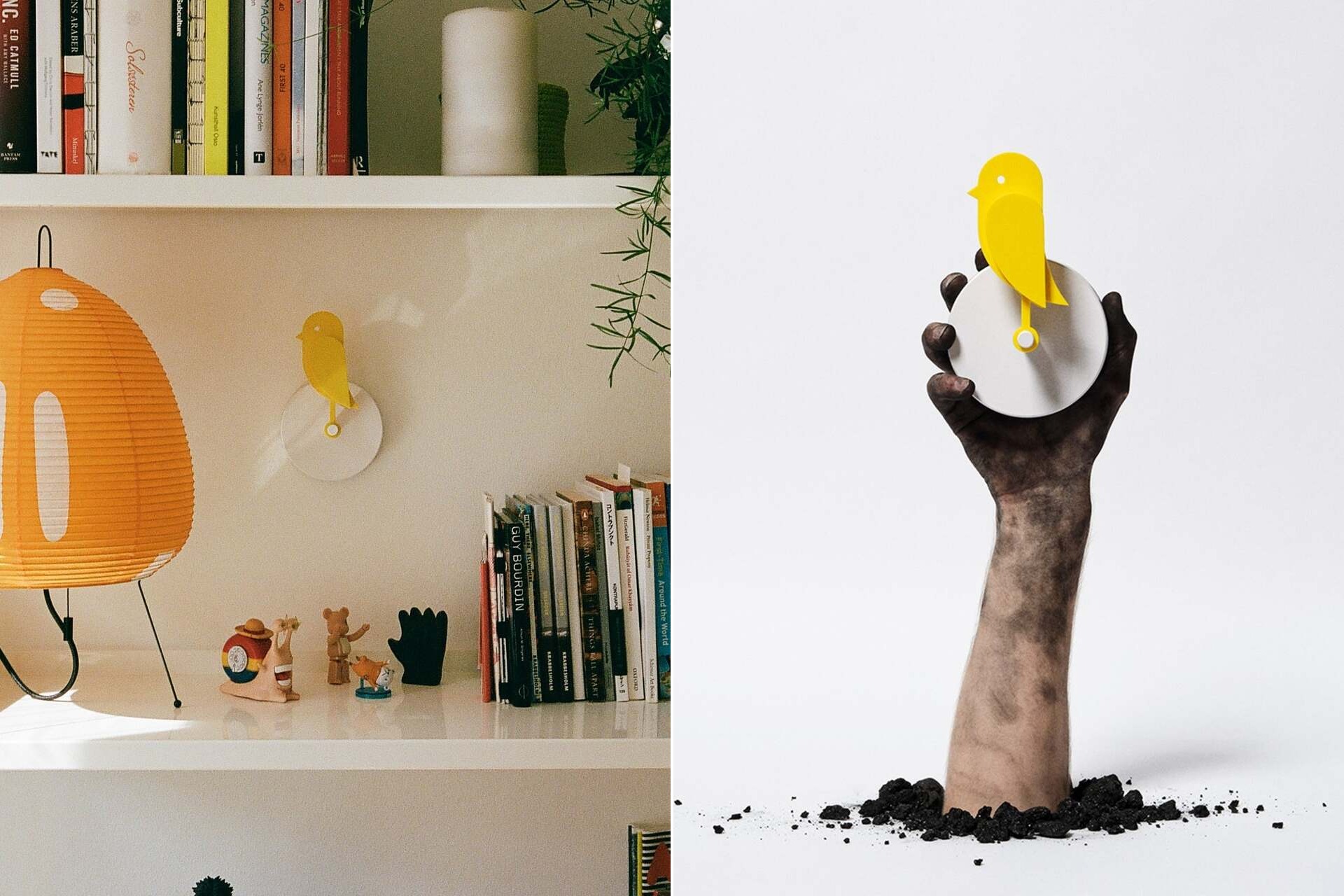
Most air-quality monitors communicate through numbers, graphs, colored lights or phone notifications. Birdie takes a much more literal approach: when carbon dioxide builds up in a room, the small wall-mounted bird falls from its upright position.
The idea is to turn something people cannot see or smell into a visual signal that is difficult to overlook. Open the windows or otherwise improve the room’s ventilation, and the bird eventually rises again.
Developed by Danish company Birdie, the Birdie 2.0 CO₂ monitor borrows its central metaphor from the canaries once carried into coal mines. The modern version contains a Swiss CO₂ sensor rather than a living bird, but it uses the same storytelling device: if the bird drops, it is time to pay attention to the air.
A physical reminder instead of another screen
Birdie is deliberately simpler than a conventional connected air-quality monitor. It has no display, app, audible alarm, flashing light or subscription service. Users do not have to interpret charts or remember to check a dashboard.
According to the company, the bird drops when the measured CO₂ concentration remains above 1,000 parts per million for more than 10 minutes. The delay helps ensure that a brief fluctuation does not immediately trigger the mechanism.
Birdie’s current FAQ says the bird returns upright after the concentration falls below 950 ppm. Another section of the product page gives a lower reset point, so the most important takeaway is the behavior rather than the precise revival threshold: elevated CO₂ makes the bird fall, while sustained improvement brings it back up.
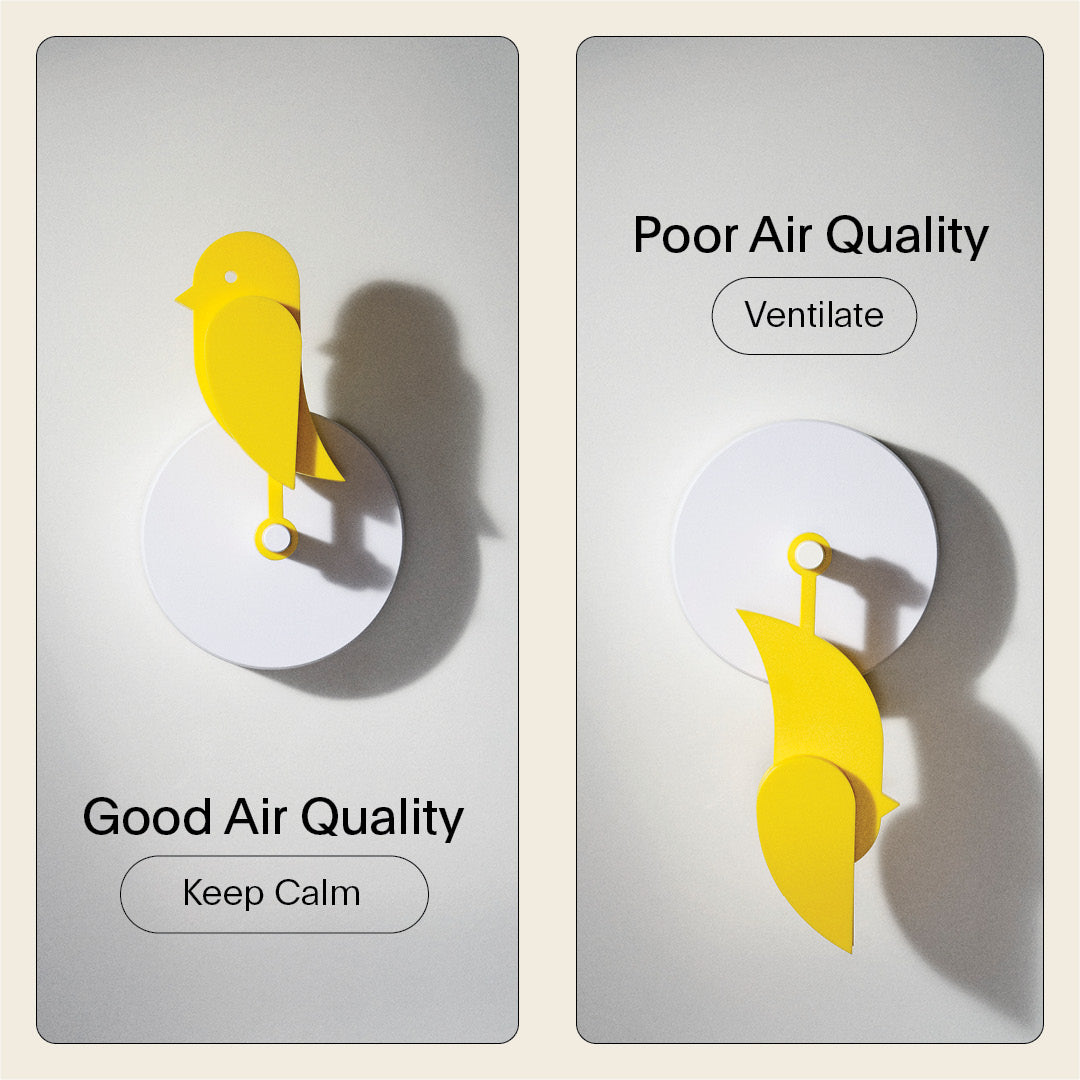
That physical movement is the product’s defining feature. A numerical monitor may provide much more information, but it only helps if someone notices the reading and understands what it means. Birdie reduces the message to a simple prompt that adults and children can recognize.
Why monitor carbon dioxide?
People continuously exhale carbon dioxide. When several people spend time in a closed room, its concentration can rise if there is not enough fresh-air exchange.
That makes indoor CO₂ useful as an indicator of how well ventilation is keeping pace with occupancy. A rising reading may be a sign that the room would benefit from open windows, increased mechanical ventilation or another source of outdoor air.
However, Birdie’s 1,000-ppm trigger should not be treated as an emergency or poisoning threshold. It is a practical ventilation reminder. The US Environmental Protection Agency says indoor CO₂ measurements can provide information about ventilation, but cautions that the results need to be interpreted carefully.
CO₂ is also not a complete measure of air quality. Birdie does not detect smoke, carbon monoxide, fine particles, volatile organic compounds, radon, pollen, mold or humidity. A room can have an acceptable CO₂ reading while still containing another pollutant.
For that reason, Birdie should complement rather than replace smoke alarms, carbon-monoxide detectors or specialized air-quality sensors. During wildfire smoke, heavy outdoor pollution, extreme temperatures or high pollen conditions, simply opening a window may not be the best response; filtered or mechanical ventilation could be more appropriate.
Designed to become part of the room
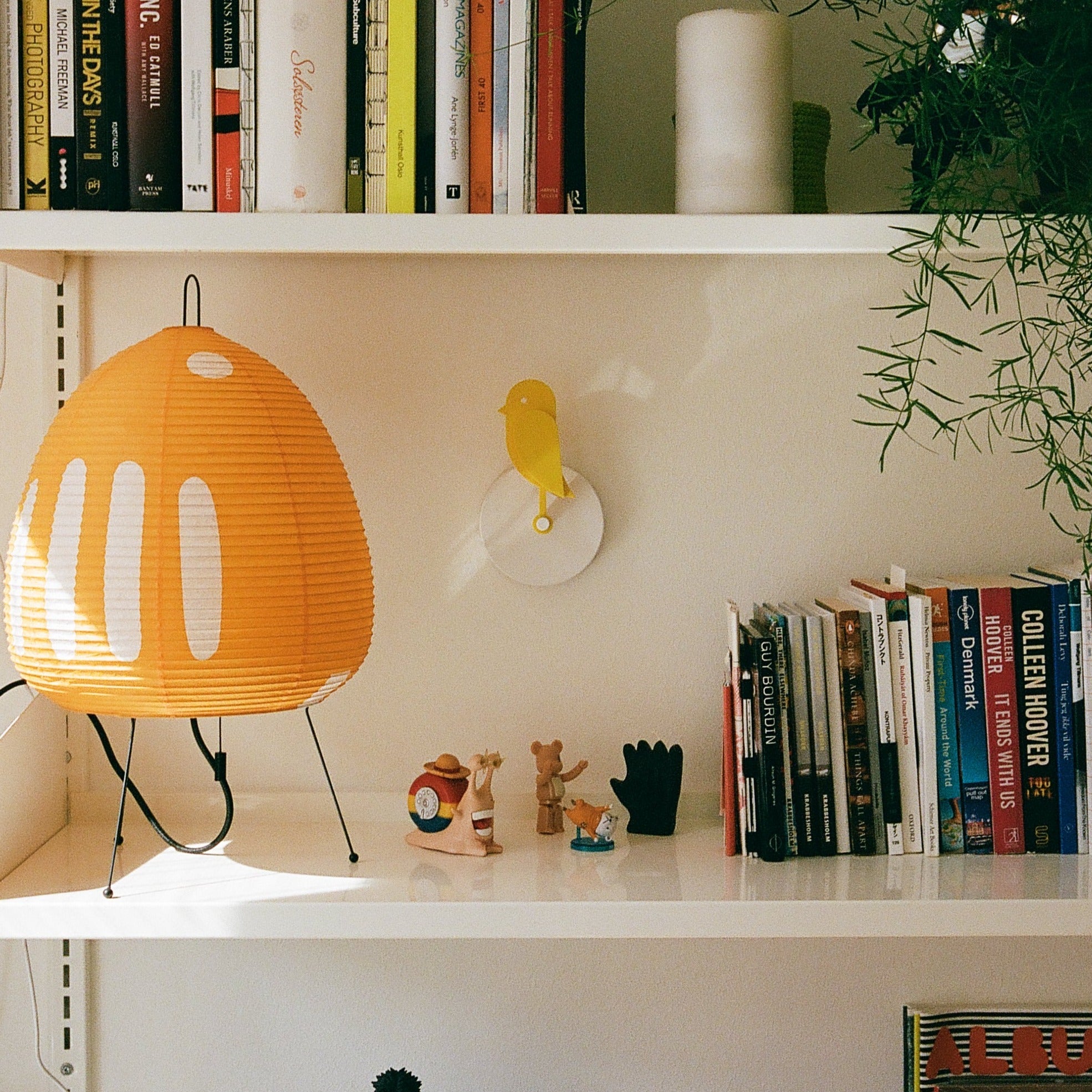
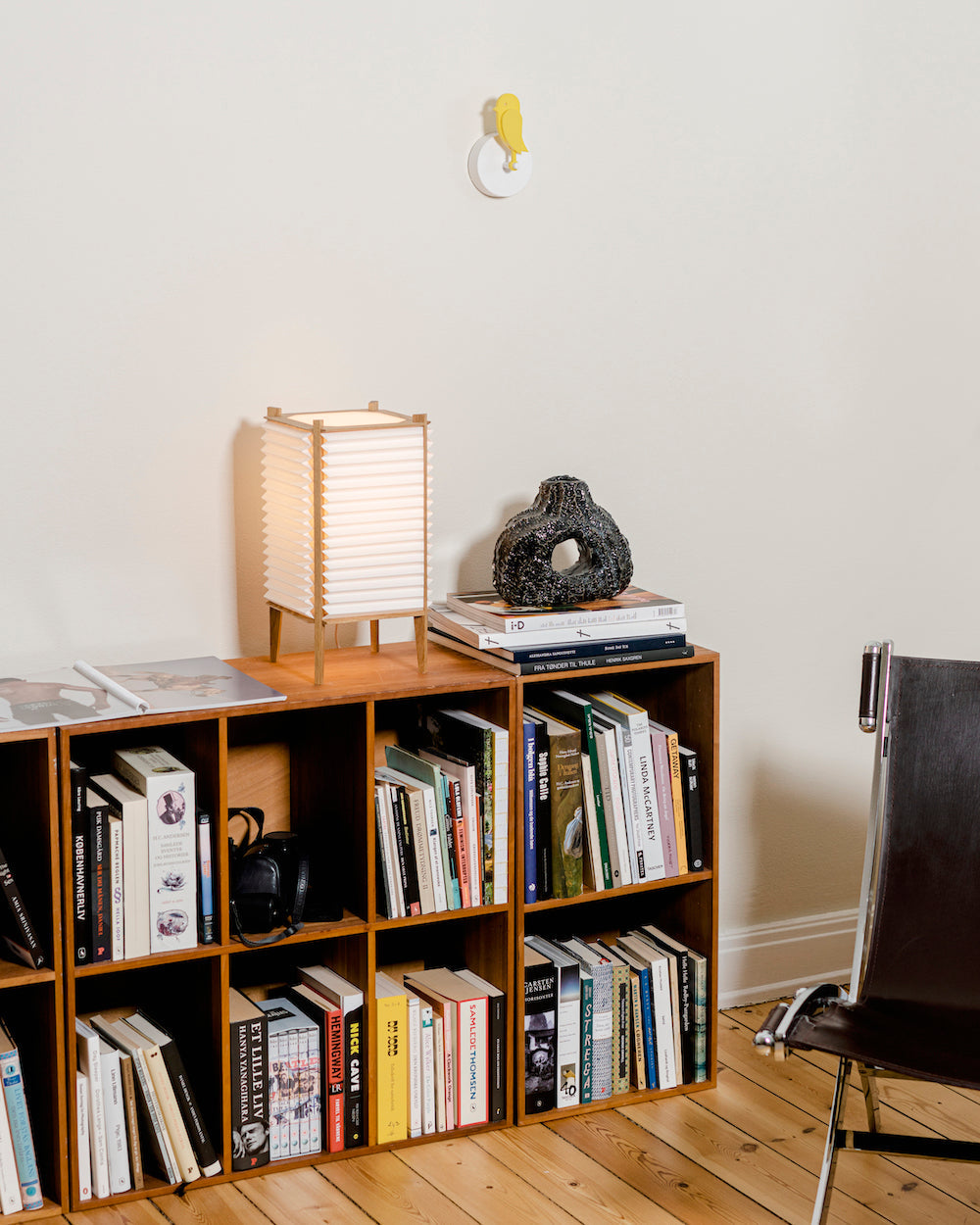
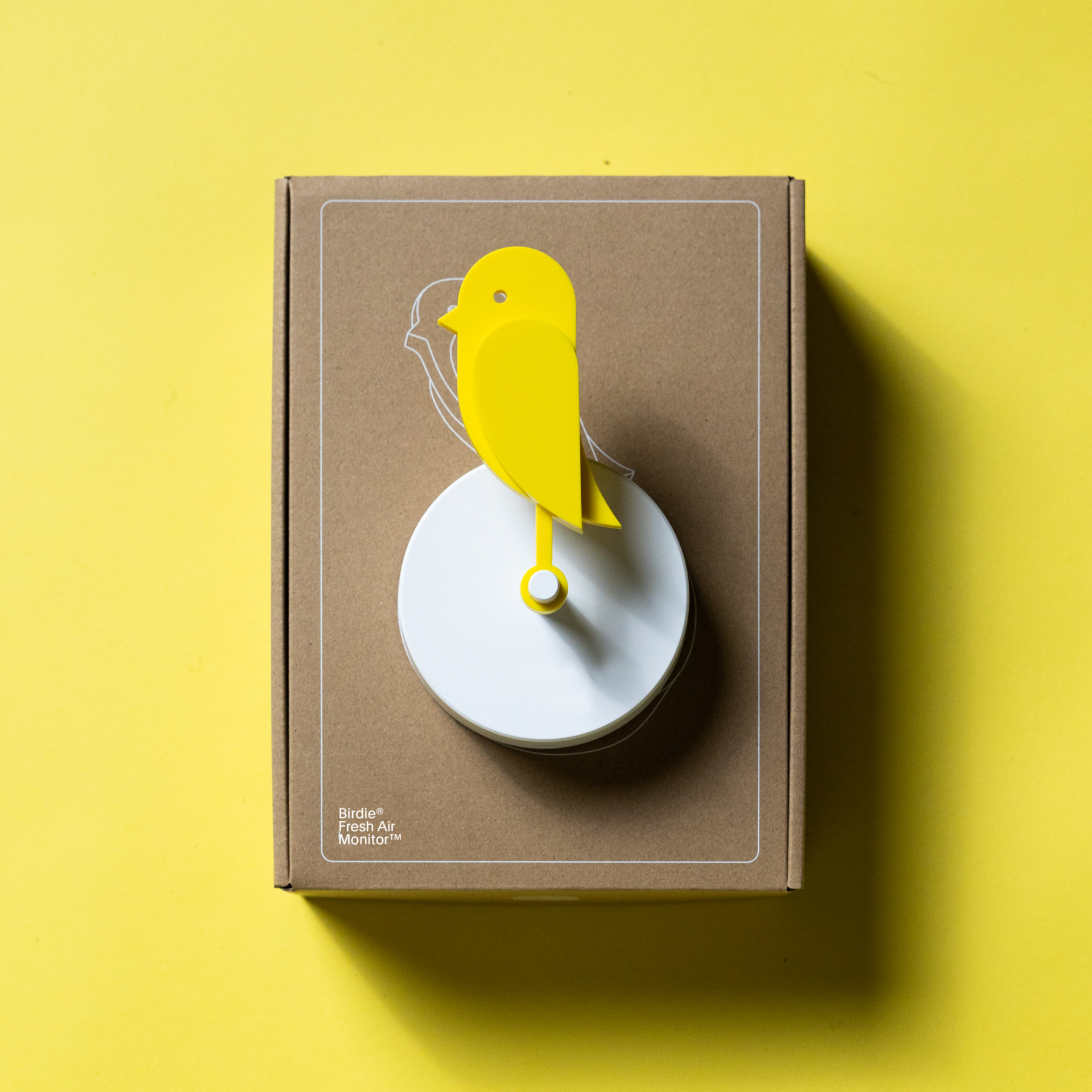
Birdie’s designers have tried to make the device feel more like a decorative object than a piece of environmental instrumentation. The circular housing sits against the wall, with the stylized bird perched on its front until the internal mechanism tips it downward.
The company offers the Birdie 2.0 in its familiar yellow finish as well as Meadow, Glacier and Dune colorways. The housing is made with 70% post-consumer recycled plastic.
The main housing measures approximately 3.7 × 3.7 × 1.1 inches (9.4 × 9.4 × 2.8 cm), while the bird itself measures around 3.9 × 2.0 × 0.8 inches (9.9 × 5.1 × 2 cm). The complete unit weighs approximately 7.4 oz (210 g).
Installation and room placement
The supplied wall mount can be installed using a screw or the included double-sided 3M tape. Birdie recommends positioning the unit between 5 and 8 ft (1.5–2.4 m) above the floor, ideally in the room where occupants spend the most time.
The company says one unit can be used in a room measuring up to roughly 1,075 sq ft (100 sq m). That figure deserves some context: CO₂ does not always mix evenly through a building, especially when doors separate rooms. Birdie therefore recommends a separate monitor for each floor or closed-off room that users want to monitor.
In practical terms, the device measures the air around its installation point; it does not clean the air or create a guaranteed coverage zone.
Months between charges
Birdie 2.0 contains a rechargeable battery, allowing it to be placed on a wall without a permanent power cable. The current product specification lists up to six months of regular use and an approximately eight-hour charging time through USB-C. It can also remain plugged in continuously.
The box includes the monitor, wall mount, screw option, adhesive mounting tape and a USB-C-to-USB-A cable.
The absence of a screen and wireless app helps preserve the product’s simplicity, but it also means there is no way to view an exact CO₂ concentration, record historical changes or compare readings between rooms. People who need building diagnostics or detailed exposure data would be better served by an instrument with a numerical display and data logging.
From Kickstarter project to finished product
Birdie was founded in 2022 by Danish childhood friends Andreas Kofoed Sørensen and Hans Høite Augustenborg, who grew up in Hellebæk, north of Copenhagen.
The pair launched their idea on Kickstarter in April 2022. According to the company, the campaign raised almost $500,000 in 30 days and attracted supporters from more than 63 countries. Birdie now says it has more than 75,000 customers worldwide.
Pricing and availability
The Birdie 2.0 is listed at $199 on the company’s US store, with the same price shown for the yellow, Meadow, Glacier and Dune versions.
Stock information varies by color. Some finishes are marked sold out, while the standard yellow model is shown as available on backorder. Buyers should therefore confirm the current status during checkout.
Birdie says US orders ship from a domestic warehouse, with an estimated delivery time of two to four weekdays when available. Orders above $100 qualify for free shipping, and the company publishes a 30-day cancellation period.
At $199, Birdie costs more than many basic numerical CO₂ meters while providing considerably less data. Its appeal lies elsewhere: it transforms an invisible ventilation issue into an uncomplicated visual prompt that can blend into a home, office or classroom.
For users who want exact readings and graphs, that simplicity will be limiting. For households that tend to ignore conventional monitors, however, a small bird falling from its perch may be a much harder reminder to miss.
Sources: Birdie 2.0, US Environmental Protection Agency