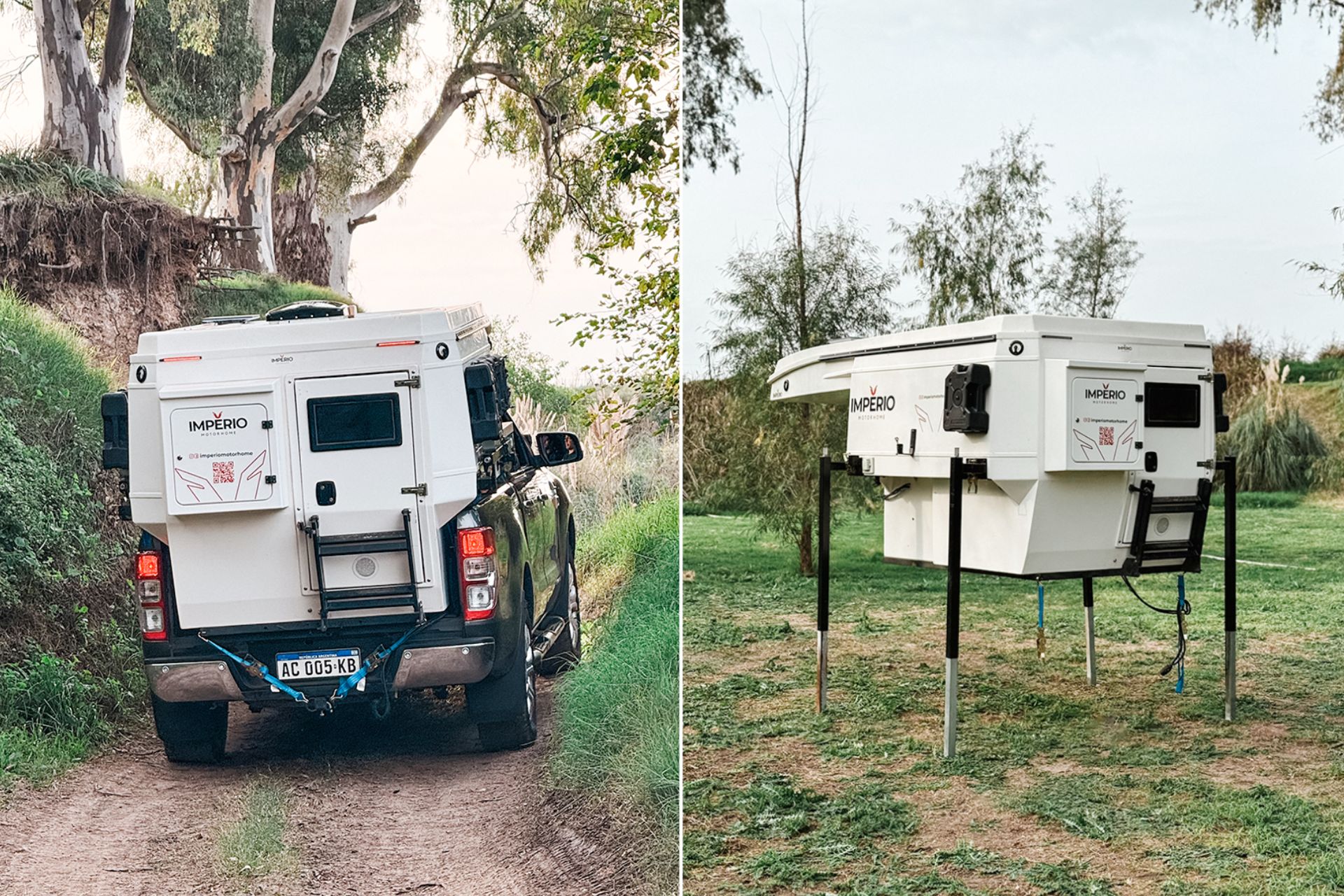
A pickup camper gives travelers a compact home that can follow a four-wheel-drive vehicle well beyond paved roads. The tradeoff is that the living space normally goes wherever the truck goes—even when its occupants only want to make a quick supply run.
Argentina’s Imperio Motorhome has built its Camper Desmontable around a more flexible idea. The fiberglass module rides in a pickup bed for travel, but removable leveling legs allow it to stand independently at camp. A separate wheeled support base can then make the detached unit easier to reposition on firm, level ground.
The result is part slide-in camper and part freestanding micro-cabin. Travelers can leave their sleeping space, kitchen and equipment set up while reclaiming the pickup for local journeys.
It separates the campsite from the truck
At the destination, four removable manual legs support the camper while the pickup is driven out from underneath. Once lowered, the module can remain behind as what Imperio calls a base of operations.
That separation is the product’s defining feature. A conventional motorhome must be packed whenever its occupants drive somewhere, while a fixed pickup camper keeps the truck tied to the campsite. Imperio’s arrangement allows the vehicle and accommodation to serve different jobs after arrival.
The company also supplies a support frame with small wheels. It should not be confused with a road trailer or a powered undercarriage: the photos show a low maneuvering dolly intended to help move the unloaded camper locally. Imperio does not publish a road-use rating for that base.
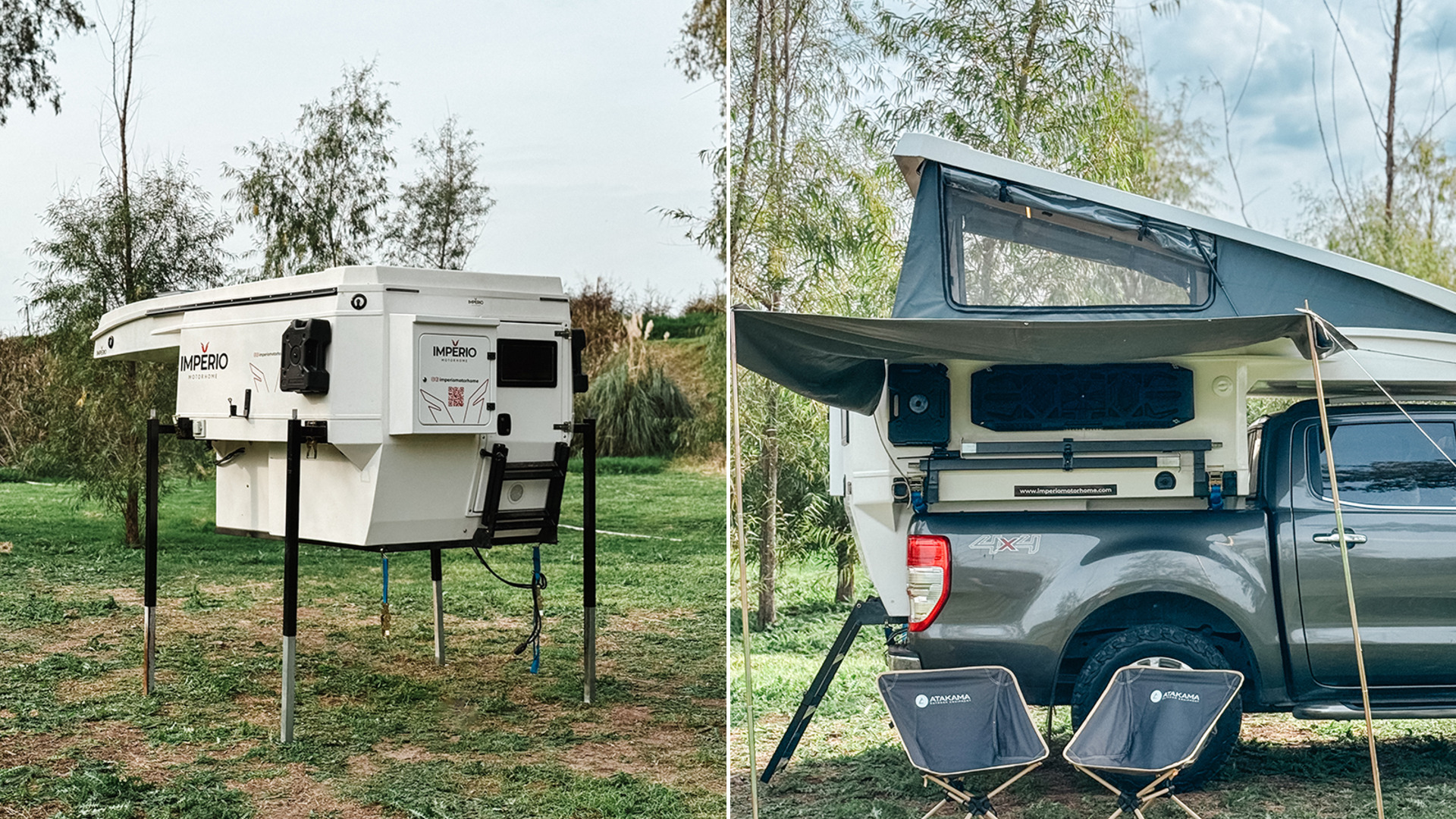
The main shell is described as a one-piece glass-fiber-reinforced plastic monocoque, known locally by the Spanish abbreviation PRFV. When parked, an insulated fabric upper section raises to provide additional headroom. It incorporates three clear windows along with blackout covers and insect screens.
A side awning expands the usable area beyond the compact shell, while an exterior folding ladder provides access. Other adventure-oriented equipment includes two recovery boards, two auxiliary fuel containers, lockable storage boxes and a front LED light bar.
There are two beds inside
Imperio lists a 1.22 × 1.90-meter (4 × 6.2-ft) double bed and a smaller 0.60 × 1.75-meter (2 × 5.7-ft) single bed. One marketplace listing gives the single bed as 1.70 meters long, so buyers should confirm the final dimensions for the unit they order.
The compact interior uses routed guatambú plywood furniture with latches intended to stop cabinet doors opening in transit. High-density foam cushions, upholstered dining seats and hard-wearing vinyl flooring complete a layout designed to switch between eating, working and sleeping.
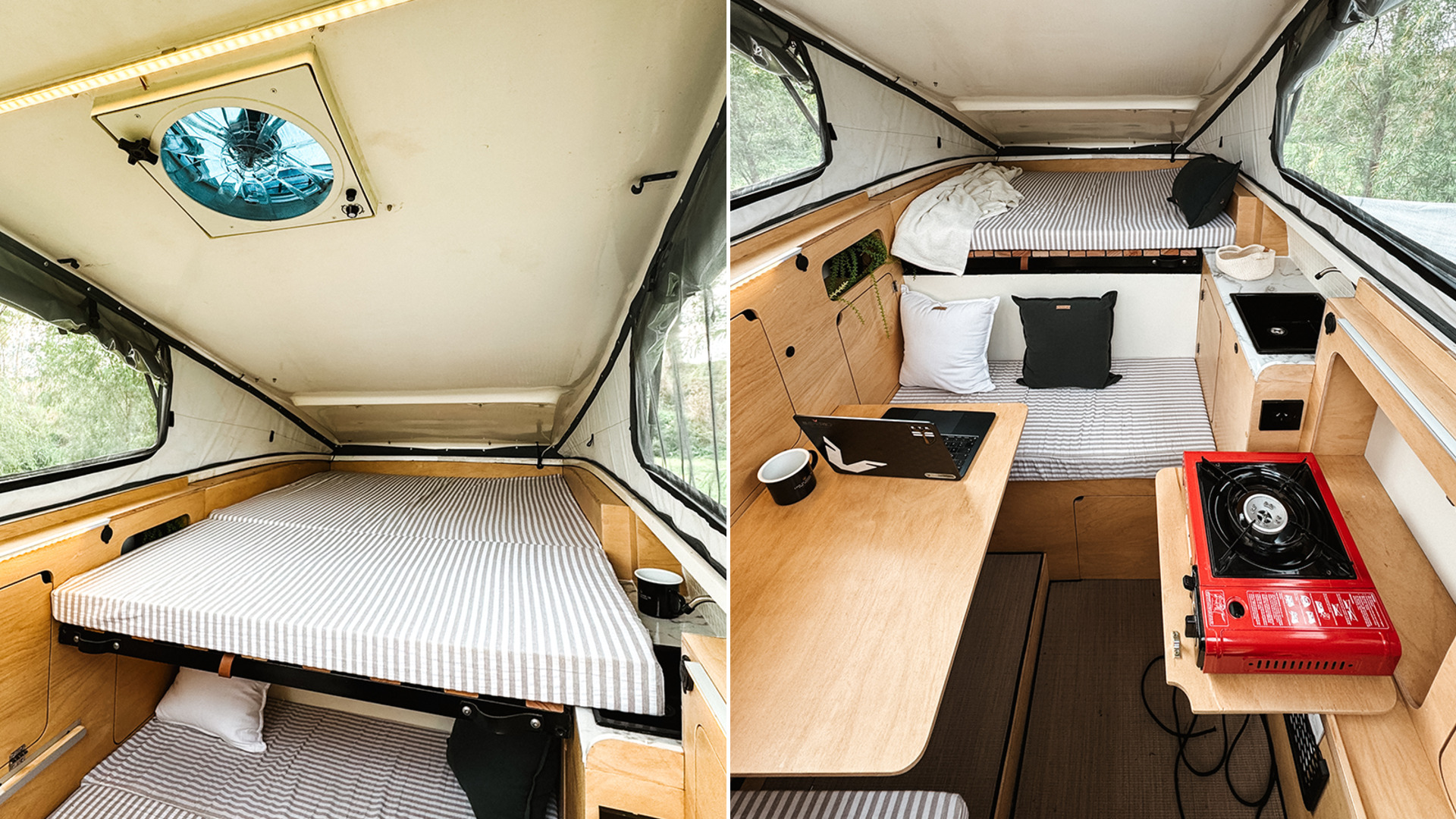
A 12-volt roof vent helps move air through the cabin. The pop-up fabric and screened windows provide additional ventilation, although Imperio does not publish insulation values or a tested temperature range.
A small kitchen and two water tanks
The kitchen includes a counter, sink and faucet, a cartridge-style butane stove, and a 12-volt refrigerator with a freezer compartment. It is a modest setup, but it avoids the need to carry a completely separate camp kitchen.
Fresh water is stored in a 40-liter (10.6-US-gallon) tank, while a 24-liter (6.3-US-gallon) gray-water tank collects wastewater. An automatic pump supplies the faucet. A portable toilet is also included rather than a permanently installed bathroom.
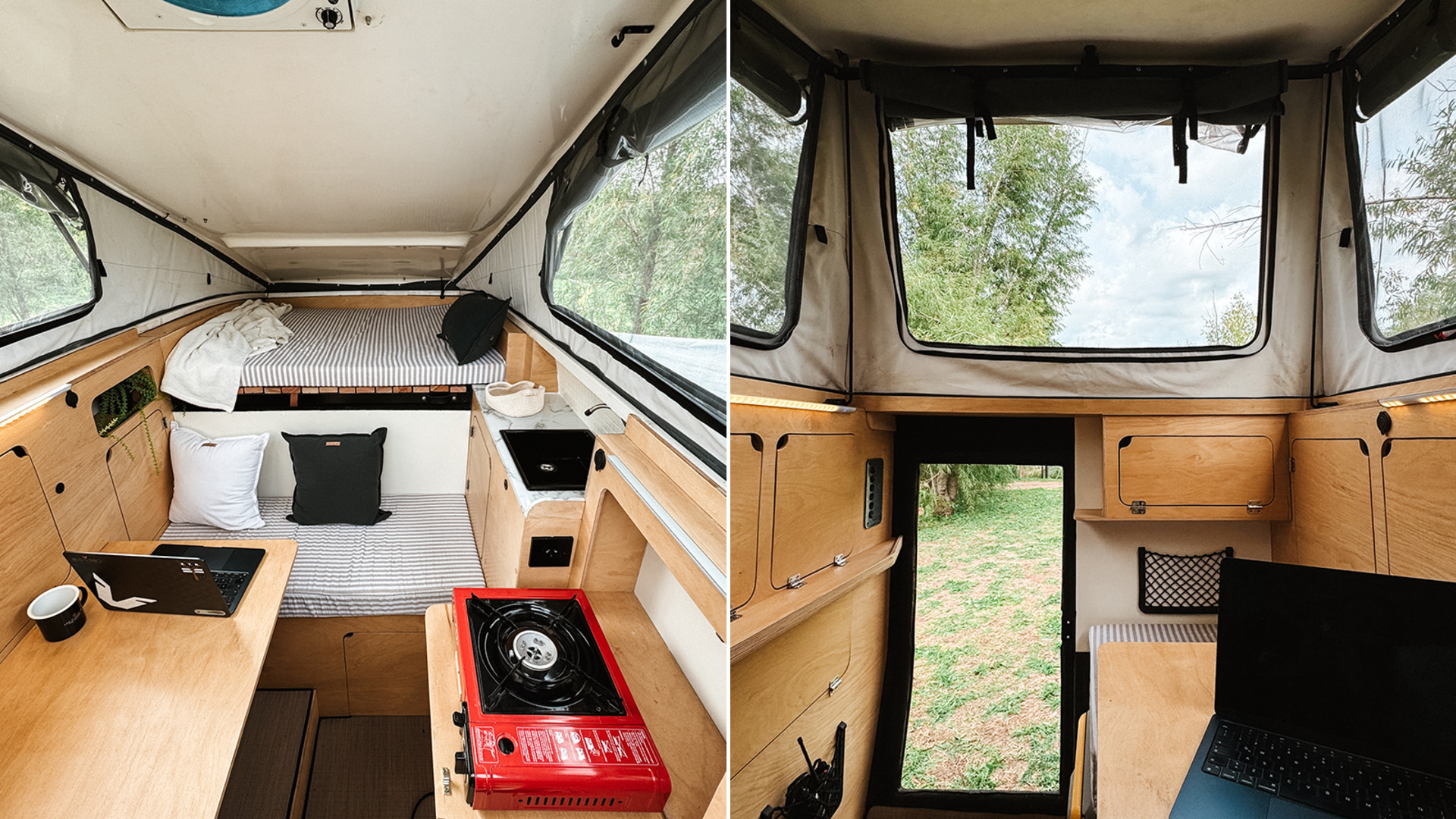
The layout is necessarily compact, and the published photos show the stove placed on the central work surface when in use. Prospective buyers should ask about ventilation and the manufacturer’s operating instructions for indoor cooking, particularly when the fabric roof is closed or conditions limit airflow.
Solar power covers basic off-grid loads
On the electrical side, the standard equipment list includes a 100-watt solar panel, MPPT charge controller and 100Ah deep-cycle gel battery. A Victron 12-to-12 converter can charge the house system from the vehicle, while separate 12- and 220-volt installations power lighting and appliances.
USB-C outlets, individual switches and LED lighting are included. The 100W array is better understood as a basic off-grid supply for lights, charging and supporting efficient 12V equipment than as a substitute for shore power under every condition. Actual autonomy will depend heavily on sunlight, refrigerator consumption and how the occupants use other loads.
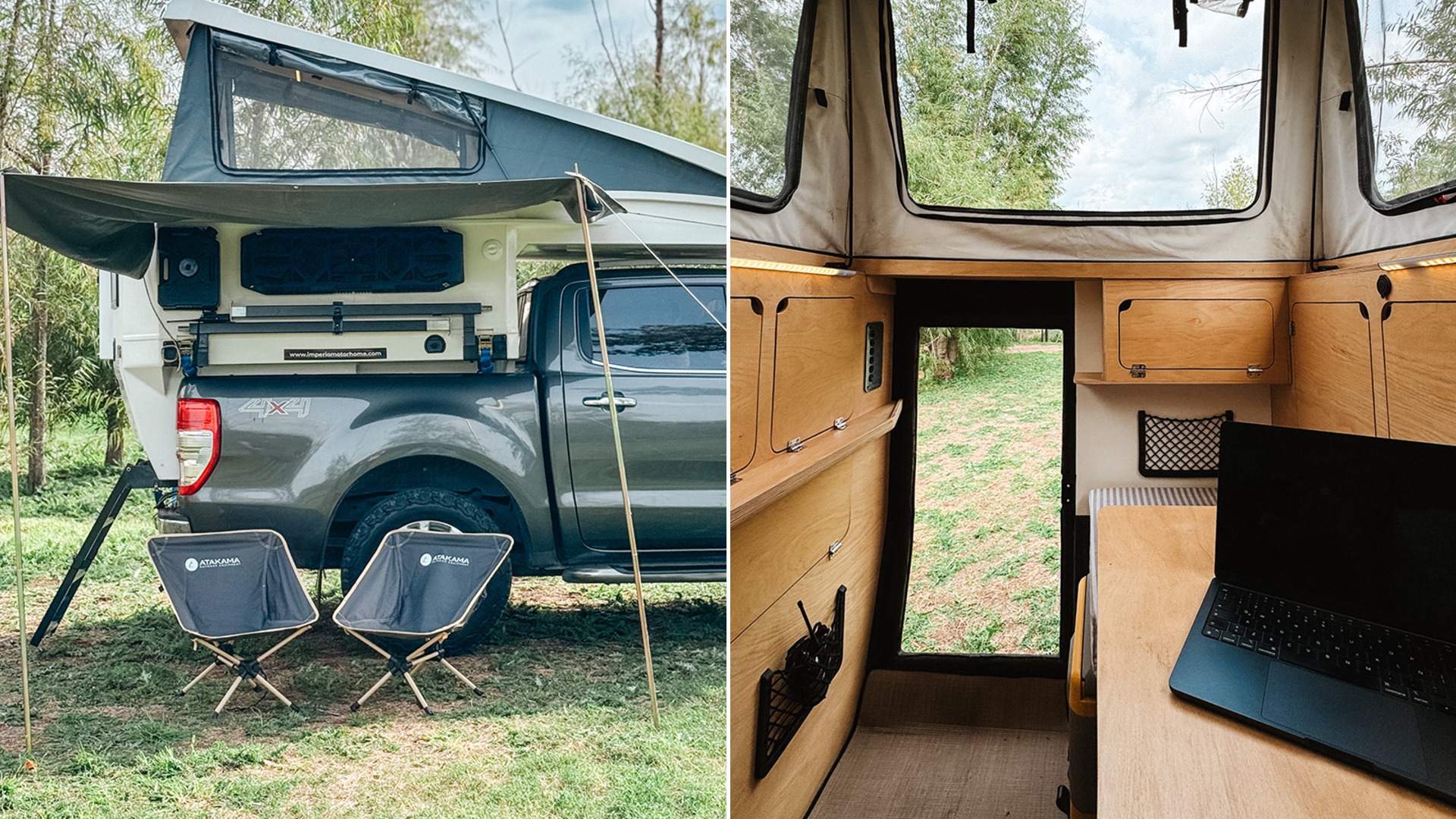
Imperio also lists pre-installation for Starlink, allowing a buyer to add satellite internet hardware without starting the wiring arrangement from scratch. An externally mounted diesel heater is offered as an option for colder trips.
Payload and compatibility need to be confirmed
The most important missing specification is the camper’s weight. Imperio does not currently publish dry weight, loaded weight, exterior dimensions or a definitive compatibility list on the product page.
Those figures matter. A pickup’s payload rating has to cover the camper, water, fuel, passengers, accessories and every other item placed in the vehicle. The correct fit also depends on bed dimensions, axle loads, center of gravity and the manufacturer’s tie-down method—not simply whether the module can physically sit in the cargo box.
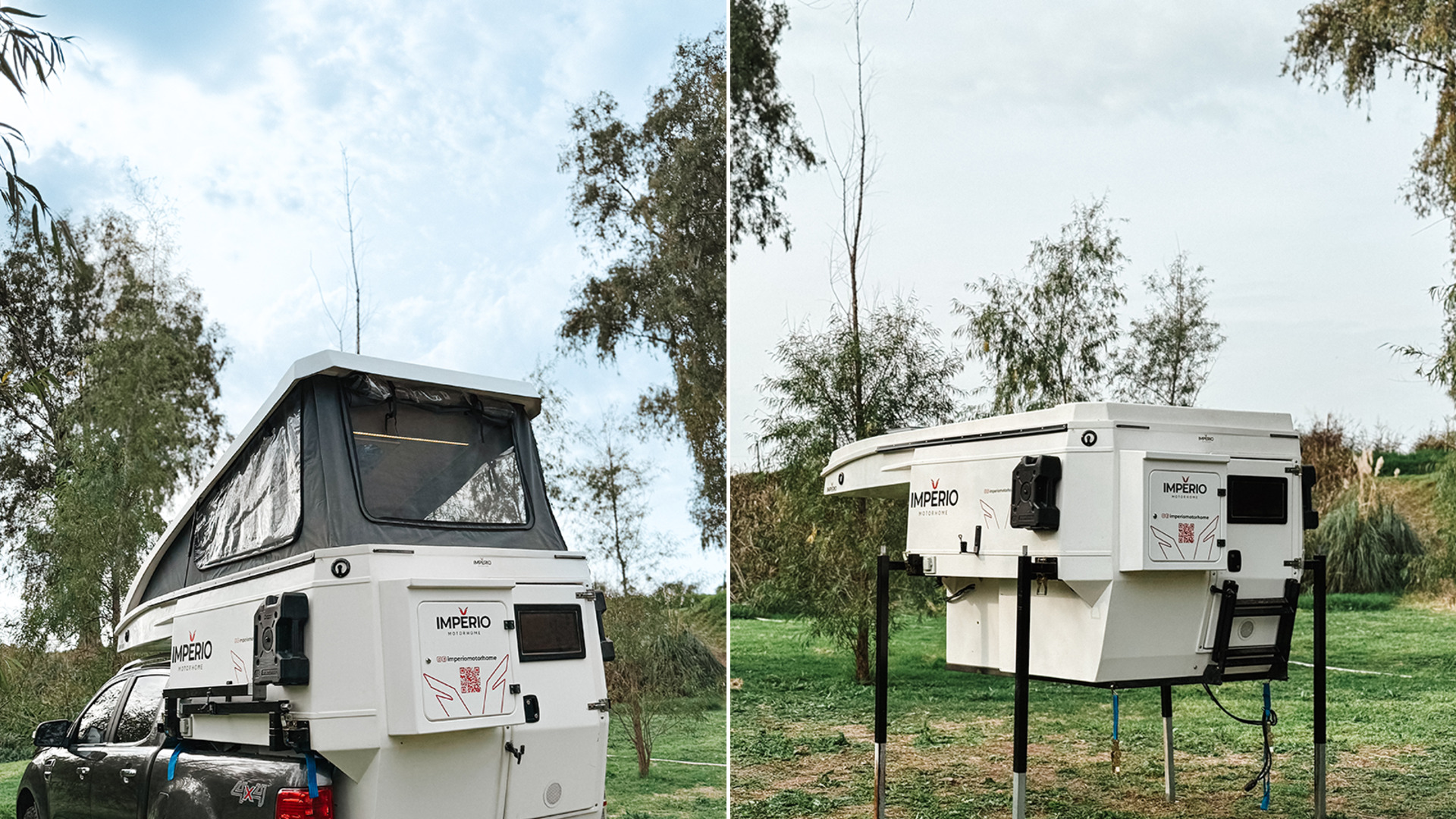
The promotional photos show the camper mounted on a pickup, but shoppers should ask Imperio to approve their exact make, model, cab configuration and model year before ordering. They should also verify whether suspension or tire changes are required and whether local registration or insurance rules apply.
Price and availability
Imperio’s current sales page lists the Camper Desmontable from ARS 47,502,500. A separate TodoMotorhome listing from Imperio advertises a unit at US$21,000. Exchange rates, taxes, options and changing configurations can make a direct comparison misleading, so both figures should be treated as indications rather than a universal delivered price.
The camper is produced in Argentina, and the official website directs customers to contact the company for a quotation. Buyers outside the country would also need to account for shipping, customs, certification and possible modifications.
Its greatest attraction is not any single appliance. It is the ability to arrive with one vehicle and then split that vehicle into two useful things: a stationary, self-contained camp and a pickup that remains free to explore.
For travelers who value that independence, the Imperio Camper Desmontable offers an unusually complete interpretation of the removable pickup-camper idea. But its unpublished weight and vehicle-fit data are essential questions to resolve before the clever campsite flexibility becomes a practical purchase.
Product page: Imperio Motorhome Camper Desmontable, TodoMotorhome