

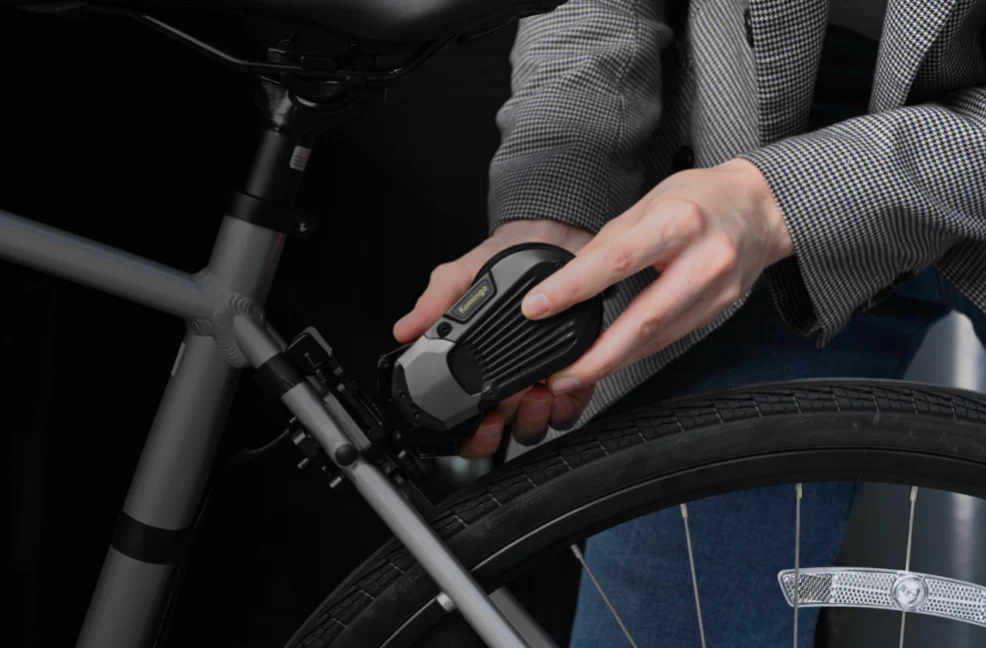
For riders who love their existing bicycle but wish it could shrug off hills and headwinds, the usual options have been awkward: buy a separate e-bike, or commit to a permanent, tool-heavy conversion kit. A startup called Kamingo is pitching a different approach with a portable add-on system that clips onto a standard bike and removes just as quickly, no rebuild required.
The product, which the company brands as a “Bikebot,” was named a 2026 CES Honoree in the Tech & Advanced Mobility category and is being launched through a Kickstarter campaign.
How it works

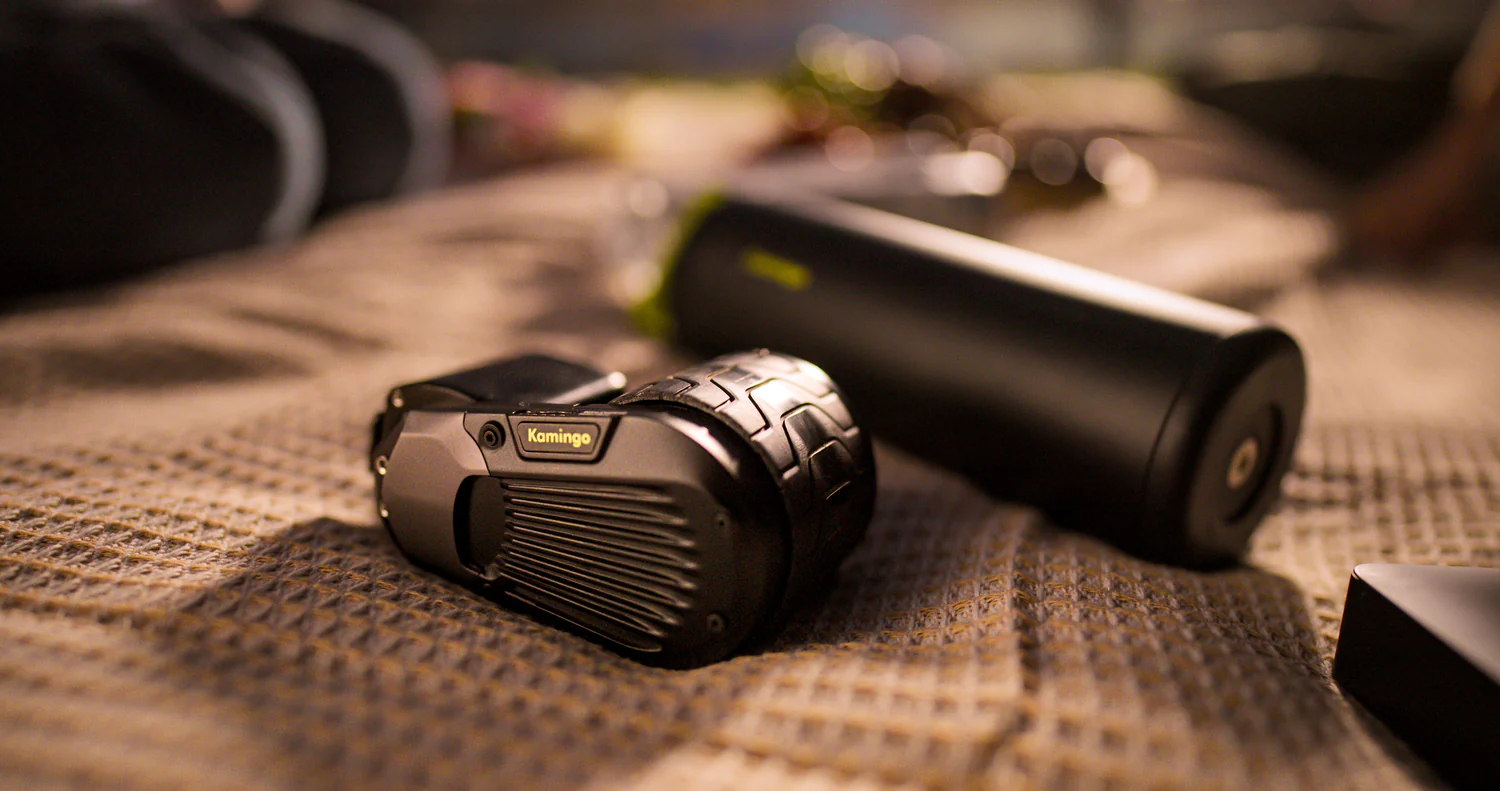
Kamingo is built around three components that the company says operate as a single system: a handlebar-mounted controller, a rear friction-assist motor that drives the back wheel, and a battery that sits in the bike’s bottle cage. According to Kamingo, the full setup takes about three minutes to install the first time with no tools, after which it can be removed or reattached in seconds.
The friction-drive design is what makes the quick on-and-off possible. Rather than replacing the wheel hub or routing the power through the drivetrain, the motor presses against the rear tire to deliver assistance. That keeps the original bike largely untouched.

The company leans on the system’s discreet look. The battery is shaped to resemble an ordinary water bottle, and Kamingo describes the design intent directly: “Like Chameleon, Kamingo is built to disappear into your bike’s frame visually and physically.”
Three riding modes
The system offers three modes that riders can switch between on the fly. In Cruise Mode, the throttle handles propulsion with no pedaling required—positioned by the company as a fully electric option for tired days or short urban trips. Assist Mode adds power while the rider pedals, intended to help on climbs or in traffic. Standby Mode disengages the motor entirely so the bike rides like a conventional bicycle without motor drag.
Kamingo frames the appeal around switching instantly between these states: “Ride manual on the flats. Shift to assist for the incline. Hit the throttle to cruise the last mile home.”
Specifications
The motor is rated at 750W of peak power. Kamingo lists a range of up to 90 km (about 56 miles) on a charge, though as with any e-bike that figure depends on terrain, rider weight, and how heavily the throttle is used.
Portability is a central selling point. The unit weighs 2.5 kg (roughly 5.5 pounds), which the company says is light enough to slip into a backpack when removed. The battery uses 16 21700-format lithium-ion cells—the same cylindrical cell type found in many electric vehicles and power tools—which Kamingo describes as automotive-grade for consistent output and safety.
Other listed features include a battery that doubles as a power bank, three-hour magnetic fast charging, regenerative braking, and what the company calls pressure-adaptive technology (PAT) for managing how power is delivered. Kamingo also emphasizes quiet operation.

A complete set includes the motor, battery, controller, and a cadence sensor, along with a battery cage, motor mount, and fast-charging dock.
Context and considerations
Friction-drive conversion systems are not new, and they come with known trade-offs worth keeping in mind. Performance in wet conditions can suffer because a roller pressing on a wet tire may slip, and friction drives can increase tire wear over time compared with hub or mid-drive motors. The approach favors convenience and low weight over the efficiency and all-weather consistency of more integrated systems.
There is also a regulatory dimension. A 750W output sits at or above the limit for some e-bike classes depending on the jurisdiction, and a throttle-only “Cruise Mode” affects how a bike is classified in parts of the U.S. and Europe. Riders will want to confirm local rules before relying on full electric propulsion on public roads or bike paths.
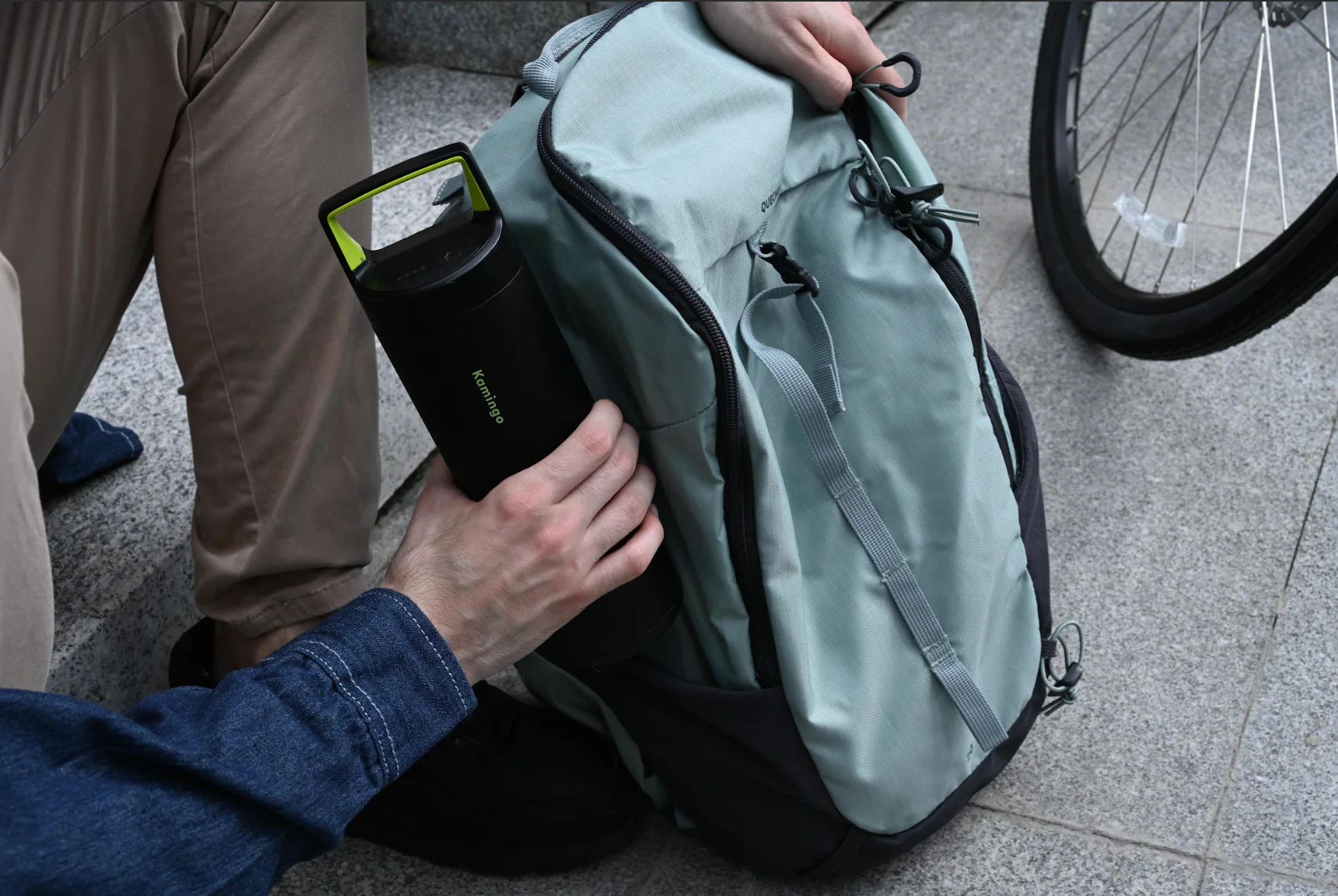
Still, for commuters and casual cyclists who want occasional assistance without owning a second, heavier bike, a removable system that preserves the original ride has clear practical appeal.
Pricing and availability
Kamingo is listed at $549, reduced from a $689 reference price, and is being offered through the company’s Kickstarter campaign. As with any crowdfunding project, backers should weigh the usual risks around production timelines and delivery, since pledges fund a product that is still being brought to market rather than guaranteeing an item ready to ship.
Source: Kamingo


