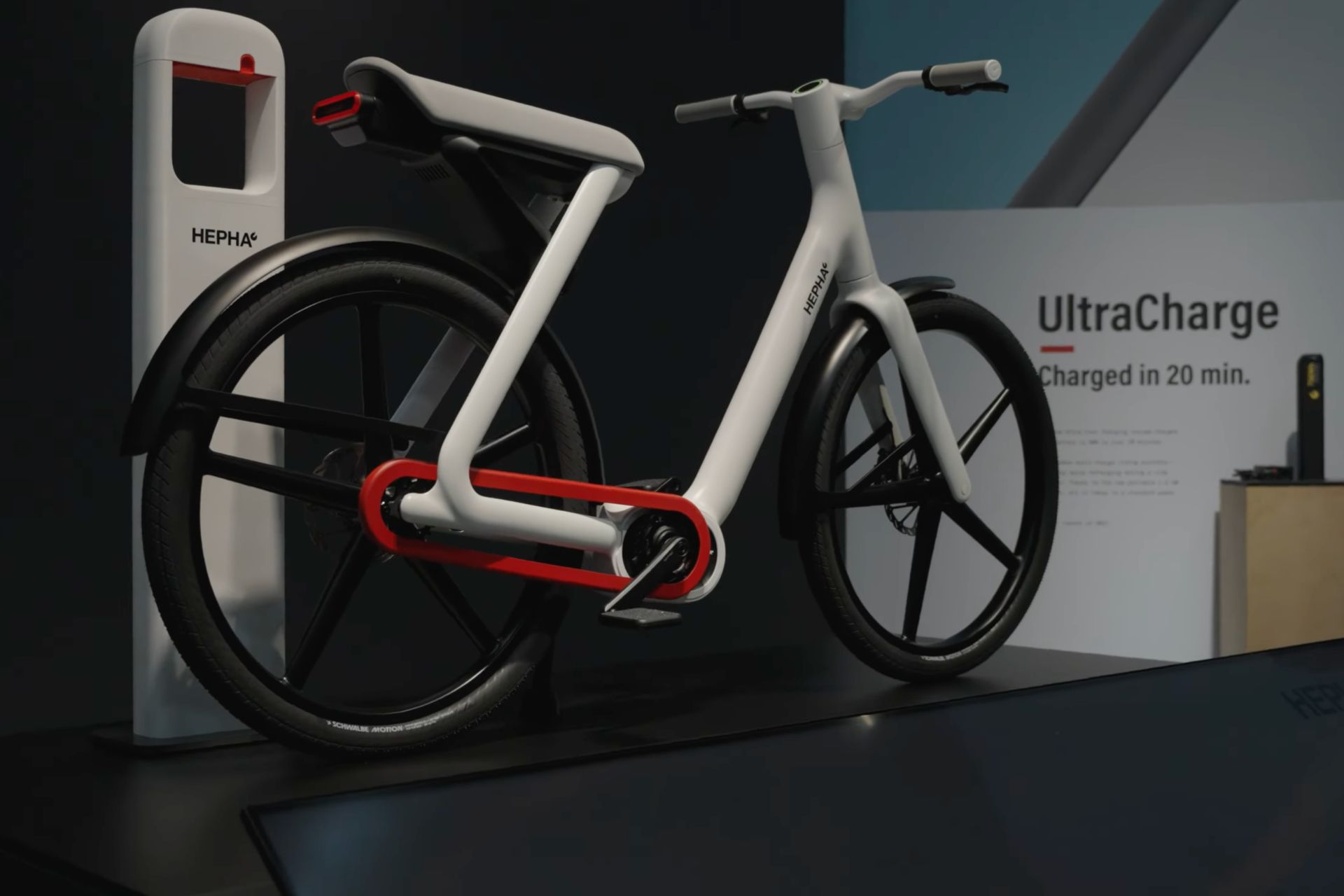
Most e-bikes still operate much like conventional bicycles. You pedal, change gears when necessary, select an assistance level, and squeeze brake levers when you want to slow down. HEPHA’s Urban X concept asks a much more interesting question: how many of those controls does an electric bike actually need?
Unveiled at Eurobike 2026, the Urban X is HEPHA’s vision of a radically simplified city e-bike. Its central idea is something the company calls “Pedal Only Ride.” Instead of requiring the rider to constantly think about gears, assistance modes and braking, the bike brings many of those functions together within an electronically controlled drivetrain.
The result is an e-bike that takes some inspiration from the way modern electric cars behave. You pedal to go, stop pedaling to begin slowing down, and can even pedal backwards when you want stronger braking.
And yes, people have already ridden a working prototype.
An e-bike that shifts for you
One of the first things missing from the Urban X is a conventional gear shifter.
At the heart of the concept is HEPHA’s new eCVT, or electronic continuously variable transmission. Rather than making the rider select individual gears, the system continuously and automatically adjusts the transmission ratio.
That could be particularly useful in city riding, where cyclists repeatedly accelerate from traffic lights, slow for intersections and then get back up to speed. HEPHA says the Urban X was designed specifically around this stop-and-go environment.
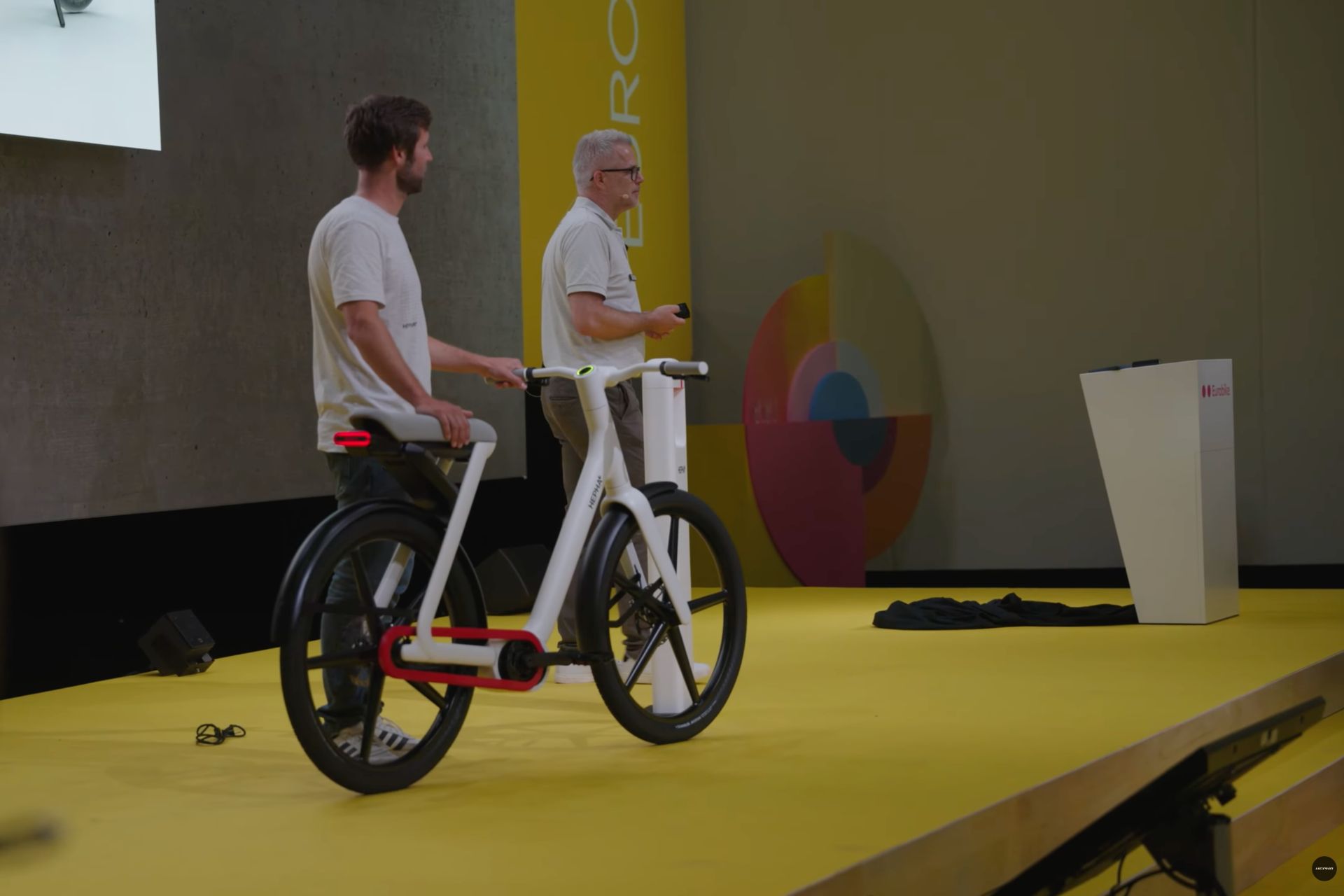
The goal isn’t simply to add another automatic transmission to an e-bike. HEPHA wants to remove much of the decision-making normally associated with riding one. The Urban X therefore eliminates conventional shifting and assistance-mode selection from the normal riding experience.
The rider essentially tells the bike what they want through the pedals.
Stop pedaling and the bike starts slowing down
The braking system is where things get considerably more unusual.
Under normal riding, simply stopping your pedaling tells the Urban X to begin slowing down using its electric drive system. The motor provides light regenerative braking, creating an effect somewhat similar to lifting off the accelerator in an electric car with strong regenerative braking.
If you want to decelerate more aggressively, you pedal backwards.
Backpedaling tells the system to increase the braking effect, and reports from Eurobike indicate that it can bring the prototype almost to a complete stop. In other words, your feet can control not only acceleration but much of the bike’s deceleration as well.
A Bike World News journalist who rode the only working prototype at Eurobike reported that stopping pedaling produced light braking, while pedaling backwards made the braking progressively more aggressive. The rider said it seemed possible to complete entire rides without needing to touch the conventional brake levers.
That last detail is important, because HEPHA’s catchy “No shifting. No braking.” description shouldn’t be interpreted as meaning the prototype literally has no conventional brakes.
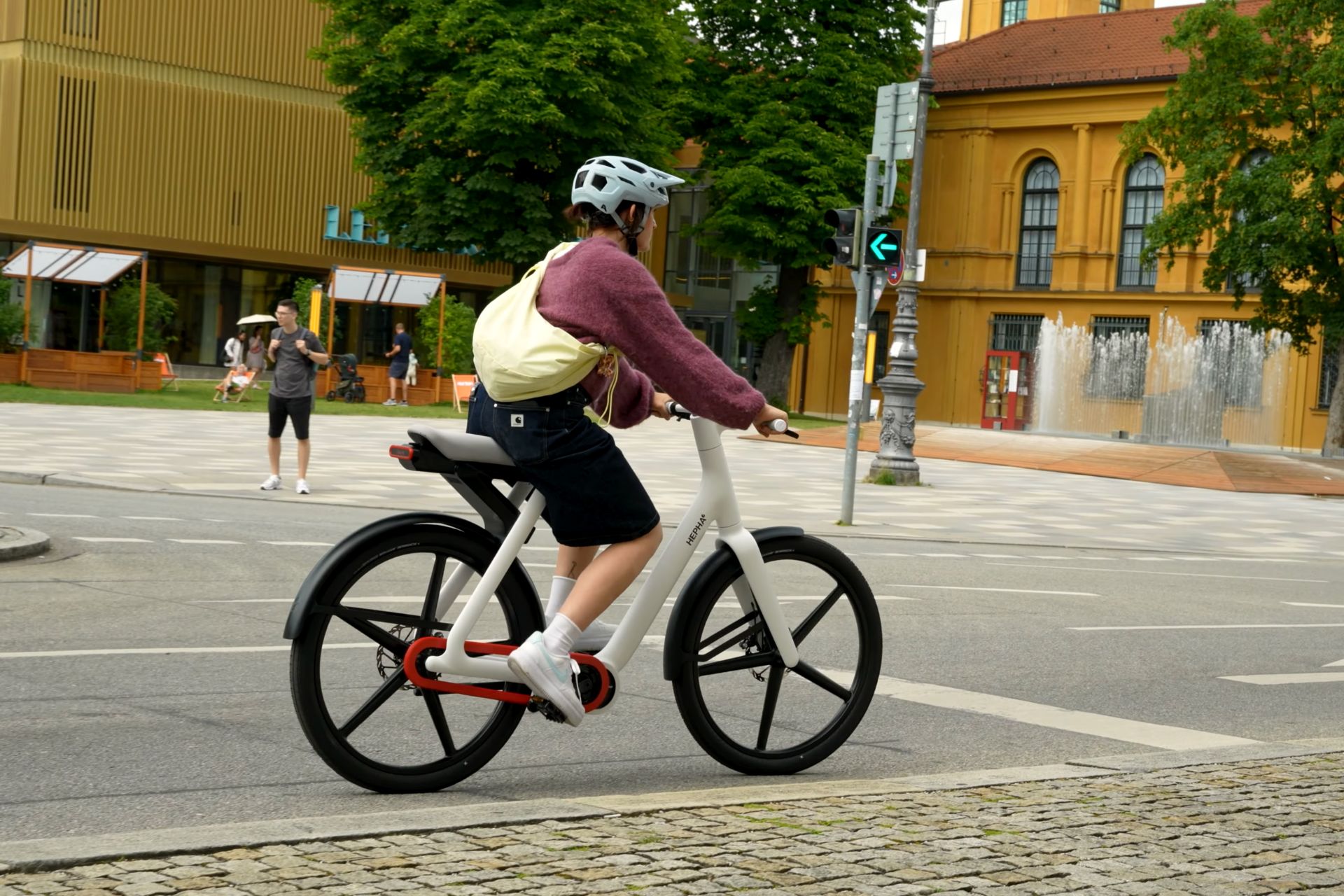
The rideable Urban X shown at Eurobike was equipped with two brake levers. They’re available when stronger or emergency braking is required. The radical part is that normal slowing can potentially be handled largely through the pedals and electric drive system.
Braking also puts some energy back into the battery
There is another benefit to using the electric motor for deceleration: regenerative braking.
Traditional bicycle disc brakes slow a bike primarily by converting its kinetic energy into heat through friction. With regeneration, the electric drive can instead recover a portion of the bike’s kinetic energy during deceleration.
The Urban X’s mid-drive system is designed to use this recovered energy while slowing, helping recharge the battery. HEPHA also says relying on electrical braking for a significant portion of everyday deceleration can reduce wear on the mechanical brakes.
This is particularly relevant to the environment for which the Urban X was designed. Urban riding involves constant cycles of accelerating and slowing, giving the regenerative system repeated opportunities to recover some energy.
It doesn’t make the bike self-charging, of course, nor does it create unlimited range. But it could make stop-and-go riding somewhat more energy efficient while reducing how frequently the conventional brakes are used.
Charging to 80% in 15 minutes
HEPHA is also using the Urban X to rethink what happens when the bike isn’t moving.
The concept features an onboard charger and an ultra-fast charging system that HEPHA says can bring the battery to 80% charge in approximately 15 minutes.
Instead of requiring riders to carry a separate charger, the charging hardware is stored with the bike. HEPHA envisions riders plugging into ordinary outdoor electrical outlets, including charging points that could potentially be installed outside shops and other businesses.
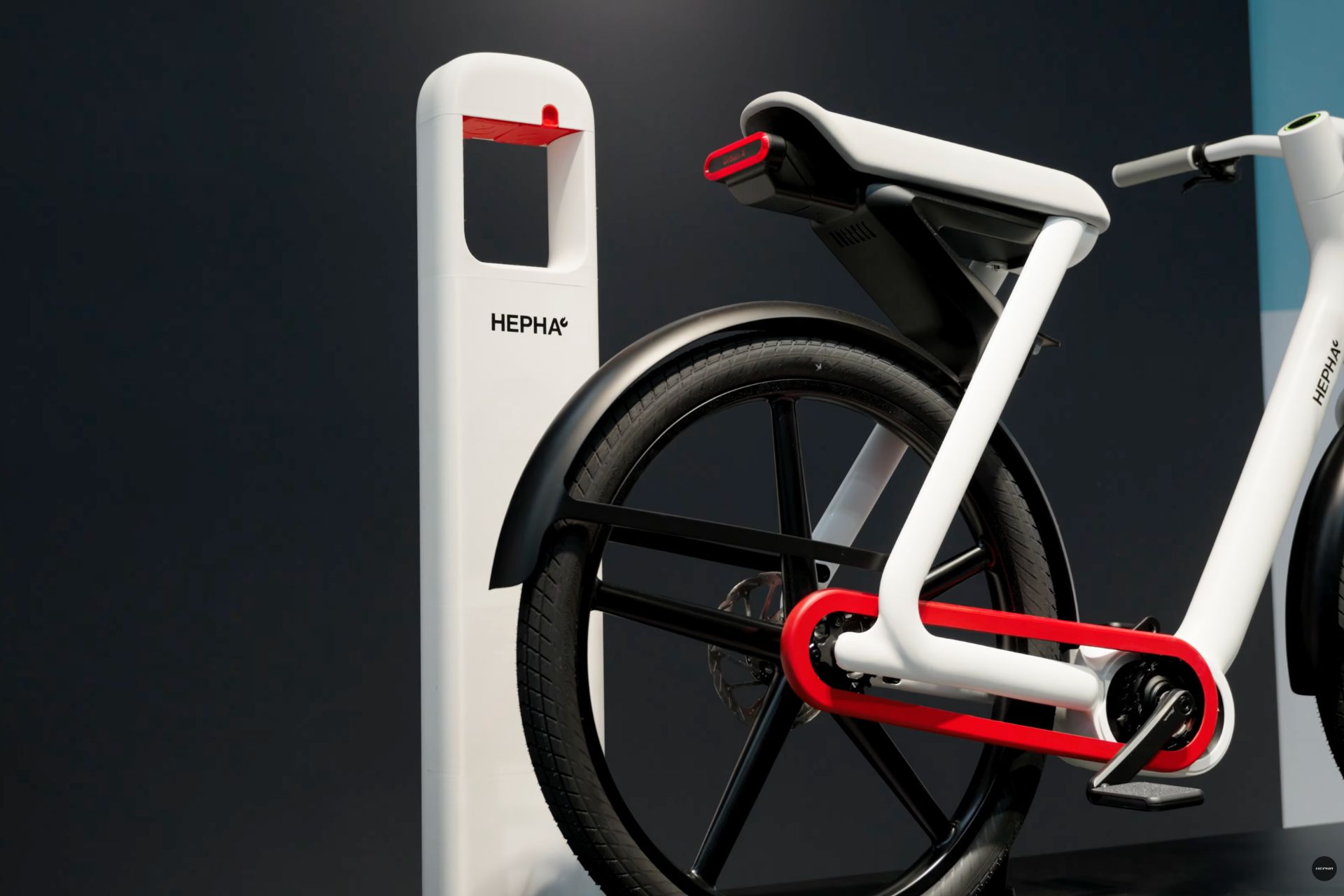
That could make a short shopping stop long enough to substantially replenish the battery.
It’s also worth putting HEPHA’s “no range limit” messaging into context. The Urban X remains a battery-powered e-bike, so its electrical range is not literally unlimited. The company’s broader argument is that combining energy recovery with very fast, readily accessible charging could make range much less of an everyday concern.
It can scream for help if someone tries to steal it
HEPHA has also focused on another problem that becomes particularly important when an expensive e-bike is used as everyday urban transportation: theft.
The Urban X concept incorporates a multi-layered security system.
Its 2Lock immobilizer is integrated into the hub and locks both the hub and axle. HEPHA also describes a WatchMode that locks the bike’s drive components so the bicycle can’t simply be ridden away normally.
GPS tracking adds another layer, allowing the bike’s location to be monitored.
But the strangest part may be the alarm.
Rather than relying solely on a conventional siren, HEPHA says the system can issue warnings using a human voice and even “scream for help” during a suspected theft attempt, potentially drawing much more attention to whoever is trying to take it.
HEPHA is also proposing an optional replacement service under which a stolen bike could be replaced.
Even the seat has been considered from an urban-security perspective. The Urban X uses a removable bench-style seat that can be taken with the rider, protecting it from theft, vandalism and bad weather.
Designed around stopping as much as riding
There are some less dramatic ideas hidden in the design too.
The Urban X uses a relatively low seating position intended to make it easier for riders to put their feet securely on the ground when stopped at traffic lights. HEPHA says its motor-control algorithm compensates for the biomechanical disadvantages that would normally come from the lower riding position.
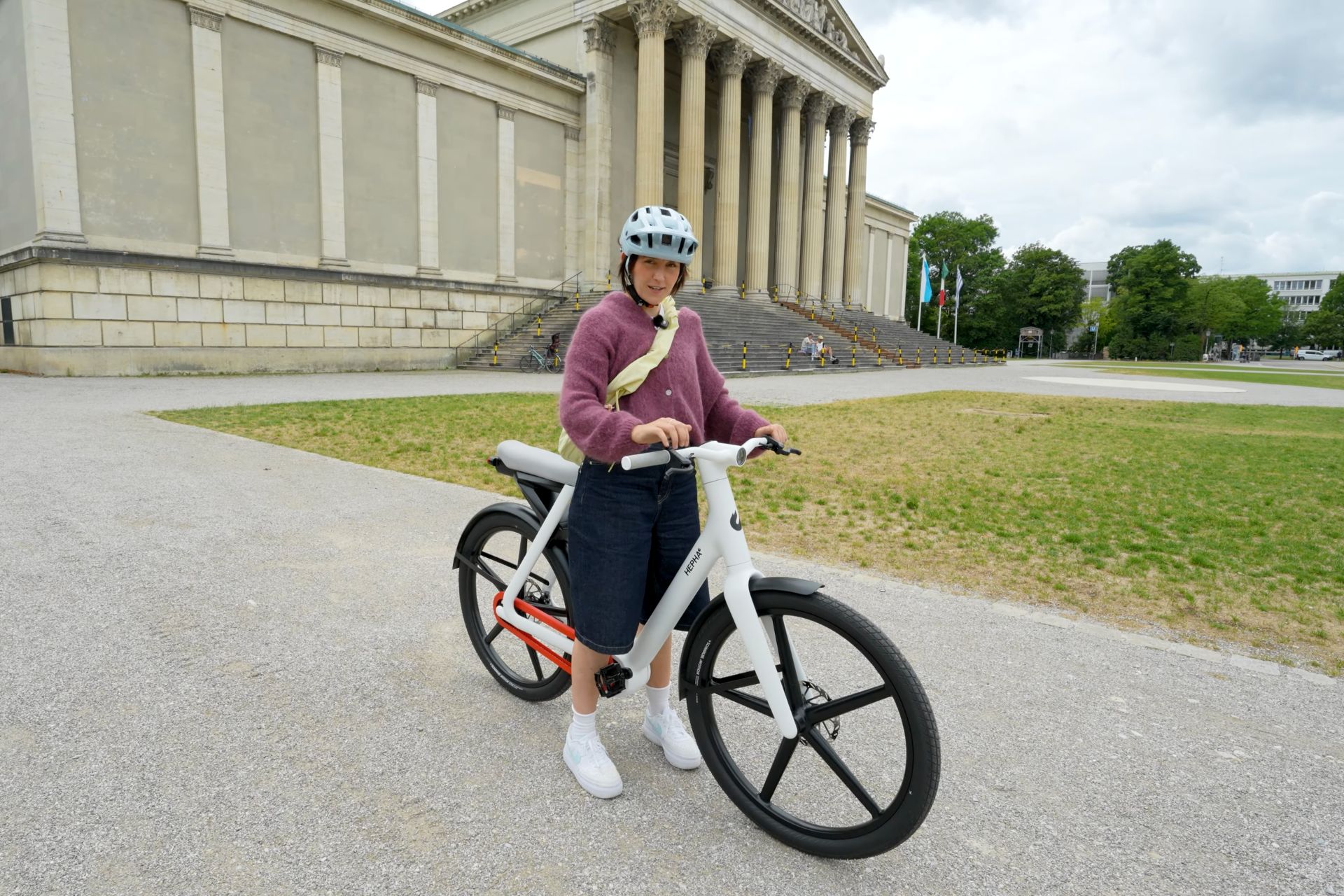
That illustrates the broader thinking behind the project.
Rather than designing an e-bike primarily around speed, power or recreational riding and then adapting it for city use, HEPHA has tried to design the Urban X around the mundane realities of urban transportation: traffic lights, frequent stops, parking, charging and theft.
It’s still a concept – for now
For all its futuristic technology, you can’t walk into a HEPHA dealer and buy an Urban X yet.
The bike made its world premiere at Eurobike on June 24, 2026, and remains a concept. HEPHA says it could begin phasing the Urban X into the market by 2028, meaning the final production version – assuming it reaches production – could change substantially from the prototype being demonstrated today.
That’s particularly relevant with technologies such as pedal-controlled regenerative braking. What feels intuitive to one rider could require adjustment for another, and the behavior of the system will ultimately have to work predictably across the huge variety of situations encountered in real-world city traffic.
One Eurobike test rider, for example, noted that having regenerative braking automatically engage when they stopped pedaling felt unusual while entering a turn – a situation where an experienced cyclist might normally coast without wanting to slow down. HEPHA reportedly indicated that this behavior could be adjustable.
That’s exactly what concept bikes are useful for: putting unconventional ideas into riders’ hands before those ideas become finished consumer products.
And the Urban X certainly has unconventional ideas.
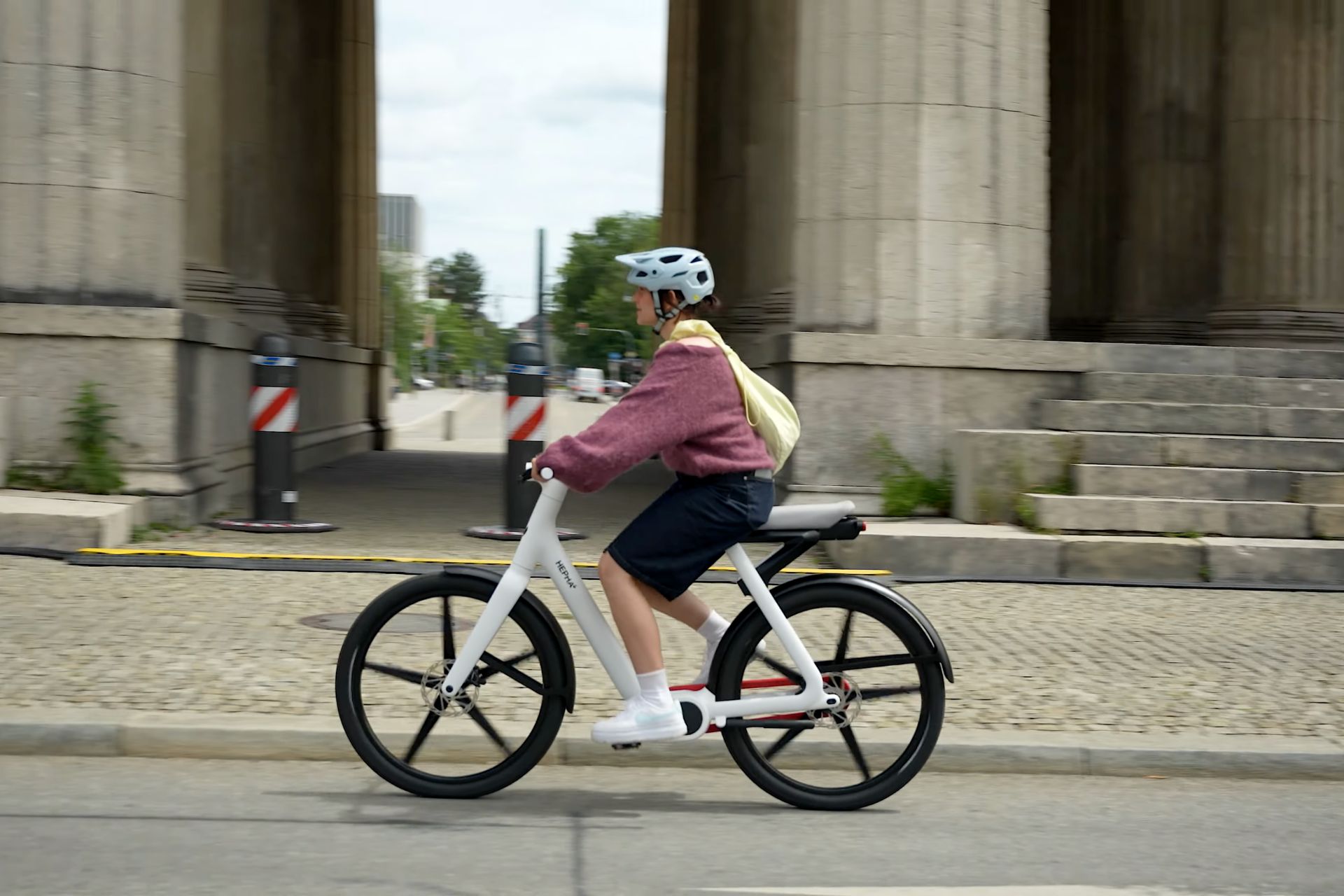
HEPHA isn’t trying merely to build another e-bike with a bigger battery or more powerful motor. It’s questioning why an electrically powered bicycle needs to retain every control inherited from a mechanical bicycle in the first place.
Automatic shifting, pedal-controlled regenerative braking, ultra-fast charging and integrated theft protection all serve the same objective: remove as many little complications as possible.
If the concept eventually makes it to production, the most futuristic thing about the Urban X may therefore not be how it looks.
It may be how little you have to think about operating it.
Source: HEPHA