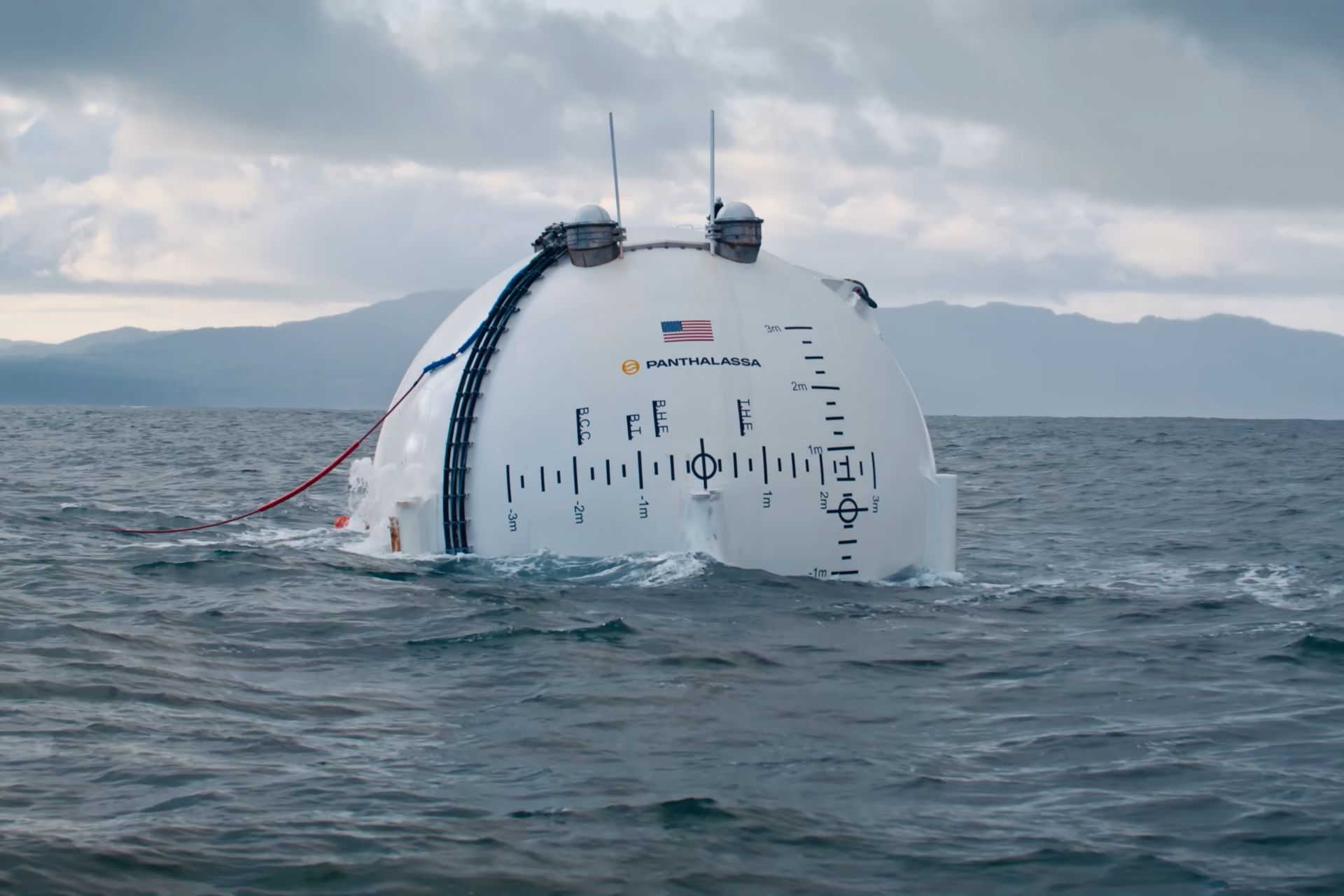
Artificial intelligence is creating an enormous appetite for electricity. While technology companies explore nuclear power, expanded renewable-energy projects and even data centers in space, an Oregon-based startup believes part of the answer could be found far out at sea.
Panthalassa is developing a floating platform called Ocean-3 that would generate electricity from ocean waves and use that power to run AI computing onboard. Rather than transmitting electricity to shore, the proposed system would place the computers directly alongside the energy source.
The result would be a network of autonomous, wave-powered computing platforms operating in deep ocean waters without permanent power cables or connections to the seabed.
Turning wave movement into electricity
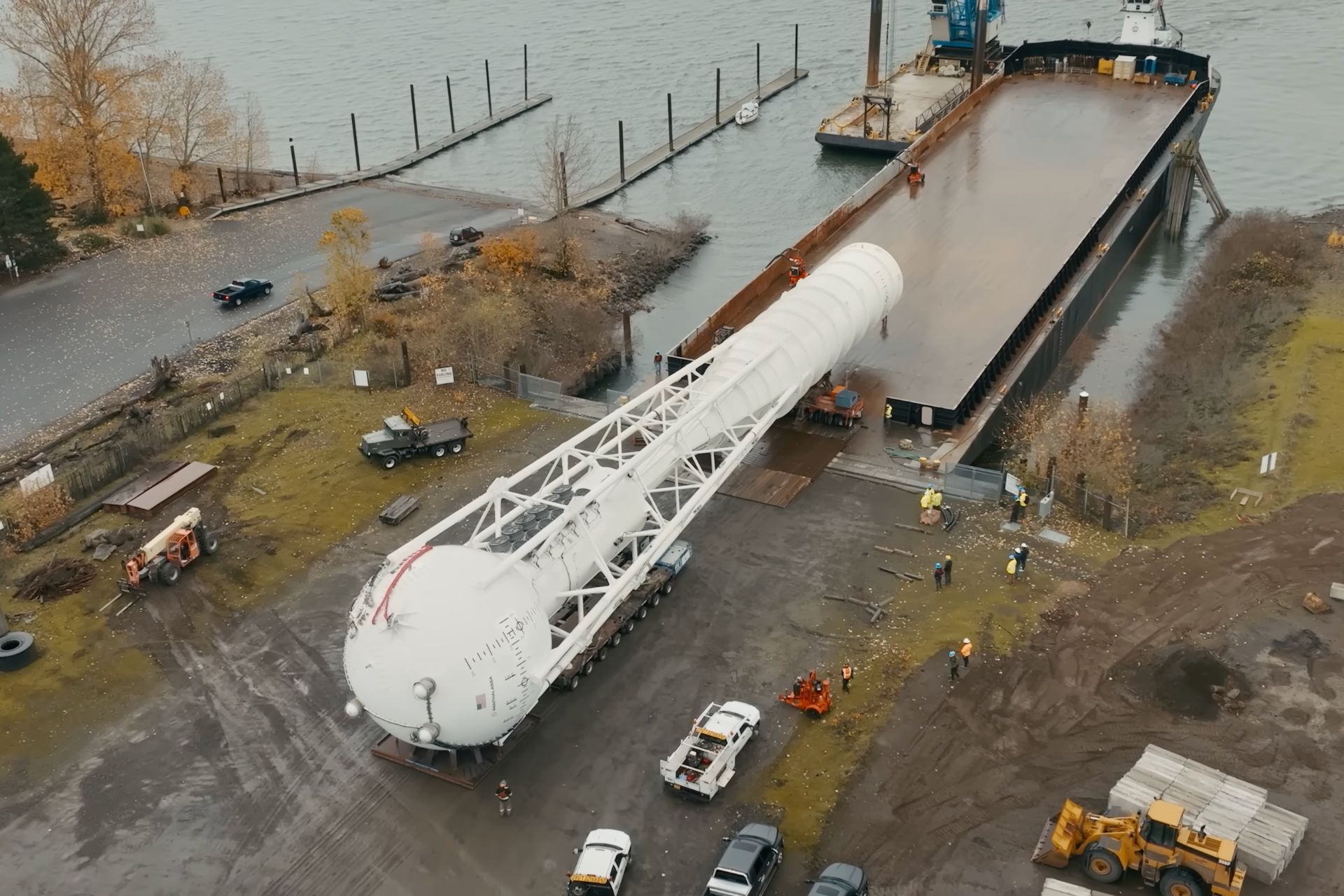
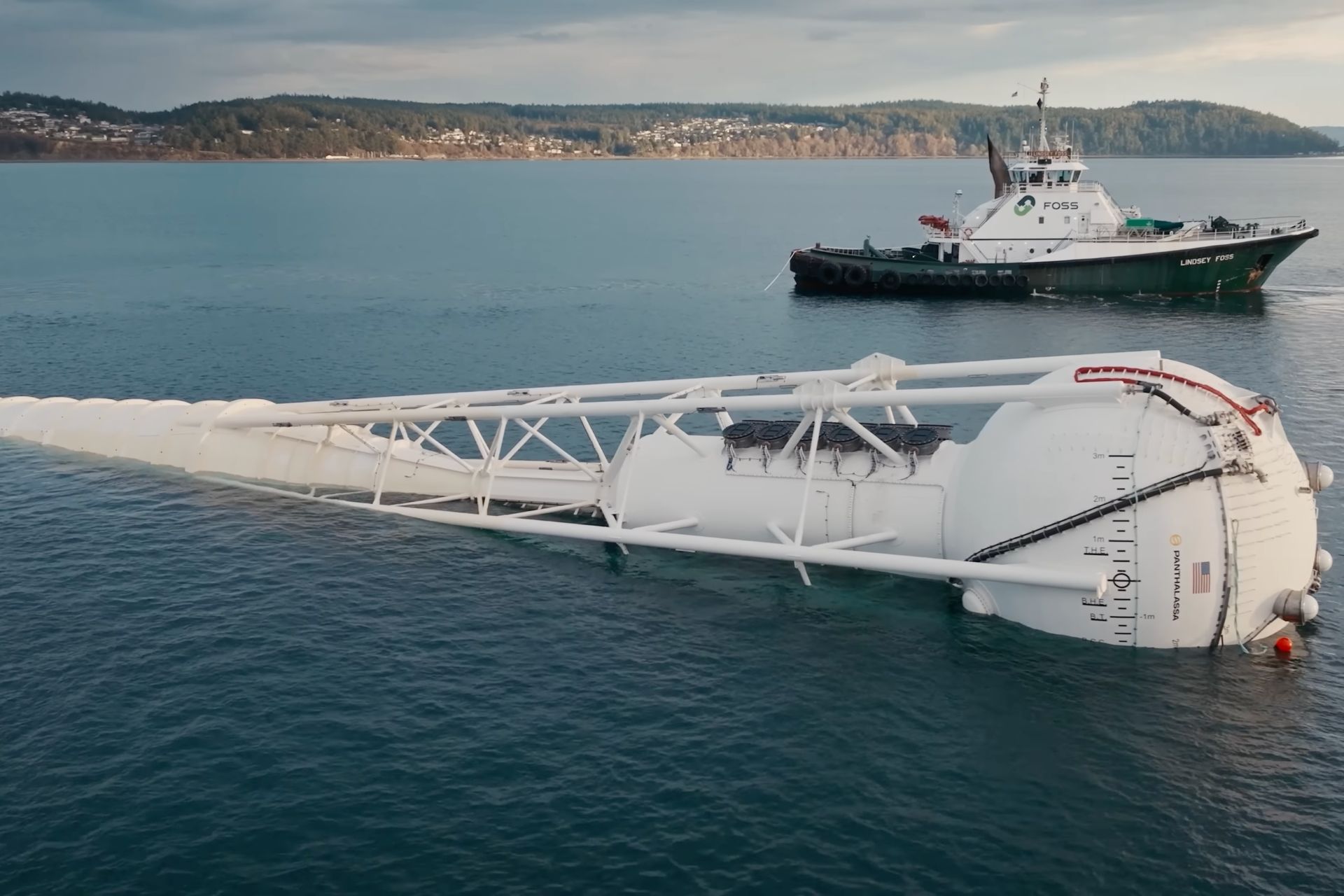
Ocean-3 is designed around a buoyant upper section connected to a long structure extending beneath the surface. As waves pass, the platform moves up and down while the deeper water around it moves comparatively little.
This relative movement forces water through an internal hydraulic system. Turbines convert the resulting flow into mechanical energy and then electricity, which can be supplied directly to computing equipment carried by the platform.
Placing computers at the point where the electricity is generated could address one of the biggest obstacles facing offshore wave energy: transmission.
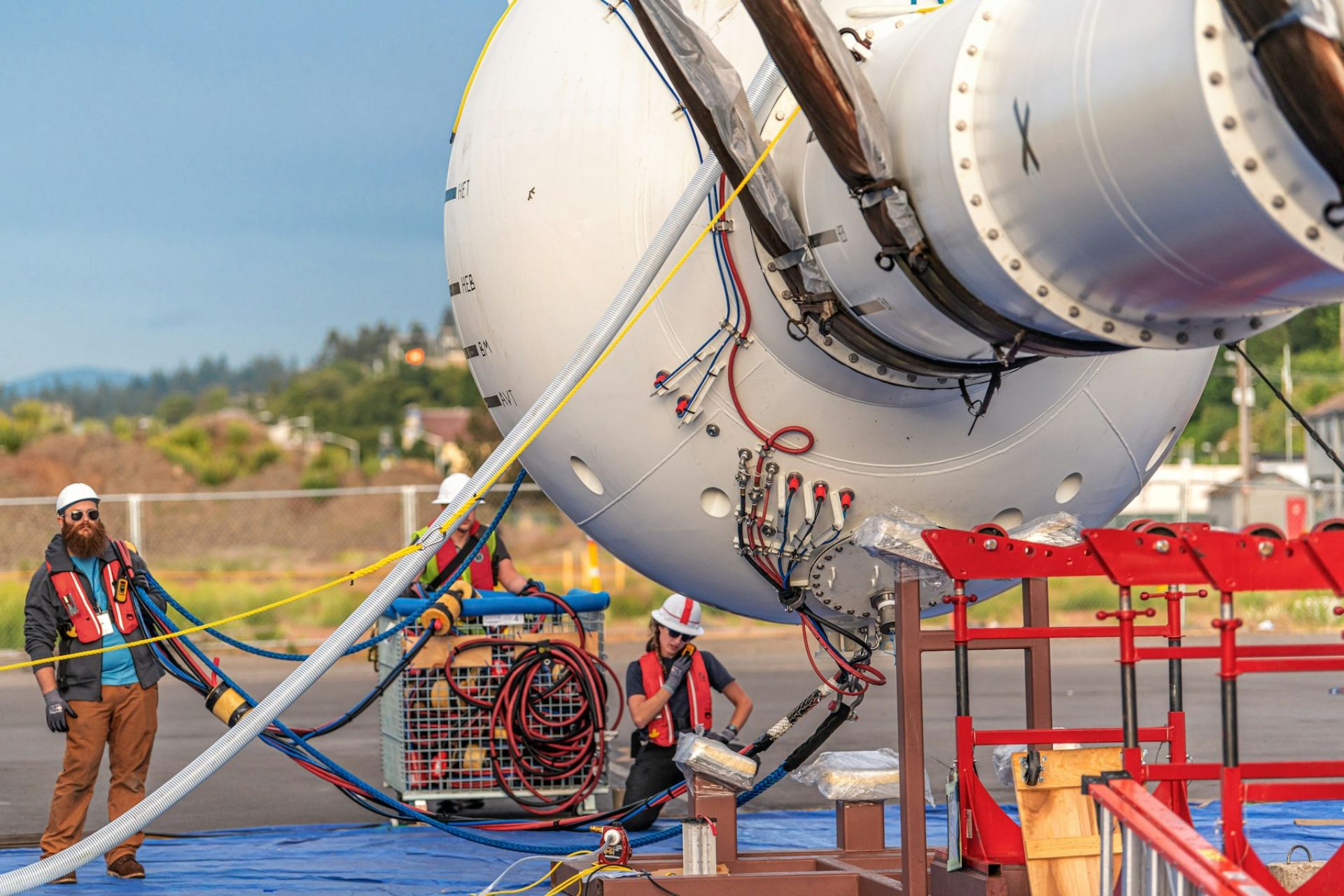
Wave resources are generally strongest and most consistent far from shore, but transporting electricity over those distances requires expensive underwater cables and other infrastructure. Panthalassa’s concept avoids that requirement by using the electricity at sea and transmitting only digital information.
AI inference performed at sea
The Ocean-3 platforms are intended primarily for AI inference—the process of running already-trained AI models to generate answers, classifications or other results.
Requests would be sent to computers aboard the platform using satellite communications. After the onboard hardware processes them, the resulting information would be transmitted back to users on land. Unlike electricity transmission, this would not require a physical cable running between the platform and the mainland.
Panthalassa also plans to use the surrounding seawater to help cool its sealed computing equipment. Cooling represents a major part of a conventional data center’s energy and infrastructure requirements. Access to cold ocean water could help remove heat without depending on the same cooling systems used by facilities on land.
That does not mean seawater would flow directly across the electronics. Reports describe the computing hardware as being installed inside sealed containers positioned below the ocean’s surface, allowing heat to be transferred to the surrounding water while protecting the equipment.
Designed to operate without anchors
Ocean-3 is not expected to be permanently anchored or connected to the seabed. Each node is being designed with its own propulsion, steering, navigation and station-keeping capabilities.
These systems would allow a platform to maintain its position, correct its course if it begins drifting and potentially operate as part of a distributed offshore fleet. Eliminating permanent moorings and undersea power cables could also make the platforms easier to relocate or recover for maintenance.
However, long-term autonomous operation in deep water remains a major engineering challenge. Equipment must survive storms, corrosion, saltwater exposure and powerful mechanical forces while operating for extended periods with limited human intervention.
Earlier prototypes tested the underlying technology
Panthalassa has been developing its ocean-energy technology for nearly a decade. The company was founded in 2016 and has tested earlier systems known as Ocean-1, Ocean-2 and Wavehopper.
Ocean-1 and Ocean-2 focused primarily on wave-energy generation and marine operation rather than carrying a complete offshore data center. According to GeekWire, these earlier prototypes participated in sea trials beginning in 2021 and 2024.
Ocean-3 represents the next and more ambitious step: integrating power generation, computing, satellite communication, navigation and cooling within one autonomous platform.
$140 million to advance Ocean-3
On May 4, 2026, Panthalassa announced that it had raised $140 million in Series B financing led by investor Peter Thiel.
The round also included investors such as John Doerr, TIME Ventures, SciFi Ventures, Hanwha, Fortescue Ventures and Super Micro Computer. Panthalassa said the funding would help complete a pilot manufacturing facility near Portland, Oregon, and accelerate the production and deployment of Ocean-3 nodes.
The company plans to deploy a pilot series in the North Pacific off Oregon and Washington during 2026. According to the Financial Times, Panthalassa is targeting initial commercial deployments in 2027.
Those dates remain company targets rather than proof that the technology is commercially ready.
An ambitious concept still awaiting validation
Panthalassa’s approach could potentially avoid some of the land, grid, power-transmission and cooling constraints affecting conventional data centers. It also gives wave energy a direct customer located alongside the generator.
But Ocean-3 remains under development. As of August 2026, Panthalassa had not announced a completed commercial fleet or publicly demonstrated large-scale AI computing powered by its platforms at sea.
Its upcoming pilot deployments will therefore be crucial. They must show that Ocean-3 can generate dependable electricity, protect sensitive computing equipment, maintain satellite connectivity and survive harsh ocean conditions.
For now, floating AI data centers remain a promising but unproven vision—one that Panthalassa is preparing to test in the real world.