

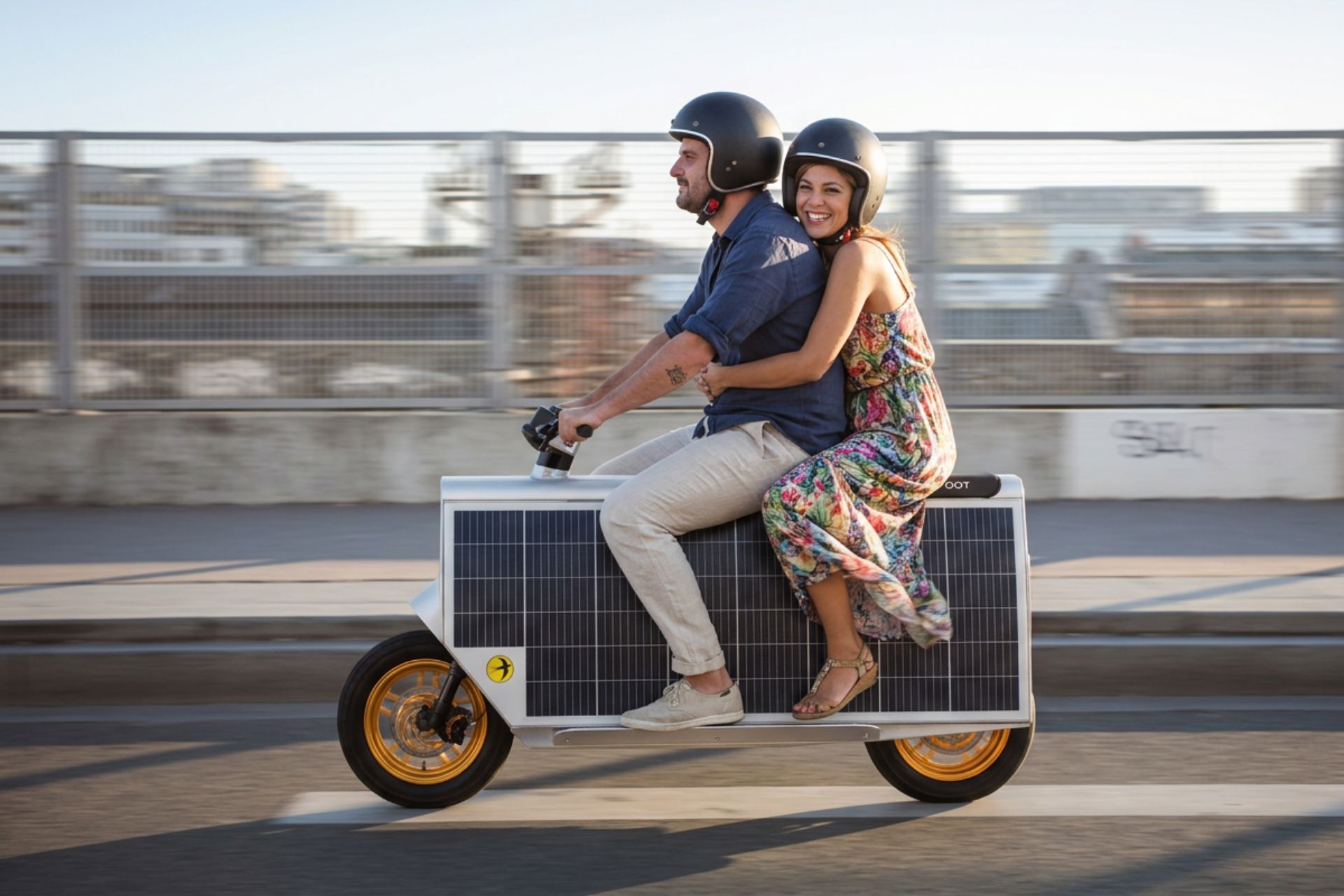
Electric scooters have become a common sight in cities, but most are designed for a single rider carrying little more than a backpack. Lightfoot takes a very different approach. Instead of focusing on speed or portability, it combines solar charging, generous cargo space, and everyday practicality into a micromobility vehicle that could handle many of the short trips people typically make by car.
Its appearance is impossible to ignore. Large solar panels form much of the scooter’s side bodywork, giving it a look unlike almost anything else on the road. But these panels aren’t there simply for style—they help recharge the battery whenever the scooter is parked or being ridden in the sun, reducing how often owners need to plug it into the wall.
Built for everyday errands
Lightfoot isn’t trying to replace a motorcycle or compete with high-performance electric scooters. Instead, it’s designed around the trips many people make every day—picking up groceries, grabbing coffee, visiting friends, commuting locally, or running quick errands around town.
The scooter features an enclosed cargo compartment built into the center of the vehicle, providing approximately 1.6 cubic feet (45 liters) of storage. That’s enough room for grocery bags, a backpack, work gear, or other everyday essentials, making it considerably more practical than most electric scooters.
The long seat can also accommodate a passenger, further expanding its usefulness for short urban journeys.
Solar panels that do more than look futuristic
Perhaps the most distinctive feature is the integrated solar array. Instead of placing solar panels on a separate roof or trailer, Lightfoot incorporates them directly into its body panels.
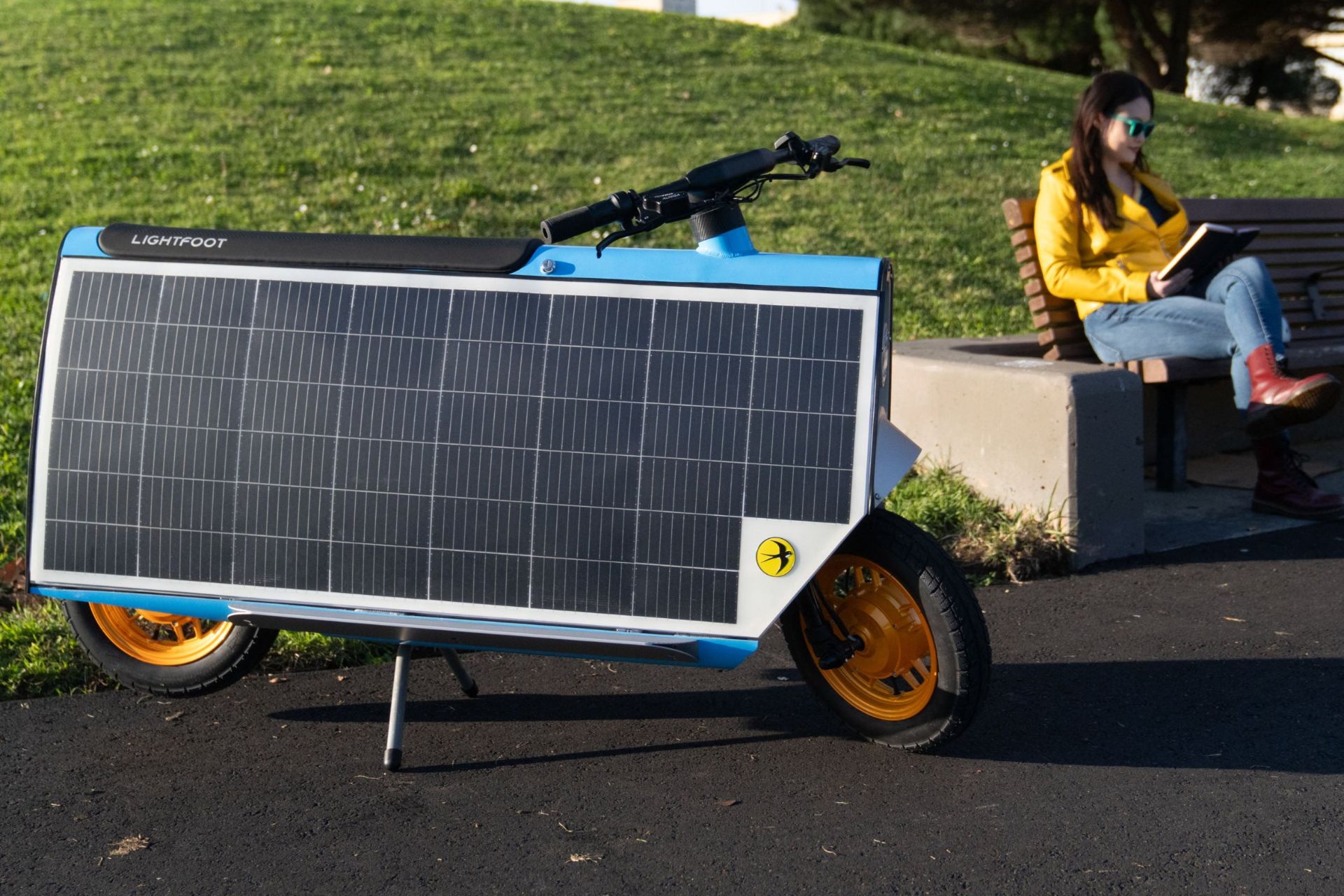
The company says the system can provide up to 18 miles (29 km) of additional range under favorable conditions. That doesn’t mean the scooter runs indefinitely on sunshine alone, but it can help offset energy consumption and reduce the number of times owners need to recharge from the electrical grid.
For people who park outdoors during the day, those extra miles could make a noticeable difference over time.
Performance suited to urban travel
Lightfoot is intentionally configured for neighborhood streets and city environments rather than highway riding.
It has a top speed of just under 20 mph (32 km/h) and offers a battery-powered range of up to 37 miles (60 km) before factoring in any solar contribution. With the maximum claimed solar range extension added, many daily commutes and errands could be completed without frequent charging.
Power comes from two brushless hub motors, one in each wheel. Each motor produces 750 watts of nominal power and can reach 1,000 watts at peak output, while delivering 45 Nm of peak torque per wheel. The scooter also incorporates regenerative braking, helping recover a portion of energy during deceleration.
Battery and charging
The scooter is equipped with a Lightfoot-designed 1.5-kWh lithium-ion battery rated at 54 volts and 30 amp-hours, using Samsung cells. According to the specifications, the battery carries IP67 protection and meets UL2722 and UN 38.3 certification standards.
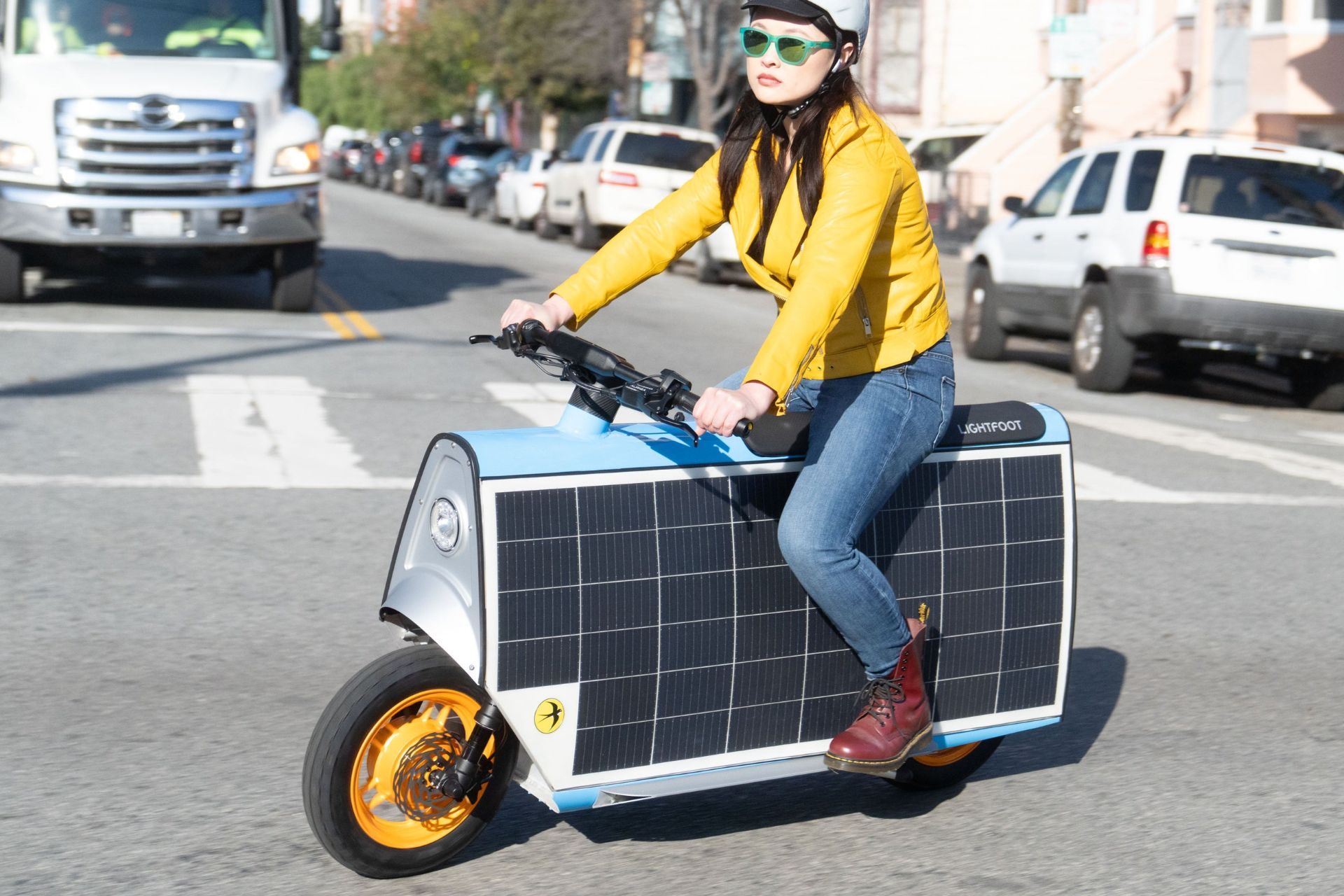
When it is time to plug in, the onboard 230-watt charger can recharge the battery to 80% in approximately 90 minutes, making it relatively easy to top up between trips.
More than just a scooter
Beyond the drivetrain, Lightfoot includes several features typically found on larger electric vehicles.
A 2.8-inch waterproof touchscreen display provides information such as battery level, speed, lighting status, and other vehicle data. Lighting consists of a 2,000-lumen front headlight with daytime and nighttime modes, while the rear lights are accelerometer-activated to improve visibility during braking. There’s also a 120 dBa horn for alerting other road users.
The vehicle itself weighs approximately 137 pounds (62 kg)—heavier than a typical electric scooter, but understandable considering its battery size, solar panels, cargo compartment, and dual-motor setup.
A different vision of micromobility
Many electric scooters prioritize being lightweight and compact enough to carry indoors. Lightfoot takes the opposite approach by asking a different question: what if a scooter could realistically replace many of the trips that people currently make in a car?
Its generous storage, passenger seat, solar-assisted charging, and practical performance are all aimed at making everyday transportation simpler rather than faster.

Of course, the solar panels won’t eliminate the need for charging, and their contribution will depend on weather, sunlight, and how the scooter is used. Still, integrating solar generation directly into the vehicle is an intriguing approach that could reduce energy costs while making electric transportation even more convenient.
Pricing and availability
Lightfoot is currently available through the company’s website with a listed starting price of $4,995. Buyers can choose from multiple color options, and the company also offers a deposit-based preorder payment option.
Source: Lightfoot


