

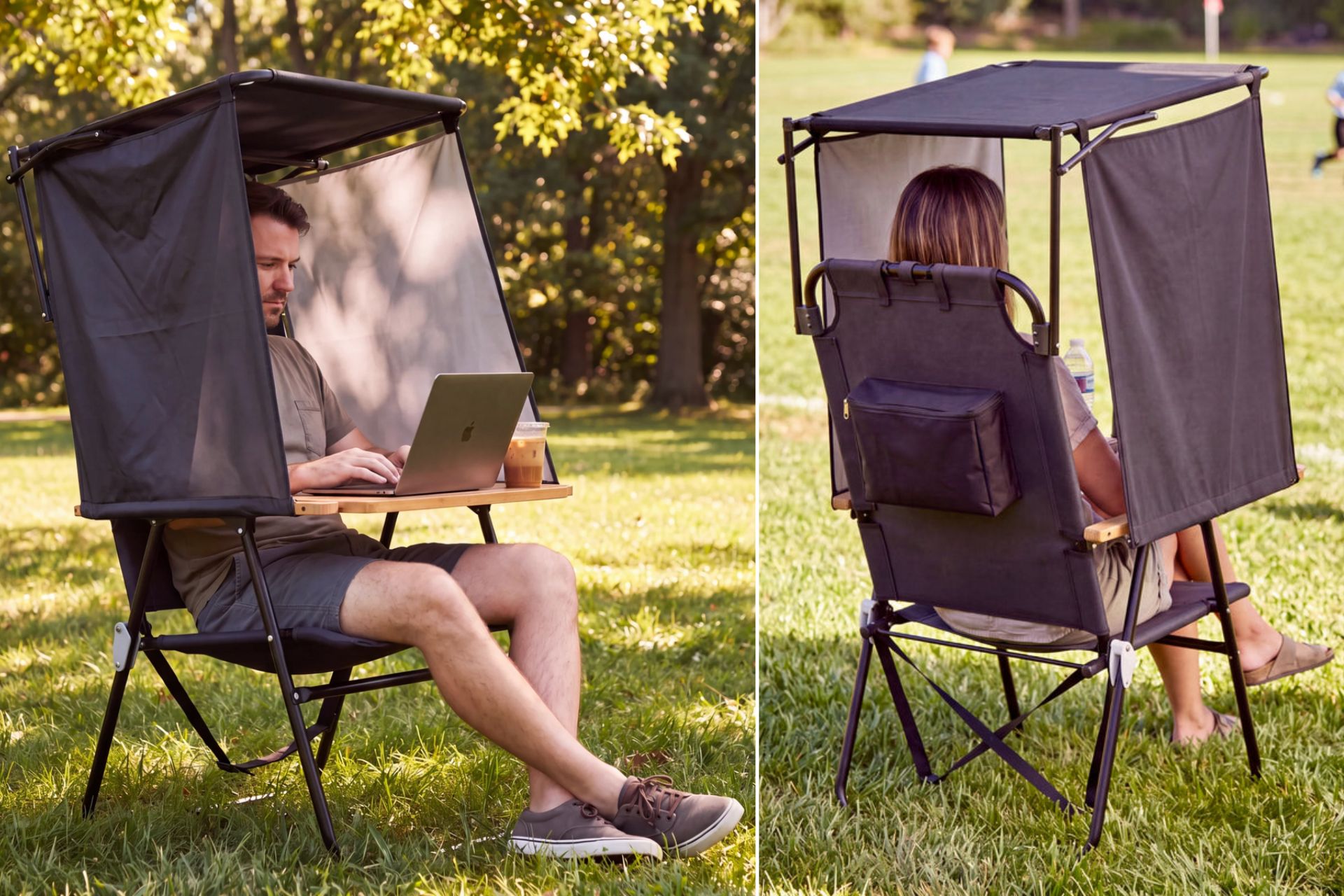
Working outside sounds appealing until sunlight washes out the laptop screen, the nearest table is nowhere near the shade and a folding chair leaves you balancing everything on your knees. NomaPod packages a seat, desk and adjustable canopy into one portable structure designed to make outdoor computer work considerably more practical.
The concept sits somewhere between a camping chair, a compact workstation and a personal cabana. Open the folding frame, raise the roof, arrange the side panels and swing the desk into position, and the user has a small shaded workspace for a laptop, tablet, notebook or meal.
A chair, desk and canopy in one folding frame
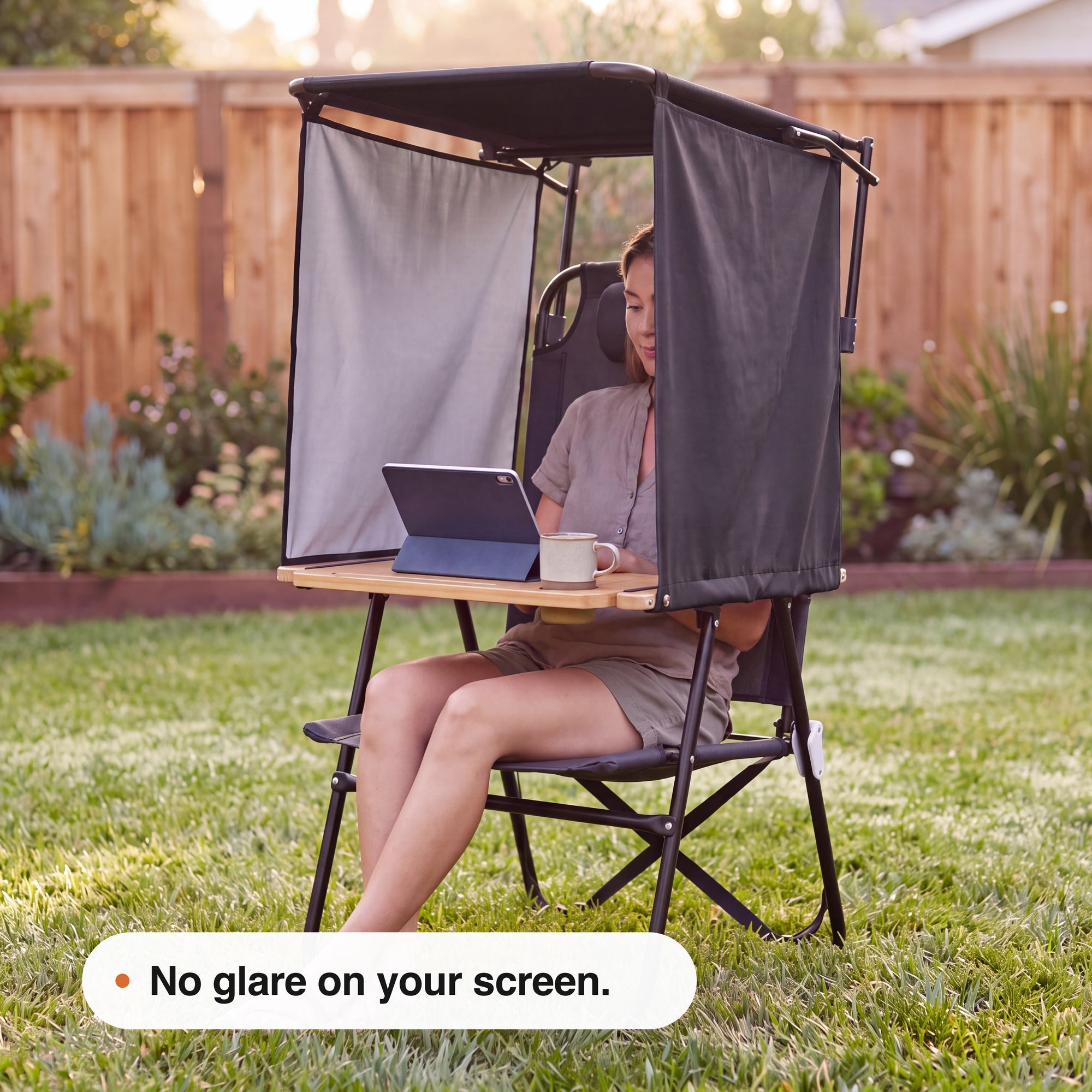
The workstation is built around an integrated folding chair. A rigid-looking desktop extends across the front, while a canopy covers the user from above and fabric panels provide shade on both sides. The result is a more enclosed setup than an ordinary canopy chair, with the desk forming a defined work surface rather than relying on a small cupholder or clip-on tray.
NomaPod says the workstation requires no tools and can be set up in about 20 seconds. Its suggested sequence is simple: unfold the frame and chair, lift the canopy into place, position the side panels and rotate the desktop forward.
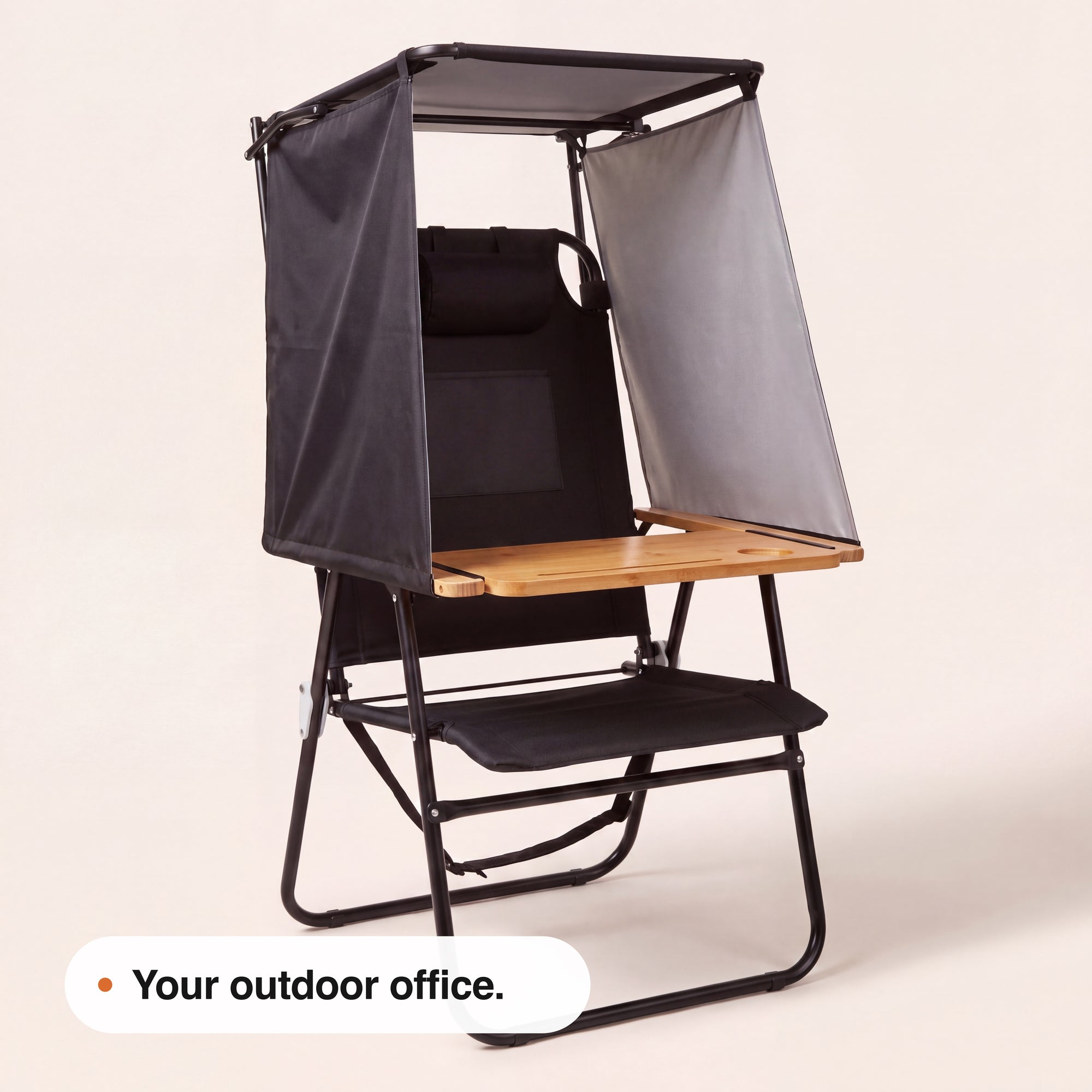
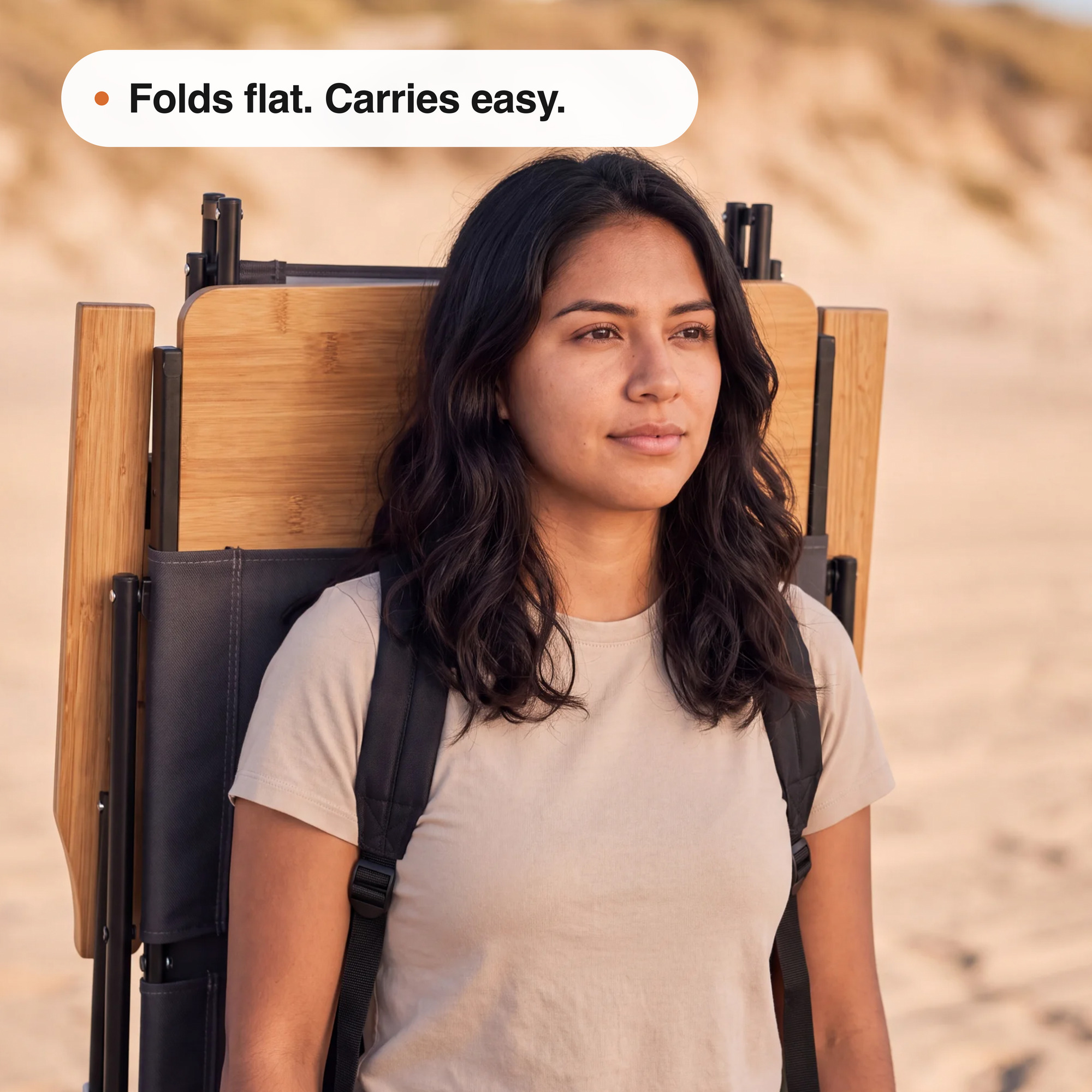
That speed claim should naturally vary with familiarity and conditions, but the design avoids separate poles, guy lines and a detached table. When the session is over, the components fold together and the unit can be carried with its integrated shoulder straps.
Designed to control glare as well as provide shade
The canopy fabric is advertised with a UPF 50 rating. Unlike a conventional overhead shade, the two adjustable side panels can be repositioned to respond to the sun’s changing angle. That can be useful during a long sports practice, a study session in the park or several hours of remote work in the backyard.
The panels may also make a laptop screen easier to see by reducing direct sunlight and some surrounding glare. They cannot eliminate every reflection, particularly when bright light enters through the open front or reflects from the ground, and the workstation should not be treated as complete protection from ultraviolet exposure. Sunscreen, suitable clothing and sensible breaks still matter outdoors.
The enclosure also offers a degree of visual separation. It is not a soundproof booth or a genuinely private office, but the roof and side panels can reduce peripheral distractions and create a clearer boundary around the work area.
A proper surface for laptops and everyday gear
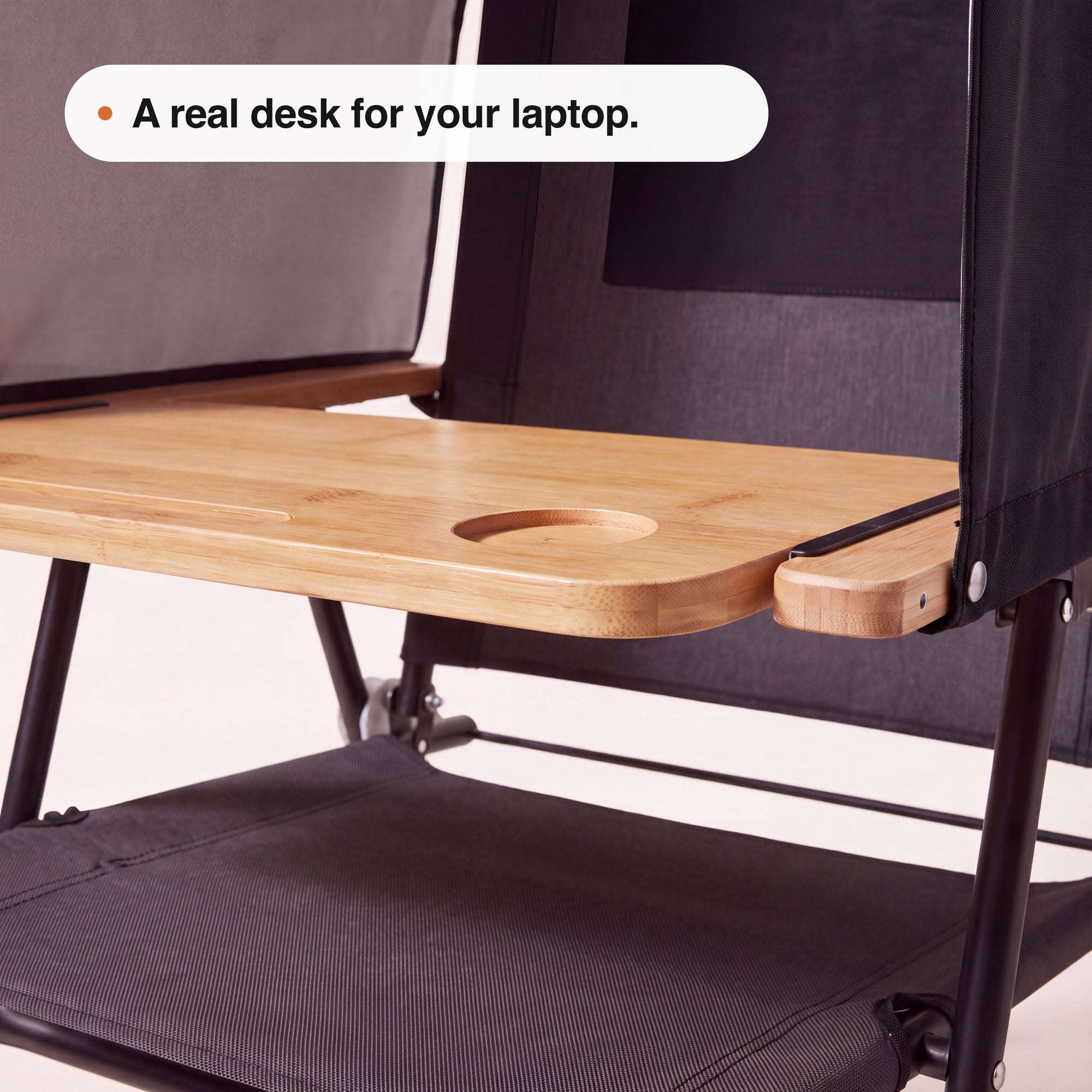
The built-in desk is the feature that separates NomaPod most clearly from a shaded camp chair. It appears large enough for a typical laptop with room for a phone, drink or small accessories, and includes a circular cup recess. The company specifies a maximum desk load of 15 lb (6.8 kg), while the seat is rated to support up to 300 lb (136 kg).
Those limits make the surface suitable for ordinary personal electronics and light work materials, not heavy tools or someone leaning their full weight on it. NomaPod does not currently publish detailed desktop measurements, overall dimensions, folded dimensions or the product’s total weight on its product page. Buyers who need to fit it into a particular vehicle, doorway or storage space should request those figures before ordering.
There is no integrated battery, charging system, fan or lighting. Users working for long periods will therefore need their own device power and any other electronic accessories. That simplicity may be an advantage for durability, but “outdoor office” describes the physical workspace rather than an electronically equipped mobile workstation.
Portable, although not pocket-sized
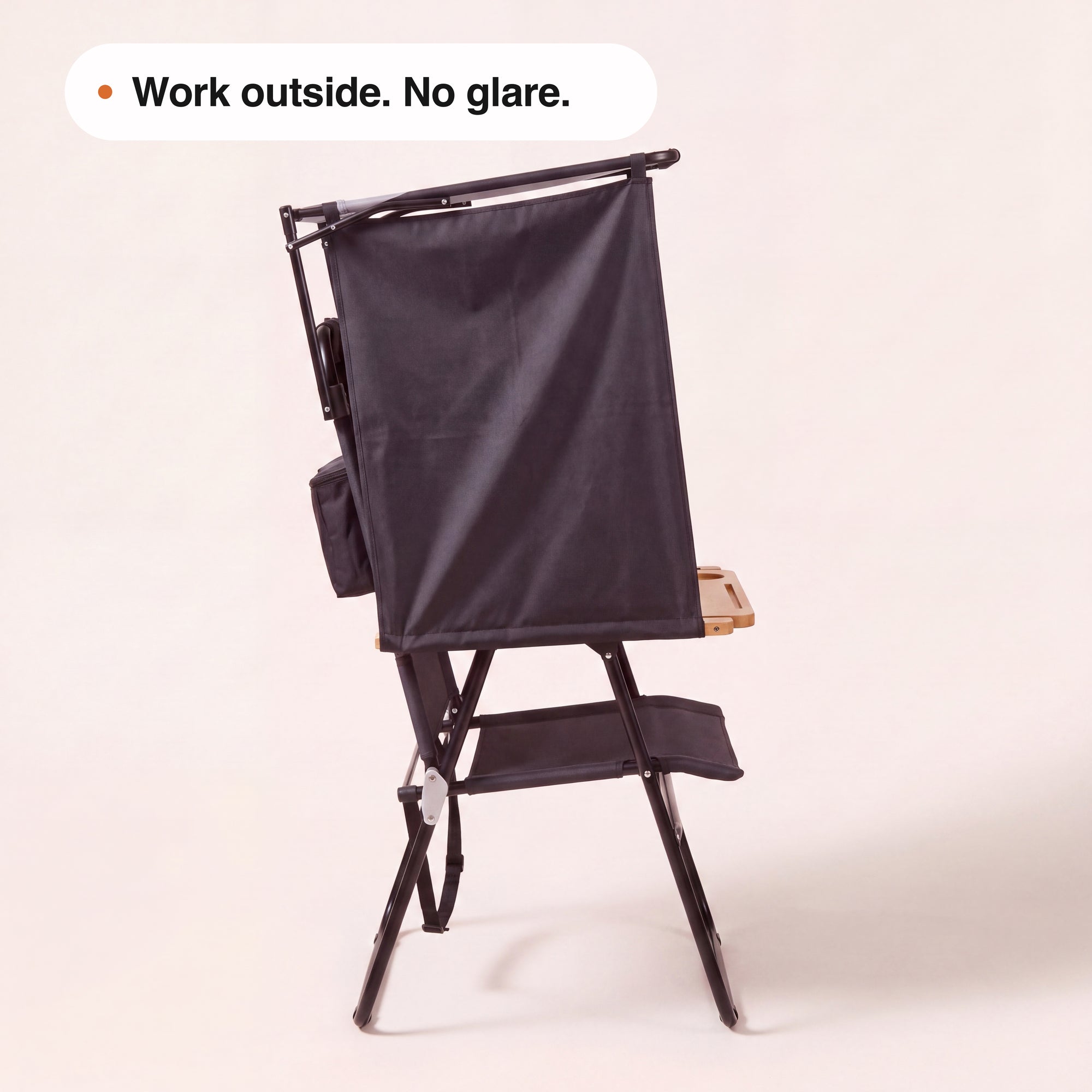
NomaPod folds into a relatively flat package, and the official imagery shows it being carried vertically on the back using shoulder straps. This gives it an advantage over transporting a separate chair, table and shade shelter, especially when walking from a parking lot to a beach, park or sports field.
Exactly how comfortable that carry will be depends heavily on the missing weight and folded-size specifications. “Portable” does not necessarily mean suitable for a long hike, and the broad frame will occupy more space than a conventional bag-style camping chair. The carrying arrangement seems better suited to short trips between a vehicle and the intended setup location.
Storage for the removable shade panels is integrated into the back of the chair. Keeping the pieces together should reduce the chance that a panel is left at home and helps the product remain a self-contained unit when folded.
Where it could be useful
The obvious audience includes remote workers who occasionally want to move beyond the patio table, but the design has broader possibilities. Parents can use it while waiting through outdoor practices and tournaments; students can create a shaded reading station; artists and writers gain a ready-made surface; and travelers can set up a more structured base at a campsite or day-use area.
It could also serve as a shaded place for eating, gaming or watching media. However, the product is not marketed as medical equipment, and anyone buying it for a disability or a specific ergonomic requirement should confirm seat height, desk height, entry clearance and support characteristics with the company.
The open-front configuration preserves airflow and visibility but leaves the user exposed to low-angle sunlight, wind-driven rain and blowing dust from that direction. NomaPod’s terms instruct users to place it on stable, level ground and not deploy it in high winds or severe weather. The company does not publish a wind rating or waterproof rating, so this is best understood as a fair-weather shade workstation rather than an all-season shelter.
Price, shipping and returns
NomaPod is currently listed at $249.99. It costs more than most individual folding chairs or portable laptop tables, but the relevant comparison is the combined cost and inconvenience of buying and carrying a chair, desk and shade structure separately. Its value will depend on how often those three functions are needed in the same place.
The product is being offered as a preorder, with new orders expected to ship in approximately 10–12 weeks. The company currently offers free standard shipping within the United States and says it does not ship to PO boxes, freight forwarders or international destinations. Normal in-stock orders are described as requiring one to three business days for processing and another three to eight business days in transit.
Returns can be requested within 30 days of delivery, provided the product is unused, in its original condition and packaging, and accompanied by proof of purchase. Customers ordinarily pay return shipping. Damaged, defective or incorrect products should be reported within seven days with photographs; the company says qualifying cases will receive a replacement or a full refund including shipping.
No separate written product warranty is presented on the site at the time of writing, so buyers who consider warranty coverage important should ask for the applicable terms before placing an order.
A more convincing way to work outside
NomaPod addresses a familiar problem with a refreshingly direct combination of existing ideas. Instead of asking users to improvise an outdoor office from mismatched pieces, it folds the essentials into one carryable system: somewhere to sit, a stable work surface and adjustable shade.
Its appeal is easiest to understand for people who regularly spend hours beside playing fields, in parks or in sunny backyards. The absence of published dimensions and weight makes it harder to judge portability and fit from the website alone, but the integrated design is clever. If the production version proves comfortable to carry and sturdy in routine use, NomaPod could turn “working outside” from a pleasant idea into a genuinely usable option.
Source: NomaPod


