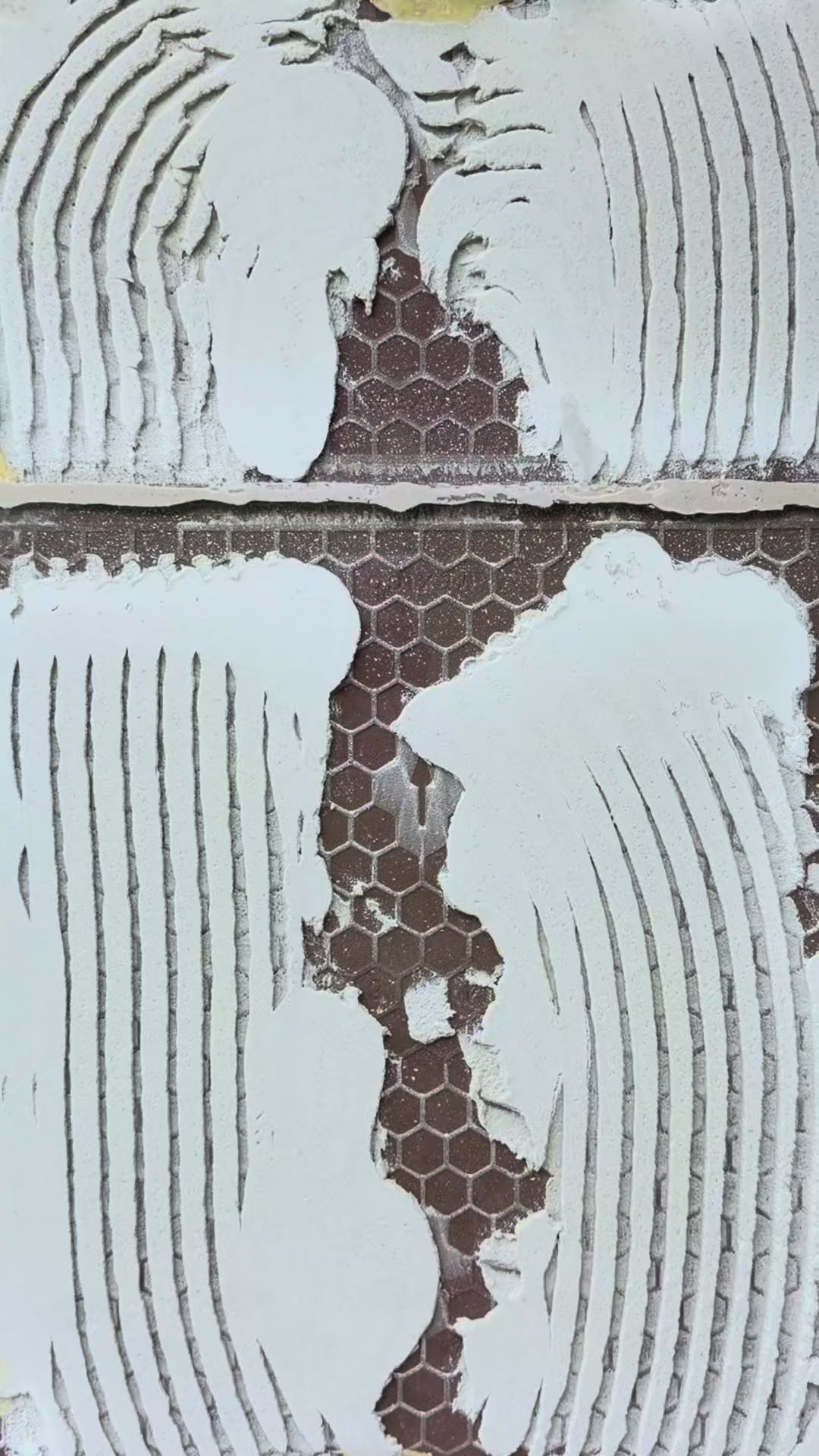
Hollow-sounding tiles can be more than an irritating noise. The sound may indicate an empty space between the flooring and the material meant to support it—an issue that can eventually contribute to movement, cracked grout or loose tiles.
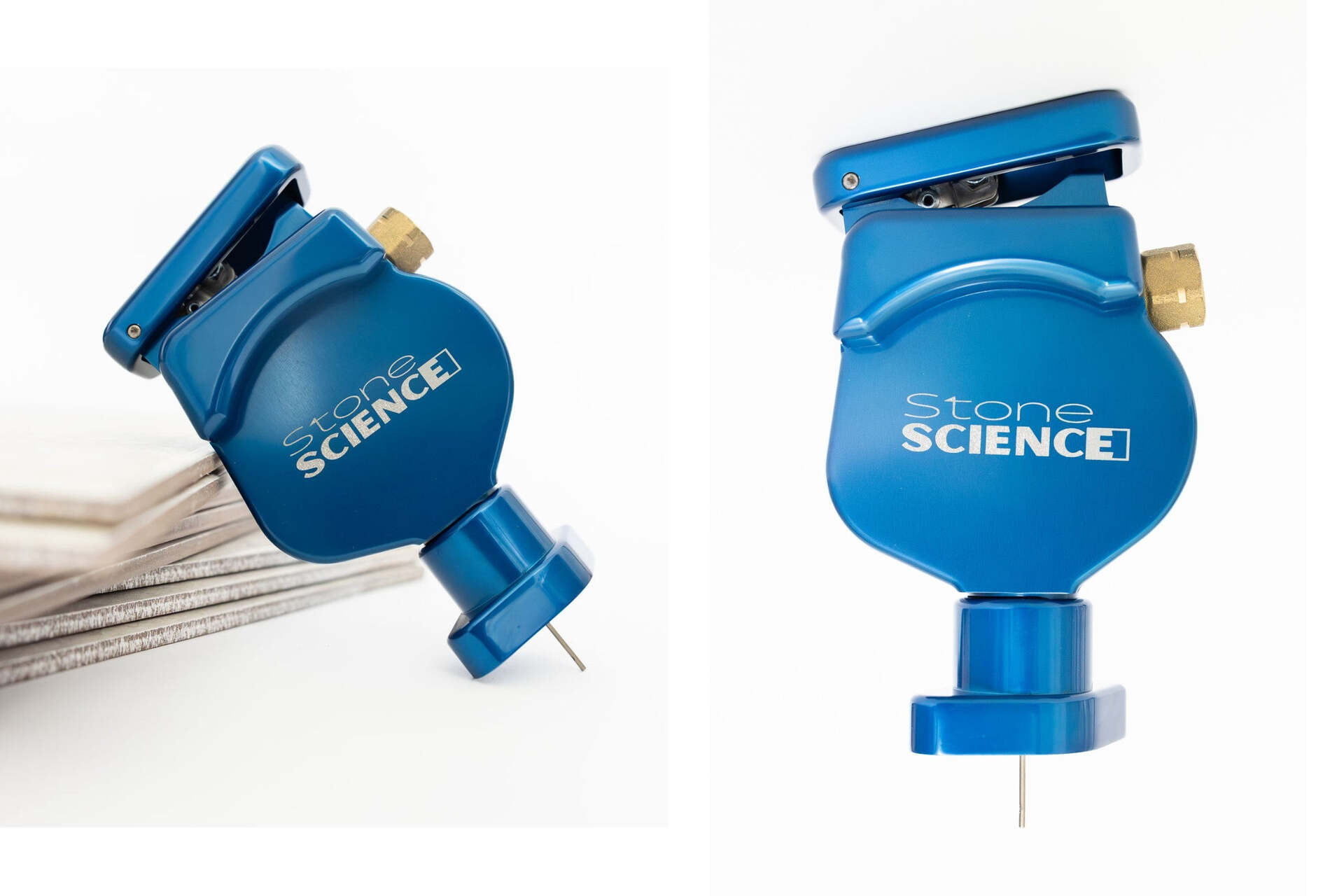
The usual repair can be disruptive: remove the affected flooring, prepare the surface and install replacement pieces. StoneScience has developed another option for suitable floors. Its Hollow/Loose Flooring Injection Tool delivers adhesive beneath the existing surface through a series of small drilled holes, potentially restoring the bond without a full tear-out.
Adhesive goes in through 1/8-inch holes
The process begins by tapping across the floor with a broom handle to locate and mark hollow areas. Several 1/8-inch relief holes are then drilled around an affected tile, typically near its corners and along its sides.
An adjustable needle on the StoneScience tool is inserted into one of these openings. Pressing and holding the lever sends a continuous flow of the company’s self-leveling adhesive into the void beneath the flooring. The other drilled openings relieve pressure and give displaced air and excess material somewhere to escape.
StoneScience advises operating at the lowest practical pressure. Forcing in material too quickly could lift or dislodge the tile—the opposite of the intended result.
The needle collar can be adjusted for depths from 3/16 inch to 1 inch. Removing the collar increases its reach to approximately 1.25 inches, although the needle does not have to touch the bottom of a void to deliver the adhesive.
It needs an airless paint sprayer
Despite its compact appearance, the handheld device is not a complete pumping system. It connects to the hose of any airless paint sprayer, which supplies the pressure and draws adhesive directly from a two- or five-gallon bucket.
Before beginning, the system is primed with clean water to push out air and check for leaks. Its intake is then moved to the adhesive bucket, and the lever is held until the water has been purged and adhesive is flowing consistently.
This bucket-fed arrangement is principally intended to make larger repairs quicker and less repetitive than squeezing multiple small tubes through a conventional caulking gun. It also lets an operator control the flow while standing instead of repeatedly working on their hands and knees.
Designed for several flooring materials
StoneScience lists ceramic, porcelain, natural stone, wood, engineered hardwood and luxury vinyl plank as compatible surfaces. The adhesive cures clear and retains some flexibility, allowing it to accommodate small movements rather than becoming a completely rigid layer.
After injection, the holes can be temporarily plugged with small pieces of painter’s tape. Approximately 24 hours later, they can be finished with color-matched grout, caulk or epoxy, depending on the surface.
Cleaning is an essential final step. The sprayer, hose, tool and needle must be flushed thoroughly with water before adhesive cures inside them.
Not every hollow floor is an injection job
A hollow sound alone does not reveal why a floor is failing. Poor mortar coverage can leave unsupported pockets beneath tile, but movement may also originate from moisture, an unstable subfloor or inadequate movement joints. The cause should therefore be assessed before deciding that injection is appropriate.
StoneScience says the system should not be used where moisture is present or around underfloor heating, where drilling could damage heating elements or tubing. Natural stone should first be tested in an inconspicuous area because contact with excess adhesive could affect the surface.
Pricing and availability
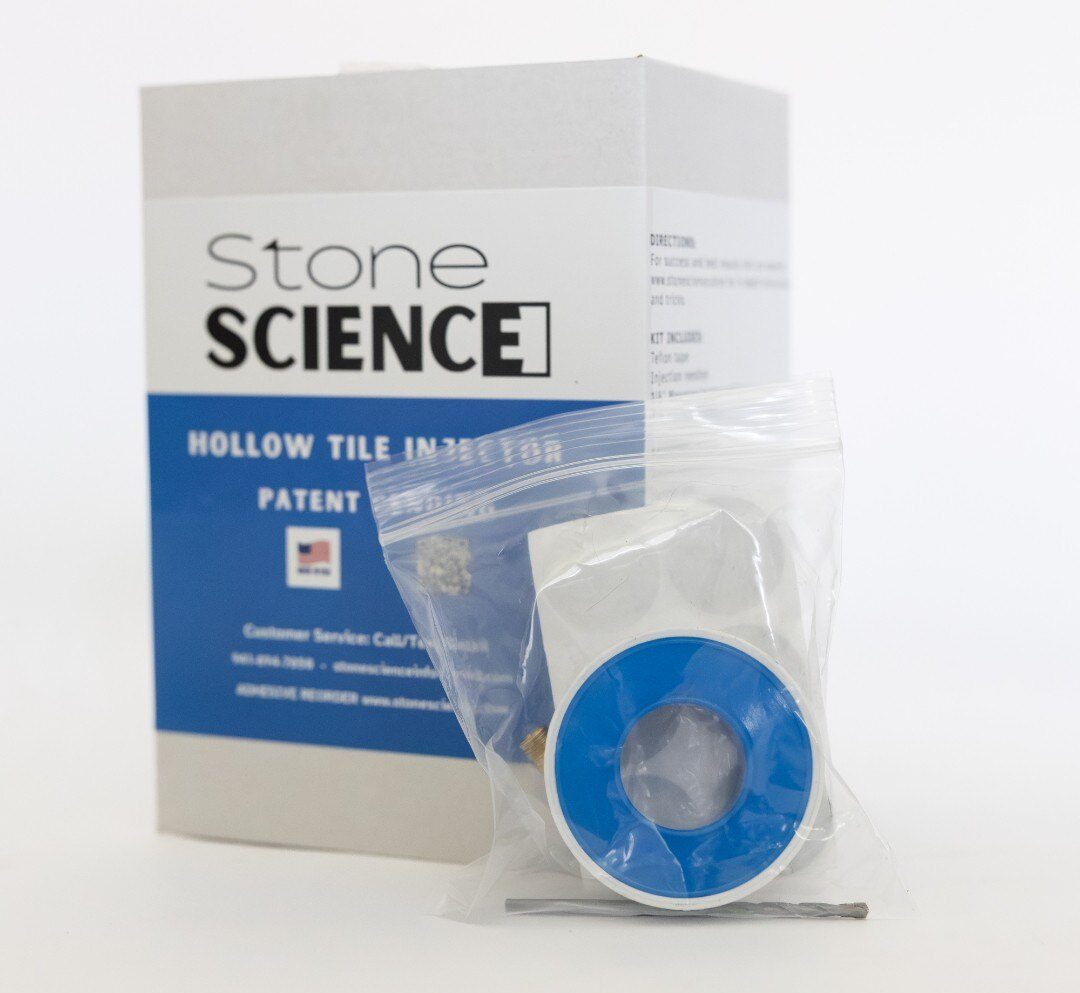
The StoneScience Hollow/Loose Flooring Injection Tool is listed at $1,499. The kit includes the tool, injection needle, adjustable depth collar, hose adapter, a 1/8-inch masonry bit and one gallon of adhesive. An airless paint sprayer, drill and other job supplies are not included.
Additional adhesive is listed at $55 per gallon. The tool is CNC-machined from 6061-T6 aluminum and assembled in the United States. StoneScience provides a one-year warranty against manufacturing defects and advertises a 30-day money-back guarantee, subject to its return conditions.
At this price, the system is likely to make the most sense for flooring contractors, restoration specialists and maintenance businesses handling repeated or larger-scale repairs. For the right floor, however, filling the hidden voids could be considerably less disruptive than removing an otherwise usable surface.
Source: StoneScience