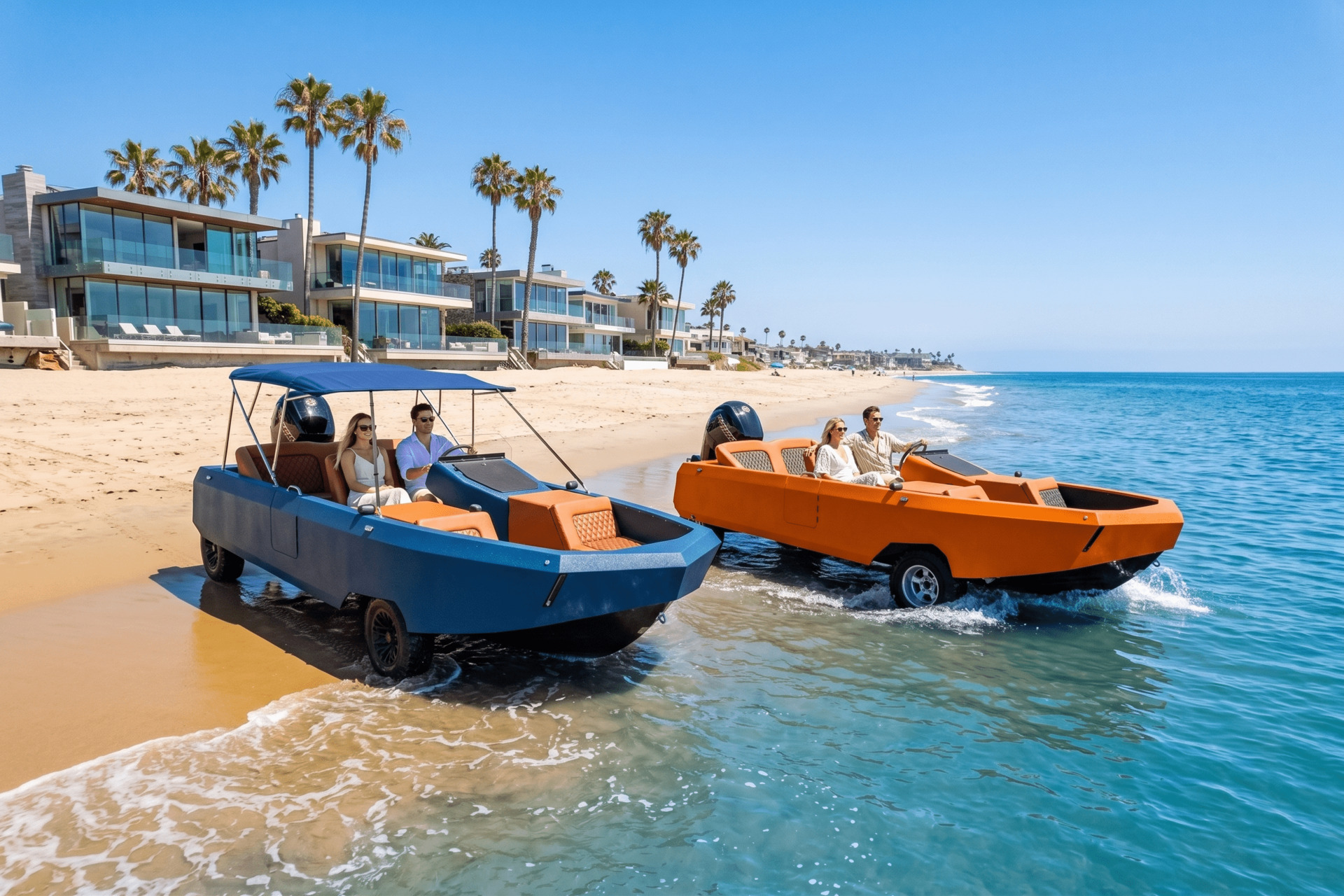
Driving a boat to the water normally means hitching up a trailer, backing it down a ramp and finding somewhere to park the tow vehicle. The WaterCar EV combines those jobs into one unusual machine: a street-legal low-speed electric vehicle that can enter the water, lift its wheels and continue as a powerboat.
The 19.5-foot (6-m) amphibious vehicle is hand-built in Southern California around an aluminum hull. On land, it uses a 48-volt electric drivetrain and is limited to 25 mph (40 km/h). On water, a separate gasoline outboard takes over and pushes it to a claimed 35 mph (56 km/h).
That makes the “EV” name only partly descriptive. The road side is electric, but the marine side still relies on gasoline.
Electric on the road, gasoline on the water
The current owner’s manual specifies a 48-volt, 160-Ah lithium-iron-phosphate battery—about 7.7 kWh of nominal capacity—for road travel. WaterCar quotes more than 18 miles (29 km) of land range, while its ownership FAQ rounds the figure to approximately 20 miles.
That is enough for short trips between a home, marina and nearby launch point, but it is not intended to replace a normal road car. WaterCar explicitly describes the EV as a low-speed vehicle rather than a daily commuter, and the manual says it is designed for paved or improved surfaces, not all-terrain driving.
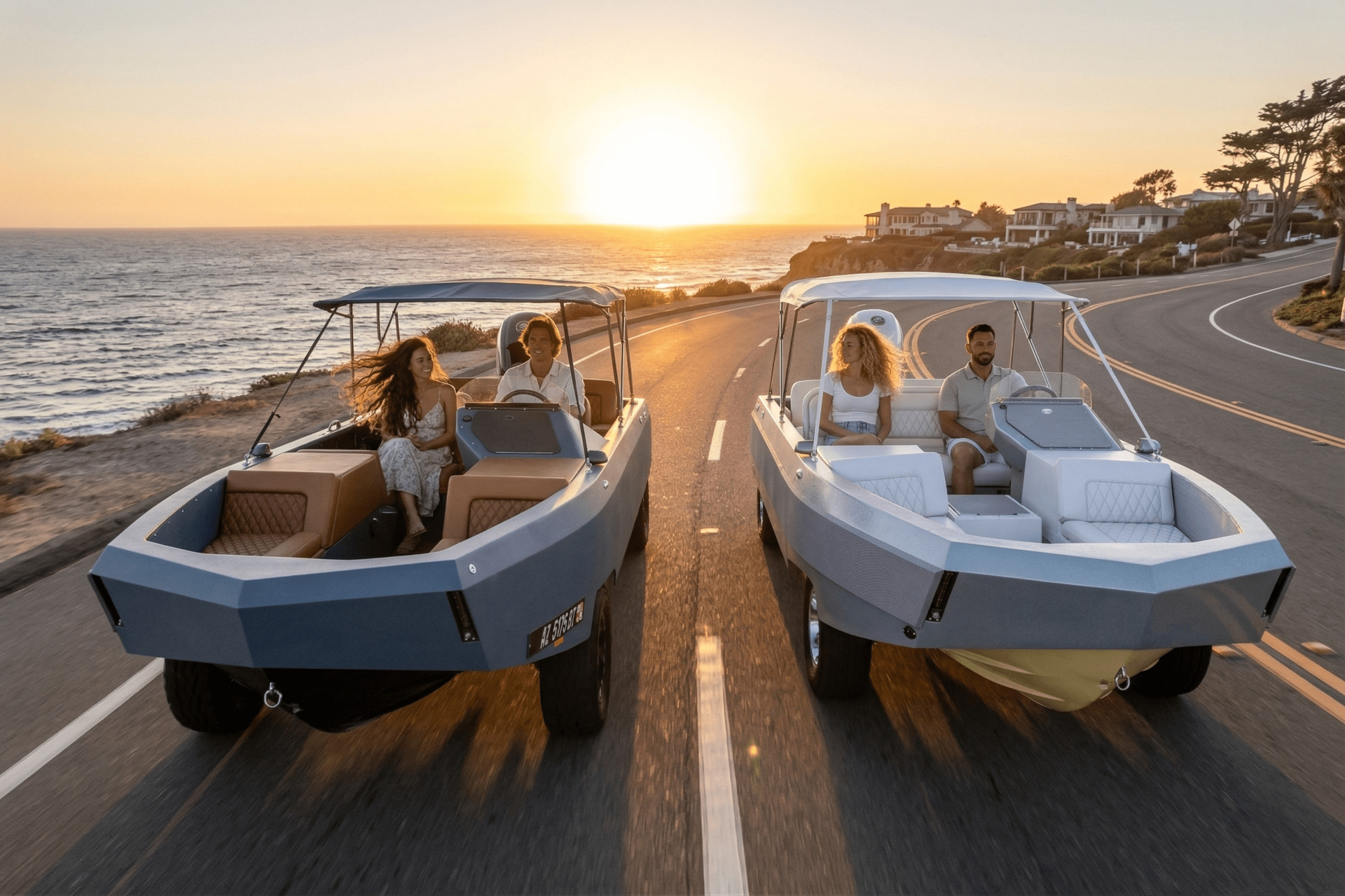
The battery can be charged from a standard 110-volt household outlet, with a quoted charging time of six to eight hours. WaterCar says systems can also be configured for 110–250 volts. Charging must take place on dry land through an appropriate GFCI-protected outlet—never while the vehicle is floating.
Once afloat, the electrical road drivetrain is no longer responsible for propulsion. The standard build uses a 115-hp Mercury Pro XS gasoline outboard, an 18-gallon (68-L) fuel tank and an estimated water range of 80 miles (129 km).
From wheels to water
The transformation is handled by WaterCar’s hydraulic LaunchMode system. The driver approaches the water on a suitable firm, gradual surface, proceeds until the hull is floating, starts the outboard and retracts the road wheels. To return to land, the sequence is reversed and the driver confirms that the wheel assemblies are fully deployed and locked before driving away.
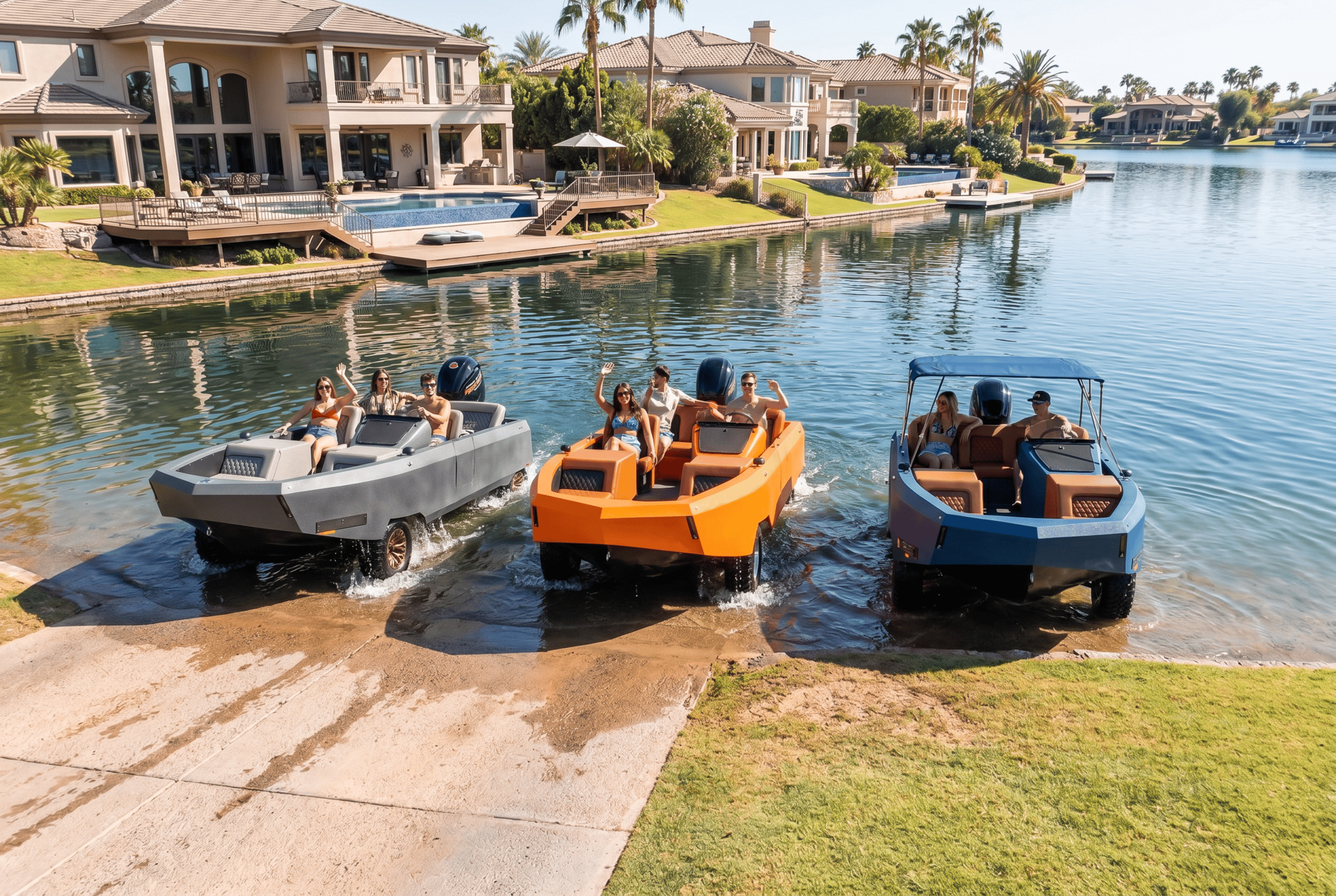
The system removes several awkward steps from launching a conventional boat, but it does not make every beach or shoreline suitable. The manual recommends an established launch ramp and warns against entering or leaving through breaking surf. Loose sand, steep banks, mud, rocks and underwater drop-offs can still prevent a safe transition.
WaterCar uses separate hydraulic pumps for the front and rear wheel mechanisms. The vehicle rides on 14-inch road wheels with four-wheel disc brakes, and its listed turning radius is 24 feet (7.3 m).
An aluminum boat underneath
Beneath the automotive styling is an all-welded aluminum unibody made from marine- and aerospace-grade alloys. The hull receives an epoxy coating and contains closed-cell flotation foam. WaterCar describes the bottom as a tri-hull V design with reverse chines, intended to help the vehicle plane and remain stable on the water.
The vehicle measures 6.5 feet (1.98 m) wide and approximately 5.7 feet (1.73 m) high without its top. With the top fitted, height rises to about 6.6 feet (2 m). Gross vehicle weight rating is 2,995 lb (1,356 kg), although curb weight varies with the selected equipment and is recorded on each vehicle’s identification plate.
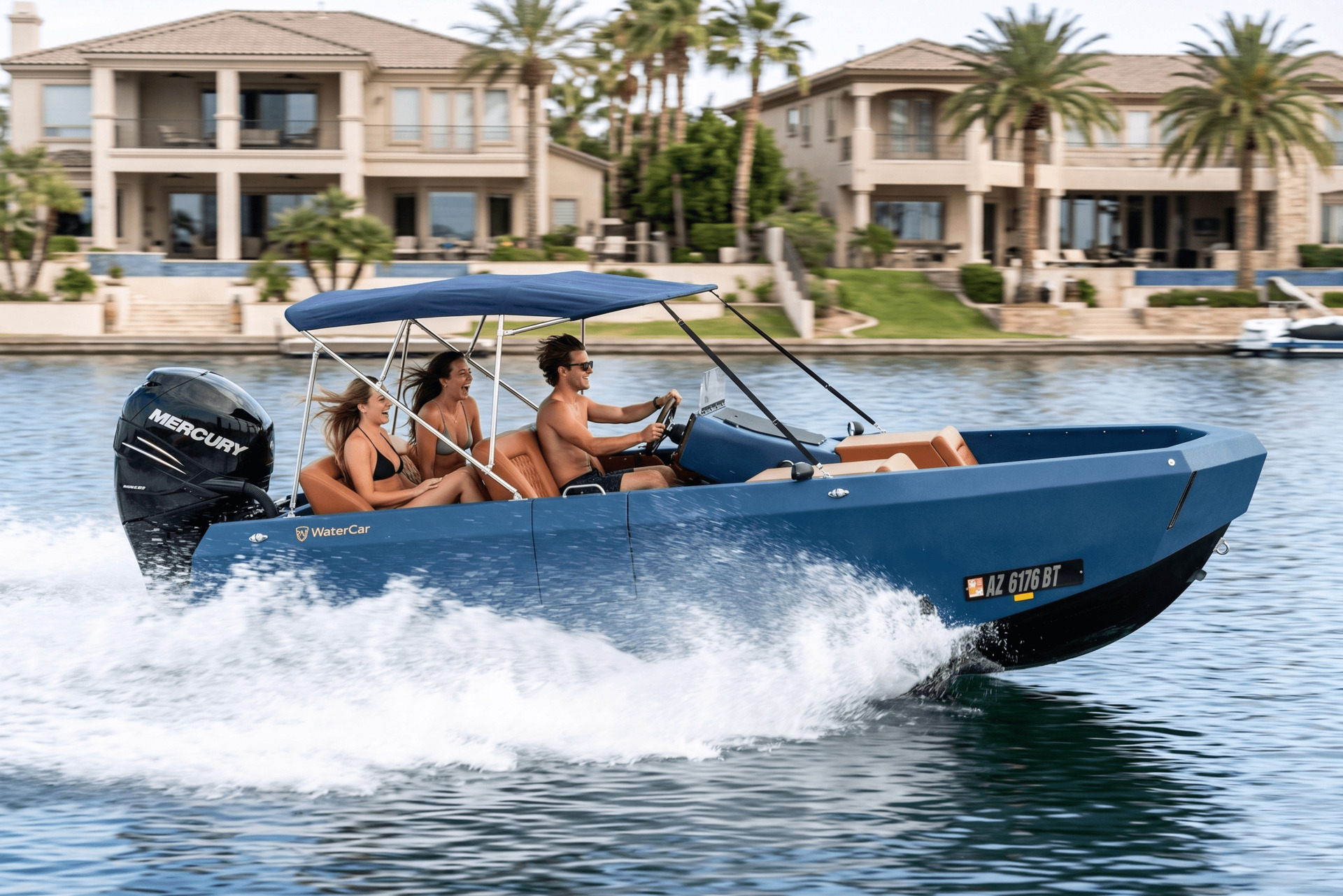
Water capacity is limited to four people or 850 lb (386 kg), whichever limit is reached first. Road seating can be configured for two or four occupants, so the lower applicable capacity must always take precedence.
One helm for both modes
The driver controls the land vehicle and boat from the same helm. The dashboard can incorporate a central Apple CarPlay display, a Simrad marine screen, Mercury VesselView engine data and a reversing camera. Conventional road equipment includes headlights, turn signals, mirrors and seat belts.
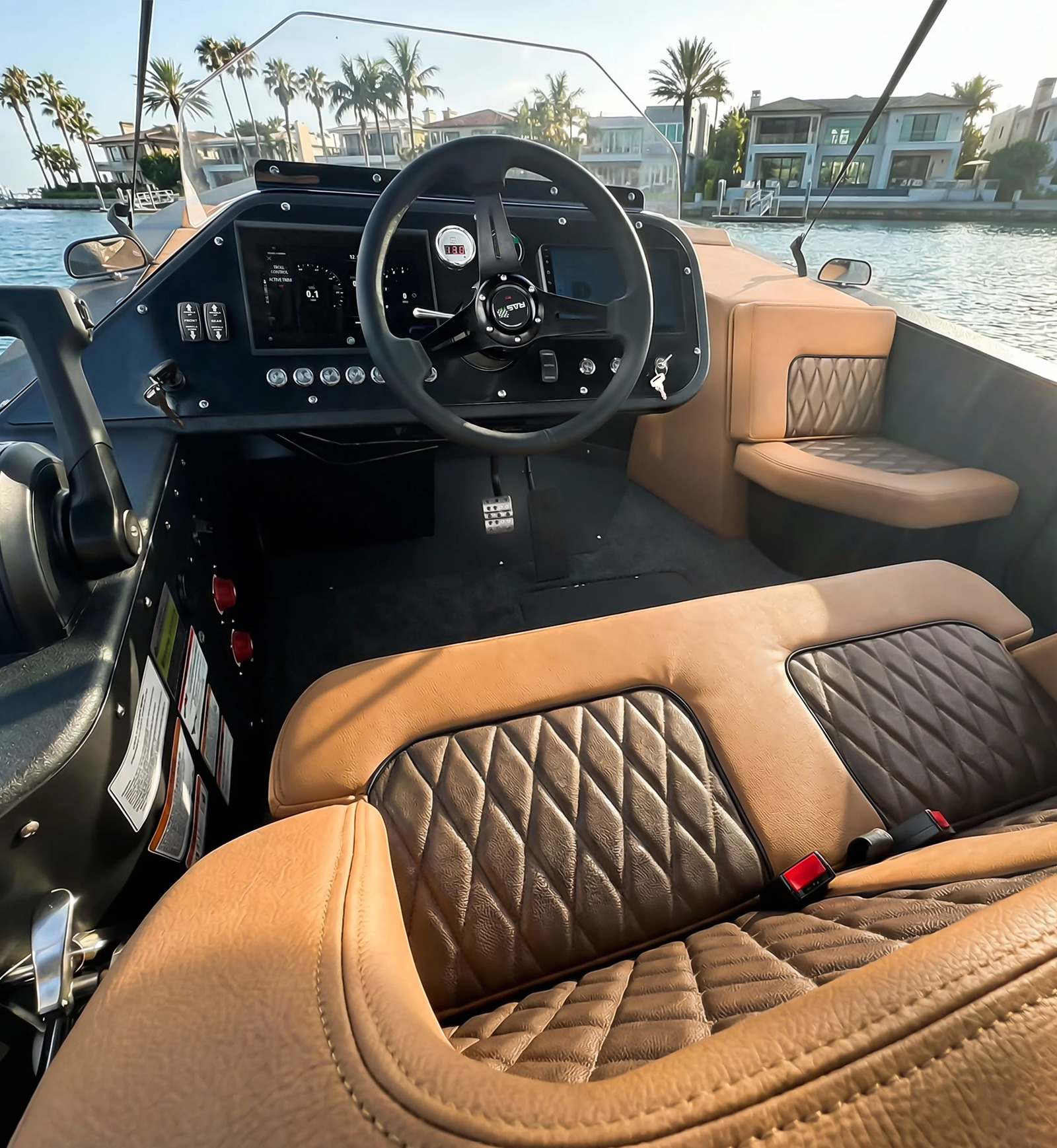
Registration is necessarily more complicated than it is for either a car or boat alone. WaterCar builds the machine with a 17-character VIN for low-speed-vehicle registration and a hull identification number for marine registration. Where it can be driven, what roads it may use, and which driving or boating licenses are required all depend on local law.
Towing without a separate trailer
For longer journeys, the included TowLink insert lets the WaterCar travel behind a suitable truck or SUV without a conventional boat trailer. The front wheels are raised while the vehicle rolls on its rear wheels.
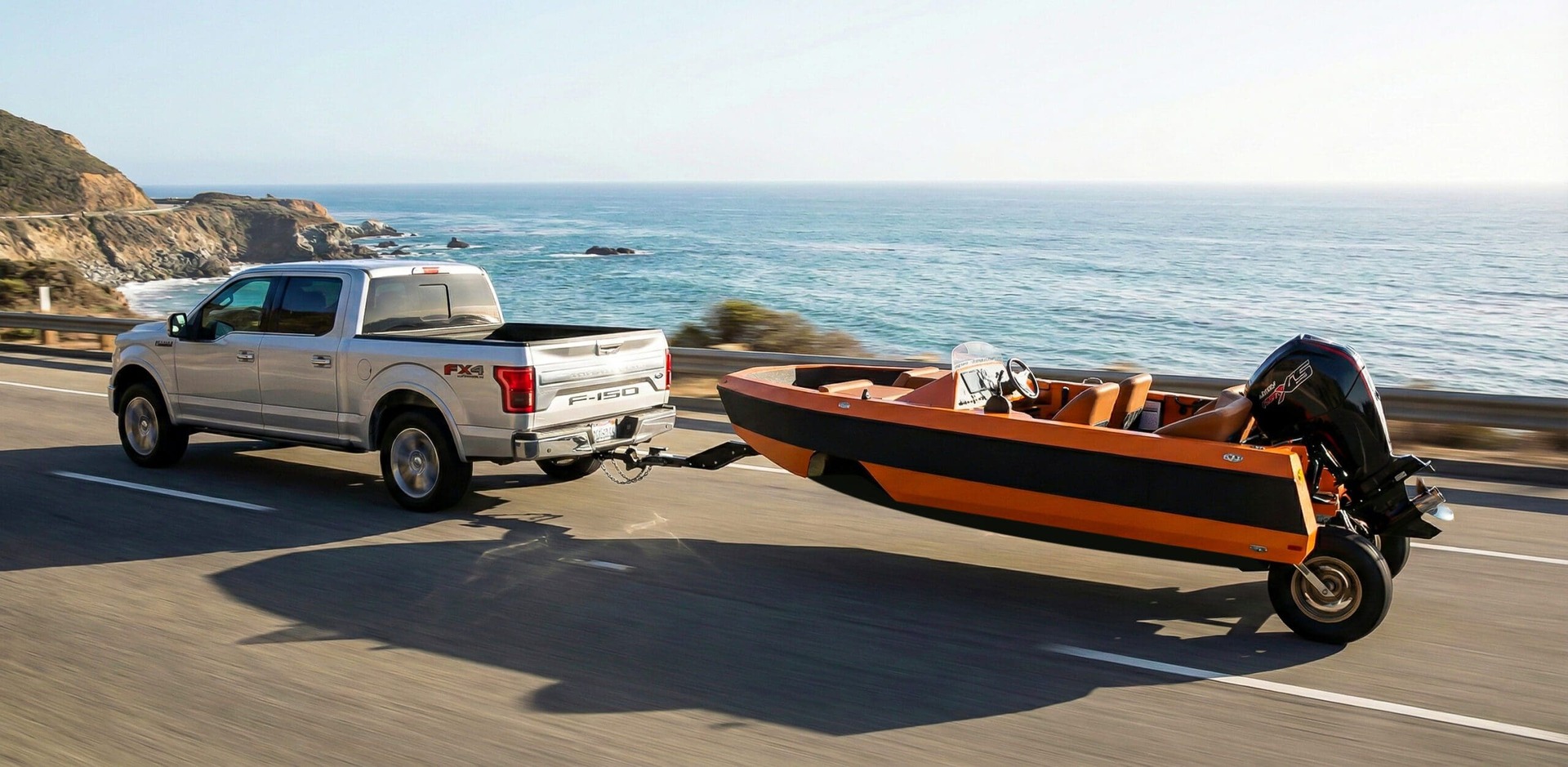
This convenience comes with an important requirement: the manual lists approximately 1,000 lb (454 kg) of tongue weight. The tow vehicle, receiver and hitch ball must all be rated accordingly, and hydraulic suspension lockouts must be installed before towing. Local rules may also require supplemental brakes, lighting or a breakaway system.
Ownership and maintenance
The amphibious design combines two sets of ownership chores. After use, WaterCar recommends rinsing the vehicle, flushing the outboard, inspecting the bilge and propeller, treating exposed metal and lubricating specified fittings. Saltwater use demands particular attention.
The company also says the vehicle should be stored on land overnight rather than left in the water for extended periods. Warranty terms are supplied with the individual purchase documents, so buyers should review the coverage for their exact build.
WaterCar’s story began in 1999, when founder Dave March started developing high-performance amphibious vehicles in Southern California. The company went on to build the Python prototype and gasoline-powered Panther before moving to the present EV platform. Production now takes place at a facility in Fountain Valley, California.
Pricing and availability
The WaterCar EV currently starts at $170,000, with the final cost determined by colors, seating, electronics and other options. Factory demonstration vehicles listed in current inventory range from $135,000 to $175,000, while examples of specialized builds are shown at up to $185,000.
A custom order begins with a $5,000 reservation deposit. After the purchase agreement is signed, WaterCar’s stated payment schedule is 40% at the start of the build, 40% midway through production and the final 20% before delivery. The company quotes an eight-to-ten-week build time once production begins and offers international shipping.
At this price, the WaterCar EV is a specialized recreational vehicle rather than a practical substitute for an ordinary car and boat. Its road range and 25-mph limit are modest, and owners still need an appropriate launch point. What it offers is a remarkably direct experience: drive to the water, retract the wheels and continue the journey at the same helm.
Source: WaterCar