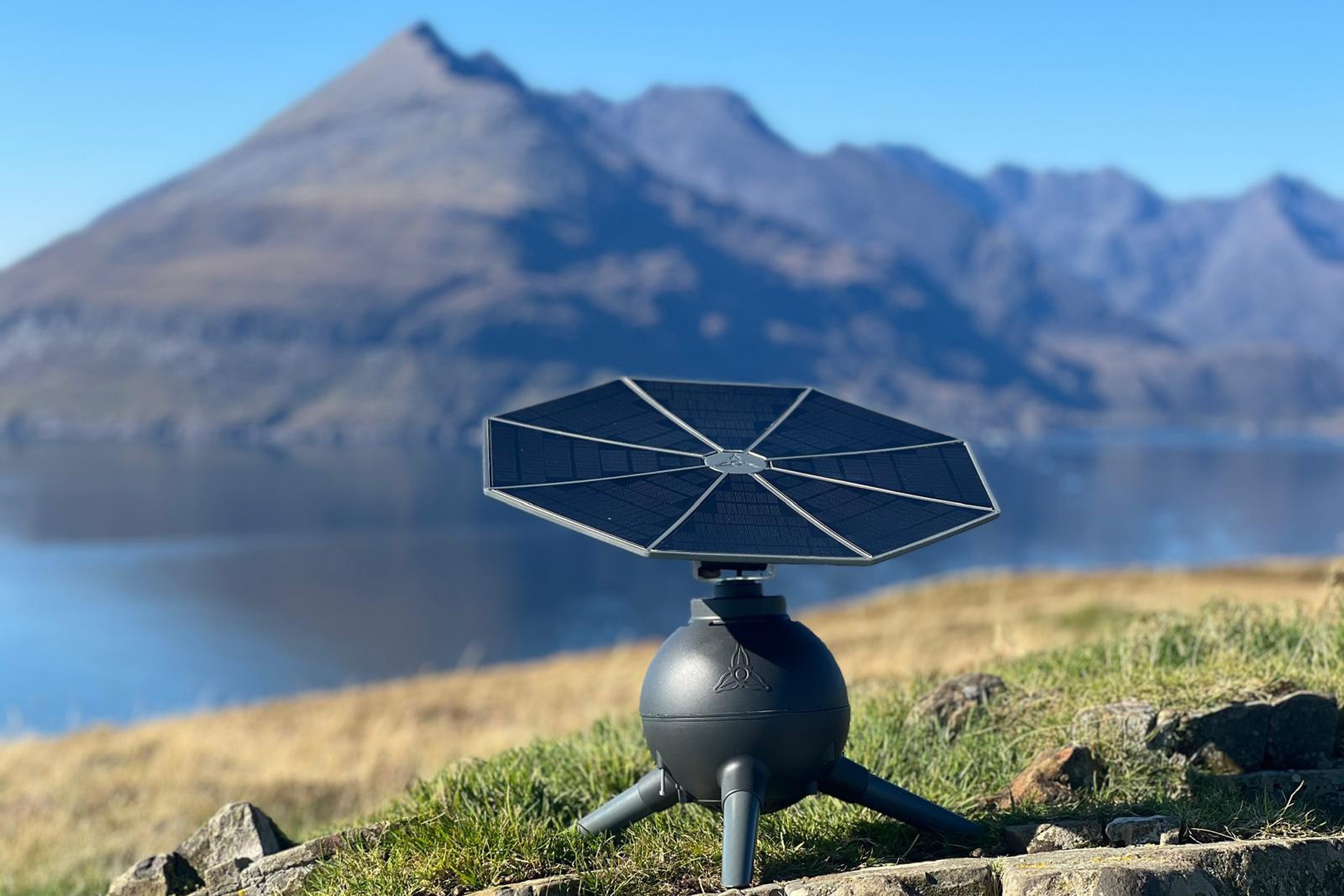
Portable power stations make it possible to keep phones, laptops, cameras and other electronics running away from the grid, but the solar side of the setup is often less convenient. A separate folding panel has to be unpacked, connected with cables and periodically repositioned as the sun moves across the sky.
The Iris T1 takes a more integrated approach. It combines a 32-watt solar panel, an automatic two-axis tracking mechanism and a removable 270-Wh battery in a single portable system designed for camping, remote work and emergency charging.
Rather than leaving the panel facing one direction all day, the tracking base physically turns and tilts it to maintain a more favorable angle toward the sun. Iris Solar Technology says this can increase energy collection by up to 40% compared with a similarly sized fixed panel under suitable conditions.
The latest version is currently being offered through the Iris T1 Kickstarter campaign.
A solar panel that follows the sun
Solar panels produce their best output when sunlight strikes them at a favorable angle. A fixed portable panel may perform well around the middle of the day but collect less energy during the morning and afternoon unless somebody manually moves it.
The Iris T1’s dual-axis mechanism is designed to handle that adjustment automatically. Its panel can rotate horizontally and change its vertical angle, allowing it to follow the sun’s changing position throughout the day.
Iris describes the system as GPS-assisted solar tracking. Once deployed outdoors, it determines where to point the panel and continues repositioning it without requiring the user to keep returning to the setup.
The company’s “up to 40%” improvement is a claimed maximum rather than a guaranteed result. Actual energy collection will depend on location, season, weather, shading and how well the comparison panel was positioned. Tracking also cannot make a 32-W panel generate beyond the limits imposed by available sunlight and its rated hardware.
The panel, tracker and battery travel together
The unusual part of the design is not only the tracking. Iris has tried to package the major components into one coordinated system.
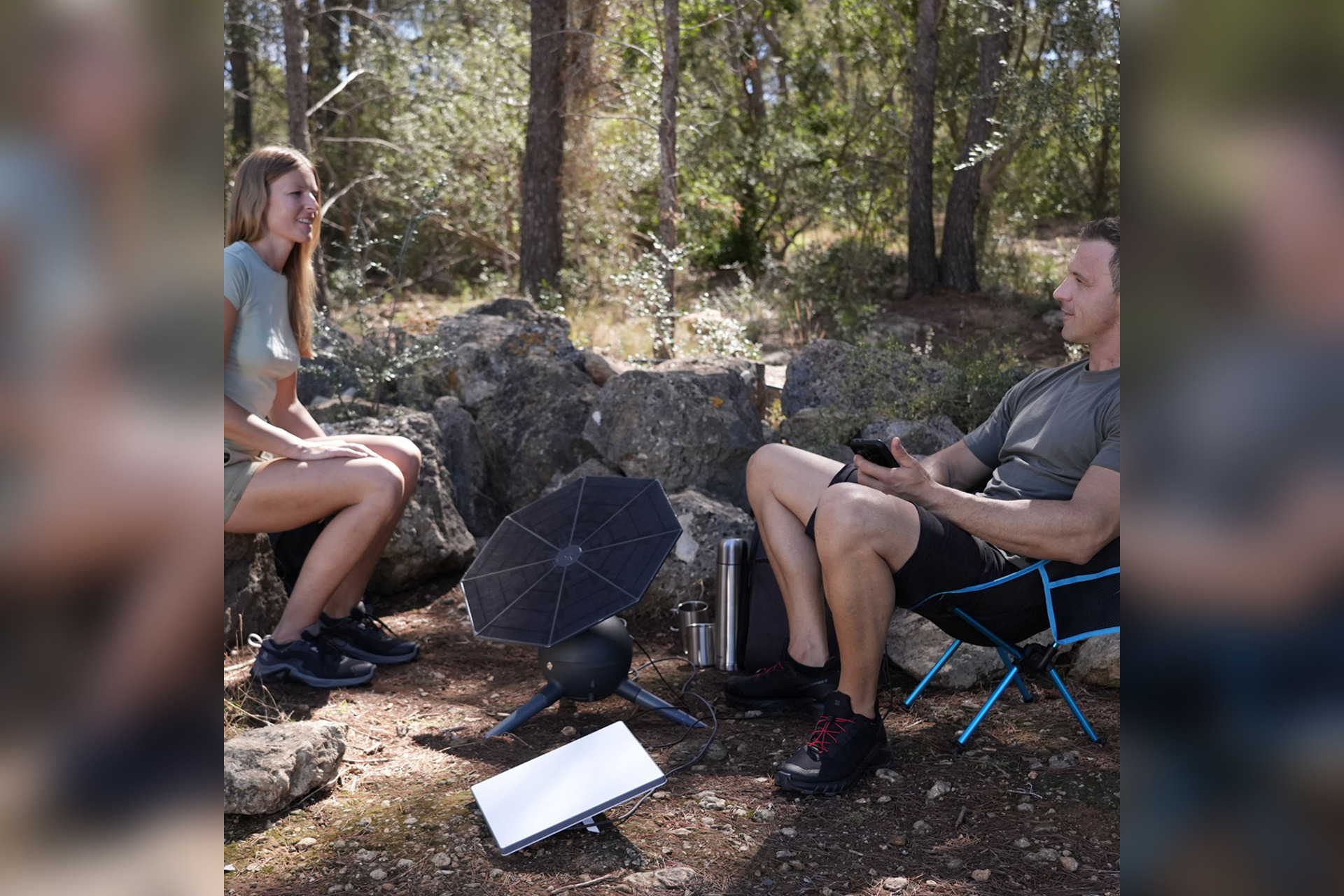
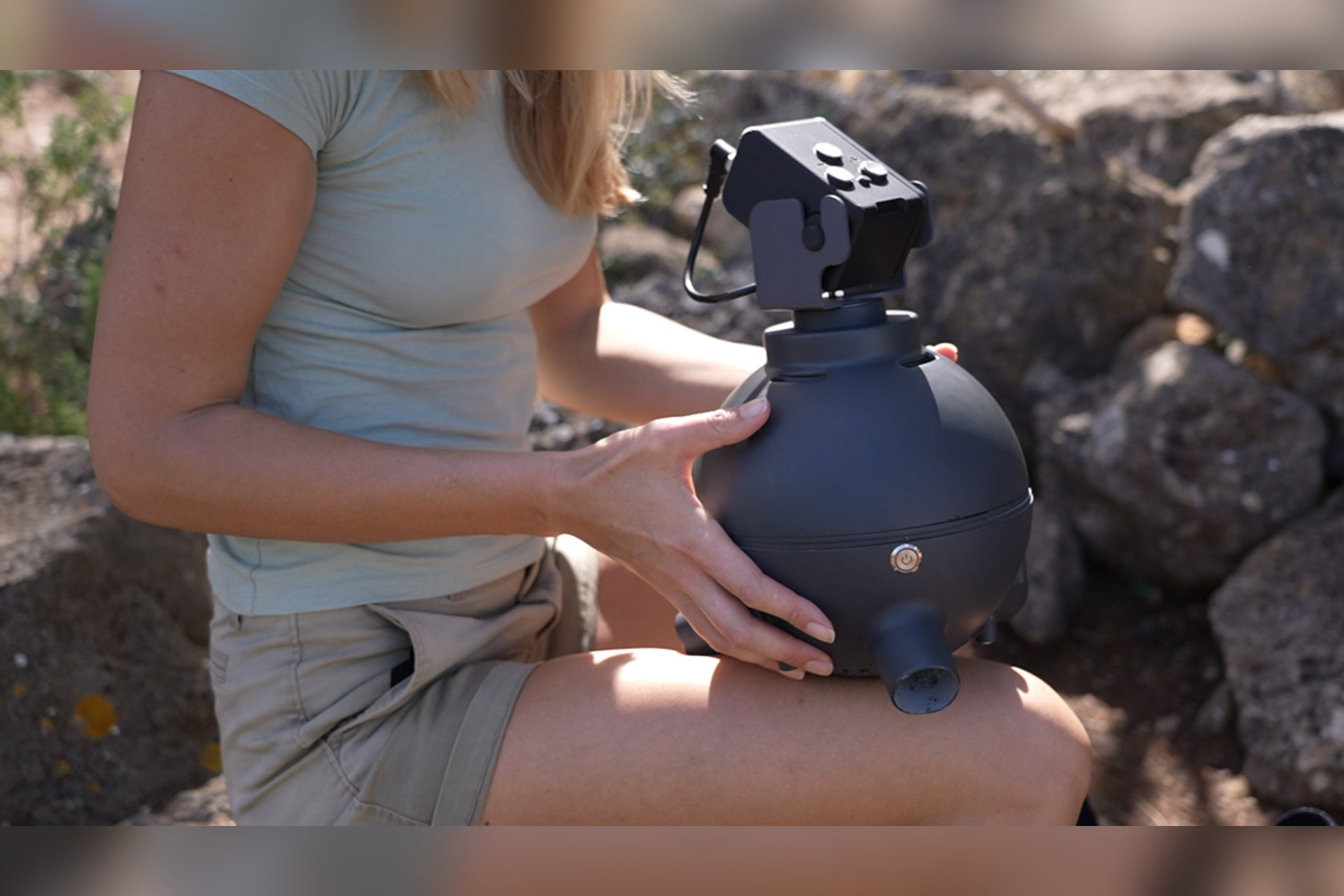
The panel attaches magnetically above a compact spherical base, while three removable legs create a tripod-style support. The tracking motors, control electronics, battery and charging ports are housed around the main unit, eliminating the usual external cable between a standalone solar panel and power station.
Iris offers fixed and folding panel configurations. The folding version occupies less space while packed, while the company says the rigid panel performs better in cloudy conditions. Both use monocrystalline silicon solar cells and are described as waterproof.
The setup is designed to take less than a minute. At departure, the panel clips off, the legs detach and the battery can be removed, allowing the pieces to be packed separately rather than carrying the deployed structure as one awkward shape.
A removable 270-Wh battery
Inside the system is a 270-Wh removable battery. Making it replaceable gives owners the option of carrying a second charged pack and means a worn battery should not necessarily require replacing the complete generator.
Iris estimates that the standard battery can provide up to 20 full charges for an iPhone 15, recharge a 13-inch MacBook Pro two or three times, or operate a Starlink Mini for approximately four to six hours. These figures are best treated as indicative because real runtimes vary with device settings, conversion losses, battery condition and ambient temperature.
Under clear conditions, the 32-W panel is expected to replenish the 270-Wh pack in roughly eight to ten hours. That estimate is plausible only with strong solar exposure over a long day; cloud, shade or winter sun will extend the charging time.
For users who value lower carrying weight over capacity, Iris is also offering a smaller 99-Wh battery. Additional 270-Wh packs are available as campaign add-ons.

USB-C power rather than household AC
The Iris T1 has two USB-C ports and one USB-A port. Its USB-C Power Delivery output reaches up to 100 W, making it suitable for compatible laptops, phones, tablets, cameras, drones, lights and other portable electronics.
There is no conventional household AC outlet. That keeps the system focused on efficient DC-powered devices, but it also means the T1 is not a substitute for a larger power station when users need to run appliances such as refrigerators, kettles, induction cookers or equipment with an AC plug.
This distinction is important when considering the “solar generator” description. The T1 is primarily a compact energy source for personal electronics and communications equipment, not a whole-campsite electrical system.
One of its most interesting supported loads is Starlink Mini. Iris says the 270-Wh battery can operate the compact satellite terminal for four to six hours, potentially making the system useful for connectivity during remote work, overlanding or an outage.
Monitoring from a phone
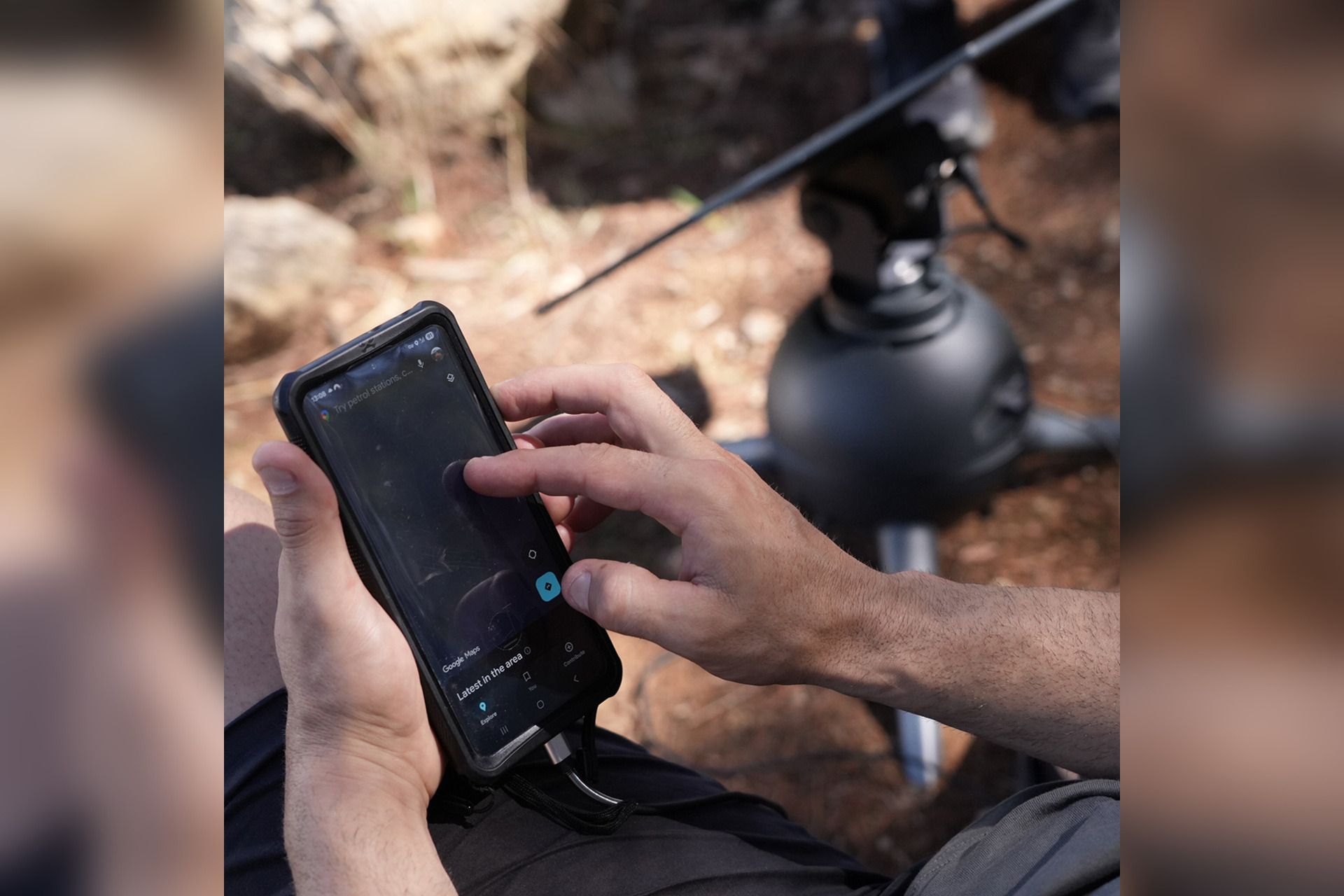
The T1 connects to a companion mobile app through Bluetooth. The Iris Dashboard is designed to show battery charge, power generation, output and the unit’s location.
That allows users to check whether the panel is collecting energy without repeatedly walking over to the generator. Remote location information could also be useful when the T1 is positioned away from a tent, vehicle or work area to find unobstructed sunlight.
Designed for outdoor conditions
The campaign version weighs approximately 4.5 kg (10 lb) for the complete system. Its components are compact enough to carry in a backpack, although the weight makes it better suited to campsites, vehicles and shorter approaches than ultralight hiking.
Iris says the solar panel is waterproof and the revised T1 has improved resistance to heat and wind. The company claims the unit can survive temperatures up to 56.7 °C (134 °F). As with any tracking device, however, stability will depend on the surface, wind conditions and how securely the three legs are positioned.
The detachable construction could also help with serviceability. Iris promotes replaceable components and batteries as a way to extend the product’s useful life rather than treating the entire unit as disposable when one part degrades.
Kickstarter price and availability
At the time of writing, the Kickstarter page for the Iris T1 lists campaign packages from approximately US$1,120, compared with an expected retail price of $1,495. The standard package includes the tracking unit and a 270-Wh battery.
Campaign add-ons have been listed at approximately $285 for an additional 270-Wh battery and $185 for the lighter 99-Wh pack. Reward availability and pricing can change as limited tiers sell out, so prospective buyers should check the current Iris T1 rewards on Kickstarter before making a decision.
The campaign launched with a $5,000 funding goal and had collected more than $126,000 from over 125 backers by August 14, 2026. Worldwide deliveries are estimated to begin in June 2027, with shipping charges expected to be calculated after the campaign.
As always, backing a crowdfunding campaign is not the same as purchasing a finished item from ordinary retail inventory. Manufacturing schedules, specifications and delivery dates can change, and rewards are not guaranteed. Iris Solar does have experience with an earlier portable solar generator, but the T1 remains a crowdfunded hardware project moving toward production.
For campers and remote workers who only need USB-powered electronics, the T1’s combination of automatic tracking, battery storage and cable-free setup is genuinely distinctive. Buyers who need AC appliances or much faster solar replenishment will be better served by a larger power station and higher-wattage panel.
The final decision comes down to whether convenience and automatic tracking justify the price. Anyone interested can view the latest Iris T1 campaign details on Kickstarter.
Product page: Iris Solar Technology