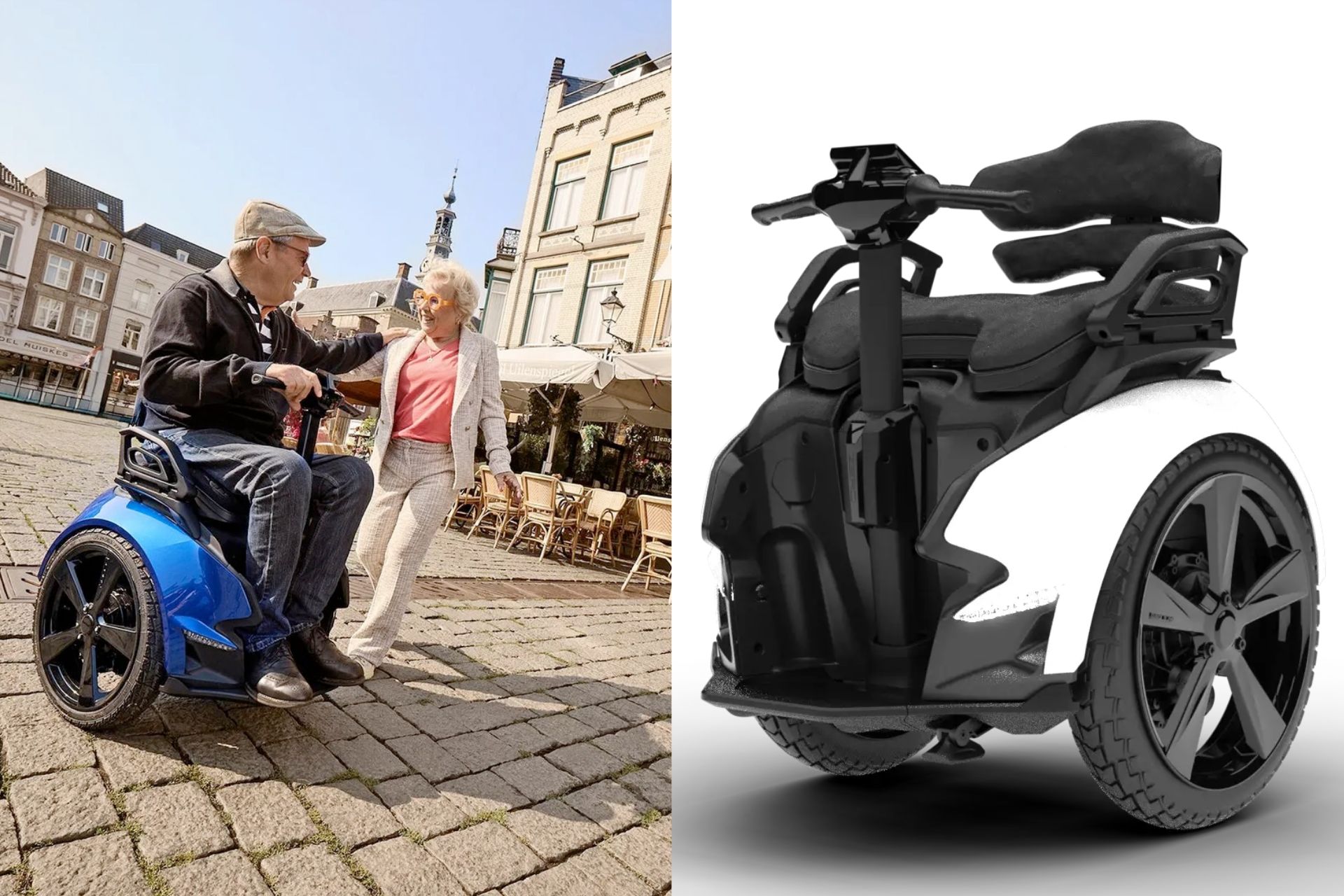
Traditional powered wheelchairs are designed primarily around stability and seated transport. The Genny Zero lineup takes a different approach by combining self-balancing technology with electric mobility assistance in a compact two-wheel platform. Developed by Genny Mobility, the device is intended to provide a more active riding experience while still delivering the functionality expected from a powered mobility system.
The Genny Zero range includes three models — the Genny Zero, Genny Zero Plus, and Genny Zero Advance — all built around the same balancing platform but with different suspension, comfort, and premium equipment options.
Rather than relying entirely on joystick controls, the Genny Zero uses body movement and balancing sensors to control motion. The system is intended for both indoor and outdoor use, including urban environments, shopping areas, sidewalks, and uneven terrain.
Build and design
The Genny Zero is built around a dual-wheel self-balancing platform supported by electronic sensors and gyroscopic stabilization systems. The platform maintains balance automatically while the rider controls movement by shifting body weight forward or backward.
According to the company:
“The two parallel wheels and many electronic sensors allow Genny™ to move only shifting part of the bust forward to advance, backward to slow down and brake.”

Steering is handled through a compact retractable control bar, while the overall frame is designed to remain compact enough for elevators, narrow hallways, and indoor maneuvering.
The seating system combines an ergonomic GES seat with an adjustable Tarta® backrest intended to improve posture and long-term comfort. Depending on the model, seating materials range from standard upholstery to microfiber and quilted finishes.
The Genny Zero lineup is also designed with folding and removable components that help reduce storage space requirements during transport.
The three available models
The standard Genny Zero model serves as the entry point into the lineup. It includes a dual-wheel balancing system, touchscreen display, retractable steering controls, ergonomic seating, a folding backrest, alloy wheels, and front lighting. The standard version is available in white and grey finishes.
The Genny Zero Plus builds on the standard model by adding Öhlins seat suspension and black folding side handles. The upgraded suspension is intended to improve comfort over rough pavement and uneven outdoor surfaces.
The premium Genny Zero Advance includes the same Öhlins suspension system along with upgraded lighting, microfiber or quilted seating, black folding handles, and expanded body color choices including red, blue, yellow, and green. The Advance version focuses more heavily on comfort and customization while using the same balancing platform as the other models.
Performance and specifications
The Genny Zero lineup uses dual electric motors paired with lithium-ion battery packs and regenerative braking systems. Depending on local regulations, the device can reach speeds of up to 20 km/h (12.4 mph) and climb slopes with gradients up to 20%.
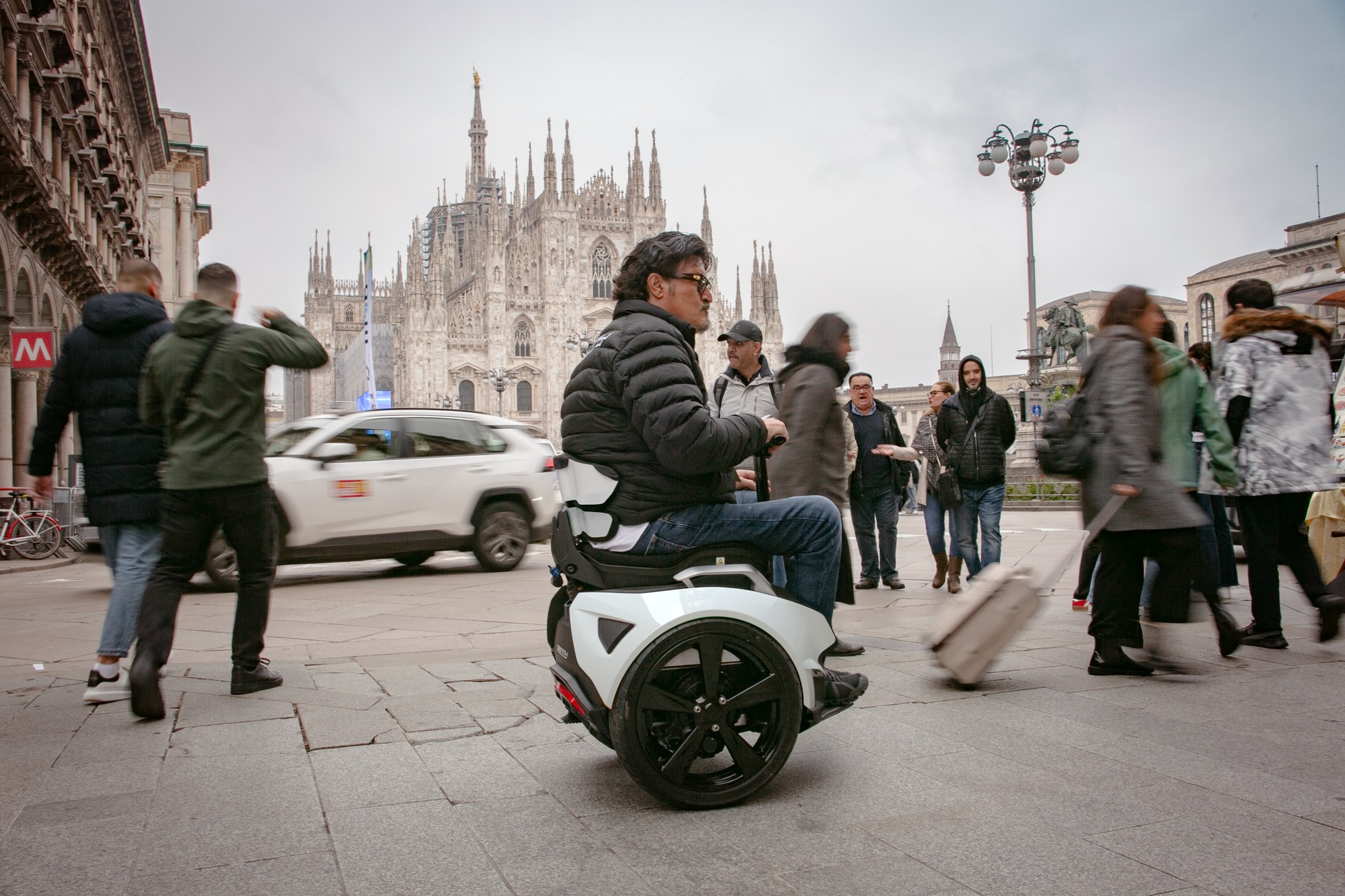
The system uses dual 72V lithium-ion batteries with a charging time of approximately six hours. Total weight ranges from approximately 60 to 65 kg (132 to 143 lbs), while user weight capacity falls between 110 and 120 kg (242 to 264 lbs).
The dual motors are rated at up to 2kW each and are designed to provide enough torque for indoor maneuvering and moderate outdoor terrain.
The platform also includes a touchscreen LCD display, USB charging support, Bluetooth connectivity, Wi-Fi functionality, GPS support, and cloud-connected diagnostics. According to the company, the removable battery system allows batteries to be swapped when needed.
Indoor and outdoor usability
One of the more unusual aspects of the Genny Zero is its attempt to combine compact indoor maneuverability with outdoor mobility capability. Traditional wheelchairs can struggle with curbs, gravel, grass, or uneven pavement because of their smaller caster wheels. The Genny Zero’s larger balancing wheels are intended to improve handling across these surfaces.
The company also offers optional off-road kits designed for environments such as sand, snow, gravel, and mud.
The compact body dimensions help maintain usability indoors. Depending on configuration, the device measures approximately 90 cm (35.4 inches) tall, 60 cm (23.6 inches) wide, and 76 cm (29.9 inches) long. Its turning radius allows it to rotate almost within its own footprint, which is useful in elevators and tighter spaces.
Safety systems and rider support
The Genny Zero includes several electronic and mechanical safety systems designed to support balancing and rider protection. These include redundant electronic stabilization systems, integrated braking systems, parking stabilization arms, seat occupancy detection, electronic balance correction, and LED lighting.

According to the company, the electronic architecture uses redundant systems inspired by aerospace engineering principles to maintain operation if a component fails.
The company also notes that the balancing system encourages continuous posture adjustment while riding:
“The self-balancing system forces the patient to maintain a constant and very subtle control of the center of gravity.”
While the device is still fundamentally a mobility aid, this active riding position differs from more passive seating systems commonly found in conventional powered wheelchairs.
Real-world use cases
The Genny Zero is intended for a broad range of everyday environments, including urban transportation, indoor mobility assistance, shopping centers, public spaces, outdoor recreational use, uneven sidewalks, and compact indoor environments.
Its compact footprint and balancing system place it somewhere between a traditional powered wheelchair and a personal mobility transporter. The different model configurations also allow users to prioritize affordability, comfort, or premium customization depending on their individual needs.
Pricing
Pricing varies depending on the model and regional distributor.
The standard Genny Zero starts at around £14,970 ex VAT, which is approximately $18,900 USD. The Genny Zero Plus is priced around £16,460 ex VAT, or roughly $20,800 USD. The premium Genny Zero Advance comes in at approximately £17,520 ex VAT, or about $22,100 USD.
Availability depends on regional suppliers and local mobility regulations.
A few practical notes
The Genny Zero is significantly more expensive than many traditional electric wheelchairs, placing it firmly within the premium mobility category. It also involves a learning curve that may feel unfamiliar to users accustomed to joystick-controlled systems.
At the same time, the self-balancing platform, compact turning capability, and active riding style give it a noticeably different feel from standard mobility devices. The optional suspension systems and off-road accessories also expand its usability beyond strictly indoor environments.
For users looking for a mobility platform that combines compact urban maneuverability with self-balancing technology, the Genny Zero lineup offers a different approach from conventional powered wheelchair designs.
Product page: Genny Mobility