

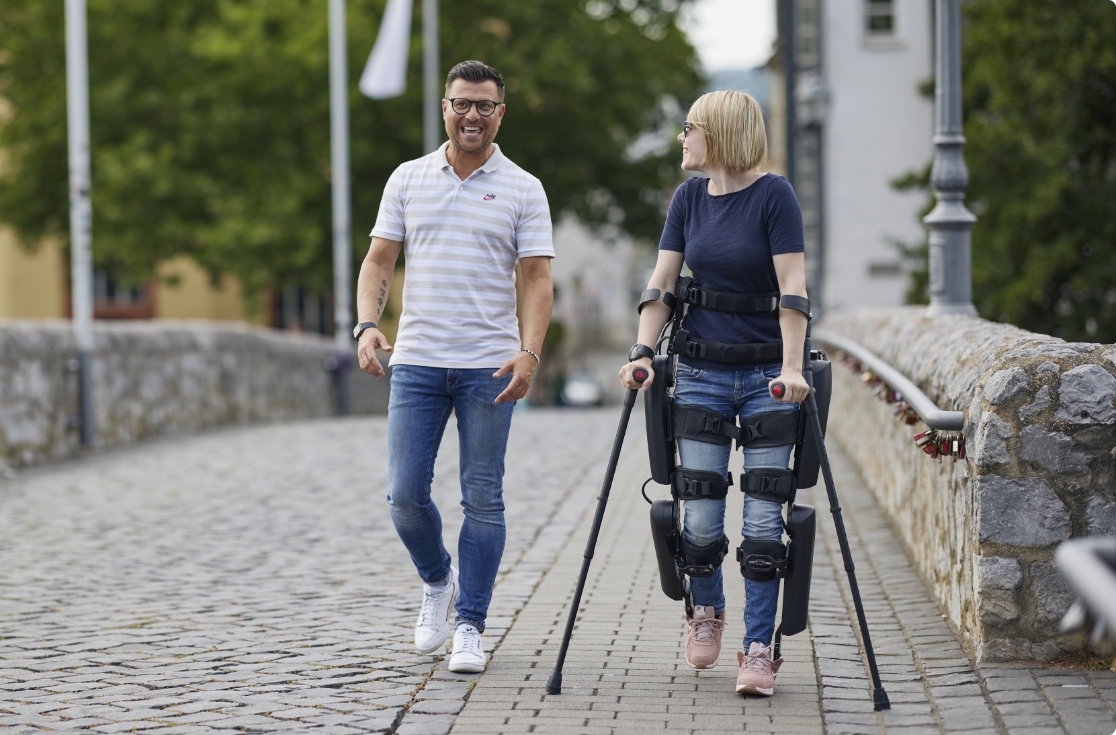
Lifeward has launched U.S. sales of its latest wearable robotic exoskeleton, the ReWalk 7, marking the seventh generation of a device that has become one of the most widely used personal exoskeleton systems for people living with spinal cord injuries. The ReWalk 7 received FDA clearance in March 2025, with U.S. sales beginning the following month.
Rather than being a complete redesign, the ReWalk 7 builds on the existing platform with a series of practical upgrades intended to improve usability, customization, and connectivity for both users and clinicians.
What the ReWalk Personal Exoskeleton does
The ReWalk Personal Exoskeleton is a wearable robotic system that provides powered hip and knee movement, enabling individuals with spinal cord injuries to stand upright, walk, turn, and navigate stairs. The system combines a wearable brace structure, onboard computer controls, motion sensors, and motorized joints to create a walking motion that closely resembles a natural gait.
The user wears the device on the lower body and uses forearm crutches for balance and support. While the crutches help maintain stability, the exoskeleton itself performs the powered leg movements that the user’s nervous system can no longer control.
The technology is designed for use at home, at work, and in community settings, allowing users to incorporate upright mobility into everyday life.
What’s new in the ReWalk 7
The ReWalk 7 introduces several upgrades focused on making the system easier to operate in real-world environments.
One of the most significant additions is Crutch Control, which allows users to control key functions directly from buttons integrated into the crutch handles. Users can start and stop walking, stand up, and select walking speeds without needing separate control steps.
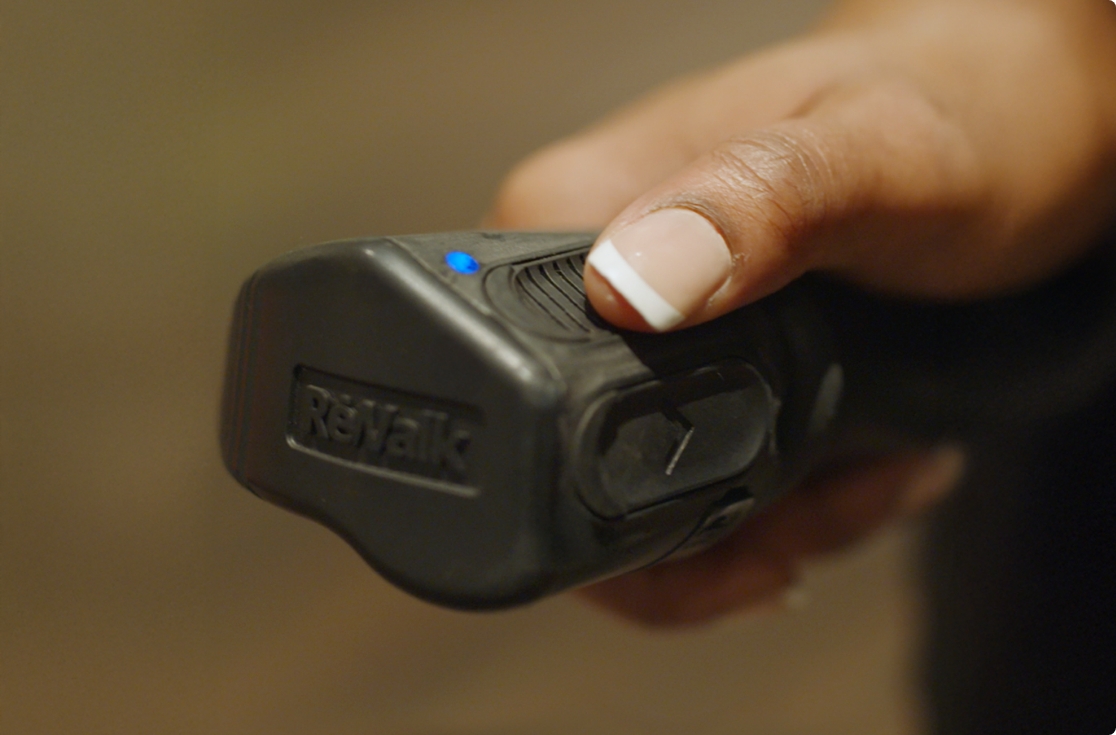
The new system also introduces two customizable walking speeds, making it easier to transition between different environments. Users can choose a slower pace for tighter indoor spaces and a faster pace for outdoor use.
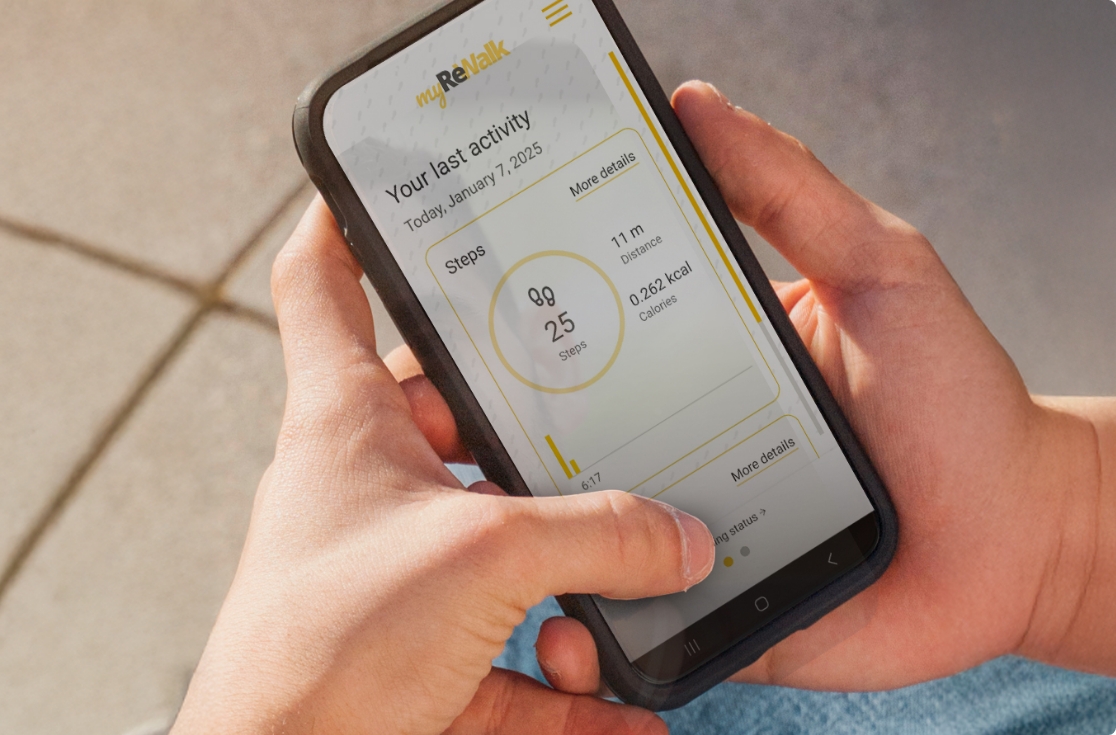
Connectivity has also been expanded through a new Wrist Control smartwatch and the MyReWalk mobile app. Together, these tools allow users to select operating modes, track usage, and set personal goals. The added data collection can also provide clinicians with greater insight into how the device is being used over time.
For rehabilitation professionals, Lifeward has introduced a new therapist handheld controller and therapist app. These tools allow clinicians to adjust settings and optimize gait training more efficiently during therapy sessions.
The ReWalk 7 also features an upgraded battery and ruggedized construction intended for years of daily use, though Lifeward has not publicly disclosed a specific runtime figure.
Stair and curb navigation
One of the defining capabilities of the ReWalk platform is its ability to navigate stairs and curbs.
According to Lifeward, the ReWalk Personal Exoskeleton is the only personal exoskeleton currently capable of providing users with access to both stairs and curbs. This functionality was first introduced with the ReWalk 6.0 system in 2023 and remains a key feature of the latest model.
For many wheelchair users, even a short staircase can create a significant barrier. The ability to negotiate stairs can expand the number of locations a user can access and reduce dependence on ramps or elevators.
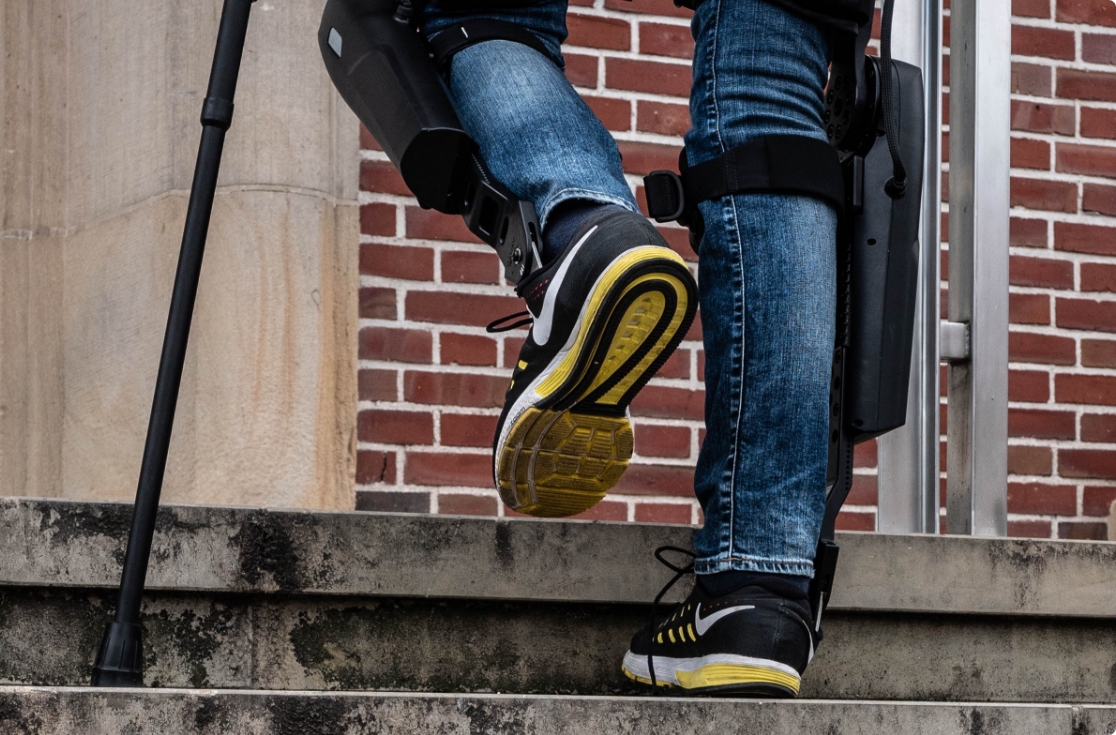
Lifeward reports that in a survey of U.S.-based ReWalk users who did not yet have access to stair functionality, nearly 80% believed it would increase both the number of places they could access and how often they would use the device.
Who can use the ReWalk 7?
In the United States, the ReWalk Personal Exoskeleton is indicated for individuals with spinal cord injuries at levels T7 through L5 for ambulatory functions in home and community settings, provided they complete the required assessment and training program and use the device with supervision from a specially certified companion.
The system is also indicated for individuals with spinal cord injuries at levels T4 through T6, though these users are currently limited to use within rehabilitation institutions under FDA indications.
The T and L designations refer to the thoracic and lumbar regions of the spinal cord, covering injuries in the mid-back and lower-back areas.
Each ReWalk system is individually configured for the user and includes adjustable ankle joints along with customizable software settings designed to support a natural walking pattern.
Development and testing
The ReWalk 7 was developed using feedback from more than two dozen end users and physical therapists as part of the FDA clearance process.
Testing focused on how the device performed in both rehabilitation environments and real-world situations. User feedback played a significant role in refining the crutch controls, therapist tools, and overall user experience.
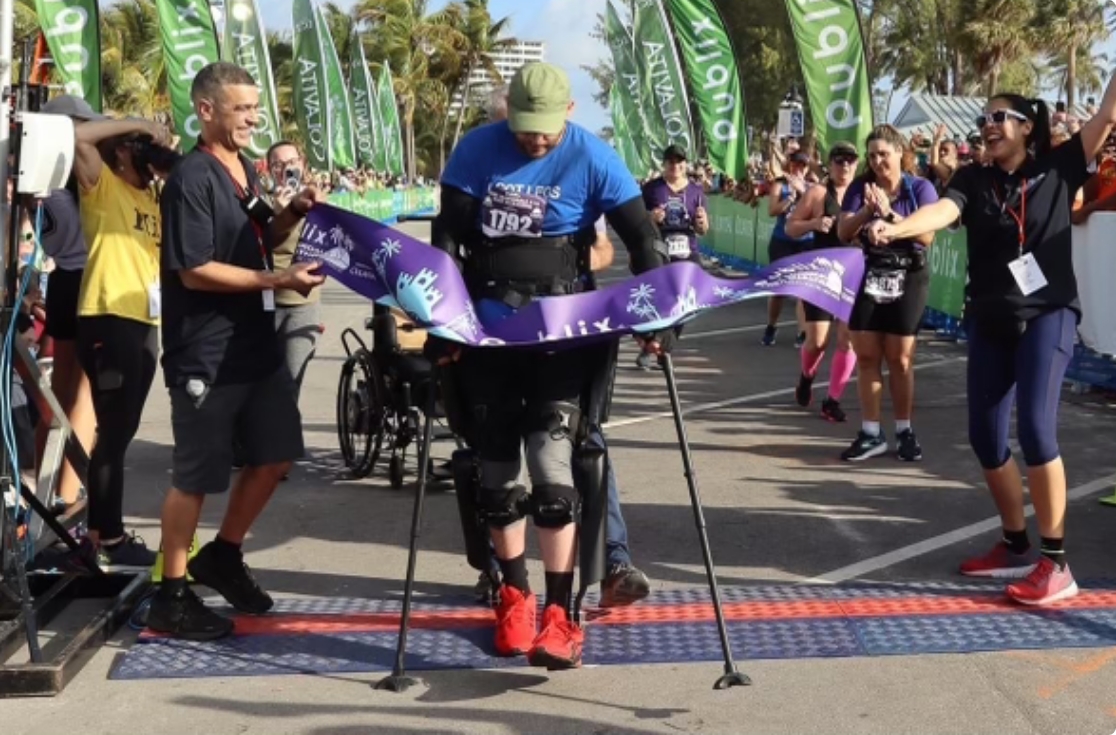
The result is a system that places a stronger emphasis on day-to-day usability rather than simply adding new hardware features.
Potential health benefits beyond mobility
While the most obvious benefit of the ReWalk system is the ability to stand and walk, studies and user surveys have identified a number of potential secondary health benefits associated with regular exoskeleton-assisted walking.
Reported improvements include:
- Reduced spasticity
- Better trunk control
- Improved circulation
- Enhanced pain management
- Better bowel and bladder function
- Improved mental health and quality of life
These benefits are particularly important because spinal cord injuries often lead to secondary complications associated with prolonged sitting and reduced physical activity. Upright, weight-bearing movement may help address some of these challenges while providing opportunities for greater social participation and independence.
Insurance coverage and availability
One of the most significant developments for ReWalk users came before the launch of the ReWalk 7.
As of January 1, 2024, the ReWalk Personal Exoskeleton was assigned to the Medicare brace benefit category and is covered by Medicare when deemed reasonable and necessary based on an individual’s medical circumstances and documentation.
Insurance coverage has historically been one of the biggest barriers to adoption for personal exoskeletons, making Medicare eligibility an important milestone for accessibility.
The ReWalk 7 is now available in the United States for both personal and clinical use.
Lifeward is headquartered in Hudson, Massachusetts, and also maintains operations in Israel and Germany.
A step toward everyday exoskeleton use
The launch of the ReWalk 7 reflects a broader shift within the exoskeleton industry. Early systems focused primarily on proving that robotic walking was possible. Newer generations are increasingly focused on making that technology practical for everyday life.
Features such as crutch-mounted controls, smartwatch integration, mobile app connectivity, customizable walking speeds, and therapist-focused software are aimed at improving long-term usability rather than simply expanding technical capabilities.
The device still has limitations. Users require forearm crutches for balance, must complete structured training before use, and in many cases require supervision from a certified companion. The system is also not intended for sports or high-impact activities.
Even with those limitations, the ReWalk 7 represents a significant advancement in personal mobility technology. For eligible individuals with spinal cord injuries, it offers a way to incorporate standing and walking into daily life through a system that is more connected, customizable, and user-friendly than previous generations.
Product page: Lifeward


