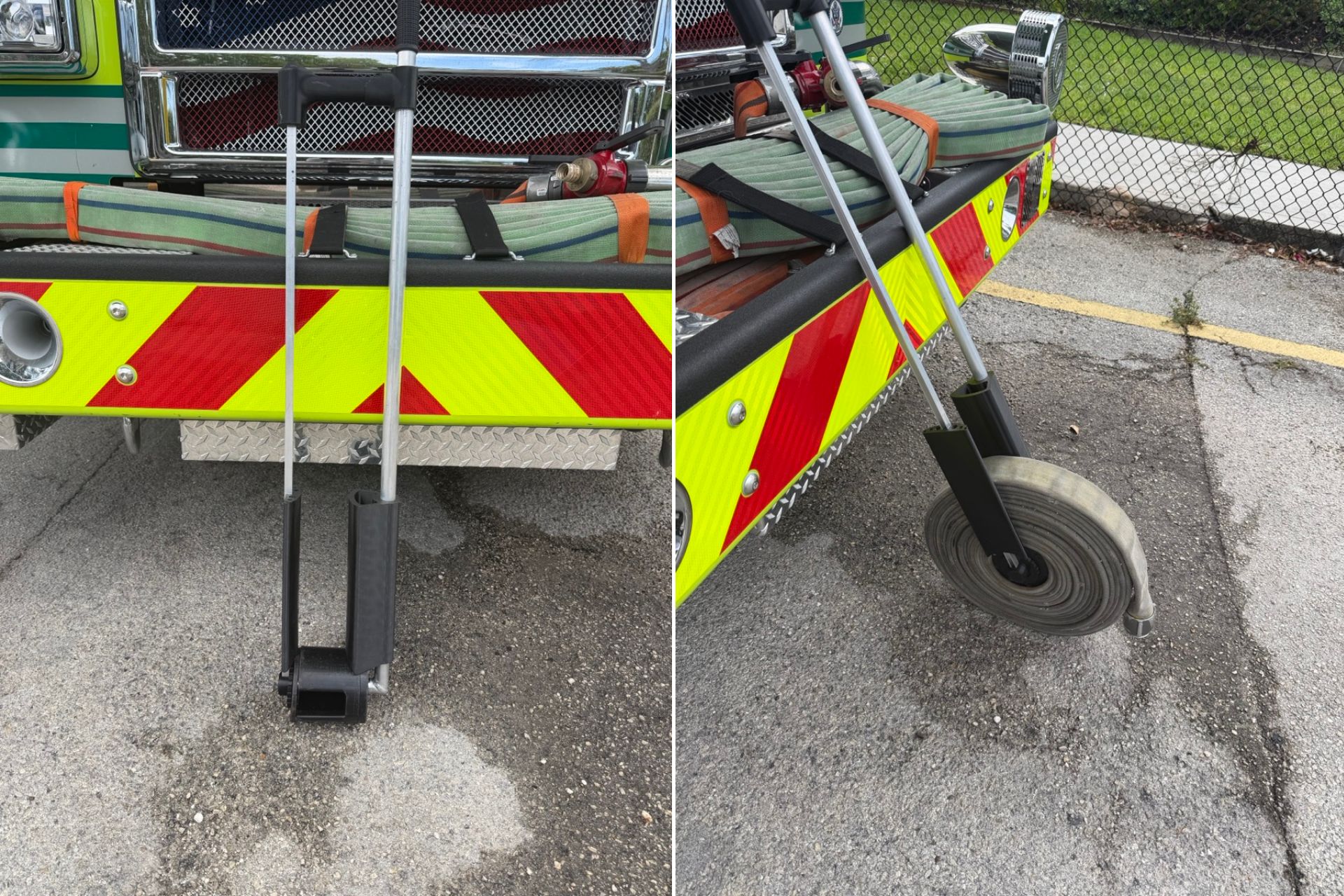
Every emergency call eventually comes to an end, but for firefighters, the work doesn’t stop when the flames are out. One of the most physically demanding parts of the job begins afterward: cleaning up and rolling fire hoses.
It’s a task that has changed very little over the years. Firefighters still spend valuable time manually rolling heavy hoses after every call, often repeating the same bending, twisting, and lifting motions throughout their careers.
Reelix is a new invention aiming to modernize that process. Designed by former firefighter Blake Loring, the apparatus-mounted hose roller is built to reduce physical strain, speed up hose cleanup, and help firefighters spend less time handling contaminated equipment after incidents. The product is currently in the prototype stage, with a patent pending and a public waitlist open.
Why hose cleanup still needs innovation
Fire departments have adopted countless technological advancements over the past several decades. Modern engines, thermal imaging cameras, advanced protective equipment, and battery-powered rescue tools have transformed emergency response.
Yet one routine task has remained largely unchanged.
After every call, firefighters still manually roll fire hose before it can be stored and made ready for the next response.
According to Reelix, this repetitive process not only consumes valuable time but also places continuous stress on firefighters’ backs, wrists, knees, and shoulders. Over years of service, these repetitive movements can contribute to chronic wear and tear. The company also notes that manually handling hose after structure fires increases direct contact with soot and other fireground contaminants absorbed by the hose during incidents.
What is Reelix?
Reelix is a purpose-built hose rolling system designed specifically for fire departments.
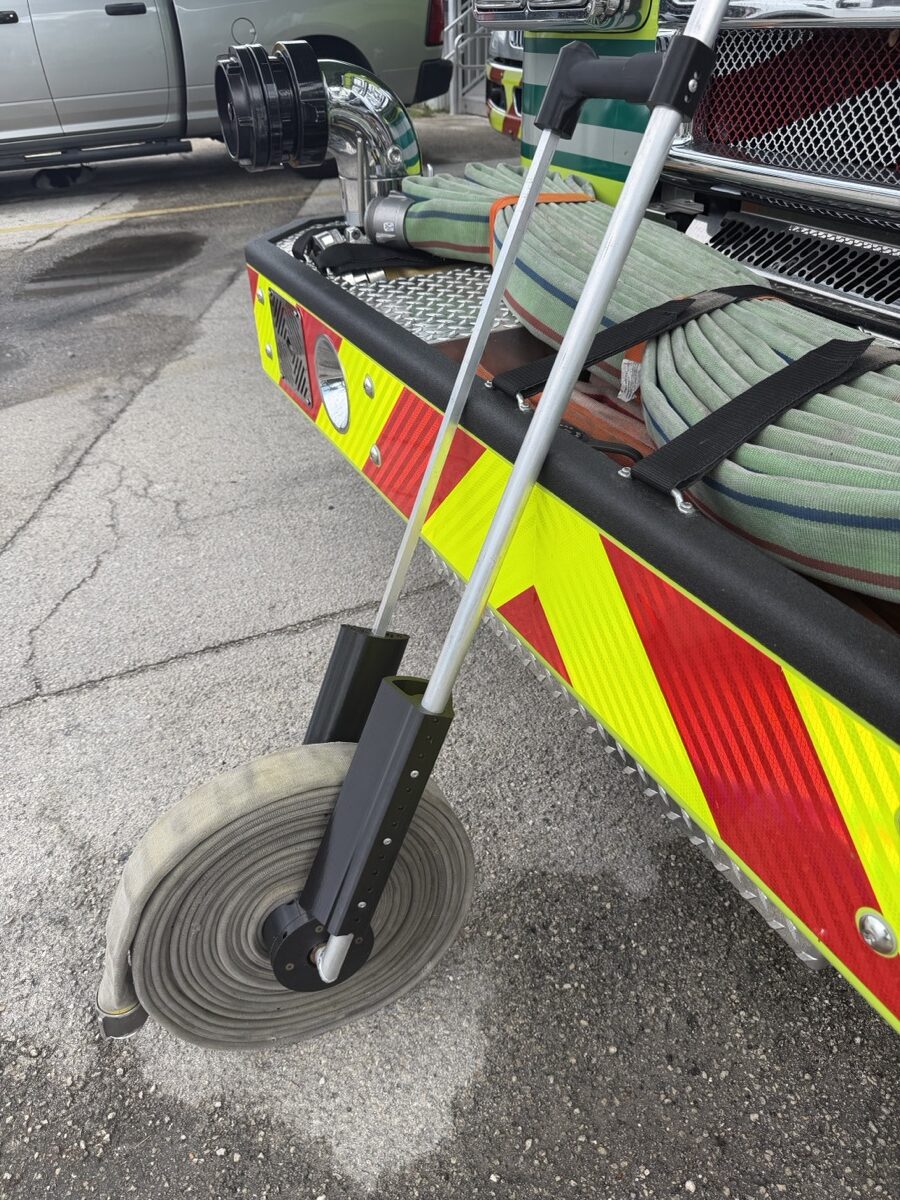
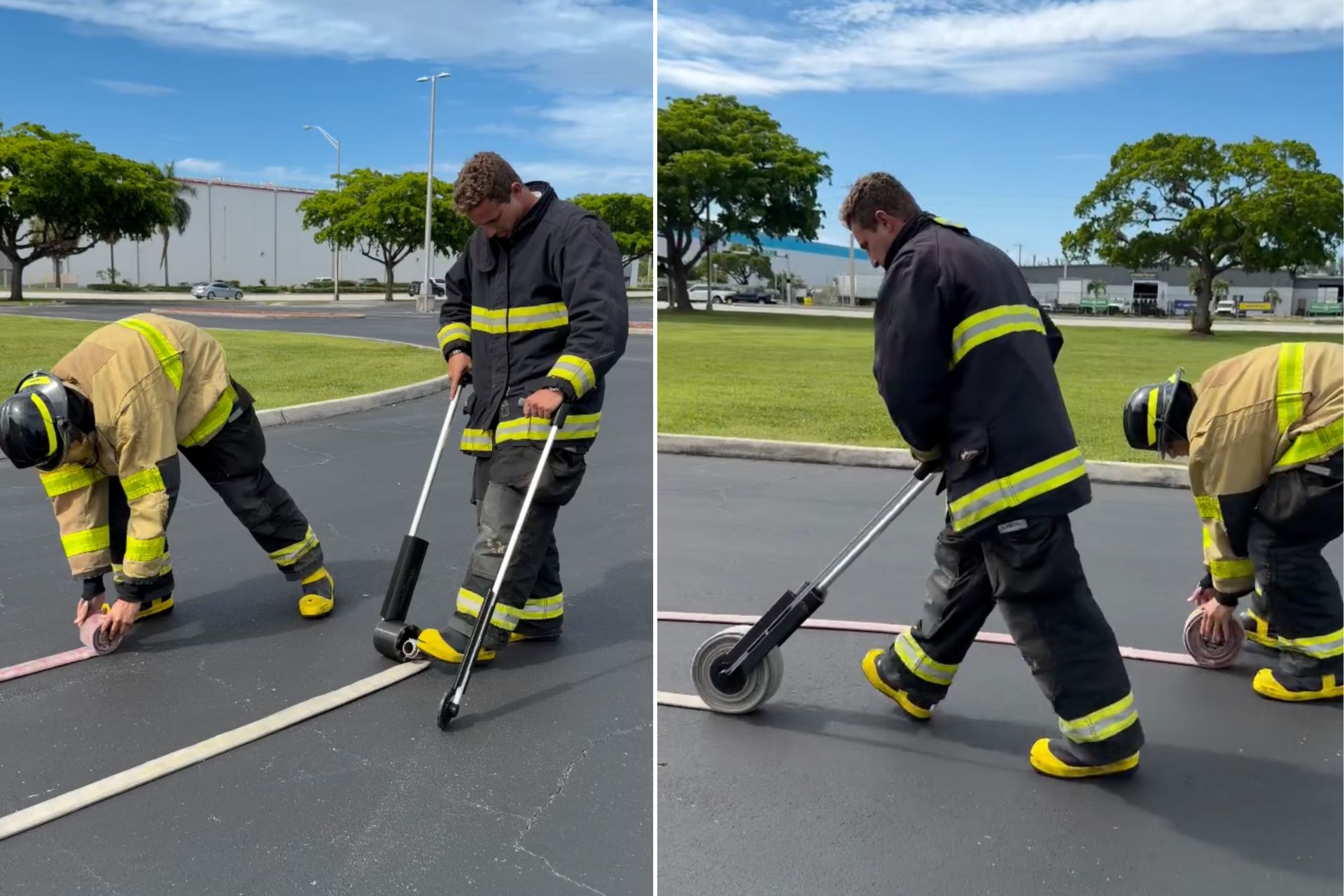
Rather than requiring firefighters to manually wind hose into coils, the device mounts directly to a fire apparatus and mechanically rolls the hose into a neat, uniform bundle.
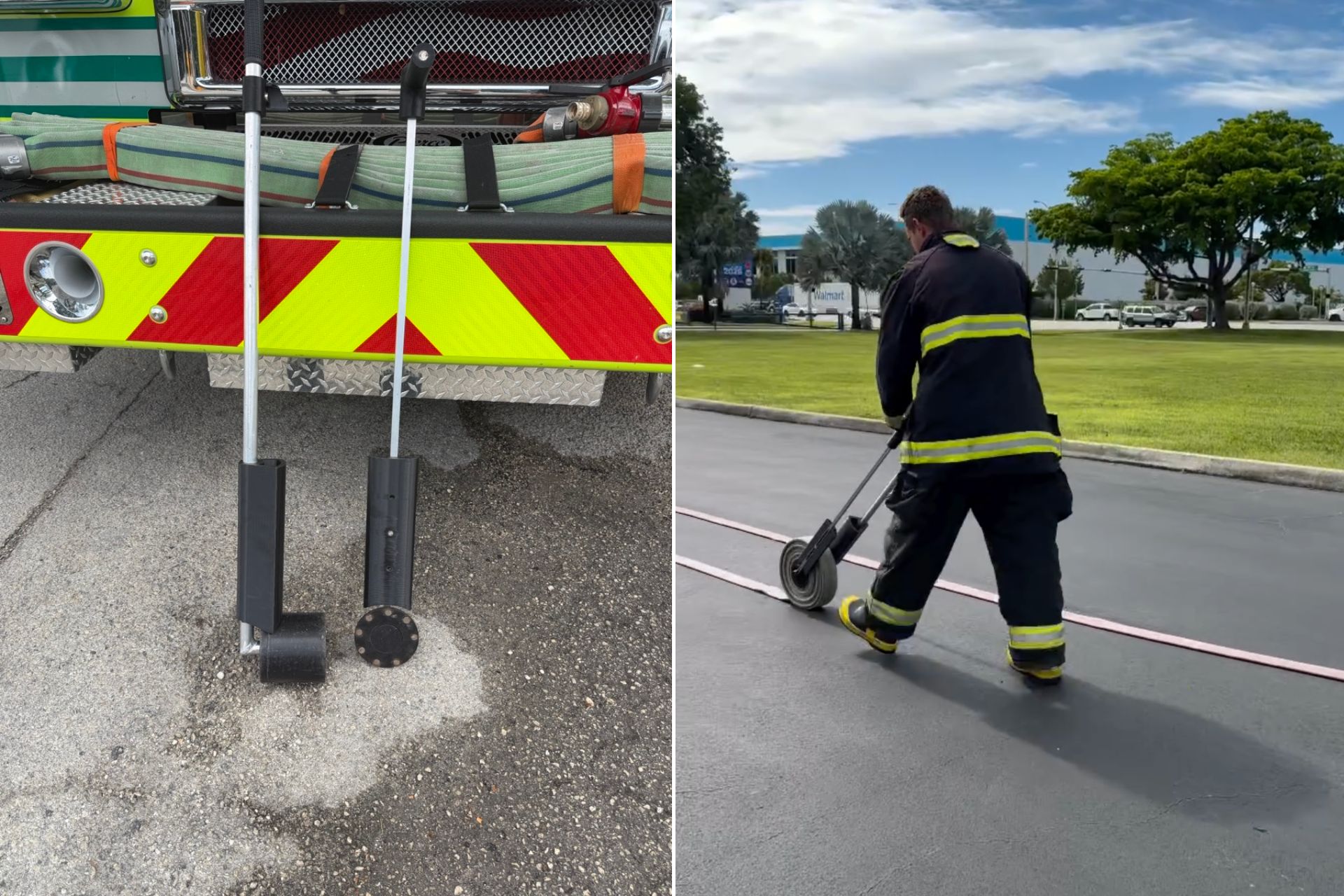
Instead of multiple firefighters spending several minutes rolling hose by hand, one person simply feeds the hose into the machine while Reelix performs the winding process. The result is a tightly rolled hose with considerably less manual effort.
The product is designed for both station use and field operations, allowing departments to integrate it into their normal cleanup workflow.
Built around simplicity
One of Reelix’s biggest strengths is that it doesn’t attempt to reinvent hose management.
Instead, it focuses on improving one specific task that firefighters perform after nearly every incident.
According to the manufacturer, the system is designed to provide:
- Faster hose rolling
- Single-person operation
- Reduced physical strain
- Simpler post-incident workflow
- Field-tested firefighter-focused design
That simplicity could make it easier for departments to adopt without significantly changing existing operating procedures.
Compatible with multiple hose sizes
Fire departments often carry several hose diameters depending on the type of apparatus and incident.
Reelix is designed to work with several commonly used sizes, including:
- 1½-inch hose
- 1¾-inch hose
- 2-inch hose
- 3-inch hose
The company says the unit is intended for single-person operation and can be used both in the station and in the field. At present, the product remains a prototype under development.
Designed by someone who did the job
Unlike many industrial products developed solely from engineering specifications, Reelix originated from firsthand experience.
Founder Blake Loring is a former firefighter who created the product after recognizing that hose cleanup had remained largely unchanged despite advancements elsewhere in the fire service.
That practical background is reflected throughout the product’s design philosophy, with the company emphasizing that Reelix was developed around real-world firefighting rather than theoretical workflows.
Reducing physical strain
One of the primary goals behind Reelix is reducing repetitive physical effort.
Rolling dozens of heavy hoses over the course of a career can involve thousands of repeated bending and twisting movements. While these individual motions may seem minor, they accumulate over years of service.
Reelix is intended to shift much of that work from the firefighter to the machine, potentially reducing fatigue during routine cleanup operations.
Although the company highlights ergonomic benefits and reduced exposure to contaminated hose, these are manufacturer claims that have not yet been independently validated through published studies.
A focus on health and safety
Beyond efficiency, Reelix also emphasizes reducing unnecessary contact with contaminated equipment.
After structure fires, hoses may carry soot, smoke residue, and other combustion byproducts until they are properly cleaned. By minimizing manual handling during the rolling process, the company says firefighters can reduce direct contact with contaminated hose during cleanup.
While proper decontamination procedures remain essential regardless of equipment used, reducing unnecessary handling aligns with broader efforts across the fire service to improve occupational health.
Availability
At the time of writing, Reelix has not yet entered full commercial production.
The company describes the system as a prototype under development with patent pending status and is currently accepting registrations through its waitlist for departments and individuals interested in future availability.
No official pricing, production timeline, or release date has been announced.
Final thoughts
Firefighters already face physically demanding and hazardous conditions every time they respond to an emergency. While dramatic innovations often focus on firefighting itself, Reelix takes aim at a task that happens after the emergency ends.
By automating the repetitive process of rolling fire hose, the device seeks to save time, reduce physical strain, and simplify post-incident cleanup without requiring major changes to existing workflows.
Whether Reelix ultimately becomes standard equipment for fire departments remains to be seen, but its focus on improving one of the most routine parts of the job highlights how even small operational innovations can have a meaningful impact over the course of a firefighter’s career.
Source: Reelix