Anyone who has spent weeks on crutches knows the routine. Every trip to the kitchen becomes a balancing act. Carrying groceries is almost impossible. Opening doors, climbing stairs, or even holding a cup of coffee can turn into frustrating challenges. While crutches have been the standard mobility aid for decades, they also force users to rely heavily on their arms and shoulders while limiting natural movement.
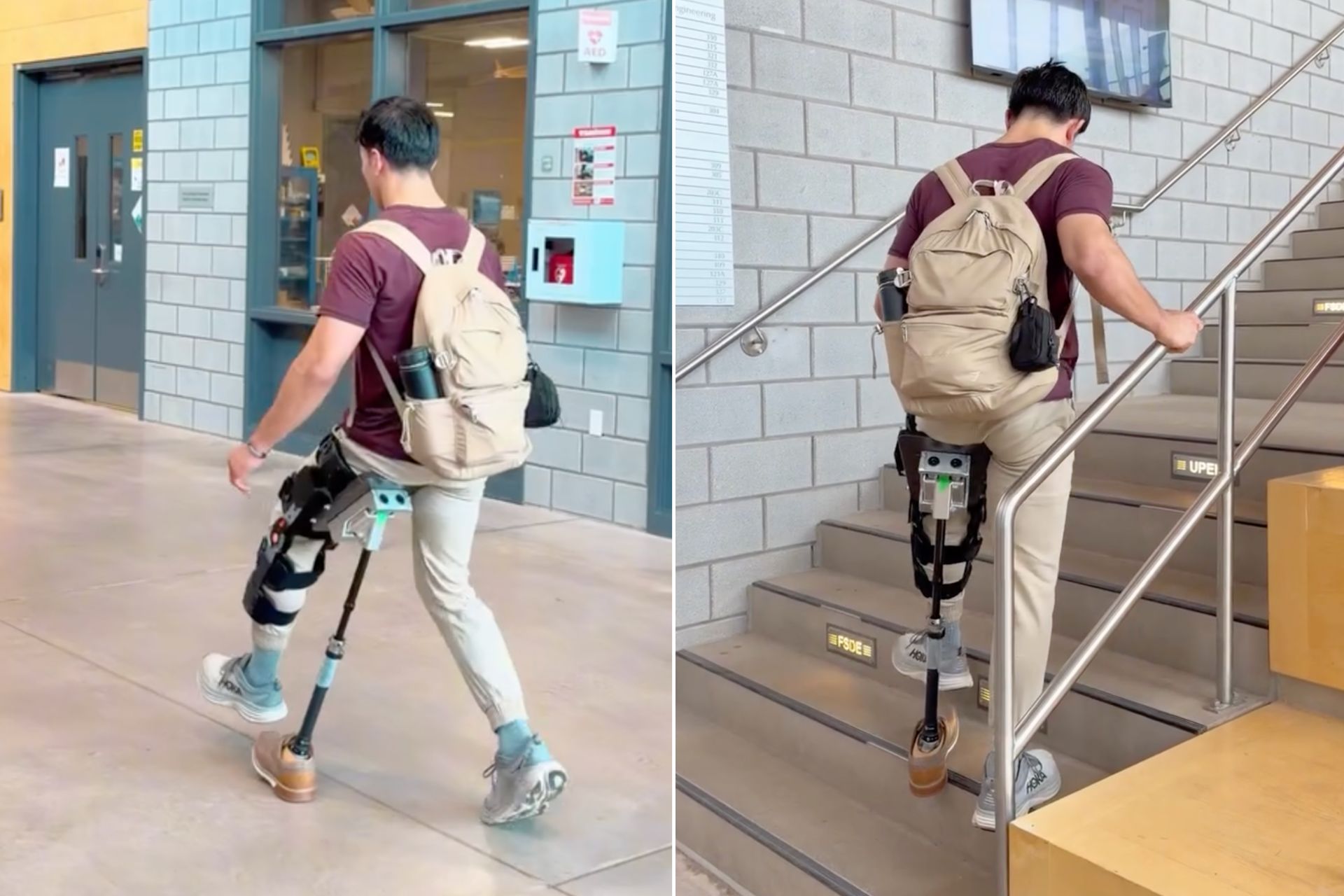
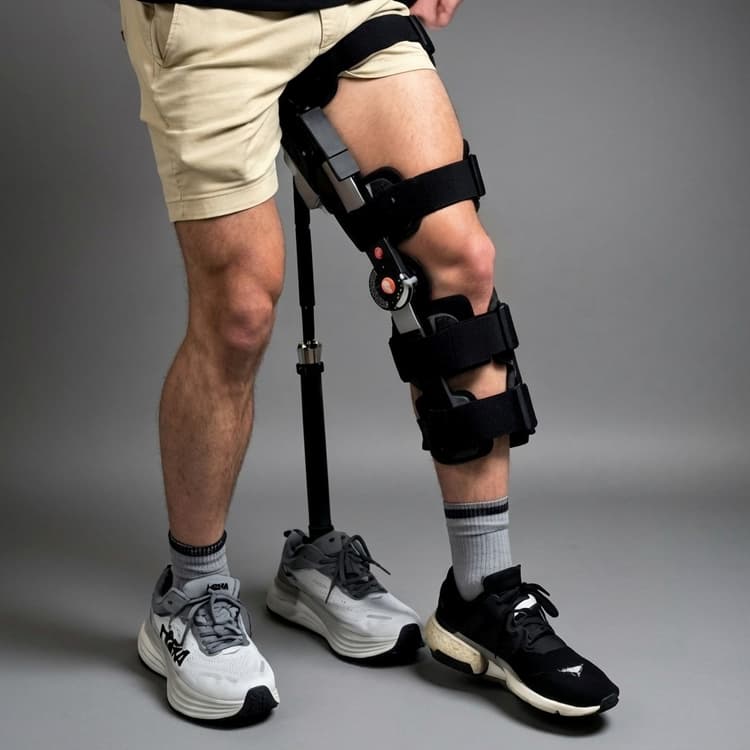
Canadian medical technology startup LimbRise believes there is a better way. Its patent-pending RevoStep is a wearable, hands-free rehabilitation device designed for people recovering from knee injuries or surgery. Rather than placing body weight through crutches, the device straps to the injured leg and is intended to redirect part of the load through the lower leg, allowing users to keep both hands free during everyday activities.
Designed around everyday mobility
Unlike traditional crutches, RevoStep is worn directly on the leg. The company says users can walk, carry objects, open doors and move through daily life without constantly relying on their upper body for support. The device is adjustable, removable and designed to fit around the lower leg and thigh while allowing controlled movement during rehabilitation.
LimbRise summarizes the concept in four simple steps: wear the device, redirect part of the load away from the injured limb, move with both hands free, and continue everyday life while recovering.
The company also describes RevoStep as being designed for use beyond clinical settings, with school, work and other daily activities in mind. It is non-invasive and can be removed when not needed.
Why the company believes crutches can slow recovery
A major part of LimbRise’s case for RevoStep focuses on the limitations of conventional crutches.
According to information presented by the company, many patients discontinue rehabilitation early because crutches are uncomfortable or inconvenient. The company also highlights issues such as reduced walking speed, upper-body strain, difficulty carrying objects and the possibility of secondary injuries from falls or prolonged crutch use.
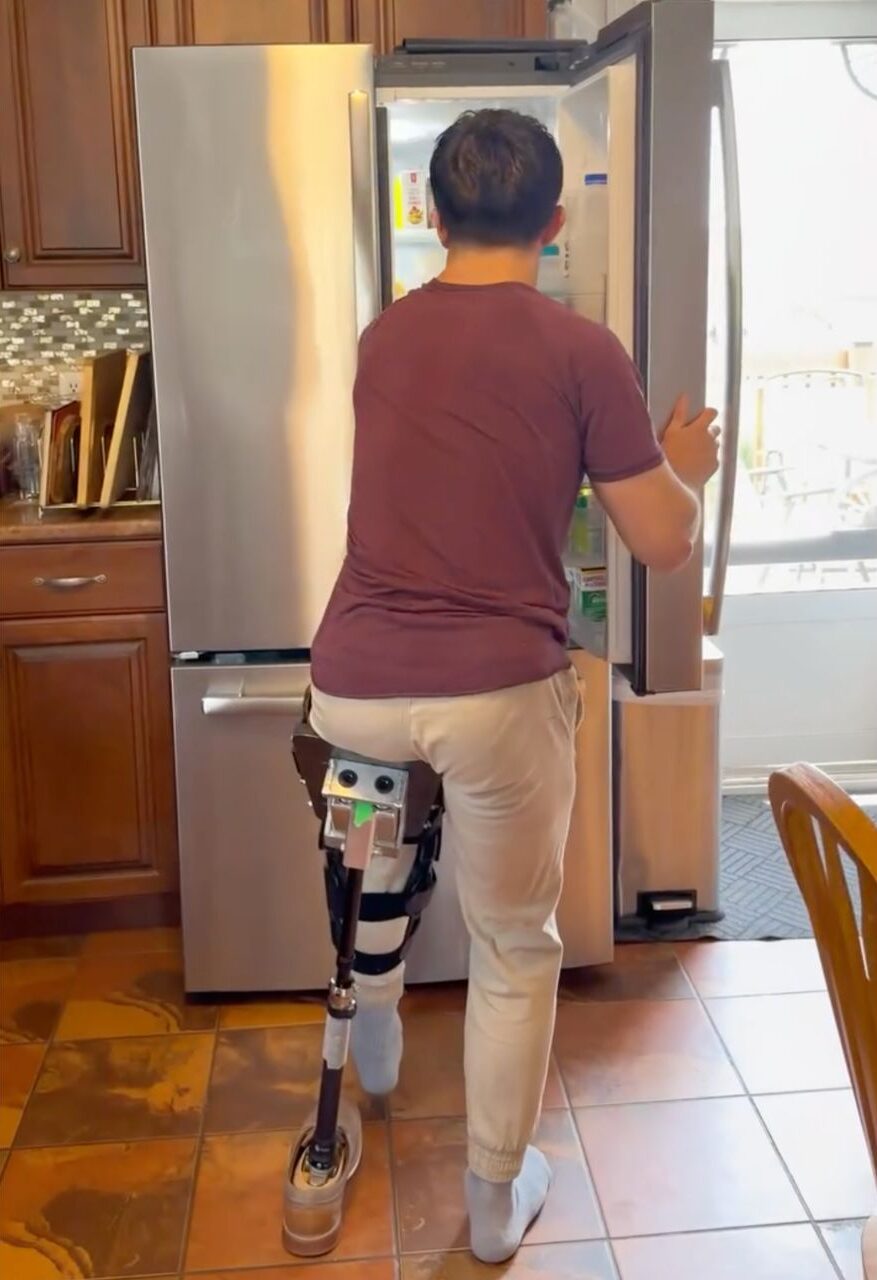
The clinical page goes even further, arguing that keeping the injured leg elevated for long periods may contribute to altered gait patterns, hip stiffness, muscle weakness and additional strain on the lower back. LimbRise presents these as reasons for designing an alternative that allows a more natural walking posture. These biomechanical explanations represent the company’s rationale for the device and should not be interpreted as established clinical outcomes for RevoStep itself.
Prototype evolution
RevoStep has already gone through multiple prototype stages.
The company’s first working prototype demonstrated hands-free weight-bearing, walking and staircase use. Based on testing and feedback, LimbRise redesigned several aspects of the device for the next iteration.
Among the changes are:
- A larger seat area for improved comfort while bearing weight.
- Removal of the spring mechanism to promote a steadier walking gait.
- A dedicated calf rest to improve knee support.
- A removable body section that allows users to sit more easily while wearing the device.
- A significant reduction in weight from approximately 25 pounds (11.3 kg) on the original prototype to under 8 pounds (3.6 kg) on the redesigned version.
Where development stands today
RevoStep is still an emerging medical technology rather than a commercially available rehabilitation product.
LimbRise says its current priorities include prototype refinement, biomechanical validation, regulatory preparation and manufacturing readiness. The company is also preparing for an anticipated Health Canada Class I regulatory pathway and notes that its product development has been informed by 69 patient discovery interviews conducted as of June 2026.
The company has also outlined plans for engineering validation, structural testing, gait evaluation and usability studies before moving toward production.
A different vision for rehabilitation
Instead of trying to improve the traditional crutch, RevoStep attempts to rethink how people move during recovery altogether. By placing the support directly on the injured leg and freeing the user’s hands, the concept aims to make everyday activities less restrictive while encouraging a more natural walking pattern.
Whether the device ultimately delivers all of its intended clinical benefits will depend on future validation studies and regulatory progress. Even so, RevoStep highlights a growing trend in rehabilitation technology: designing mobility aids that fit into daily life rather than forcing daily life to adapt to them.
Source: LimbRise