

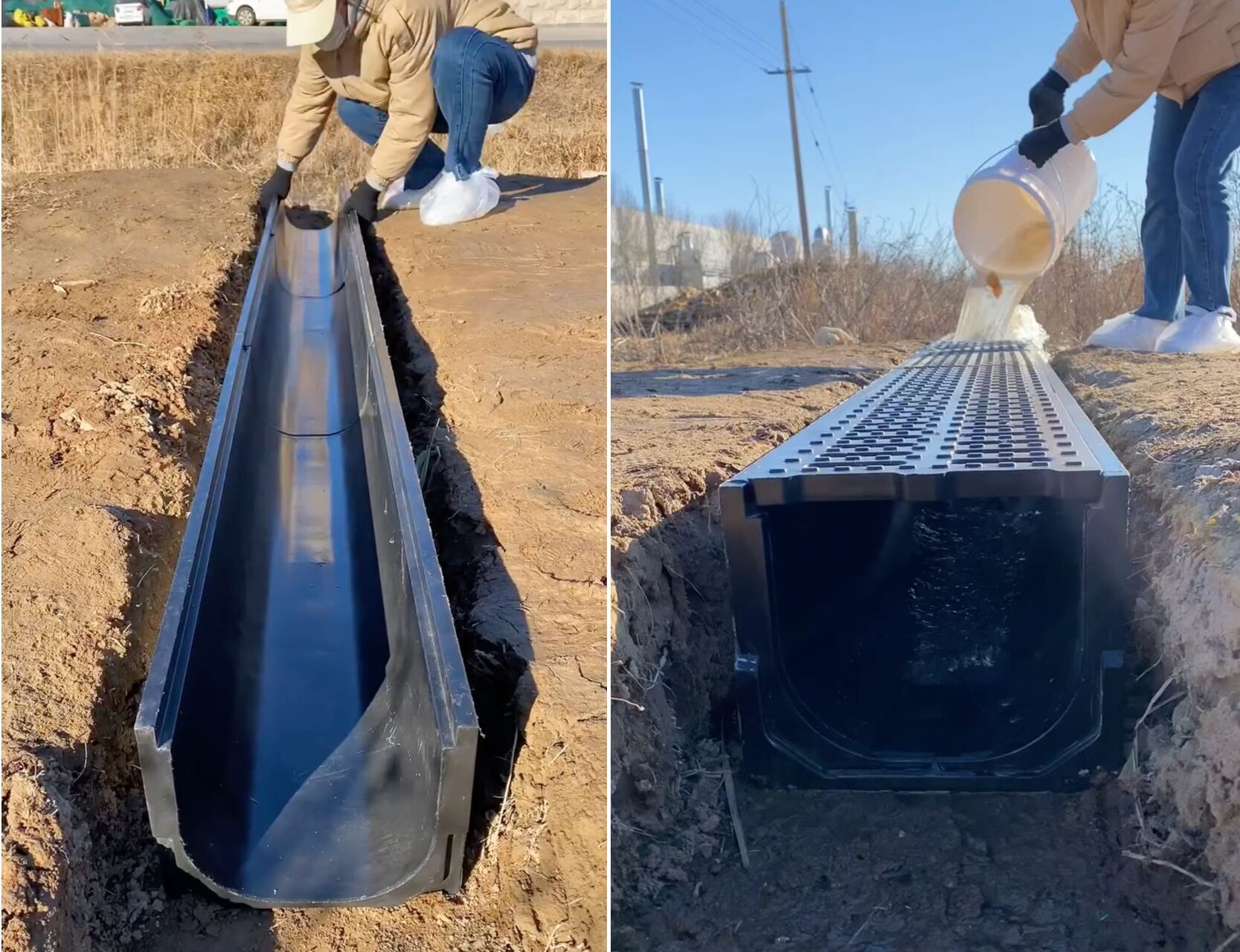
Building a roadside drainage ditch has traditionally been a slow, labor-intensive job. Contractors first excavate a trench, then build formwork or position heavy concrete sections, pour concrete, wait for it to cure, and finally install the drainage grates before the system is ready for use. It is a process that can take days, especially on larger projects.
A newer approach replaces much of that work with prefabricated trench drain units. Instead of constructing the channel on-site, the drainage sections arrive ready to install. Workers simply prepare the trench, position the modular units one after another, connect them into a continuous channel, and complete the assembly with protective grates. The result is a cleaner installation process that can significantly reduce construction time.
Not your typical plastic drain
At first glance, the drainage channels shown in the installation videos resemble heavy-duty plastic. According to the manufacturer, however, these units are made from resin-based composite materials, with some models also available in polymer concrete depending on the application. Unlike conventional concrete channels, the resin construction reduces weight while maintaining the rigidity needed for civil engineering projects.
The manufacturer currently offers a range of modular trench drain units in numerous configurations, including models CN001, CN004, CN005, CN008, CN013, CN015, CN021, CN022, CN023, CN024, CN025, and CN026. Individual models are produced in different channel dimensions, while custom sizing is also available to suit specific project requirements.
Building a drainage ditch like building blocks
The biggest advantage of prefabricated trench drains is the installation process itself.
Instead of casting an entire drainage channel in place, workers excavate the required trench, prepare the base, and then position the prefabricated sections sequentially. Each module forms part of a continuous drainage channel, allowing the ditch to take shape piece by piece.
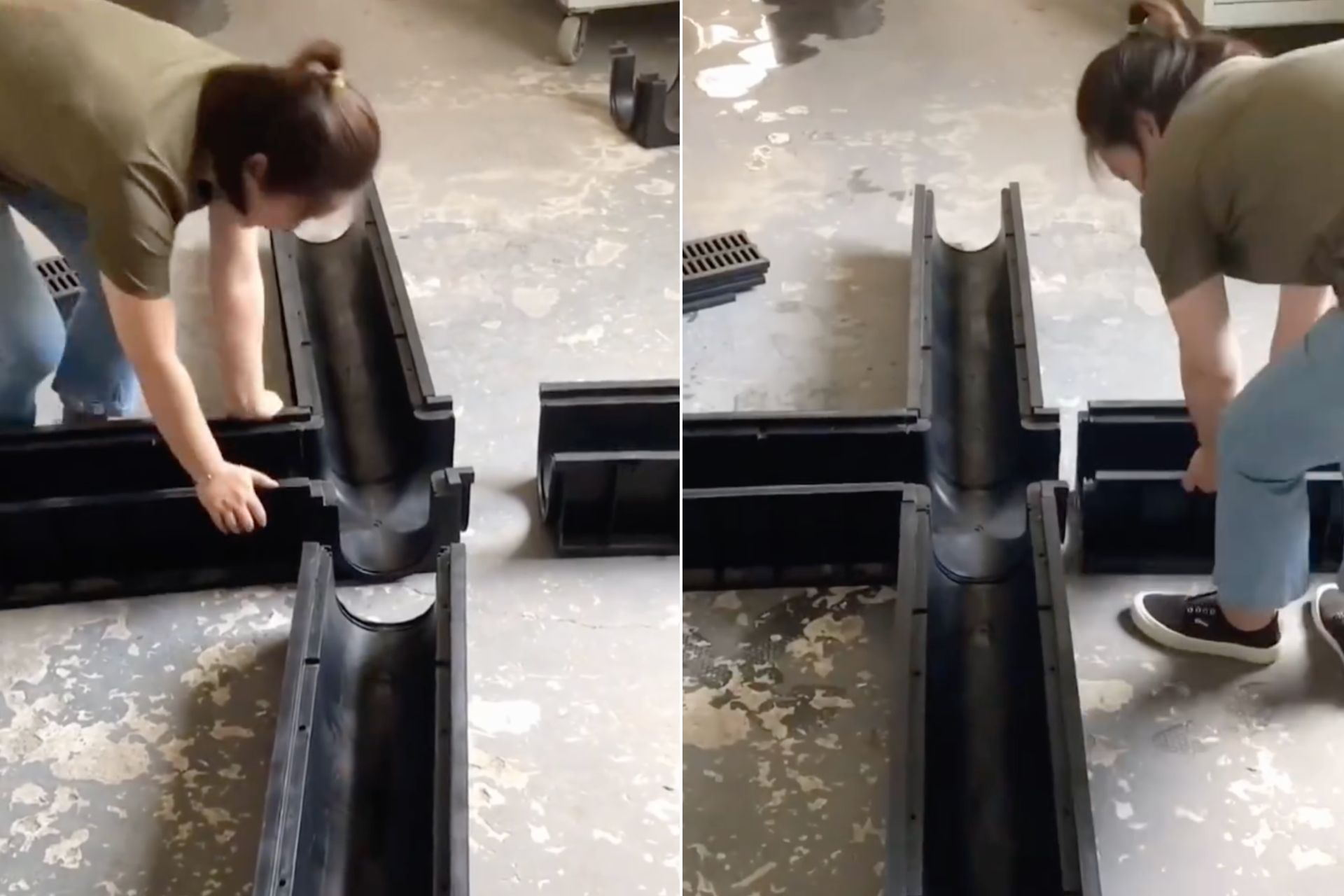
Because the channel sections are manufactured before they arrive on site, there is no need to wait for freshly poured concrete to cure. Once aligned and secured, installers can move directly to the next stage of construction.
For contractors, that can translate into reduced labour requirements, shorter road closures, and less disruption to surrounding areas.
Why resin channels are becoming more popular
According to the manufacturer, resin trench drain systems offer several practical advantages over traditional cast-in-place drainage.
The composite material is designed to resist corrosion from water, salts, acids, alkalis, and many chemicals commonly encountered in drainage environments. The smooth interior surface is also intended to encourage efficient water flow while helping reduce sediment accumulation inside the channel.
Being considerably lighter than conventional concrete alternatives can also make transportation and on-site handling easier, particularly where large numbers of drainage sections must be installed.
The manufacturer also notes that the modular design provides flexibility for a wide range of installation layouts while allowing channels to be produced in custom sizes for different infrastructure projects.
The ditch isn’t finished without the grates
The trench drain channels themselves form only part of the completed drainage system.
Once the channel has been installed, it is typically covered with ductile iron gully gratings, which create the finished walking or driving surface while allowing rainwater to enter the drainage channel below.
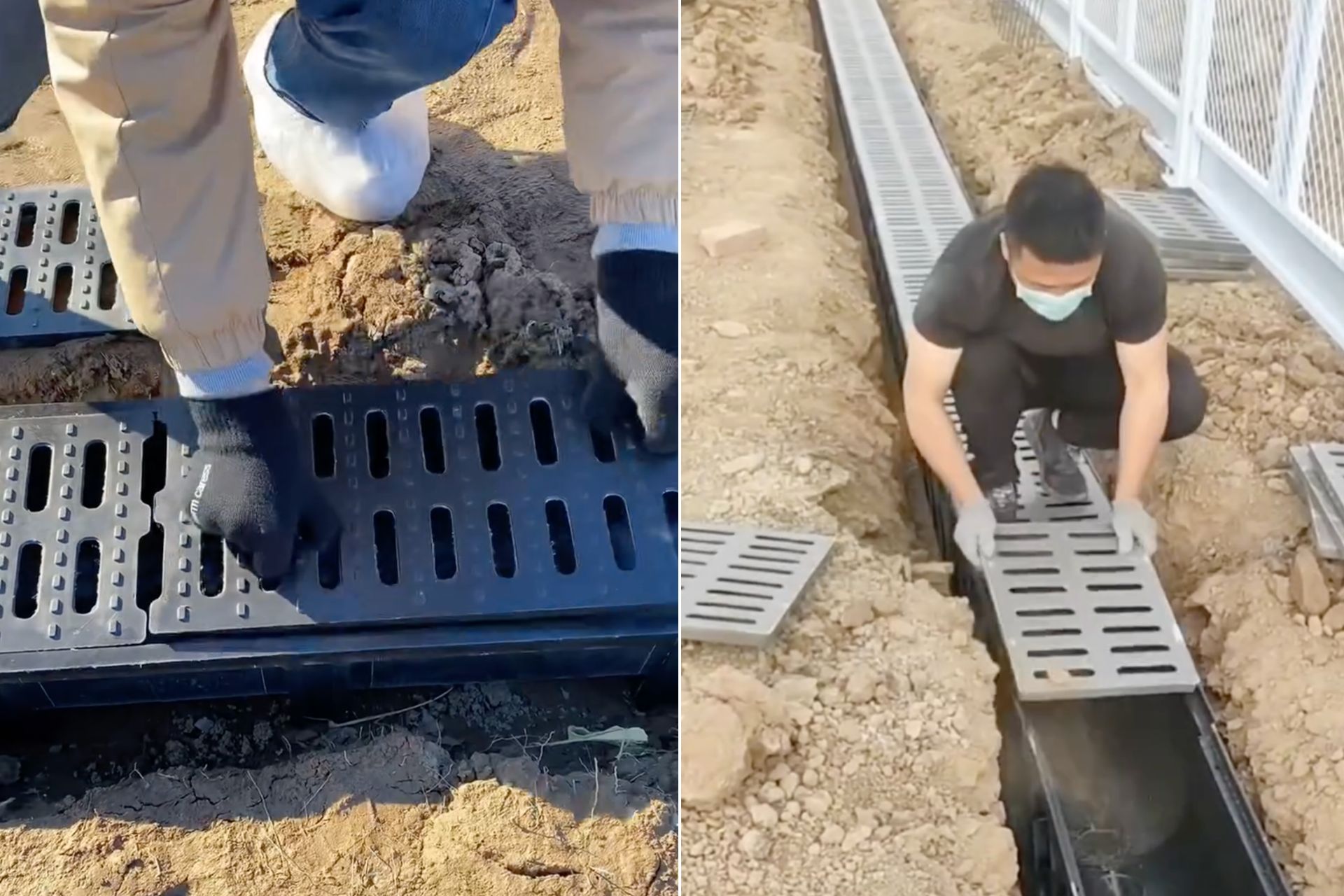
These gratings perform several important functions. They prevent large debris from entering the drain, protect the channel beneath, and provide the structural surface that pedestrians and vehicles travel over.
The manufacturer offers numerous ductile iron gully grating designs, including standard, hinged, and herringbone-style patterns, allowing the drainage system to be matched to different applications. Various frame designs and load classes are also available depending on whether the installation is intended for pedestrian areas, parking lots, roads, or heavier-duty industrial environments.
This combination of a lightweight resin channel below and a high-strength ductile iron grating above allows each material to perform the job it is best suited for.
Where these systems are used
Prefabricated trench drain systems are commonly installed anywhere surface water needs to be collected and directed away quickly.
Typical applications include:
- Roads and highways
- Parking areas
- Commercial developments
- Industrial facilities
- Residential communities
- Public plazas
- Landscaped areas
- Pedestrian walkways
Because different sites experience different traffic loads, manufacturers offer multiple channel sizes together with a choice of grate materials and load ratings.
A modular approach to modern drainage
Drainage infrastructure rarely attracts much attention, but it plays an essential role in protecting roads, buildings, and public spaces from water damage.
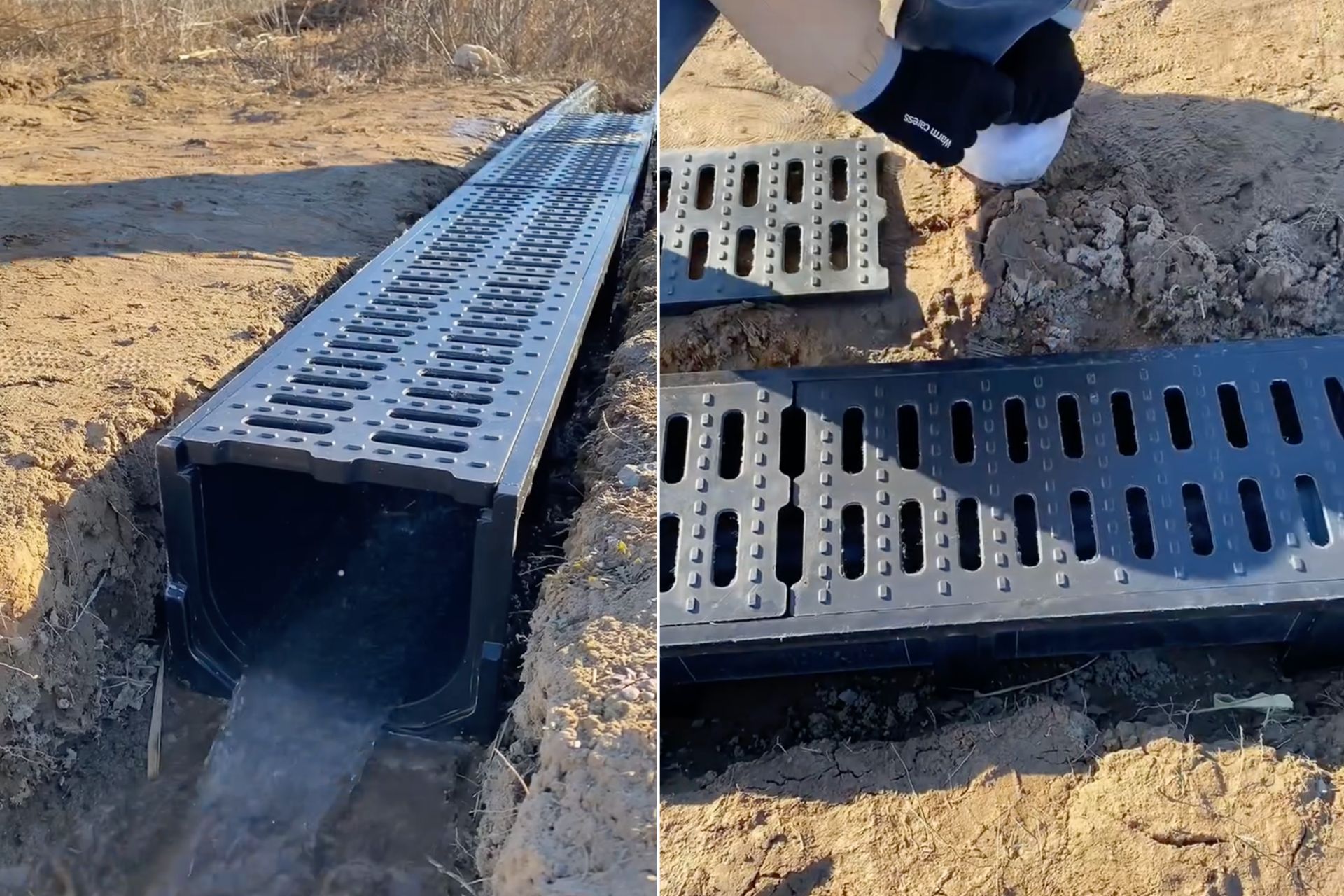
Modular resin trench drains demonstrate how prefabrication is changing even the most traditional areas of civil engineering. By manufacturing drainage channels before they reach the construction site, installers can assemble long stretches of drainage quickly while maintaining consistent quality and reducing on-site work.
The result is a drainage system that combines lightweight composite channels with durable ductile iron gratings to create a practical, modular solution for everything from footpaths to busy roads. It may not be the most glamorous piece of infrastructure, but it’s a good example of how thoughtful engineering can make construction faster, cleaner, and more efficient.
Pricing
Pricing is not publicly listed. Like many industrial drainage systems, these trench drain units are supplied on a quotation basis, with costs depending on dimensions, load rating, materials, customization, order quantity, and shipping requirements.
Product page: Xinghua Casting


