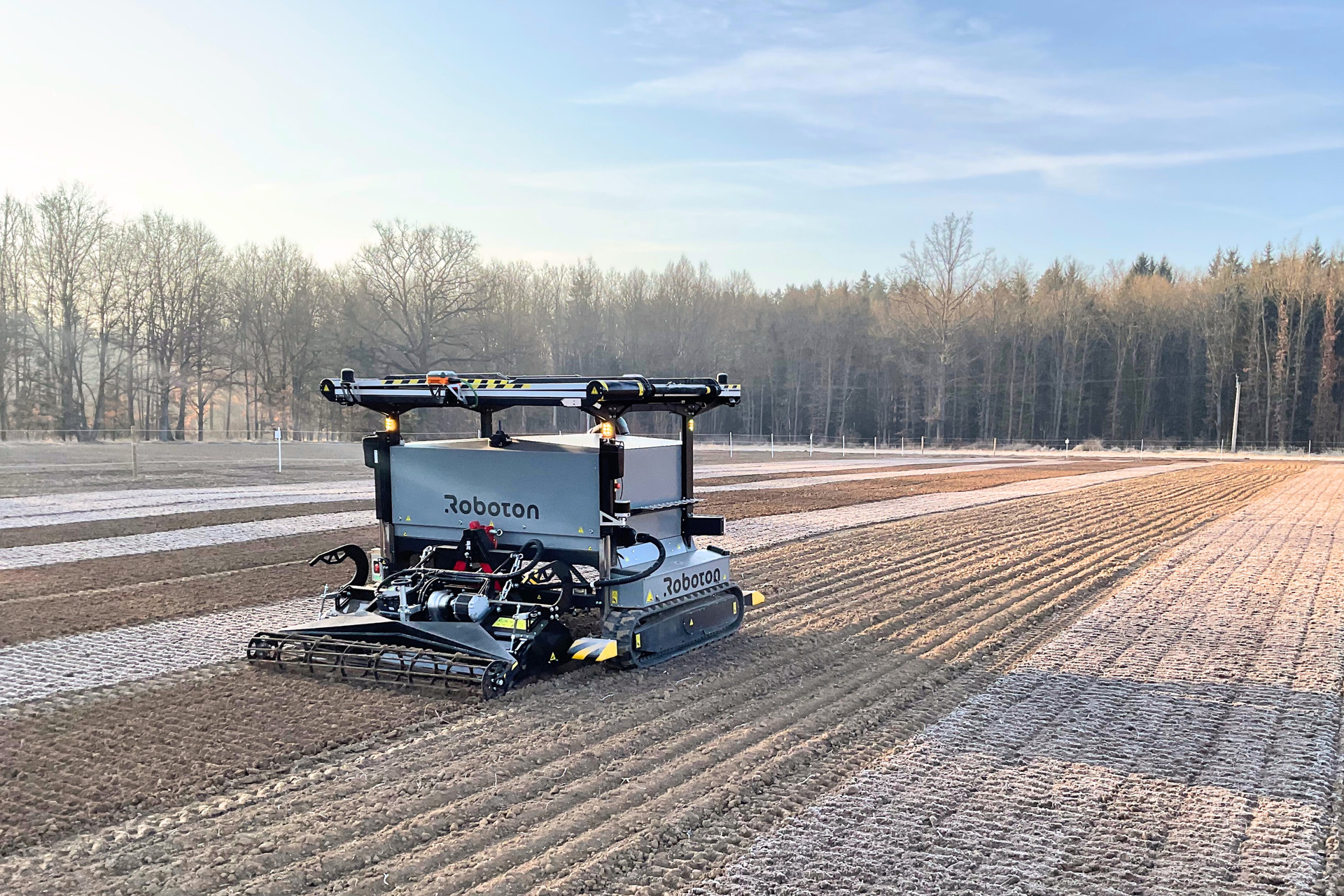
Solar panels may be the first thing people notice about the Roboton Farmer, but generating some of its own electricity is only one part of this Czech agricultural robot’s appeal.
The tracked machine is designed to prepare soil, sow seeds, irrigate crops and remove weeds with minimal human involvement. Rather than building a separate robot for every job, developer TERMS has created a modular platform that can swap implements and follow growing plans managed through a digital control system.
One robot, several jobs
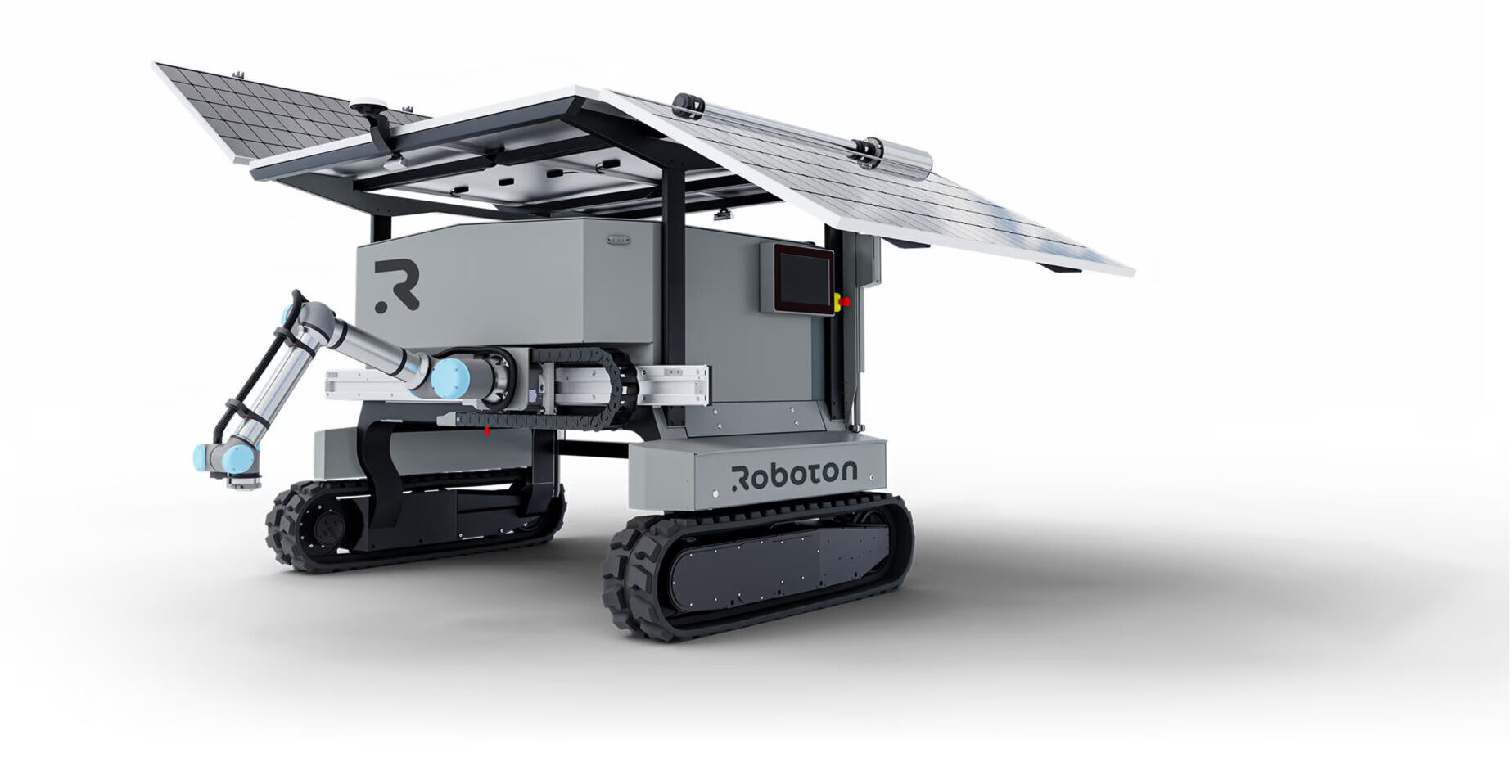
Roboton Farmer is an electrically driven, tracked unmanned ground vehicle. Its low, broad stance lets it carry different tools and turn within a confined area.
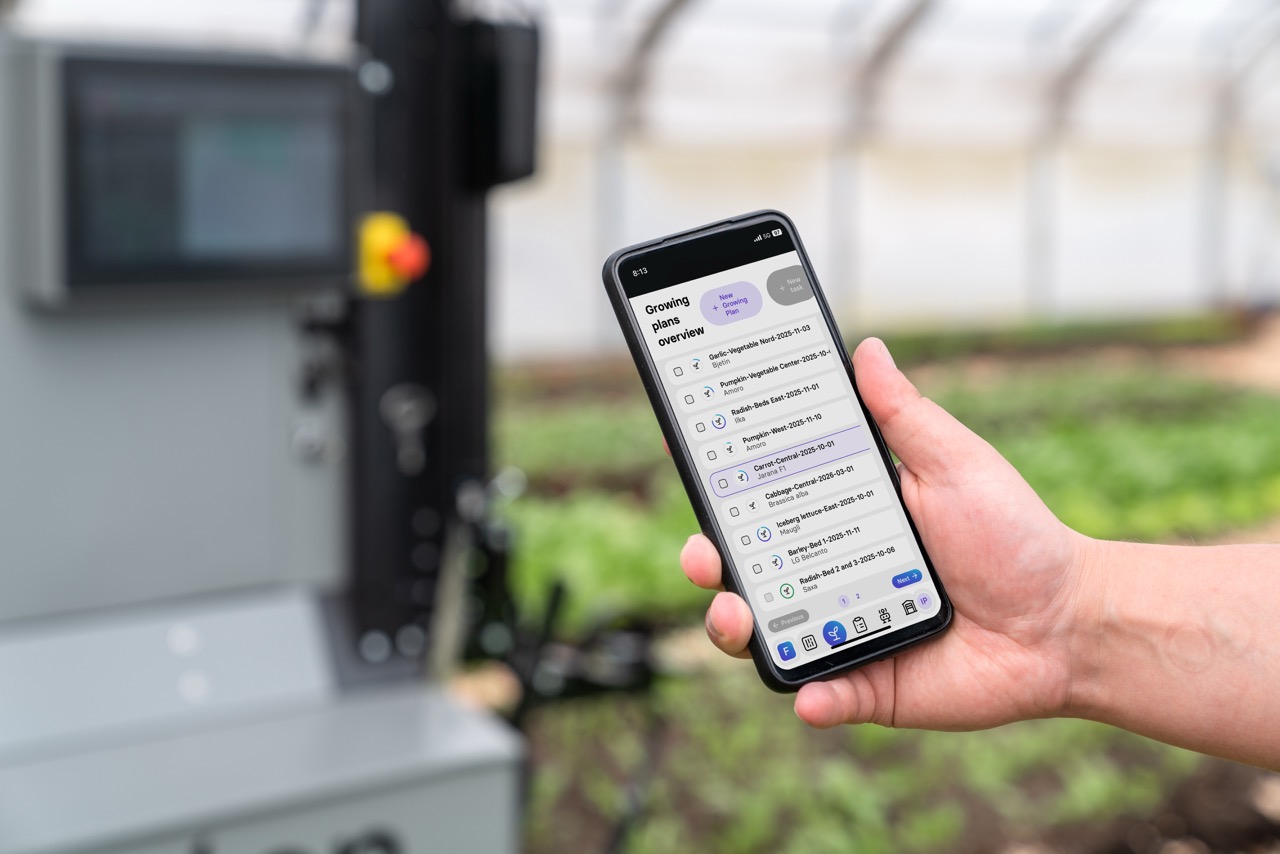
Farmers can build task plans in the accompanying software, monitor the machine’s condition and follow field operations remotely.
TERMS also describes autonomous charging, water refilling and implement changes as part of the platform’s operating concept. Once serviced, the machine is intended to resume its assigned work rather than requiring an operator to drive it back into the field.
Centimeter-level navigation
Roboton uses dual-antenna RTK satellite navigation, which the company says recalculates its position ten times per second and enables accuracy of up to 1 cm.
Digital field plans guide multiple stages of the growing cycle, letting the robot prepare beds, place seeds and later return to the same rows with watering or weeding equipment.
For soil preparation, a rotary implement works across a width of 190 cm and can be set from the surface down to a depth of 13 cm. The system automatically adjusts its travel speed in response to soil conditions, according to the manufacturer.
Precision sowing for different crops
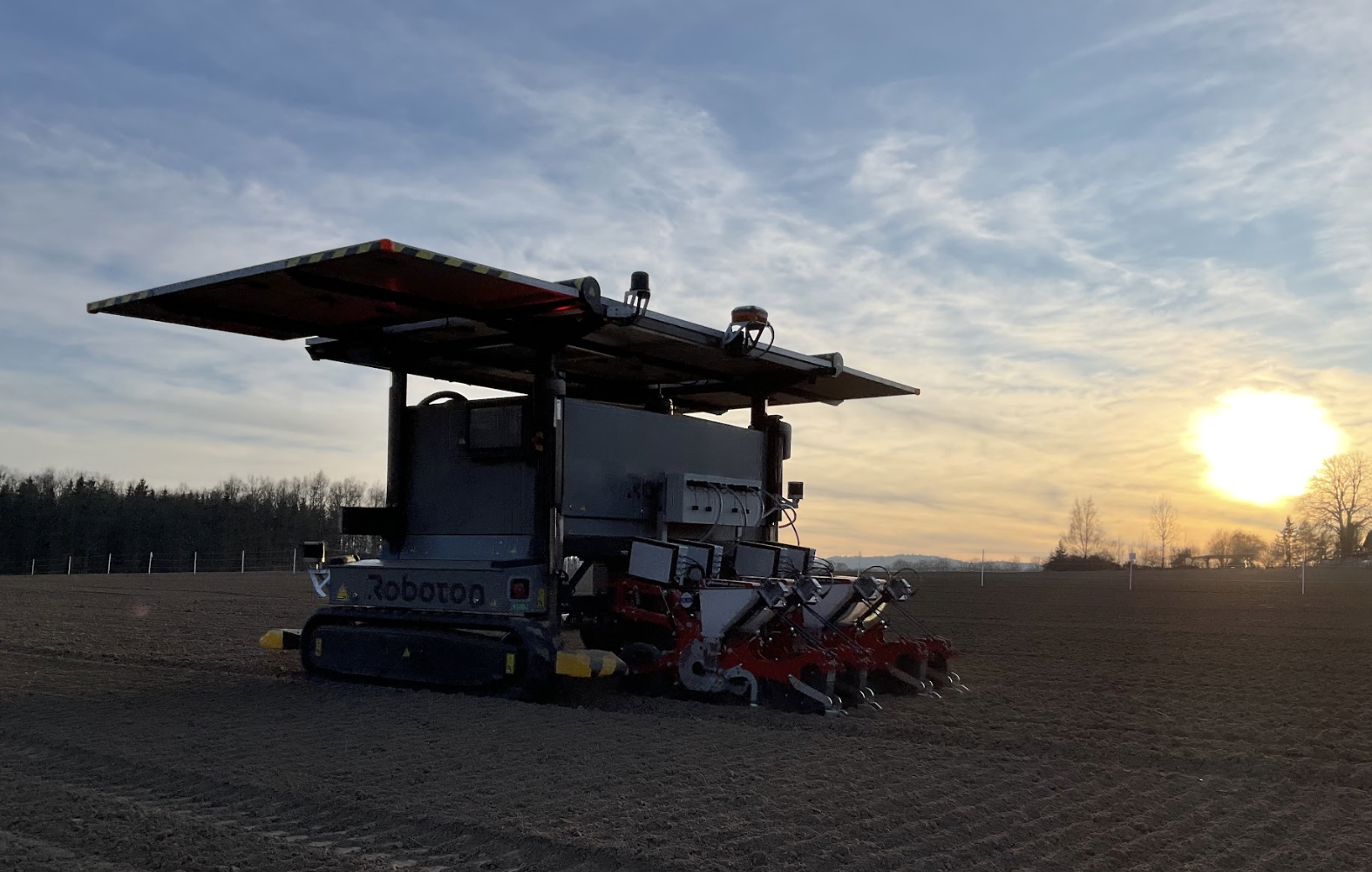
The sowing attachment can be configured with between one and 11 planting units. Seed size, spacing and planting depth can be adjusted for the selected crop, while a vacuum mechanism meters individual seeds. An optical sensor checks whether a seed is present before placement.
TERMS claims a sowing success rate of up to 99.5%, while the combination of metering and position control is intended to reduce gaps and unnecessary seed use. Actual results will depend on seeds, soil, settings and operating conditions.
Water delivered where plants need it
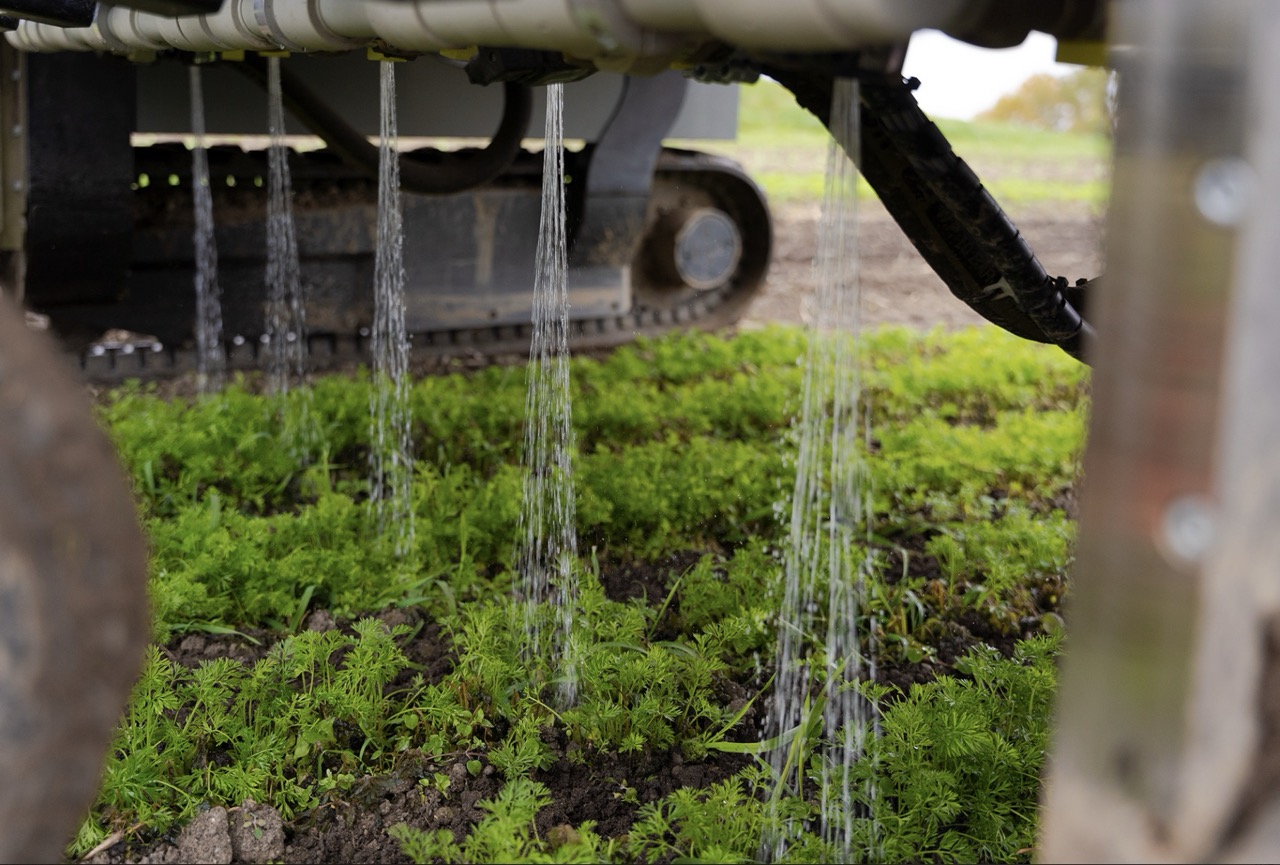
For irrigation, the robot carries a 1,200-liter tank and can serve as many as 11 rows during a pass. Eleven independently controlled outlets allow the system to vary watering across the working width instead of treating every part of the field identically.
Soil-moisture information helps determine where water is required, and the nozzles use gravity-based pressure. Roboton says deployments have demonstrated water savings of up to 70%; the actual reduction will vary with the crop, weather, soil and comparison method.
Mechanical weeding guided by cameras
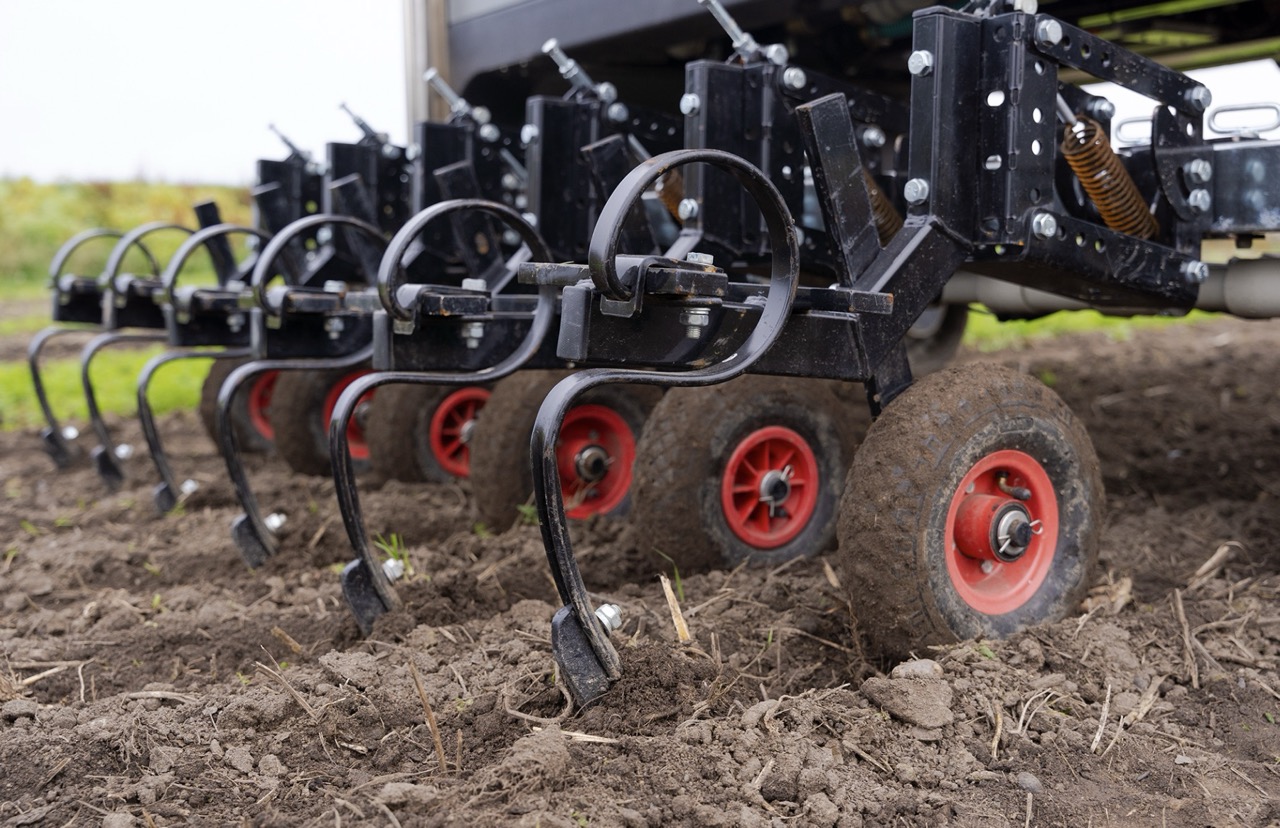
Weed control is another task where accuracy matters. A camera operating at 30 frames per second feeds the recognition system, which distinguishes cultivated plants from unwanted growth. The robot then moves metal blades laterally around the crop rather than spraying the entire area with herbicide.
The attachment supports between one and 11 blades with adjustable depth. TERMS reports recognition accuracy of up to 98% and a blade response time of 0.2 seconds. Mechanical removal could appeal to growers seeking to reduce broad chemical treatment, although results will vary with crop spacing, weeds and field conditions.
Solar power extends the robot’s independence
An array of four solar panels sits above the machine. Roboton has demonstrated a mechanism that changes the panels’ angle to improve their exposure to sunlight, allowing solar generation to supplement the onboard battery and extend operating time in suitable weather.
This does not mean unlimited solar-only operation. TERMS has not published battery capacity, panel output, charging time or typical endurance. The panels’ contribution will vary with season, weather, location and the implement in use.
A connected system rather than a standalone machine
Roboton is intended to operate as part of a larger digital ecosystem. The online control panel combines crop planning, robot assignments, real-time monitoring, progress reporting and yield estimates. This gives the farmer oversight of the work without requiring someone to sit on the machine or continually steer it.
The platform is already being tested in the Czech Republic and abroad, including vegetable-growing work at Farma Rožnov. However, it remains an evolving system rather than a conventional tractor available from a dealer with a fixed specification sheet. A joint project involving TERMS and the University of South Bohemia, running through February 2027, is continuing work on comprehensive autonomous tool exchange using machine vision. This indicates that some of the most advanced hands-off functions are still being developed and validated.
Pricing and availability
TERMS does not publish a retail price for Roboton Farmer. Interested farms and project partners are invited to contact the company to arrange a demonstration and discuss a deployment, suggesting that systems are currently configured around individual applications rather than sold as an off-the-shelf consumer product.
The company also has not published dimensions, weight, battery capacity, operating speed, weather protection or acreage per day. Prospective operators would need to discuss these details, service and implement compatibility directly with TERMS.
Roboton Farmer nevertheless presents a compelling picture of where small-scale and specialist agriculture may be heading: one adaptable electric machine performing several jobs, guided by centimeter-level positioning, supported by solar energy and managed from a digital growing plan. If the company can turn its demonstrations and field trials into a dependable commercial system, the robot could help growers spend less time on repetitive passes and more time managing the farm as a whole.
Sources: Roboton, University of South Bohemia research project