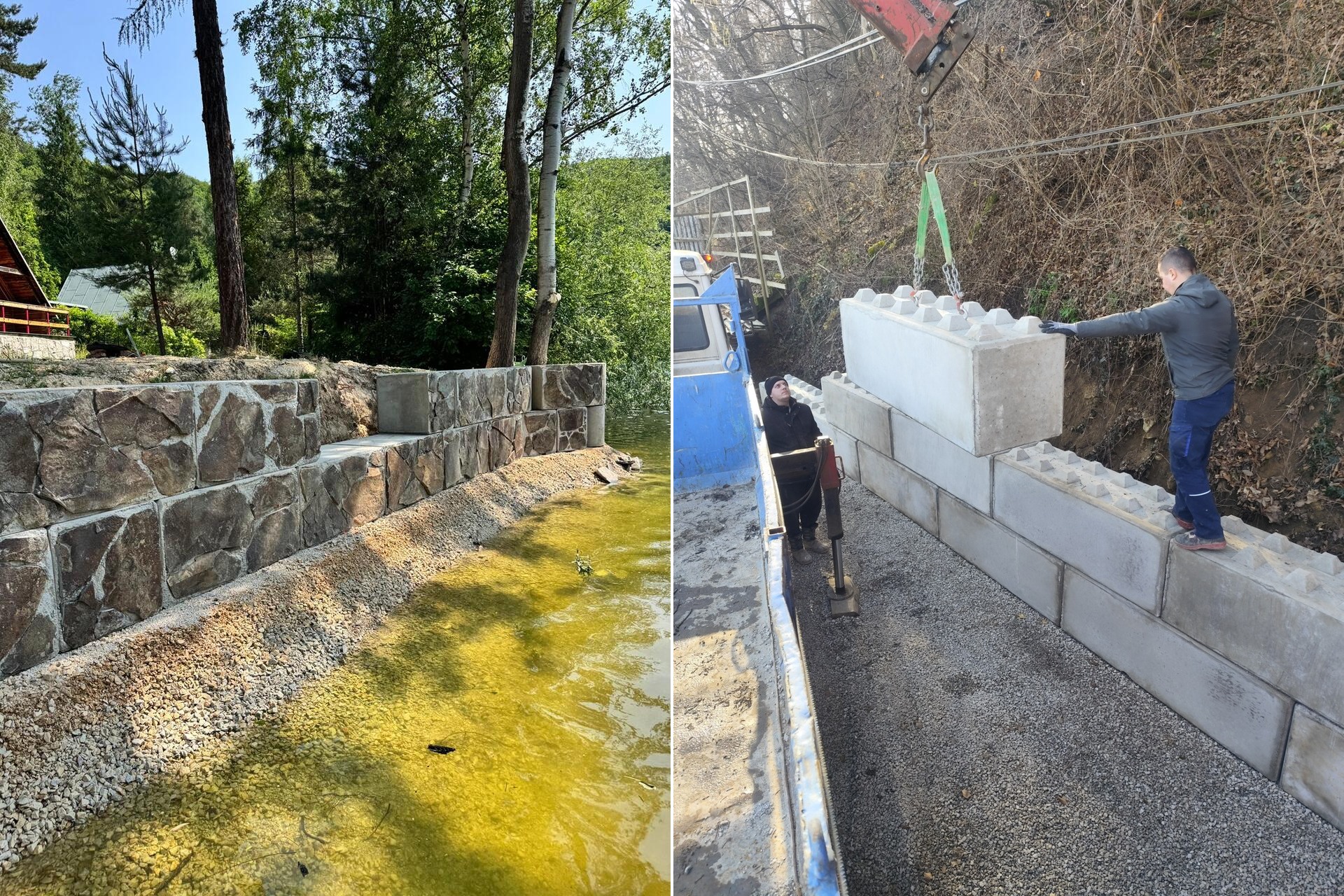
Building a retaining wall normally involves formwork, reinforcement, wet concrete or rows of smaller masonry units. Slovak manufacturer Betaron offers a much larger alternative: precast concrete blocks that a crane can stack into place without mortar or adhesive.
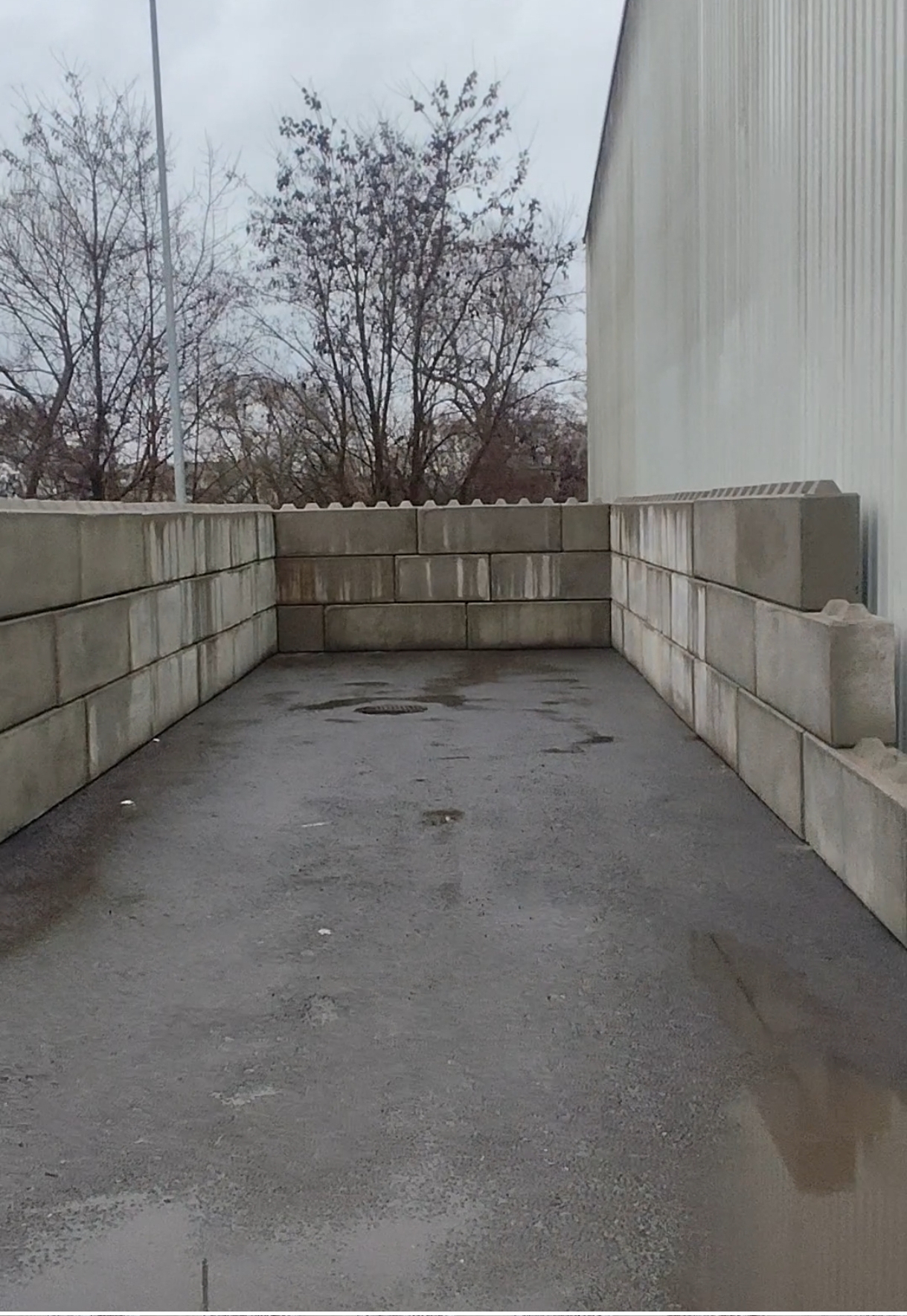
The blocks use raised conical studs on top and corresponding recesses underneath. As one unit is lowered onto another, the profiles engage and help keep successive courses aligned. The principle resembles an oversized construction toy, although individual blocks can weigh well over a metric ton.
What makes Betaron’s system especially interesting is that the exposed face does not necessarily have to look like plain industrial concrete. Decorative treatments can give the wall an aggregate texture, a molded stone pattern or the appearance of traditional dry-stacked masonry.
Large blocks that lock together without mortar
Betaron manufactures the units from unreinforced C30/37 concrete. The standard blocks are 60 cm (23.6 in) high and come in lengths of 60, 90, 120, 150 and 180 cm (23.6–70.9 in). Buyers can choose between 30- and 60-cm (11.8- and 23.6-in) widths, depending on the proposed wall and its structural requirements.
That produces a considerable range of weights. The smallest 60 × 30 × 60-cm block weighs approximately 259 kg (571 lb), while the largest 180 × 60 × 60-cm unit reaches about 1,550 kg (3,417 lb). Suitable lifting equipment is therefore essential even though the assembly itself is comparatively straightforward.
The blocks are laid dry, allowing a structure to be dismantled, altered or moved more easily than a cast-in-place concrete wall. Betaron also offers smooth-topped versions without visible upper studs for the final course. Angled blocks with rounded ends are available for walls that need to bend or change direction.
Three decorative stone-style faces
Betaron’s current catalog lists three made-to-order decorative treatments. They are best understood as different surface effects rather than three names for the same stone veneer.
The first is Makadam, a rough aggregate-style face intended to give the concrete a more irregular, crushed-stone appearance. The second, Šablóna – kameň, translates approximately as “stone template” and creates a patterned masonry effect on the visible face. The third is Imitácia suchého múrika, or “dry-stone-wall imitation,” which reproduces the layered look of small stones traditionally assembled without mortar.
Betaron labels the online renderings of these three finishes as illustrative, so their precise color and texture should be confirmed when ordering. The company does not describe them all as pieces of natural stone bonded to the block; “decorative concrete face” or “stone-style finish” is the more accurate general description.
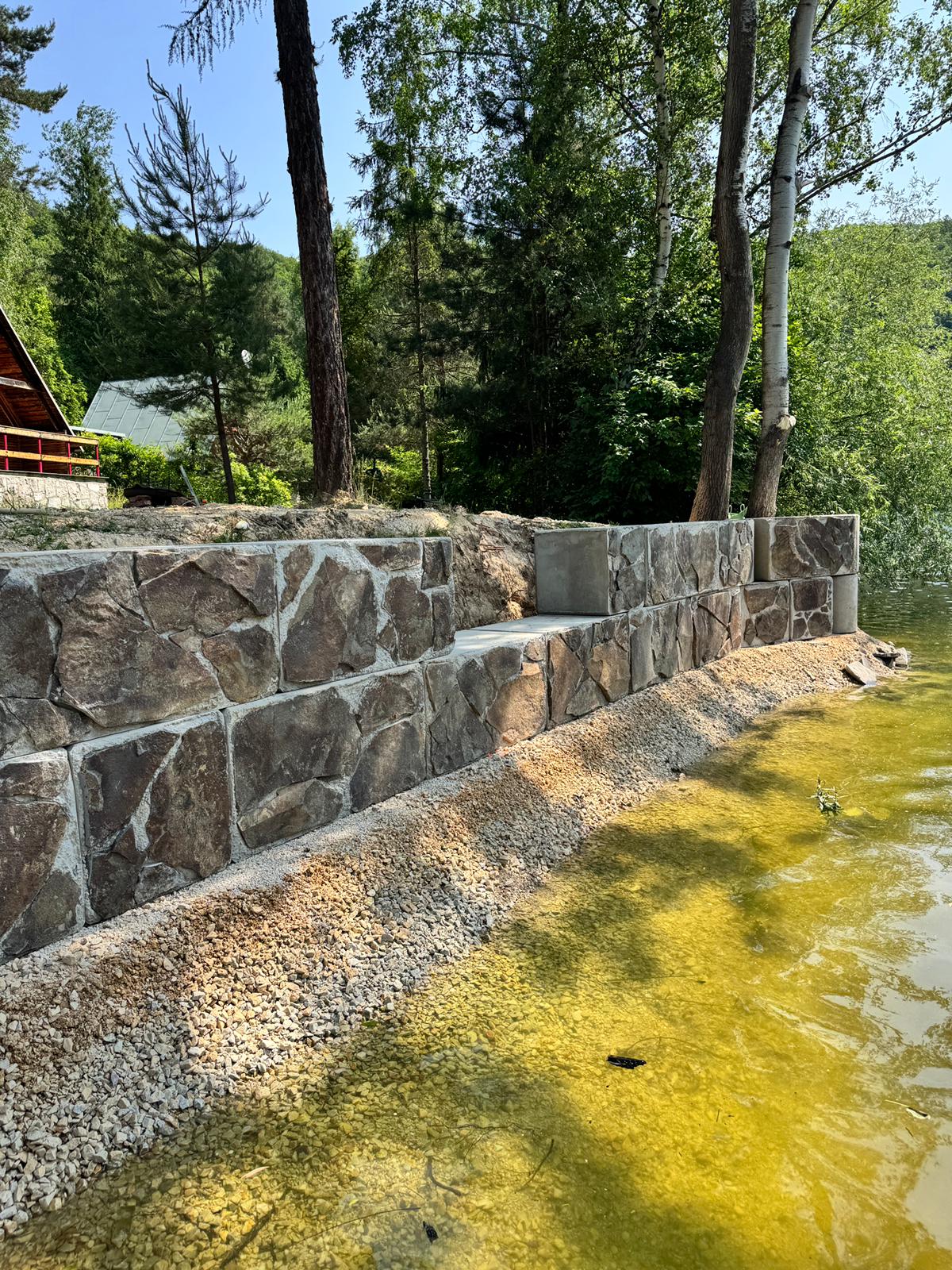
There is one notable additional example in Betaron’s project gallery: a completed retaining wall described as having andesite. Its irregular dark stone face looks much closer to conventional stonework than the company’s plain blocks. However, andesite is not included in the current standard decorative price list, suggesting that it should be treated as a project-specific finish whose availability needs to be confirmed directly with Betaron.
More than a landscaping wall
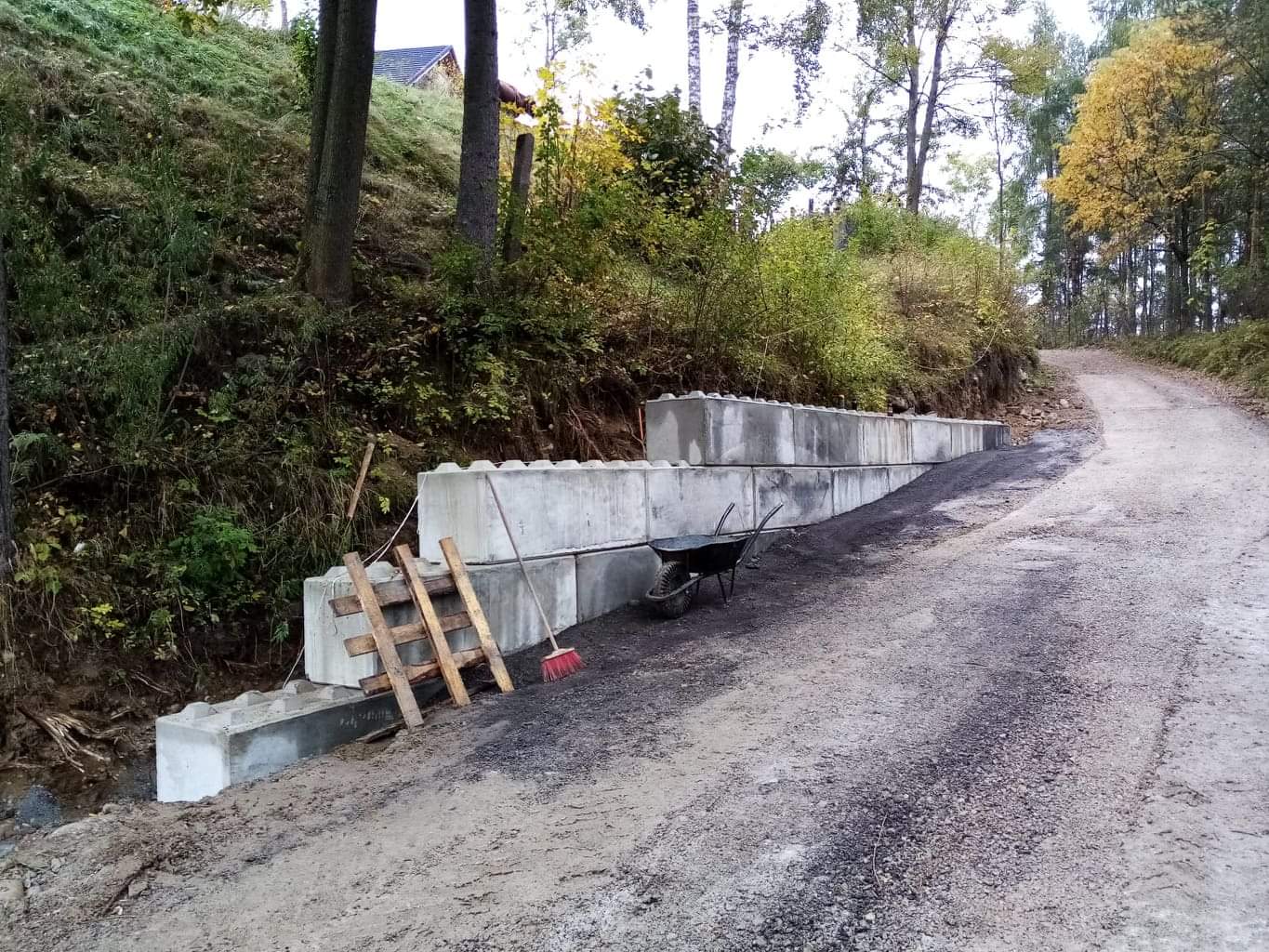
The interlocking system can be used for retaining soil and resolving changes in ground level, but its applications extend into farms, warehouses, municipal yards and industrial sites. Blocks can form bays that keep sand, gravel, wood chips, fertilizer or other bulk materials separated. They can also create freestanding dividing walls, perimeter barriers and temporary enclosures.
For these utilitarian installations, the ability to rearrange the blocks may be as useful as their installation speed. A storage yard can enlarge a bay, change its layout or reuse the units elsewhere without demolishing a mortared wall.
Betaron says it can deliver projects across Slovakia from its production operation in Strážske. It also promotes mobile production for sufficiently large jobs, allowing blocks to be manufactured at the customer’s site and reducing the need to transport multiple units weighing hundreds of kilograms apiece.
Simple assembly does not remove the need for engineering
The LEGO comparison explains how the blocks connect, but it should not imply that any wall can be designed simply by stacking them higher. C30/37 describes the compressive strength of the concrete; it does not establish the safe height or load capacity of the finished structure.
A retaining-wall design must account for the ground, wall geometry, soil pressure, nearby loads and water behind the structure. The first course also needs an accurately prepared and level foundation. Drainage is particularly important because trapped water can create hydrostatic pressure against the back of the wall.
Betaron therefore does not publish one universal maximum wall height. It offers access to structural assessment, with the appropriate block width, arrangement, foundation and drainage determined for the conditions of each project. Transport, crane unloading, base preparation, installation and the structural report are priced separately from the blocks.
Pricing and availability
Standard blocks are currently listed from €25 to €110 excluding VAT, depending on their dimensions. With decorative treatment included, listed prices range from approximately €33 to €135 for Makadam, €31.35 to €130 for the stone-pattern face and €54.45 to €200 for the dry-stone-wall imitation.
The decorative blocks are made to order. Betaron calculates delivery, unloading and installation separately, so the practical project price will depend heavily on location, wall design, machinery access and the amount of preparation required.
These blocks are unlikely to replace every conventional retaining-wall method. Their appeal lies in combining rapid machine installation, reuse and substantial mass with a choice of faces that can look more at home in a garden or residential landscape. The andesite project demonstrates the visual potential particularly well: beneath the stone appearance is still a wall assembled from giant interlocking concrete units.
Source: Betaron